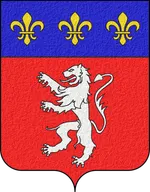
Country
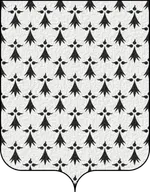
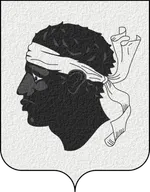
France stands unique among European nations: the Republic has no official coat of arms. Since the Revolution swept away the royal Azure, three fleurs-de-lys Or, no state blazon has replaced it. Instead, an unofficial emblem — a lictor’s fasces framed by laurel and oak, bearing the Légion d’honneur and the motto Liberté, égalité, fraternité — represents the Republic on diplomatic occasions. Alongside it flies the tricolore, born from a cockade pinned to Louis XVI’s hat on 17 July 1789, now one of the most influential flags in world history. Below that national story, 21 historic regions carry their own heraldic identities, from the ermine of Bretagne to the Moor’s head of Corse.

Flag
Not available
Coat of Arms
Not available
| Official name | République française |
|---|---|
| Official coat of arms | None (unofficial emblem used since 1905) |
| National flag | Tricolore — blue, white, red vertical bands |
| Flag adopted | 15 February 1794 (Convention nationale) |
| Motto | Liberté, égalité, fraternité |
| Capital | Paris |
| Government | Unitary semi-presidential republic |
| Head of State | Emmanuel Macron (since 2017) |
| Historical royal arms | Azure, three fleurs-de-lys Or (from Charles V, c. 1376) |
| Regions shown | 21 (pre-2016 NUTS 2 regions, Normandie reunified) |
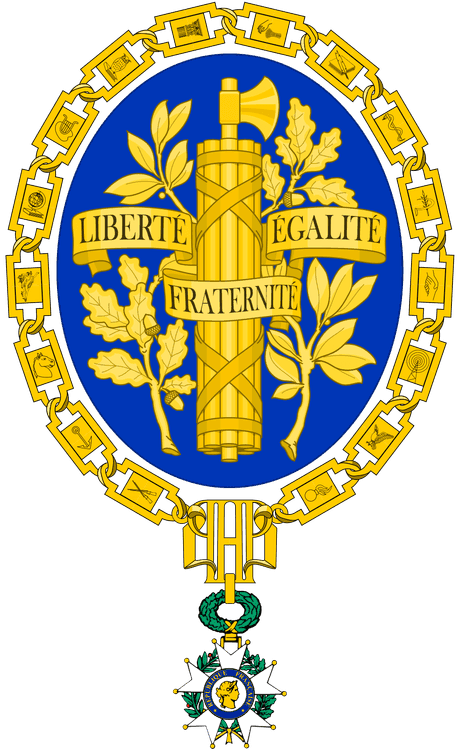
Emblem of France — A lictor’s fasces on branches of laurel and oak, with the Légion d’honneur
France has no official coat of arms. The fall of the monarchy in 1792 abolished the royal blazon — Azure, three fleurs-de-lys Or — and no republican government has formally adopted a replacement. What France uses instead is an unofficial emblem, centred on a lictor’s fasces (a bundle of rods bound around an axe, an ancient Roman symbol of civic authority).
By the early 1900s, French embassies displayed improvised symbols — an RF monogram or a fasces topped with a Phrygian cap — that diplomats considered embarrassing beside the elaborate arms of other European states. When Alfonso XIII of Spain visited Paris in 1905, following earlier visits from Edward VII and Victor Emmanuel III, the Ministry of Foreign Affairs commissioned heraldic painter-engraver Maurice de Meyère to create a proper composition.
Meyère’s design places the fasces upon crossed branches of laurel (victory) and oak (perennial wisdom), encircled by a ribbon bearing the national motto Liberté, égalité, fraternité. The full achievement is surrounded by the star and grand collar of the Légion d’honneur, created by Napoléon Bonaparte in 1802.
In 1953, heraldist Robert Louis selected Meyère’s 1905 composition as France’s official representation at the United Nations. It has since appeared on French passports, diplomatic documents, and presidential inaugurations, though it has never been codified by law.
Before the Republic, the royal arms of France were among the most recognised in European heraldry:
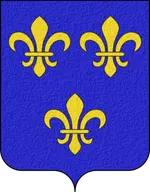
Azure, three fleurs-de-lys Or, 2 and 1.
This simplified blazon, known as France moderne, was adopted by Charles V around 1376, replacing the earlier France ancien which bore a semé (powdering) of fleurs-de-lys across the entire blue field. The golden lily became the defining symbol of the Capétien, Valois, and Bourbon dynasties and influenced the heraldry of dozens of European houses.
Flag of France — The tricolore, adopted 15 February 1794
The French tricolore — three vertical bands of blue, white, and red — is one of the most influential flags in world history. Its origins lie in the tumultuous days of July 1789.
On 13 July 1789, the Paris militia adopted a blue-and-red cockade, using the traditional colours of the city of Paris. Four days later, on 17 July, the cockade was presented to Louis XVI at the Hôtel de Ville. Lafayette, commander of the new Garde nationale, argued for the addition of a white stripe — the “ancient French colour” associated with the monarchy — to nationalise the design. The tricolour cockade was born: a symbol uniting king and people.
On 24 October 1790, the Assemblée constituante approved a tricolour flag with vertical red, white, and blue stripes for the navy. The order was reversed to blue-white-red — the current arrangement — by a resolution of the Convention nationale on 15 February 1794.
The tricolore was briefly replaced by the white Bourbon flag during the Restauration (1815–1830), but the Révolution de Juillet restored it permanently. Today, Article 2 of the Constitution of 1958 declares: « L’emblème national est le drapeau tricolore, bleu, blanc, rouge. »
France played a founding role in the development of European heraldry. The word blazon itself derives from the Old French blason, and the earliest systematic treatises on heraldic practice were written in French. The fleur-de-lys, associated with the French crown since at least Louis VII in the 12th century, became perhaps the single most recognisable charge in Western heraldry.
Unlike England or Scotland, France has no state heraldic authority today. The last royal officers of arms disappeared with the Ancien Régime. Municipal and regional heraldry, however, remains vibrant: communes, départements, and régions freely adopt and modify arms, often drawing on centuries-old blazons recorded by d’Hozier’s Armorial général de France (1696).
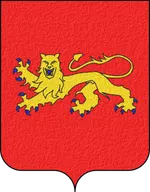
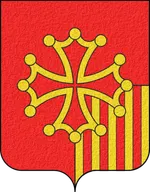
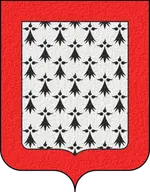
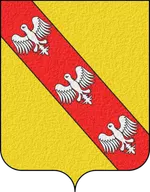
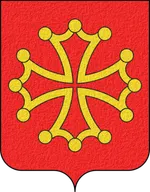
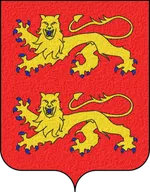
French heraldic style favours clarity and elegance: simple partitions, bold charges, and the règle de contrariété des émaux (rule of tincture) strictly observed. Regional arms often reflect feudal history — the leopards of Normandie echo the Plantagenet connection, the ermine of Bretagne recalls the ducal house, and the cross of Toulouse marks the Languedoc.
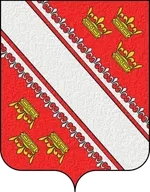
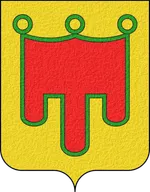
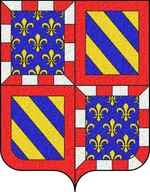
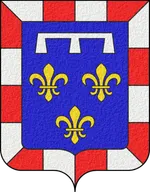
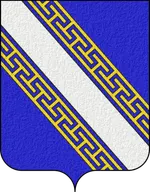
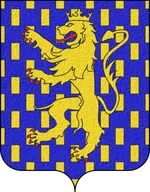
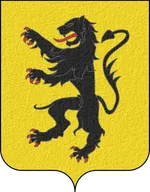
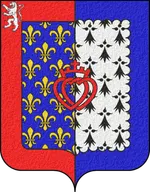
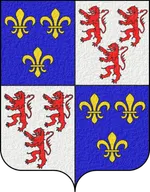
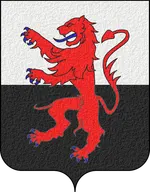
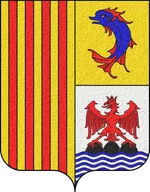
Each of France’s historic regions carries a distinctive coat of arms rooted in its feudal or provincial past. Here are eight notable examples:
No. Since the fall of the monarchy, France has had no official coat of arms. The Republic uses an unofficial emblem depicting a lictor’s fasces on branches of laurel and oak, with the Légion d’honneur and the motto Liberté, égalité, fraternité. This design was created in 1905 by Maurice de Meyère and submitted to the United Nations in 1953.
The blue and red bands represent the traditional colours of Paris, while the white band represents the monarchy. The three colours were brought together in a cockade on 17 July 1789 at the initiative of Lafayette, symbolising the union of the king and the people. The vertical tricolore flag was officially adopted on 15 February 1794.
The emblem was created in 1905 by heraldic painter-engraver Maurice de Meyère, prompted by diplomatic embarrassment during state visits from Alfonso XIII of Spain, Edward VII, and Victor Emmanuel III. In 1953, Robert Louis selected this design for France’s representation at the United Nations.
Blue and red are the historic colours of Paris, used on the city’s coat of arms. White was the colour of the French monarchy. Lafayette proposed adding white to the revolutionary blue-and-red cockade to nationalise the design when it was presented to Louis XVI on 17 July 1789.
The royal arms were Azure, three fleurs-de-lys Or — three golden lilies on a blue field. This simplified blazon was adopted by Charles V around 1376, replacing the earlier France ancien which bore a semé (powdering) of fleurs-de-lys across the entire field.
Explore the coat of arms of each of France’s 21 historic regions (pre-2016 NUTS 2 divisions, with Normandie shown reunified).
Last reviewed by the Emblema Mundi editorial team on 2026-06-21.