Region of France
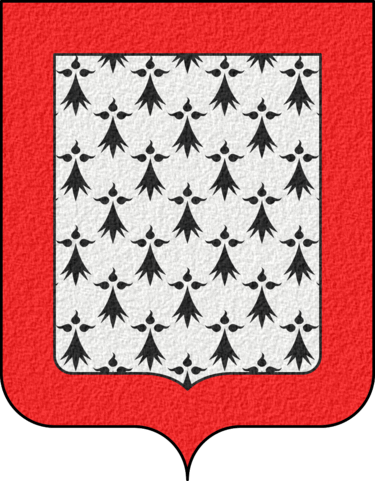
Limousin was a region of central France, encompassing the departments of Corrèze, Creuse and Haute-Vienne. Its coat of arms — an ermine field with a red bordure — is one of the simplest and most elegant in French regional heraldry, derived directly from the ancient arms of the viscounts of Limoges.
Coat of Arms
Not available
| Status | Former administrative region of France (1972–2015) |
|---|---|
| Current region | Nouvelle-Aquitaine (since 1 January 2016) |
| Capital | Limoges |
| Departments | Corrèze, Creuse, Haute-Vienne |
| Area | 16,942 km² |
| Historic territories | Limousin, Marche, Corrèze |
Coat of Arms — Ermine plain, a bordure Gules.
Ermine plain, a bordure Gules.
The ermine and red bordure were the arms of the viscounts of Limoges, a powerful dynasty who controlled the city and surrounding territory from the 10th century. When Limousin was incorporated into the French royal domain after 1370, these arms were preserved as the symbol of the region. They were adopted without modification by the modern administrative region created in 1972 and remained in use until Limousin's merger into Nouvelle-Aquitaine in 2016.
The regional flag displayed the coat of arms — ermine and red — on a white background. The dominant contrast between the white-and-black ermine pattern and the red bordure gave the emblem a striking, minimal appearance.
French administrative regions do not have formally legislated flags separate from their arms. The arms of Limousin, inherited from the viscounts of Limoges, were used on official signage, publications and the regional council building in Limoges.
Since the creation of Nouvelle-Aquitaine in 2016, the Limousin arms have been preserved as a subregional identity marker. The new region's own arms combine elements from Aquitaine, Limousin and Poitou-Charentes, but the ermine and red bordure remain recognisable locally.
The arms display an ermine field (silver with black spots) bordered in red (Gules), derived from the heraldry of the viscounts of Limoges — the dominant medieval lords of the region.
Ermine is a heraldic fur showing a white or silver field with stylised black spots representing the tail of the stoat in its winter coat. It is a mark of high nobility and appears in many French regional and dynastic arms.
The viscounts of Limoges were a powerful medieval dynasty controlling Limoges and the Limousin from the 10th century. Their descendants bore the ermine and red bordure arms that became the emblem of the whole territory.
On 1 January 2016, Limousin merged with Aquitaine and Poitou-Charentes to form Nouvelle-Aquitaine, the largest administrative region of metropolitan France by area.
Limousin is famous for Limoges porcelain (one of the world's finest since the 18th century), Aubusson tapestries (UNESCO World Heritage), the Limousin cattle breed, oak forests of the Millevaches plateau, and the medieval pilgrimage routes passing through the region.
Last reviewed by the Emblema Mundi editorial team on June 29, 2026.