Region of France
Centre-Val de Loire is one of France's thirteen administrative regions, stretching across the heart of the country along the Loire Valley — a UNESCO World Heritage landscape renowned for its Renaissance châteaux, royal history, and exceptional wines. The region encompasses the departments of Cher, Eure-et-Loir, Indre, Indre-et-Loire, Loir-et-Cher, and Loiret, with Orléans as its capital.
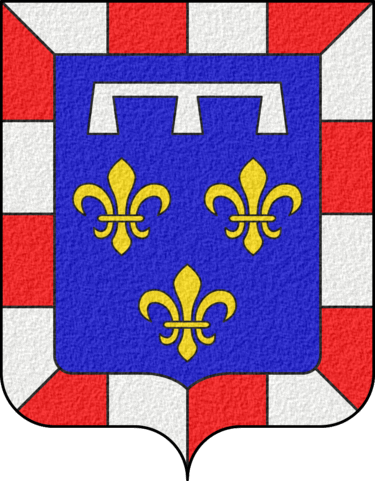
Coat of Arms
Not available
| Official name | Centre-Val de Loire |
|---|---|
| Capital | Orléans |
| Area | 39,151 km² |
| Population | approx. 2.6 million |
| Departments | Cher, Eure-et-Loir, Indre, Indre-et-Loire, Loir-et-Cher, Loiret |
| Notable cities | Orléans, Tours, Chartres, Bourges, Blois |
| UNESCO heritage | Loire Valley (inscribed 2000) |
| Historic association | Royal France; residence of François Ier |
Coat of Arms — Azure, three fleurs-de-lis Or in pale between two flanches of the same.
Azure, three fleurs-de-lis Or in pale between two flanches of the same.
The region of Centre was created in 1956 as one of France's original planning regions and took its current name, Centre-Val de Loire, in 2016 to better reflect its geographical identity. Its heraldic arms deliberately echo the arms of the French crown: for much of the late medieval and Renaissance periods, the Loire Valley — with its magnificent châteaux such as Chambord, Amboise, and Chenonceau — served as the preferred residence of the French kings. François Ier in particular transformed the region into a showcase of Renaissance architecture. The arms thus carry a direct line from medieval royal heraldry into the modern regional emblem.
The regional flag of Centre-Val de Loire is derived directly from the coat of arms: a blue field bearing the golden fleurs-de-lis. This banner format closely mirrors the ancient royal oriflamme tradition of France, presenting the heraldic charges on their blazoned field without additional borders or ornaments.
As with most French regional flags, the flag of Centre-Val de Loire is not defined by a formal statute but derives organically from the coat of arms adopted by the Regional Council. The fleur-de-lis motif was chosen precisely because of the Loire Valley's unrivalled association with the French crown — kings from Charles VII (who chose Chinon as his refuge during the Hundred Years' War) to Henri II maintained royal residences along the river.
Today the flag and arms appear on official Regional Council communications, signage, and cultural promotion materials. The Loire Valley's UNESCO World Heritage status (inscribed in 2000 as the "Garden of France") has given the regional emblem additional international visibility, appearing in tourism campaigns highlighting the châteaux circuit from Gien to Angers.
The arms display three golden fleurs-de-lis on a blue field, directly referencing the heraldry of the French royal family. They symbolise the Loire Valley's historic role as the heartland of the French monarchy, particularly during the 15th and 16th centuries.
The fleur-de-lis is the most iconic symbol of the French crown. The Loire Valley was home to many royal châteaux where kings such as François Ier, Charles VII, and Henri II resided, making the royal emblem the natural heraldic choice for the region.
Orléans is the capital of Centre-Val de Loire. It is historically famous as the city where Jeanne d'Arc lifted the English siege in 1429, turning the tide of the Hundred Years' War.
The region was originally simply named "Centre" when it was created in 1956. It was officially renamed "Centre-Val de Loire" in January 2016 to better reflect its geographical identity along the Loire River.
The Loire Valley between Chalonnes-sur-Loire and Sully-sur-Loire was inscribed on the UNESCO World Heritage List in 2000 under the category of "cultural landscape." It is recognised for its exceptional Renaissance châteaux, historic towns, and vineyard landscapes.
Last reviewed by the Emblema Mundi editorial team on June 29, 2026.