Region of France
Poitou-Charentes was a region of western France encompassing the historic territories of Poitou, Saintonge, Aunis and Angoumois. Its coat of arms features a bold red lion on a divided silver and black field, directly descended from the heraldry of the counts of Poitou — one of the most powerful dynasties of medieval France and the dynasty of Aliénor d'Aquitaine.
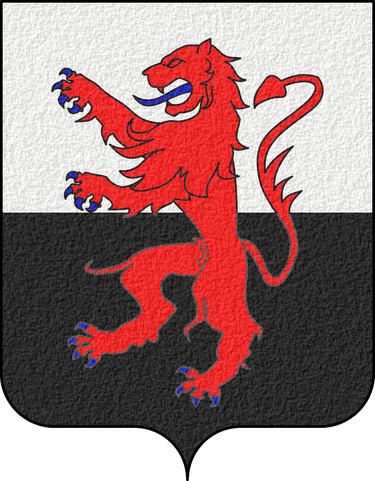
Coat of Arms
Not available
| Status | Former administrative region of France (1972–2015) |
|---|---|
| Current region | Nouvelle-Aquitaine (since 1 January 2016) |
| Capital | Poitiers |
| Departments | Charente, Charente-Maritime, Deux-Sèvres, Vienne |
| Area | 25,810 km² |
| Historic territories | Poitou, Saintonge, Aunis, Angoumois |
Coat of Arms — Per fess: 1st Argent; 2nd Sable; over all a lion Gules armed and langued Azure debruising the whole.
Per fess: 1st Argent; 2nd Sable; over all a lion Gules armed and langued Azure debruising the whole.
The counts of Poitou bore a red lion on silver from the 12th century. The dynasty produced Guillaume IX de Poitiers, the first known troubadour poet, and Aliénor d'Aquitaine, who married both Louis VII of France and Henry II of England, making her one of the most powerful women in medieval Europe. Poitou was incorporated into the French royal domain in 1204. The black element in the regional arms was added in 1972 to incorporate the heraldic memory of Saintonge, the territory of the Charente valley. Together, the silver and black field beneath the red lion creates a striking contemporary composition.
The regional flag reproduced the coat of arms — the red lion on the divided silver and black field. The three-colour composition (red, silver, black) gave the emblem a strong visual identity distinct from other French regional arms.
No formal flag predated the 1972 administrative region. The arms were designed to represent the main historic territories of the new region and were used on official buildings in Poitiers and the departmental prefectures.
Since the merger into Nouvelle-Aquitaine in 2016, the Poitou-Charentes arms are no longer the official regional emblem, but they remain in use locally. Poitiers, the historic capital, retains the lion in civic contexts, and the arms appear on publications and associations concerned with Poitevin and Saintongeais cultural identity.
The arms show a red (Gules) lion with blue claws and tongue on a per fess field of silver (Argent) over black (Sable), combining the heraldic traditions of Poitou (the red lion on silver) and Saintonge (the black element).
The counts of Poitou were also dukes of Aquitaine — among the most powerful lords of medieval France. The dynasty included the first troubadour Guillaume IX and, most famously, Aliénor d'Aquitaine, who married both Louis VII of France and Henry II of England.
The upper silver half references Poitou's heraldic tradition; the lower black half incorporates Saintonge, the territory of the Charente valley. Together they form a per fess field debruised by the lion of Poitou.
On 1 January 2016, Poitou-Charentes merged with Aquitaine and Limousin to form Nouvelle-Aquitaine, the largest administrative region of metropolitan France by area, with Bordeaux as its capital.
The region is renowned for cognac production (centred on the town of Cognac), Pineau des Charentes, the Marais poitevin wetland, the prehistoric painted caves of the Vienne valley, Romanesque pilgrimage churches on the route to Santiago de Compostela, and the Atlantic coastline of the Charente-Maritime.
Last reviewed by the Emblema Mundi editorial team on June 29, 2026.