Region of France
Aquitaine is a historic region of southwestern France, stretching from the Pyrenees to the Gironde estuary. Its coat of arms — a golden leopard on red — is among the most ancient in France, carried by Aliénor d'Aquitaine into the Plantagenet dynasty and embedded in the English royal arms still used today.
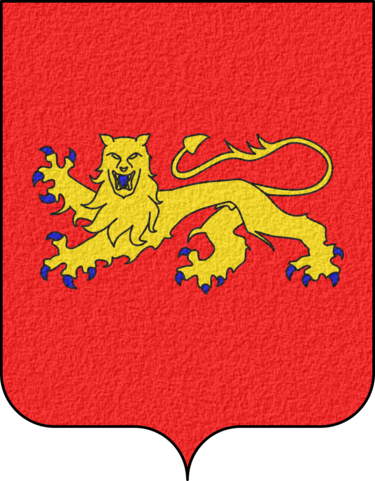
Coat of Arms
Not available
| Region | Aquitaine (now part of Nouvelle-Aquitaine) |
|---|---|
| Capital | Bordeaux |
| Blazon | Gules, a leopard Or, armed and langued Azure |
| Tinctures | Gules (red), Or (gold), Azure (blue) |
Coat of Arms of Aquitaine — Gules, a leopard Or, armed and langued Azure
Gules, a leopard Or, armed and langued Azure.
The golden leopard on red appears in the arms of the Duchy of Aquitaine from at least the 12th century. When Aliénor d'Aquitaine (Eleanor of Aquitaine, 1122–1204) married Henri II Plantagenêt, the arms of Aquitaine were united with those of England. The leopard of Guyenne — the English name for the duchy — directly influenced the three lions of the English royal arms. After Aquitaine definitively returned to the French crown in 1453 following the Hundred Years' War, the arms continued in use as the symbol of the province until the Revolution.
The traditional banner of Aquitaine bears the coat of arms on a red field: the golden leopard is the dominant motif. The colors red and gold (Gules and Or) are the heraldic colors of the region and remain strongly associated with Aquitaine's identity.
The leopard banner was used by the medieval Dukes of Aquitaine in battle and ceremony. Carried by Aliénor d'Aquitaine's descendants through two dynasties — Plantagenet and Capetian — it is one of the most historically traveled heraldic devices in Western Europe.
Following the 2016 merger into Nouvelle-Aquitaine, the arms of historic Aquitaine remain emblematic of the Bordeaux area and the broader Gironde department. They are used in cultural, viticultural, and tourism contexts that promote the identity of southwestern France.
The coat of arms of Aquitaine is blazoned: Gules, a leopard Or, armed and langued Azure. A golden leopard with blue claws and tongue on a red field — one of the oldest and most recognizable heraldic devices in France, shared with the arms of Guyenne.
The arms of Aquitaine and Guyenne are essentially the same: a golden leopard on red. Guyenne was the Gascon pronunciation of Aquitaine and the name used when the region was under English Plantagenet rule. Both names refer to the same heraldic device.
Aliénor d'Aquitaine (1122–1204) was Duchess of Aquitaine in her own right. When she married Henri II of England, the leopard of Aquitaine became part of the English royal arms. Her duchy's golden leopard is thus an ancestor of the three lions still on the English coat of arms today.
Since 2016, the administrative region of Aquitaine was merged with Limousin and Poitou-Charentes to form Nouvelle-Aquitaine. The historic arms of Aquitaine remain closely associated with Bordeaux and the wider territory of southwestern France.
In heraldry, the leopard (a lion passant guardant) symbolizes strength, courage, and vigilance. The golden leopard on red was the emblem of the dukes of Aquitaine since at least the 12th century, reflecting the power and prestige of one of medieval France's wealthiest provinces.
Last reviewed by the Emblema Mundi editorial team on June 29, 2026.