Country
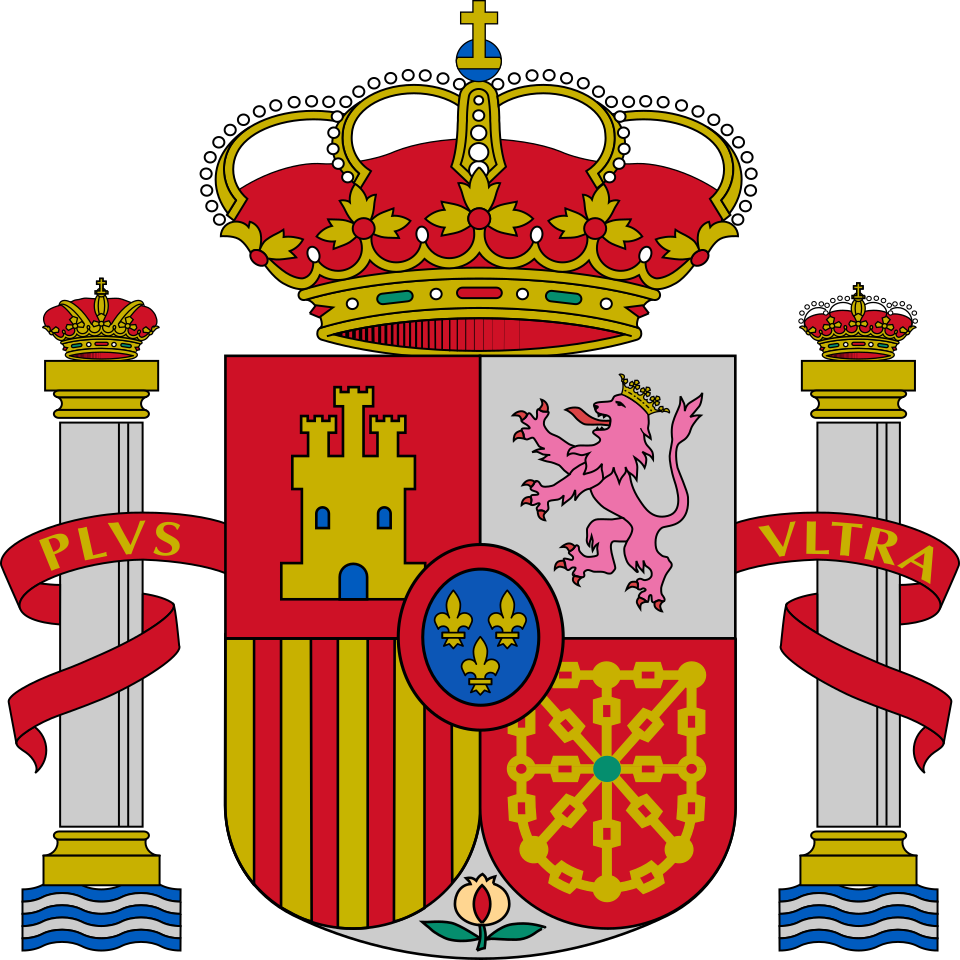
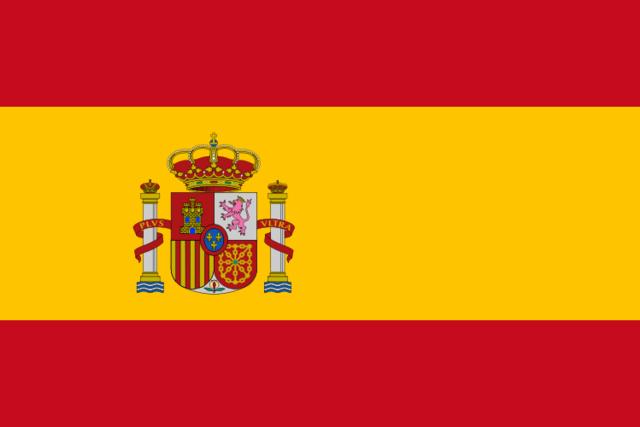
The coat of arms of Spain quarters the emblems of Castile, León, Aragón and Navarre — the four medieval kingdoms whose dynastic unions created the modern state. Flanked by the Pillars of Hercules bearing the motto Plus Ultra, the shield was given its current legal form by Ley 33/1981. The Spanish flag, the iconic red-yellow-red Rojigualda, traces its origin to a naval ensign chosen by Carlos III in 1785 to distinguish Spanish warships from those of rival Bourbon kingdoms.
Flag
Not available
Coat of Arms
Not available
| Official name | Reino de España (Kingdom of Spain) |
|---|---|
| Capital | Madrid |
| Government | Constitutional monarchy, parliamentary democracy |
| Head of State | Felipe VI (since 2014) |
| Population | ≈ 48 million |
| Area | 505,990 km² |
| National motto | Plus Ultra (Further Beyond) |
| Coat of arms adopted | Ley 33/1981, 5 October 1981 |
| Flag adopted | Naval ensign 1785; constitutional since 1978 |
| Autonomous communities | 17 comunidades + 2 ciudades autónomas |
Coat of Arms — Quarterly: Castile, León, Aragón, Navarre; enté en point Granada; inescutcheon Bourbon-Anjou
Quarterly: 1st, Gules a castle triple-towered Or, masoned Sable and ajouré Azure (Castile); 2nd, Argent a lion rampant Purpure, crowned Or, langued and armed Gules (León); 3rd, Or four pallets Gules (Aragón); 4th, Gules a cross, saltire and orle of chains linked together Or, a centre point Vert (Navarre); enté en point Argent a pomegranate proper seeded Gules, supported, slipped and leaved Vert (Granada). Overall an inescutcheon Azure three fleurs-de-lys Or within a bordure Gules (Bourbon-Anjou). The shield ensigned with the Royal Crown of Spain. Supporters: two Pillars of Hercules Argent on waves Azure and Argent, each surmounted by a crown and bearing a scroll with the motto Plus Ultra.
The Spanish shield is a heraldic summary of the Reconquista and the dynastic unions that forged the nation. The first quarter — a gold castle on red — stands for the Kingdom of Castile, whose arms date from the reign of Alfonso VIII in the late twelfth century. The second — a purple lion on white — represents the Kingdom of León, separated from Castile until their definitive union under Fernando III in 1230. The third quarter, four red pallets on gold, carries the celebrated Señal Real of the Crown of Aragón, attested since Ramón Berenguer IV in the twelfth century. The fourth, a chain of gold on red, evokes Navarre and the legendary chains broken by Sancho VII el Fuerte at the Battle of Las Navas de Tolosa (1212). At the base, the pomegranate (granada) commemorates the Kingdom of Granada, the last Muslim stronghold, conquered by the Reyes Católicos in 1492.
The small blue shield at the centre bearing three golden fleurs-de-lys identifies the reigning House of Bourbon-Anjou, which acceded to the Spanish throne with Felipe V in 1700. Flanking the main shield, the Pillars of Hercules — representing the Strait of Gibraltar — carry the motto Plus Ultra (Further Beyond), adopted by Emperor Carlos V after 1492 to proclaim that Spain had sailed past the ancient limits of the known world.
1230 — Fernando III unites Castile and León; their arms are quartered for the first time.
1469 — Marriage of Isabel I de Castilla and Fernando II de Aragón; the four-kingdom quartering takes shape.
1492 — Fall of Granada; the pomegranate is added enté en point.
1700 — The Bourbon dynasty replaces the Habsburgs; the inescutcheon changes to fleurs-de-lys.
1868–1870 — The Sexenio Democrático briefly removes the royal crown and dynastic inescutcheon; a mural crown replaces the royal one.
1931–1939 — The Second Republic adopts a mural crown and removes the Bourbon inescutcheon.
1981 — Ley 33/1981 establishes the current blazon, restoring the royal crown and Bourbon inescutcheon within a democratic constitutional framework.
Flag — Three horizontal stripes red-yellow-red; the yellow stripe twice the width of each red stripe
Before 1785, Spain flew a white Bourbon flag at sea — virtually identical to those of France, Naples, Parma and Sicily. At a distance, it was impossible to tell friend from foe. Carlos III tasked Antonio Valdés y Fernández Bazán, Minister of the Navy, with designing a distinctive ensign. From twelve proposals, the king selected a red-yellow-red banner whose bold colours were unmistakable against sea and sky. The Royal Decree of 28 May 1785 made it the official naval ensign.
The red and yellow (gualda) bands echo the colours shared by the historic arms of Castile (red-gold), Aragón (gold-red pallets) and Navarre (red-gold chains). Although the 1785 decree was strictly naval, the colours gradually became the symbol of the nation itself. The popular nickname Rojigualda (Red-Weld) reflects the archaic Spanish term gualda for the yellow dye plant Reseda luteola.
Article 4.1 of the 1978 Constitution defines the national flag as “three horizontal stripes, red, yellow and red, the yellow being double the width of each of the red stripes.” Ley 39/1981 regulates its use and protocol. The coat of arms is placed off-centre toward the hoist on the state version; a plain triband without arms may be used for civilian purposes.
Spain possesses one of the richest heraldic traditions in Europe. The office of Rey de Armas (King of Arms) dates to the late Middle Ages; the Cronista Rey de Armas served the Crown as the supreme authority on noble and municipal arms until the office fell into disuse in the modern era. Unlike France or England, Spain never developed a single centralised heraldic college; instead, each of the historic kingdoms — Castile, Aragón, Navarre, and the Basque provinces — maintained its own heraldic customs and repertoires.
Municipal heraldry is exceptionally vibrant: Spain’s roughly 8,100 municipios nearly all bear arms, many of them granted during the Reconquista or in the centuries immediately following. The comunidades autónomas, established by the 1978 Constitution, adopted their own official arms and flags through their respective Estatutos de Autonomía, often drawing on medieval precedents.
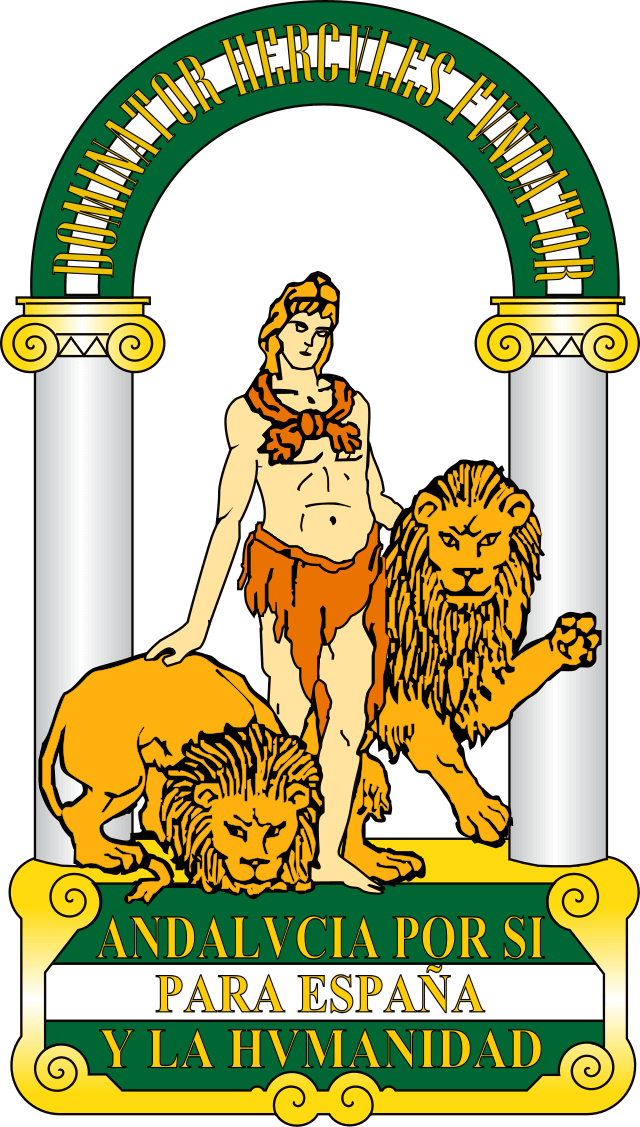
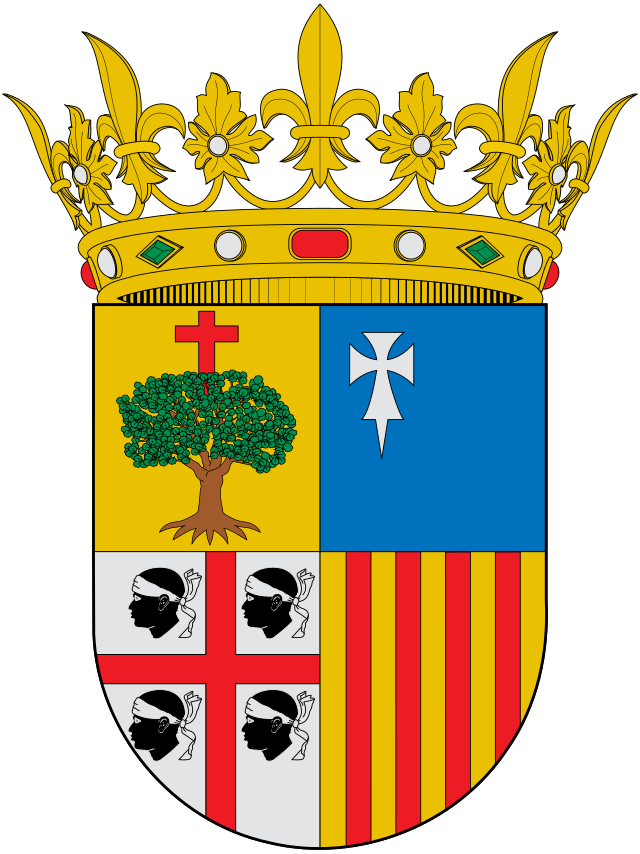
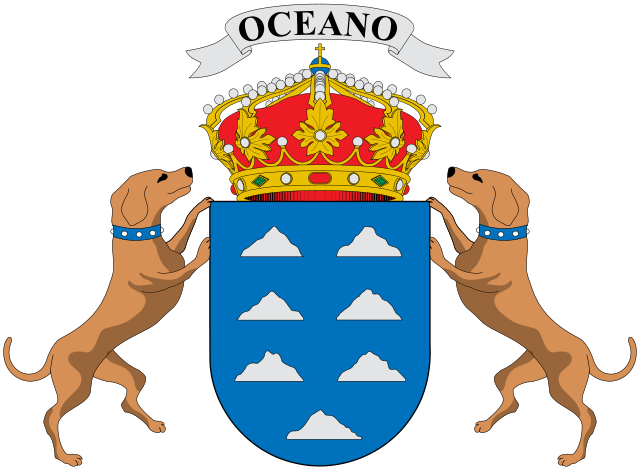
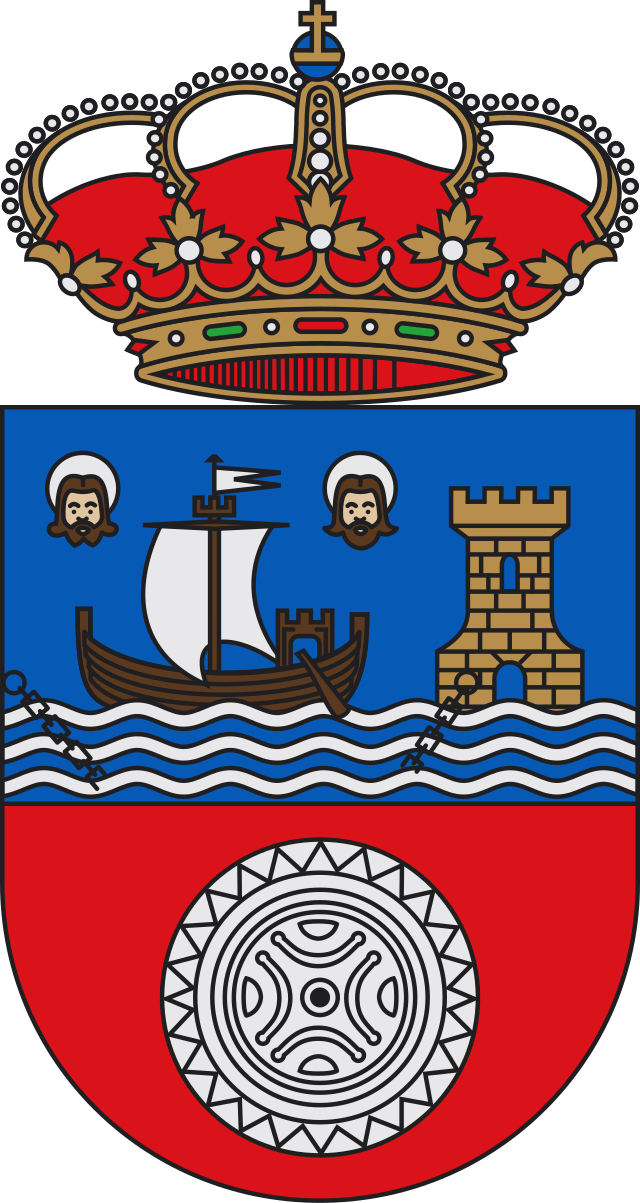
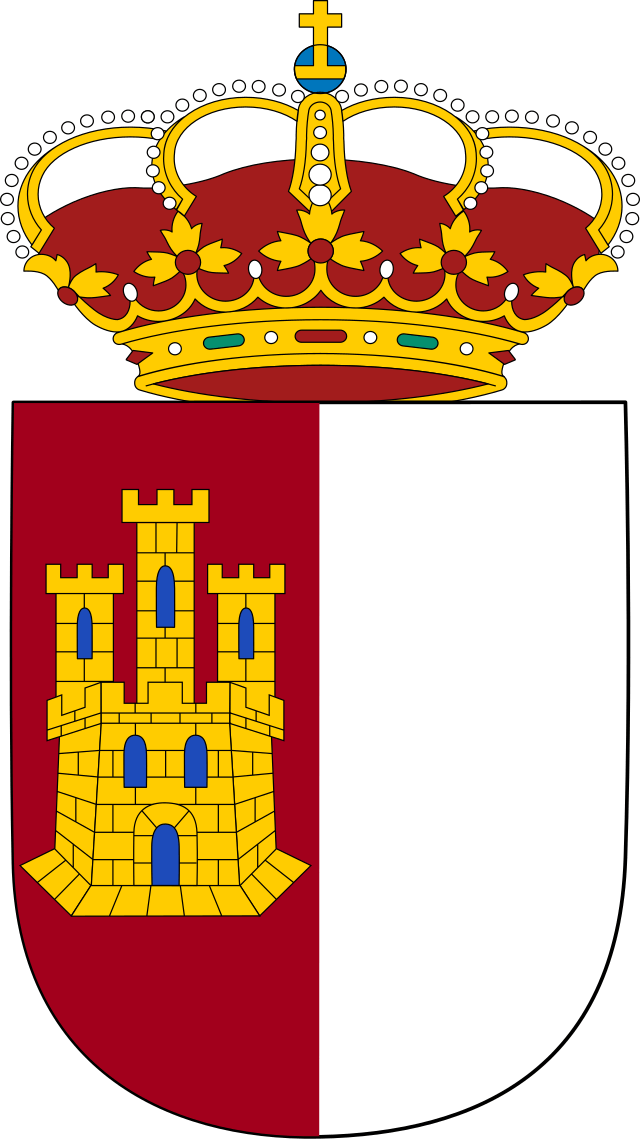
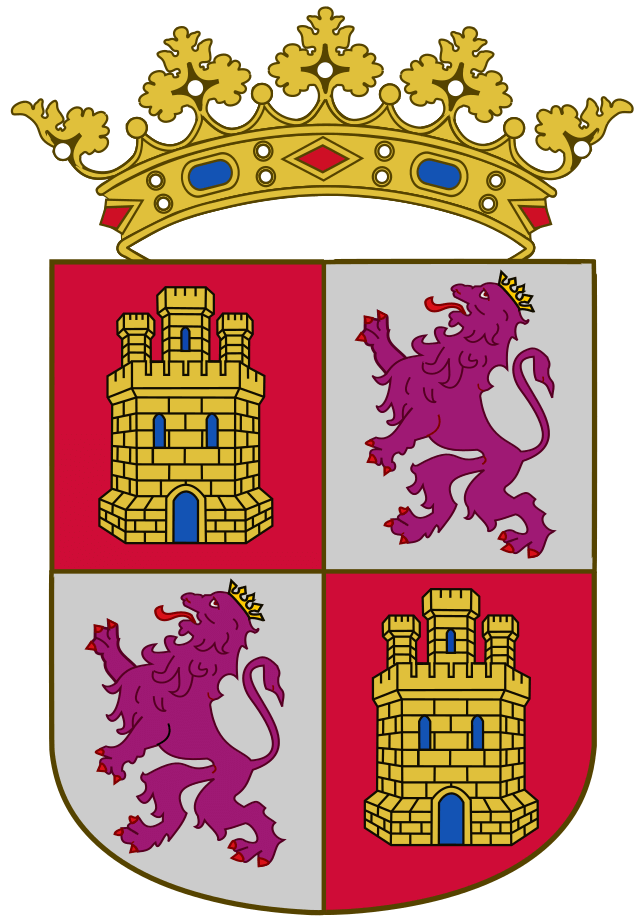
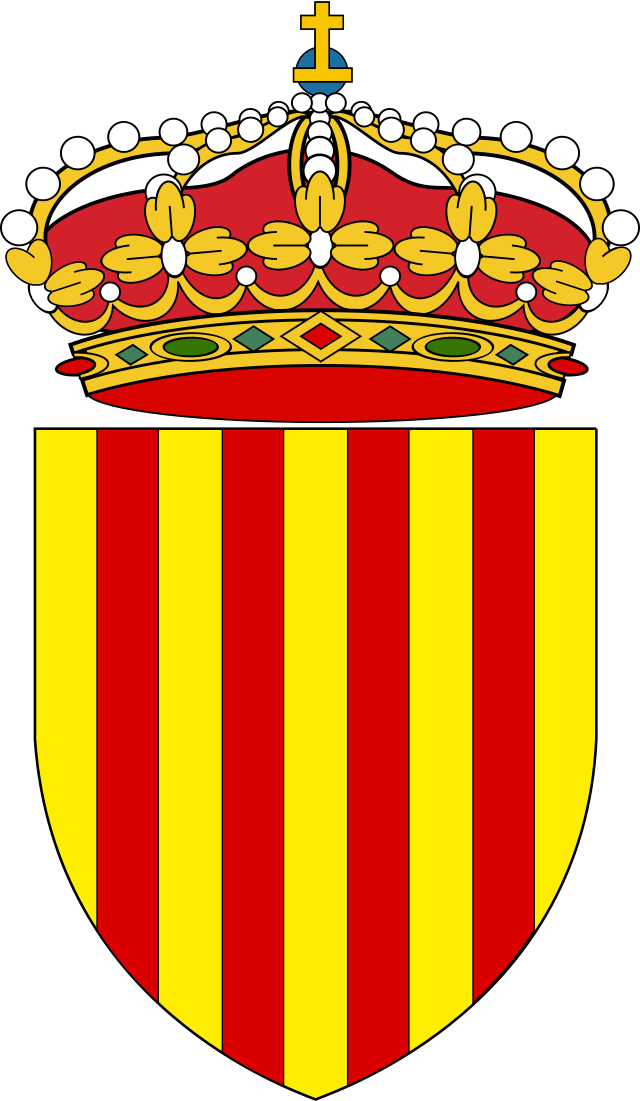
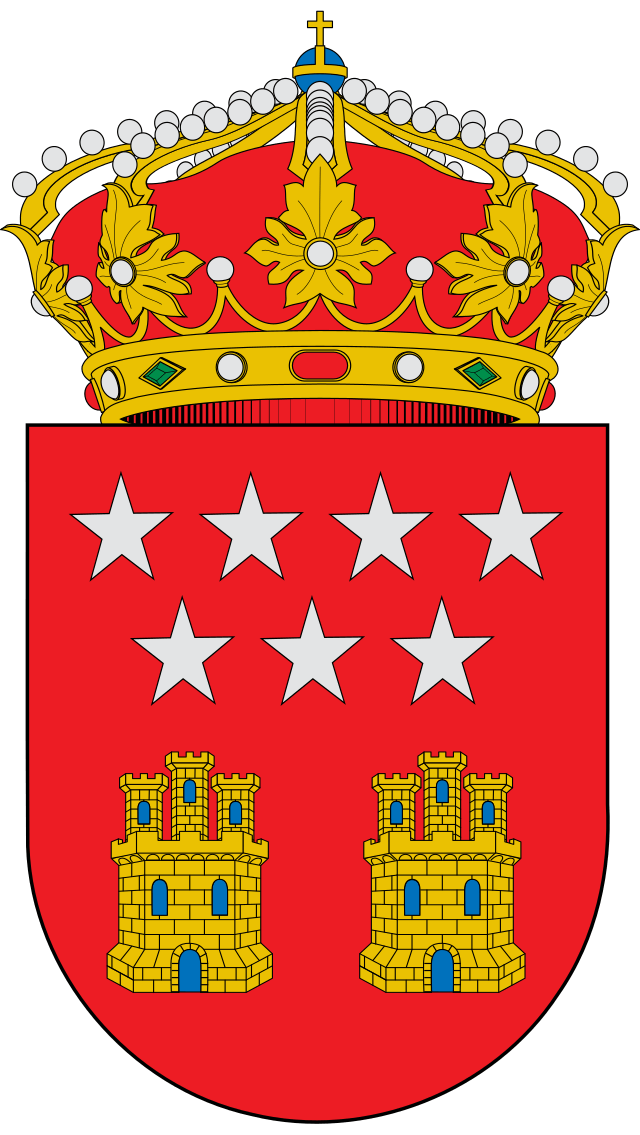
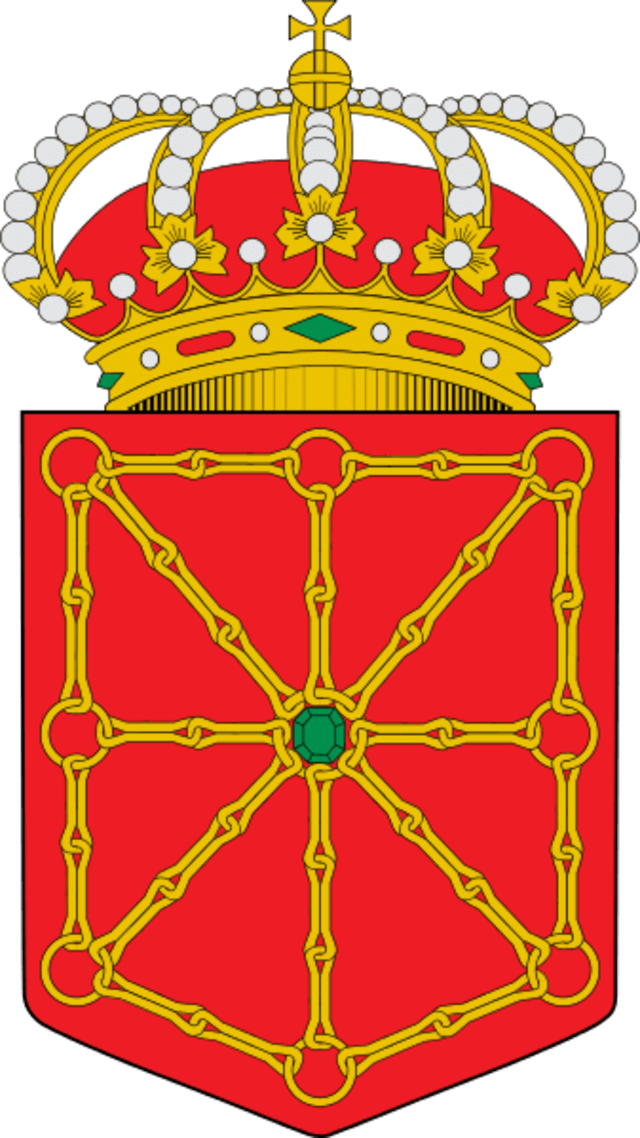
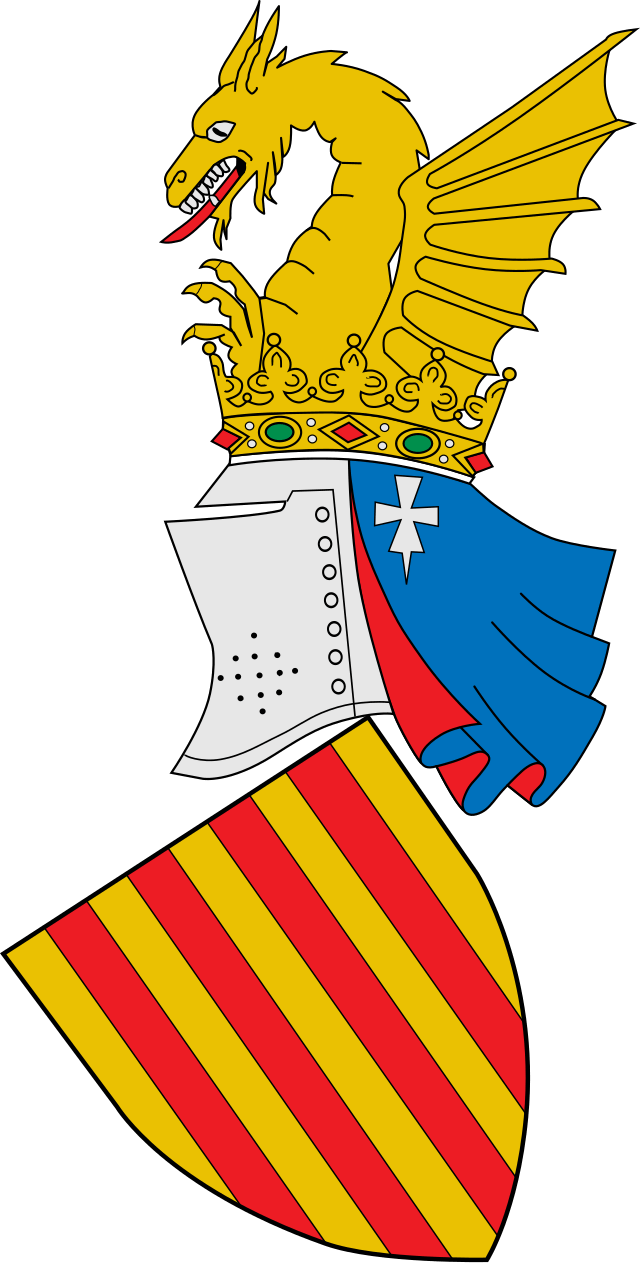
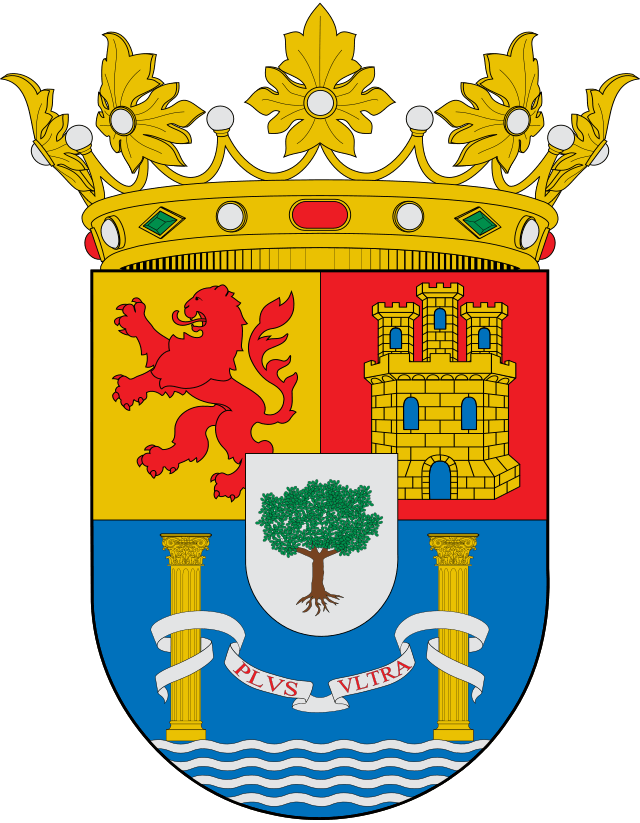
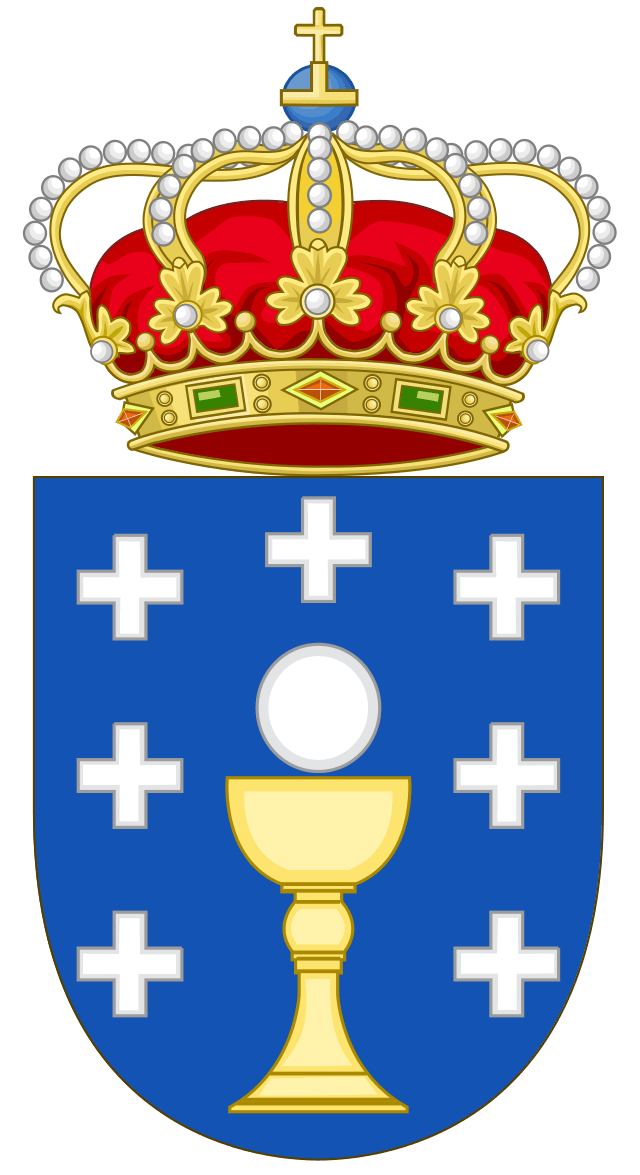
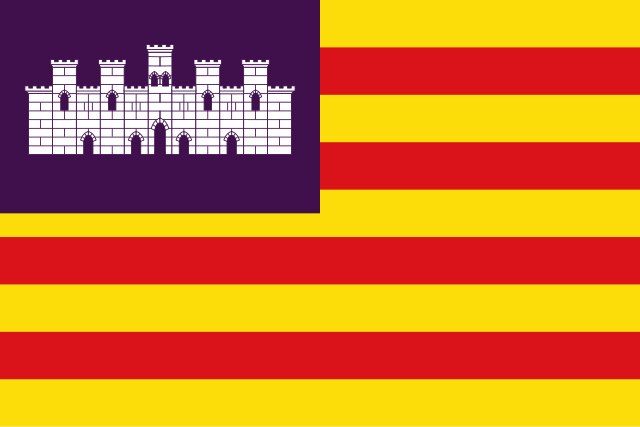
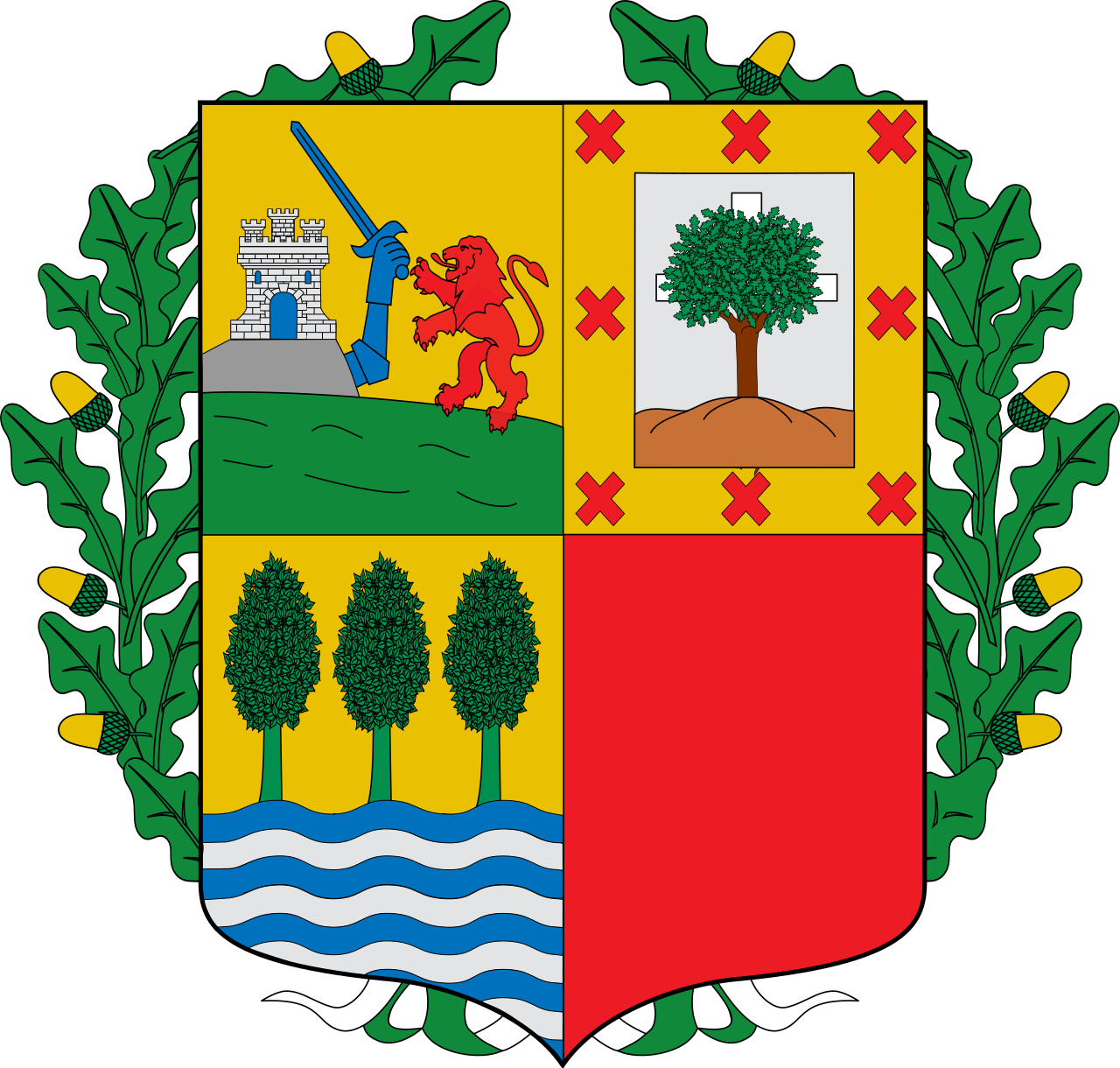
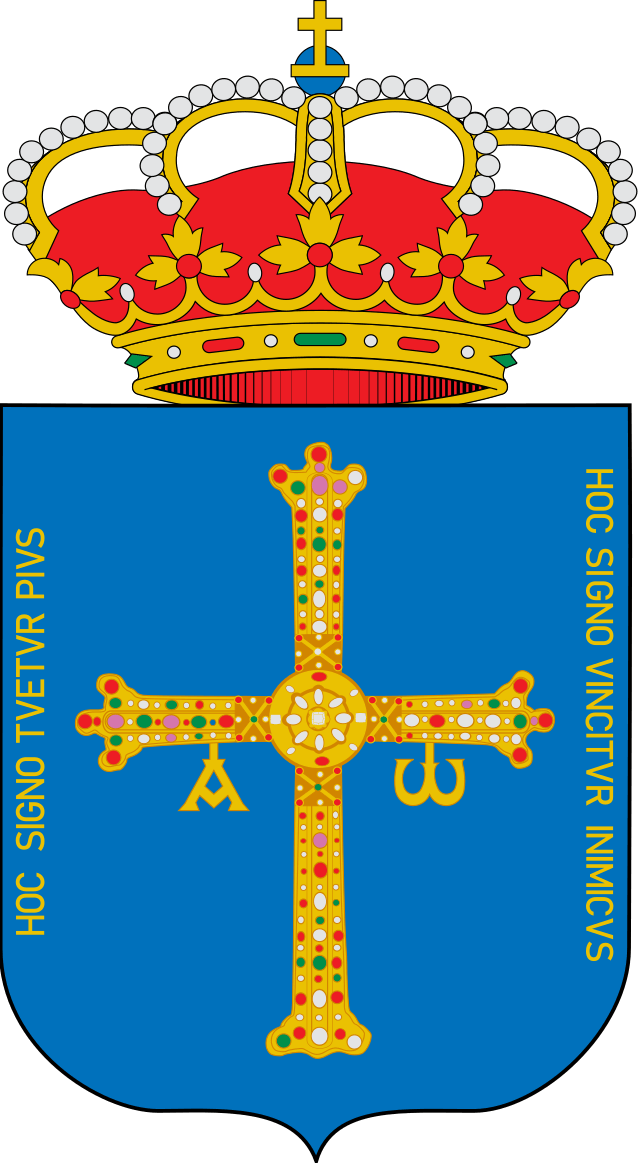
Spain’s 17 autonomous communities and 2 autonomous cities each carry distinctive arms rooted in centuries of independent history. Here are some of the most notable:
The four quarters represent the medieval kingdoms whose union formed modern Spain: Castile (a gold castle on red), León (a purple lion on white), Aragón (four red vertical stripes on gold), and Navarre (gold chains on red). At the base, a pomegranate represents the Kingdom of Granada, the last territory reclaimed during the Reconquista in 1492.
By Royal Decree of 28 May 1785, Carlos III adopted a red-yellow-red naval ensign because the previous white Bourbon flag was too easily confused with those of other Bourbon kingdoms (France, Naples, Parma, Sicily) at sea. Red and yellow were chosen for maximum visibility against the sky and ocean.
Plus Ultra (Latin for “Further Beyond”) is the national motto of Spain, inscribed on banners wrapped around the Pillars of Hercules flanking the shield. It was adopted by Emperor Carlos V after 1492 to signal that Spain had ventured beyond the ancient limits of the known world marked by the Strait of Gibraltar.
Ley 33/1981, of 5 October, establishes the official blazon and design of the Spanish coat of arms. The flag is defined by Article 4.1 of the 1978 Constitution and further regulated by Ley 39/1981.
Spain has 17 autonomous communities (comunidades autónomas) and 2 autonomous cities (Ceuta and Melilla), for a total of 19. Each has its own official coat of arms and flag, often rooted in medieval heraldic traditions predating the unification of Spain.
Explore the coat of arms and flag of every comunidad autónoma and ciudad autónoma of Spain.
Last reviewed by the Emblema Mundi editorial team on 2026-06-21.