Autonomous Community
País Vasco (the Basque Country) is an autonomous community in northern Spain, bordering France and the Bay of Biscay. One of the most economically developed regions of the Iberian Peninsula, it is home to around 2.2 million people and holds a distinctive cultural and linguistic identity rooted in the ancient Basque language, Euskara. Its coat of arms and flag — the iconic Ikurriña — are among the most recognisable regional symbols in Spain.
Flag
Not available
Coat of Arms
Not available
| Autonomous Community | Euskadi / País Vasco |
|---|---|
| Capital | Vitoria-Gasteiz |
| Statute of Autonomy | 1979 (Statute of Guernica) |
| Provinces | Álava, Biscay (Bizkaia), Gipuzkoa |
| Flag name | Ikurriña |
| Coat of arms adopted | 1978 |
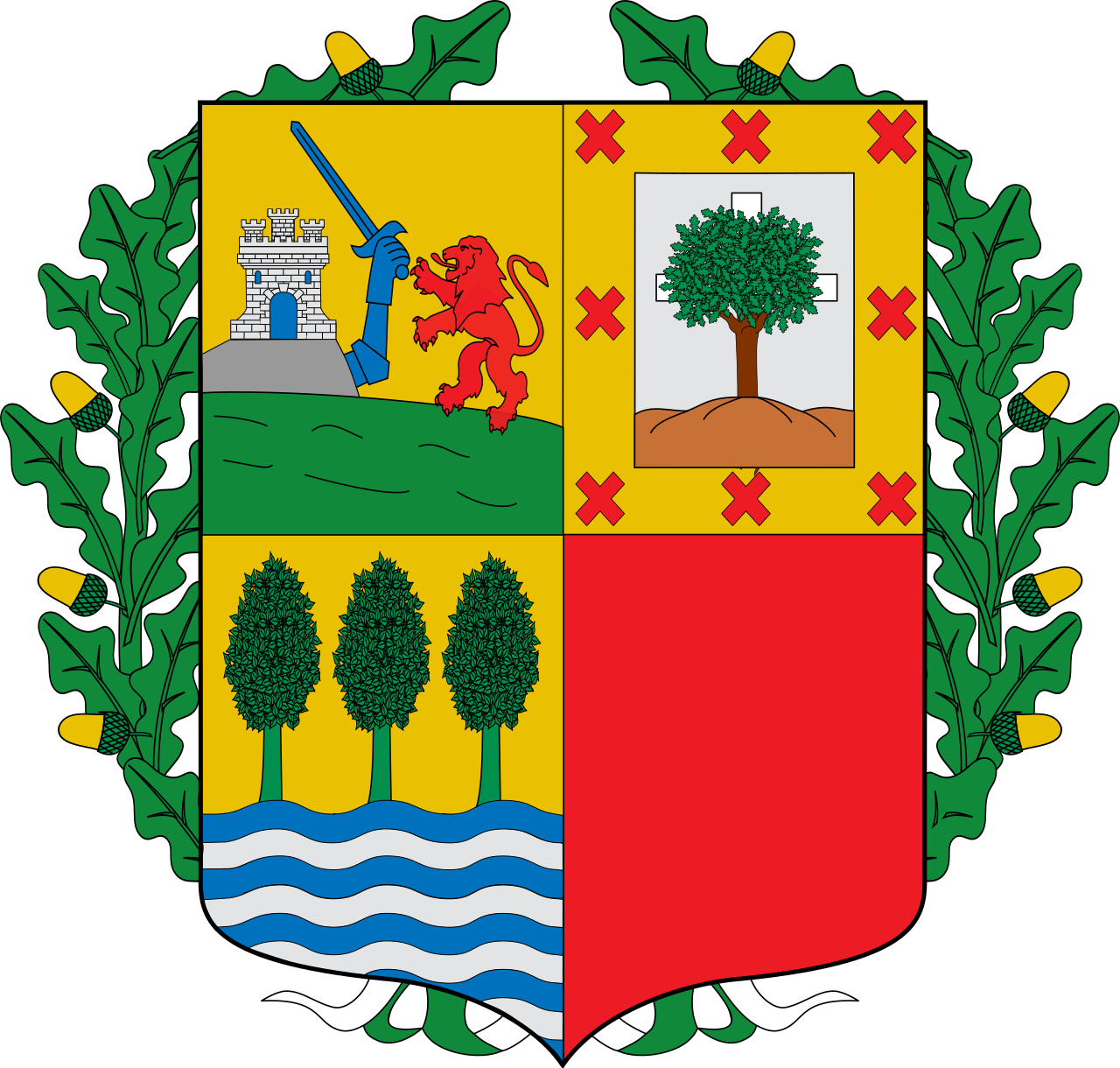
Coat of Arms of País Vasco — quarterly shield of the three Basque provinces, adopted 1978
Quarterly: first, Gules, an oak tree Or on a terrace Vert (Biscay); second, Or, a lion rampant Gules (Álava); third, Or, three oak trees Vert in base waves Azure (Gipuzkoa); fourth, Or (plain, replacing the earlier chains of Navarre in the modern version). The whole ensigned with a royal crown.
The quartered shield represents the three historical provinces of the Basque Autonomous Community. The first quarter shows the oak of Guernica (Gernika), the sacred tree under which the Lords of Biscay traditionally swore to uphold Basque customary law (fueros). The second quarter bears a red lion on gold, the ancient arms of the Lords of Álava. The third quarter displays three oak trees above blue waves, representing the coastal forests and seas of Gipuzkoa. The fourth quarter, now plain gold, originally bore the chains of the Kingdom of Navarre — removed in the modern version to avoid territorial disputes, as Navarre is today a separate autonomous community.
The heraldic traditions of the three Basque provinces date back to the medieval period, when each province maintained its own identity and institutions under the fueros system. After the abolition of the fueros by the Spanish central government in 1876, Basque nationalist movements began asserting a shared identity. The current unified coat of arms was officially adopted in 1978, as part of the political transition following the death of Francisco Franco, and was enshrined in the Statute of Guernica of 1979.
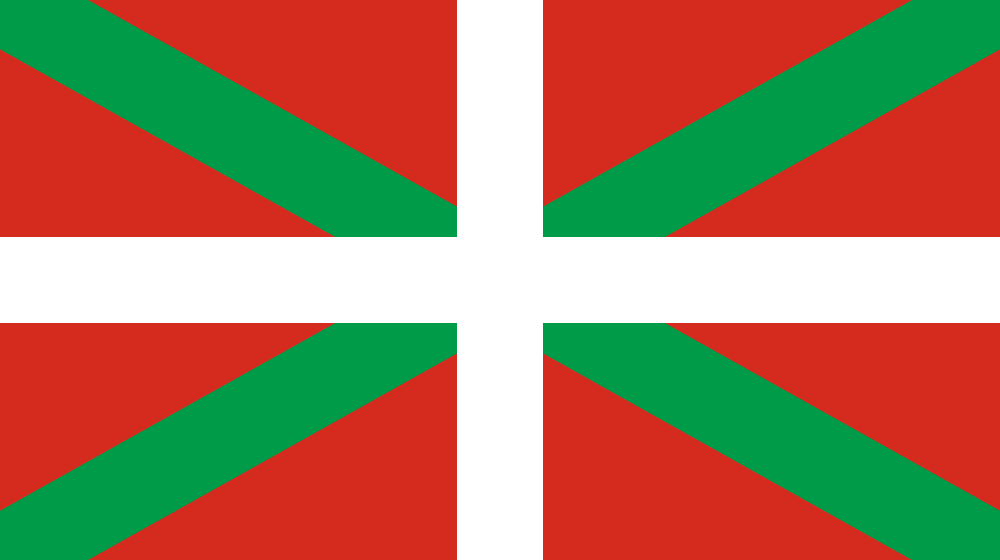
Flag of País Vasco (Ikurriña) — red field, green saltire, white cross — designed by Sabino Arana in 1894
The flag of the Basque Country is known as the Ikurriña (Basque for “flag” or “symbol”). Its blazon: Gules, a saltire Vert overall a cross Argent. In plain terms, a red background is crossed by a green diagonal cross (saltire of Saint Andrew) overlaid by a white upright cross. The colours carry symbolic weight: red represents the Basque people; green symbolises the oak of Guernica and traditional liberties; white stands for faith and the Christian tradition.
The Ikurriña was designed in 1894 by Sabino Arana and his brother Luis Arana, originally as the flag of the province of Biscay. Sabino Arana, the founder of Basque nationalism, drew inspiration from the Union Jack’s overlapping crosses. Over the following decades, the flag came to represent the entire Basque Country. Banned throughout the dictatorship of Francisco Franco (1939–1975), it became a symbol of resistance.
After Spain’s transition to democracy, the Ikurriña was officially adopted as the flag of the Basque Autonomous Community and is today recognised by the Statute of Guernica.
The flag of País Vasco is called the Ikurriña. It features a red field with a green saltire overlaid by a white upright cross. It was created in 1894 by Sabino Arana and his brother Luis Arana.
The red represents the Basque people, the green symbolises the oak of Guernica and traditional liberties, and the white stands for faith and the Christian tradition.
The quartered coat of arms represents the three historical provinces: Biscay (oak of Guernica on gules), Álava (red lion on gold), and Gipuzkoa (three green trees with blue waves at base).
The current coat of arms was officially adopted in 1978, during Spain’s transition to democracy after the end of the Franco dictatorship.
During the dictatorship of Francisco Franco (1939–1975), regional identities and symbols were suppressed across Spain. The Ikurriña was banned because it embodied Basque identity and aspirations for autonomy, which the regime considered a threat to national unity.
Last reviewed by the Emblema Mundi editorial team on June 29, 2026.