Autonomous Community
The Comunidad Foral de Navarra is a Spanish autonomous community in the north of the Iberian Peninsula, bordering France, the Basque Country, La Rioja, and Aragón. It is the direct successor of the ancient Kingdom of Navarre, one of the oldest states of medieval Iberia, and retains special autonomous powers — the fueros — that set it apart from other Spanish regions. Its coat of arms, bearing the chains of Navarre on red, is among the most historically layered and visually powerful emblems on the peninsula.
Flag
Not available
Coat of Arms
Not available
| Status | Autonomous Community (Foral) of Spain |
|---|---|
| Capital | Pamplona (Iruña) |
| Official languages | Spanish, Basque (in Basque-speaking zones) |
| Foral autonomy statute | Amejoramiento del Fuero, 1982 |
| Kingdom of Navarre incorporated | 1512 (by Fernando II de Aragón) |
| Heraldic arms | Documented from the 13th century |
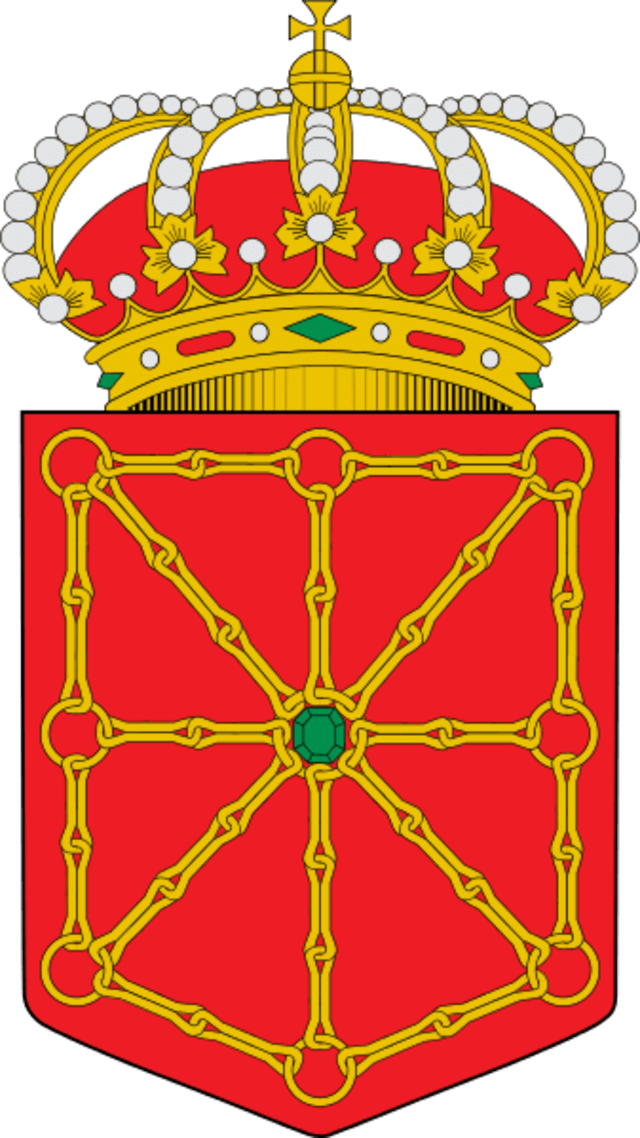
Coat of Arms of Comunidad Foral de Navarra — the chains of Navarre on gules, documented from the 13th century
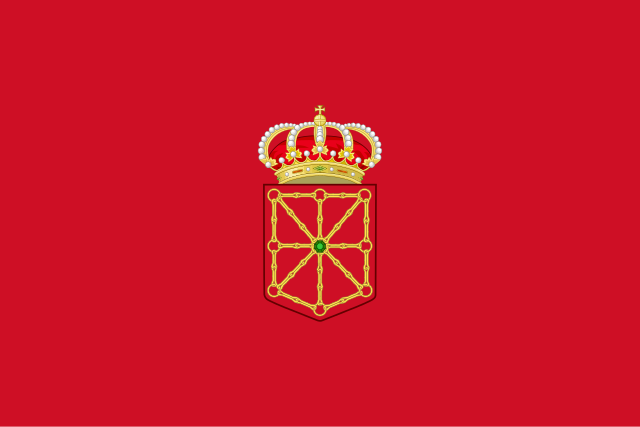
Flag of Comunidad Foral de Navarra — gules with the arms of Navarre, officialized by the Amejoramiento del Fuero in 1982
The chains are a gold pattern radiating from a central emerald, forming a cross, saltire, and orle. According to legend, they recall the Battle of Las Navas de Tolosa (1212), where Sancho VII of Navarre broke through chains protecting the Almohad caliph's tent. The arms are documented from the 13th century.
It is a Spanish autonomous community succeeding the ancient Kingdom of Navarre. Its special foral status — governed by the Amejoramiento del Fuero of 1982 — grants it greater autonomy than most regions, including control over its own taxation system.
The Kingdom of Navarre was conquered by Fernando II de Aragón in 1512 and incorporated into the Crown of Castile. However, it retained its own laws and institutions (fueros) until the 19th century.
The Battle of Las Navas de Tolosa (1212) was a decisive battle of the Reconquista in which the allied Christian kingdoms of Castile, Aragón, Navarre, and Portugal defeated the Almohad Caliphate. Sancho VII of Navarre's role became the origin legend of Navarre's heraldic chains.
The emerald at the center of the chains is a green precious stone. In the legend of Las Navas de Tolosa, it was captured from the caliph's tent by Sancho VII of Navarre. In heraldic terms it is rendered as a green roundel at the center of the chain design.
Last reviewed by the Emblema Mundi editorial team on June 29, 2026.