Continent
South American heraldry is the material record of one continental political event: the wave of Iberian independence between 1810 and 1825. In the space of fifteen years, ten of the twelve modern national flags were designed — and they were designed, as often as not, by the same small circle of men, corresponding across the Andes, borrowing one another’s vocabulary, watching one another’s battles. Reading a South American flag today is reading a fragment of that conversation. This page follows the conversation through: the precursor, the two great families it spawned, the imperial anomaly to the east, and the two late arrivals to the north.
Click on a country to learn more
The first modern South American national flag was not designed on South American soil. In February 1806, the Venezuelan revolutionary Francisco de Miranda, whose personal library ran to volumes of Rousseau, Montesquieu, and the debates of the French Convention, put in at Jacmel on the southern coast of the newly independent Haitian Republic. He was preparing an armed landing in Venezuela, and he needed a flag.
What he ran up on his ship, the Leander, on 12 March 1806, was a horizontal tricolour of yellow, blue and red. Miranda later explained the choice in his journal: yellow for the wealth of the American continent, blue for the ocean separating that continent from tyrannical Europe, red for the courage and blood of those who would fight to keep the two apart. The composition was deliberately alien to Spanish colonial vocabulary — no lions, no castles, no Castilian crosses.
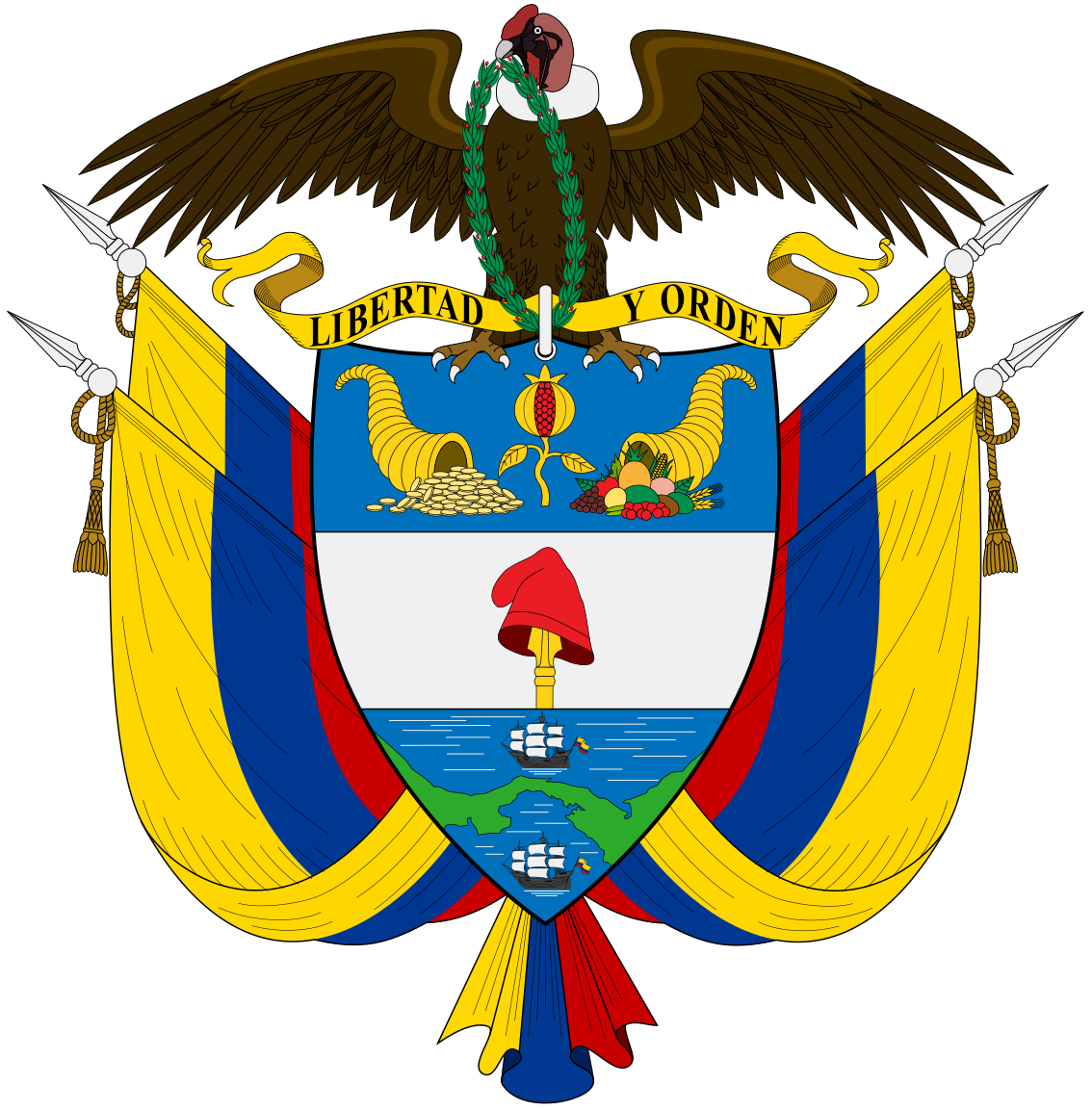
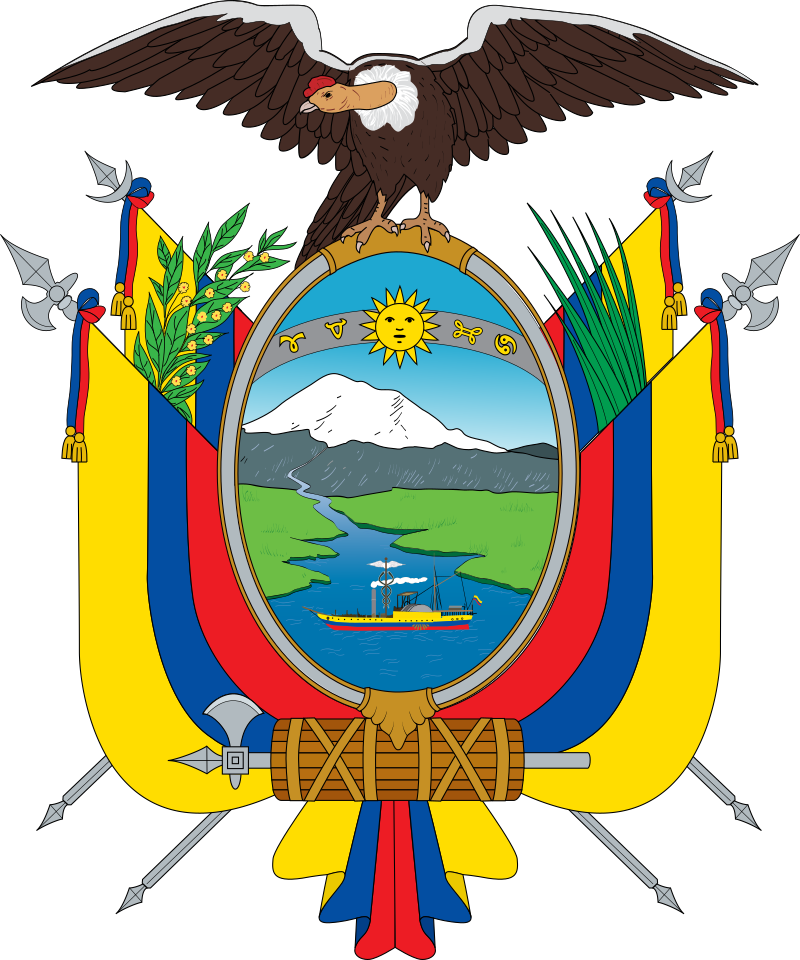
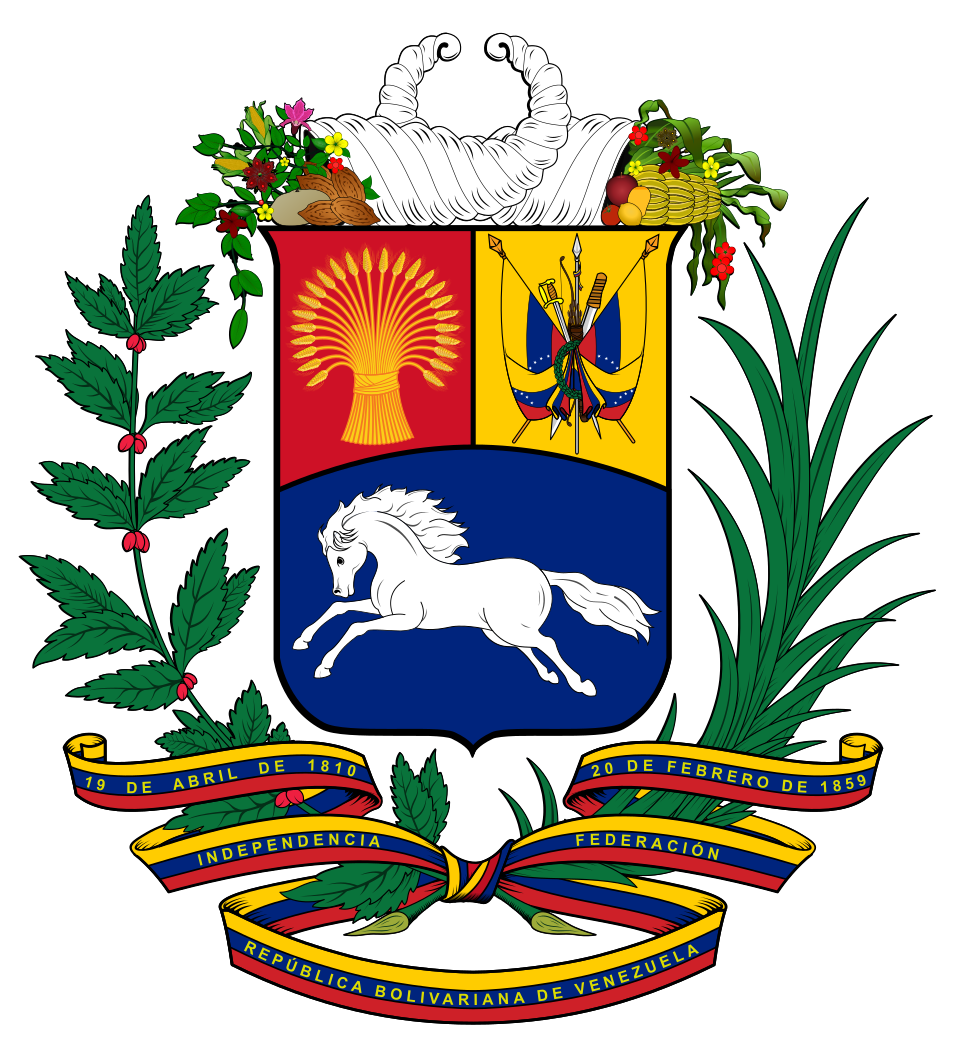
Miranda’s expedition failed. He was captured in 1812 and died four years later in a Spanish dungeon. But his tricolour survived, carried into the Andean campaigns of the 1820s by the young disciple who had met him in London in 1810: Simón Bolívar. From those campaigns emerged three modern national flags — those of Colombia, Ecuador and Venezuela — each descended, in unbroken heraldic line, from the flag hoisted at Jacmel.
The second family opens six years later, on the banks of the Paraná. On 27 February 1812, General Manuel Belgrano raised for the first time a blue-and-white cockade before his troops at Rosario. He was fighting for the United Provinces of the Río de la Plata, still nominally on behalf of the captive King Ferdinand VII — but his choice of colours was not the choice of a Bourbon loyalist. Blue and white were the tinctures of the Ribbon of the Order of Charles III, established by that Bourbon monarch in 1771. Belgrano’s act was one of visual re-appropriation: taking the dynastic tinctures of the reigning house and enlisting them for the independent political community emerging in its place.
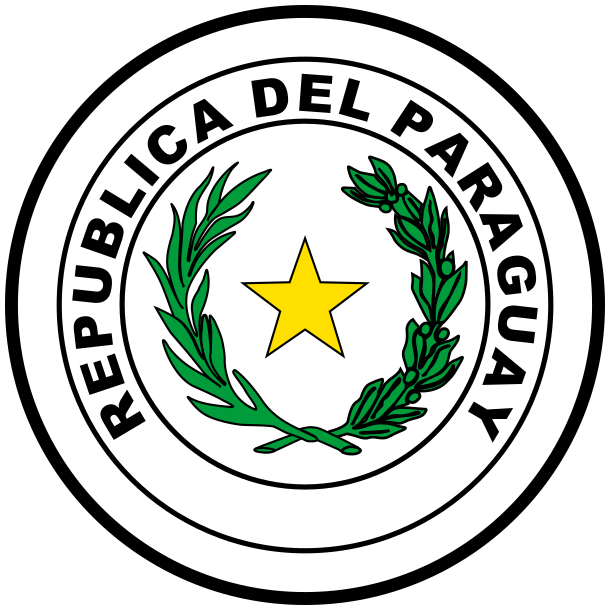
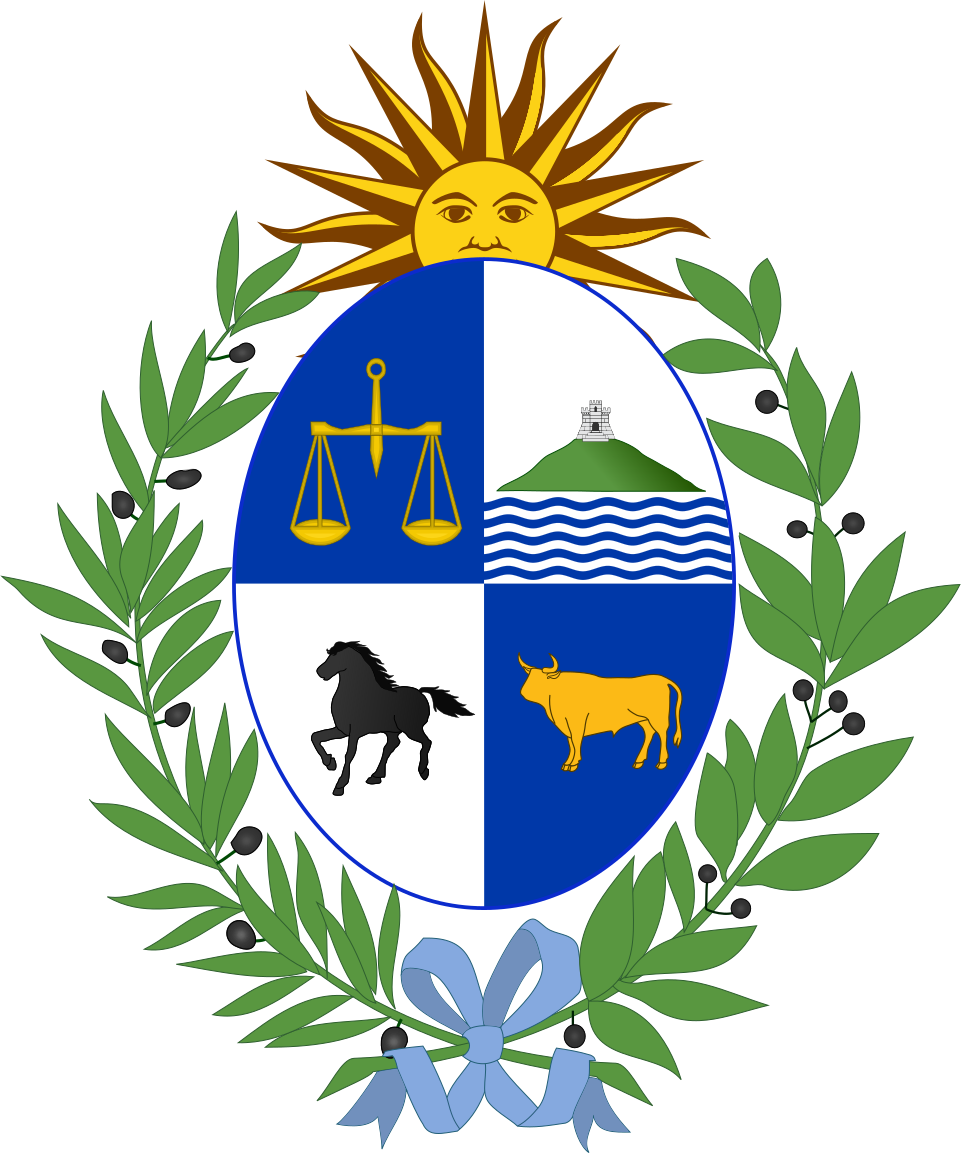
The cockade became a flag; the flag crossed borders. Within twenty years the same blue-and-white had spread through the Southern Cone. Argentina’s flag — sky-blue, white, sky-blue — is Belgrano’s cockade unrolled. Uruguay’s nine blue-and-white stripes, adopted in 1830 after the Cisplatine War, draw the same colours through the same historical channel. Paraguay’s red-white-blue horizontals — famously the only national flag in the world with different obverse and reverse designs — are a distinct branch of the family, but they too descend from the Río de la Plata revolutionary vocabulary.
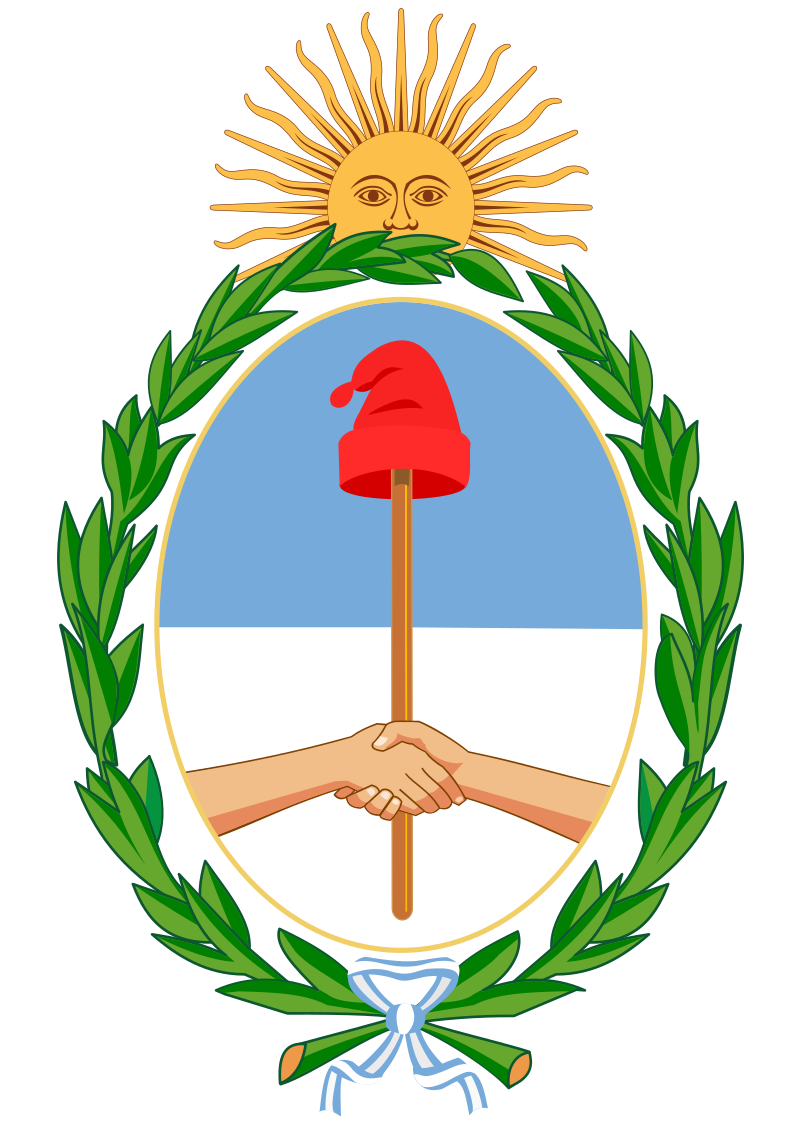
The Sun of May (Sol de Mayo) — the golden sun with a human face and sixteen alternating straight and wavy rays that anchors the arms and flags of half a dozen South American states — is the continent’s most direct case of pre-Columbian iconography moving into republican heraldry. Its immediate source is the silver eight-reales coin struck in Potosí in July 1813 by the emerging revolutionary authorities. Its deeper source is Inti, the solar deity of the Inca Empire, whose golden disc — the Inti Punchao — hung at the centre of the Coricancha temple in Cusco.
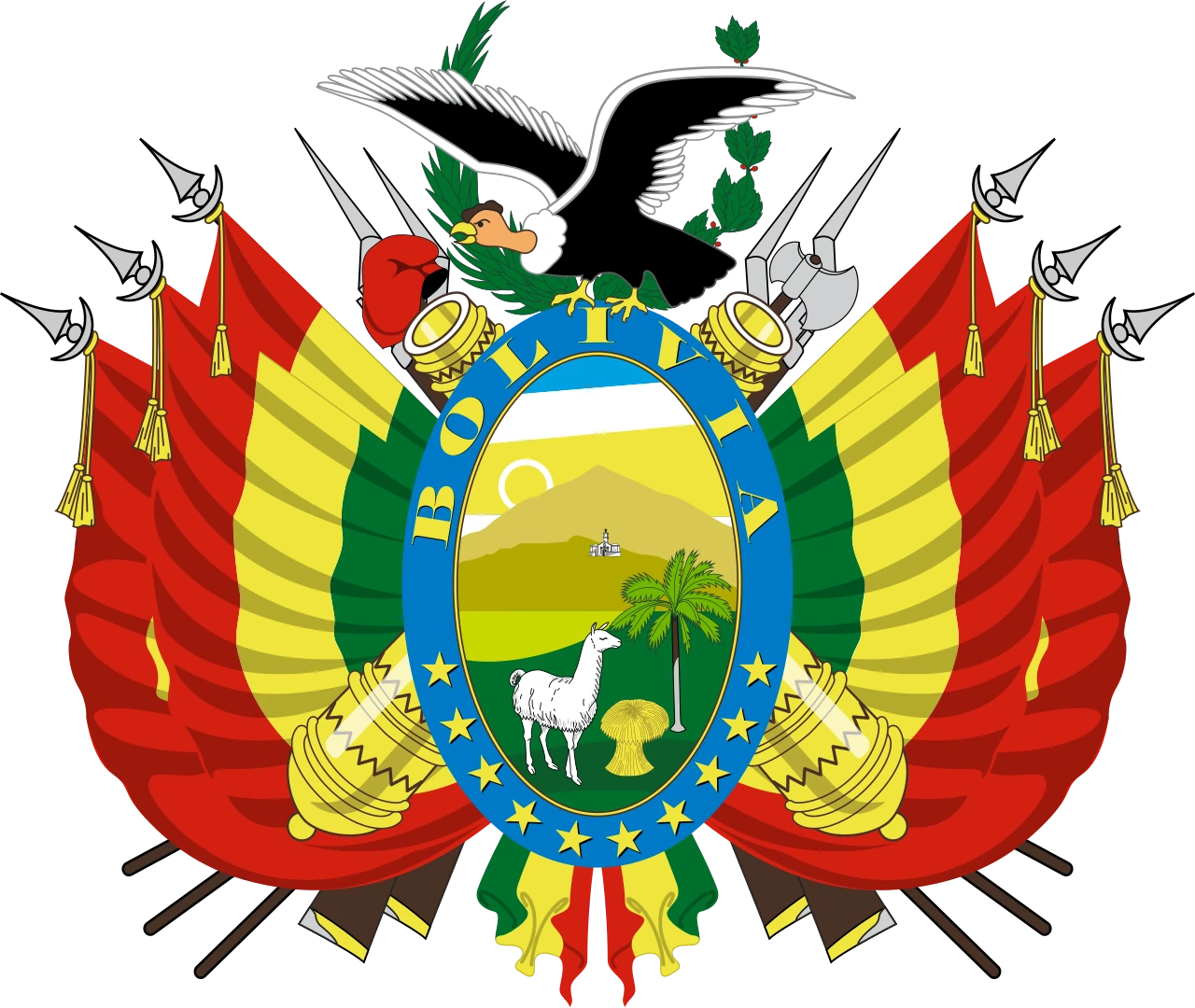
The sun took its political name from the May Revolution of Buenos Aires (18–25 May 1810), the first stage of Spanish collapse in the Río de la Plata. The Junta chose it as its seal. When the National Congress of Tucumán added it to the Argentine flag on 25 February 1818, it made explicit what the Belgrano cockade had already implied: this was a state grounded in pre-Iberian time, not in the vocabulary of the Bourbons. Within a decade the sun reappeared on the flag of Uruguay (1830), on the coat of arms of Peru (1825), and on the arms of Bolivia (1826). It is now the most-used single charge in South American heraldry.
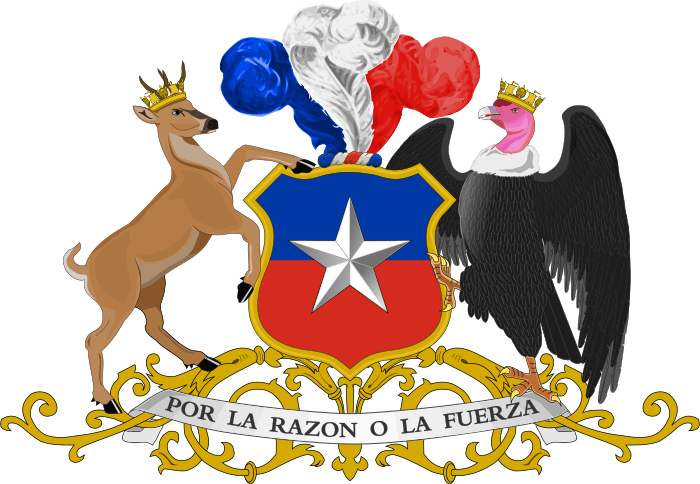
Two Andean republics escaped both families. Chile’s single white star on a blue canton, above a horizontal white and red, was hoisted at Santiago on 18 October 1817 to mark the first anniversary of the Battle of Chacabuco. The design is attributed to Bernardo O’Higgins and his minister José Ignacio Zenteno. It predates the sunburst tradition altogether, and its striking resemblance to the flag of Texas (adopted twenty-two years later) has produced a small comparative literature but no documented direct link.
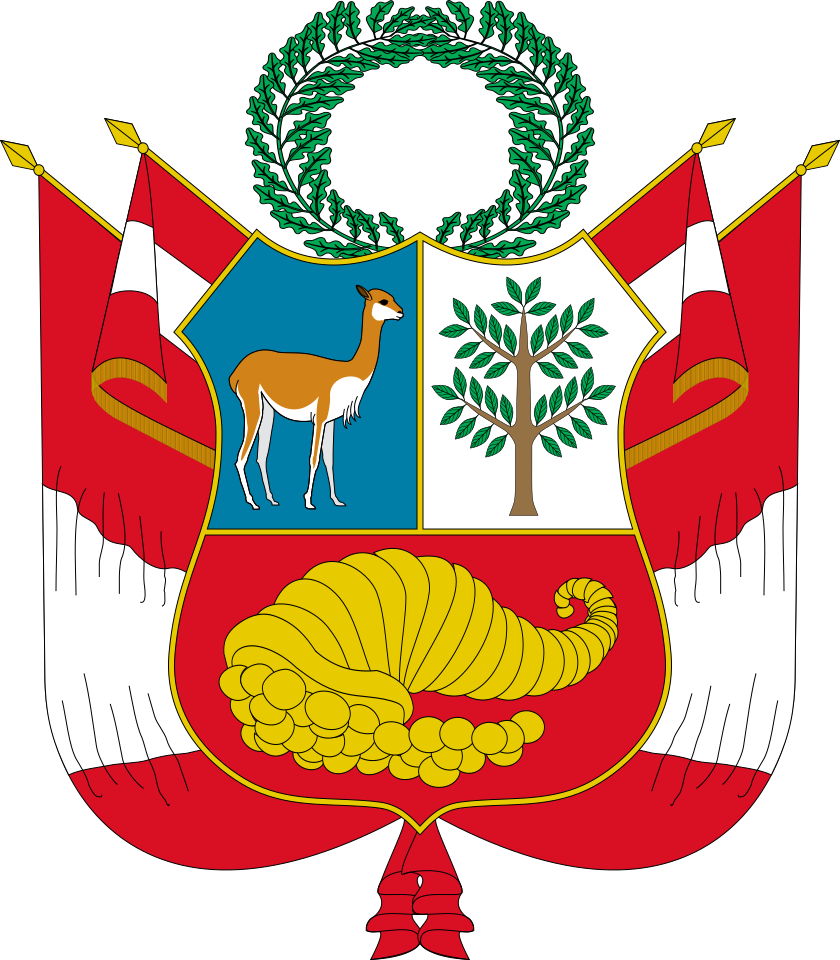
Peru’s red-white-red vertical was fixed by decree of José de San Martín on 21 October 1820, at Paracas. Peruvian schoolbook tradition tells a charming story: San Martín saw a flock of parihuanas (Andean flamingos) rise over the shore, and the red-and-white pattern of their plumage suggested his flag. The archival record is more prosaic: the decree adapts the Argentine expeditionary flag with Peruvian tinctures substituted. The flamingos are a good story but not the source.
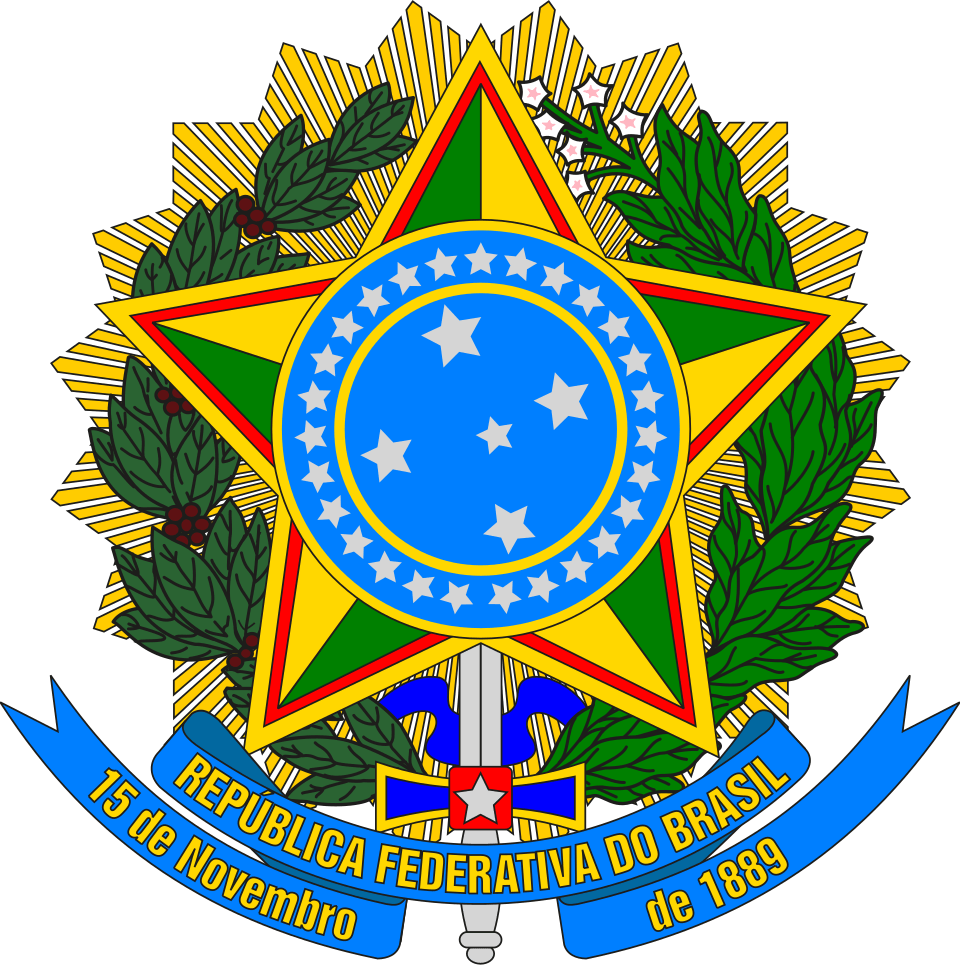
The largest state on the continent is also the great exception to everything above. When D. Pedro I proclaimed independence from Portugal on 7 September 1822 at the Ípirianga stream near São Paulo, he did so not as the leader of a revolutionary junta but as the son of the Portuguese king, and he founded the new state as an empire. The heraldry followed suit. The arms and flag of the Empire of Brazil, drawn up by the French painter Jean-Baptiste Debret and the Austrian Johann Moritz Rugendas, drew on the Portuguese dynastic vocabulary: the armillary sphere of D. Manuel I’s oceanic monarchy, the five quinas shield of the House of Bragança, a field of vert and or combining the Bragança tinctures with the Habsburg-Lorraine colours of Empress Maria Leopoldina.
When the Empire fell on 15 November 1889 and the Republic was proclaimed, the composition was thoroughly redesigned by Raimundo Teixeira Mendes. But the redesign kept the vert-and-or, the armillary sphere, and added the Southern Cross constellation over a starred sky. It did not import the Sun of May, the Phrygian cap, the condor, or the cornucopia. Brazilian heraldry is thus twice unusual: dynastically Portuguese in tinctures, distinctively Positivist in the motto Ordem e Progresso that Teixeira Mendes wrote across the sky, and closed to the vocabulary shared by every one of its Spanish-speaking neighbours.
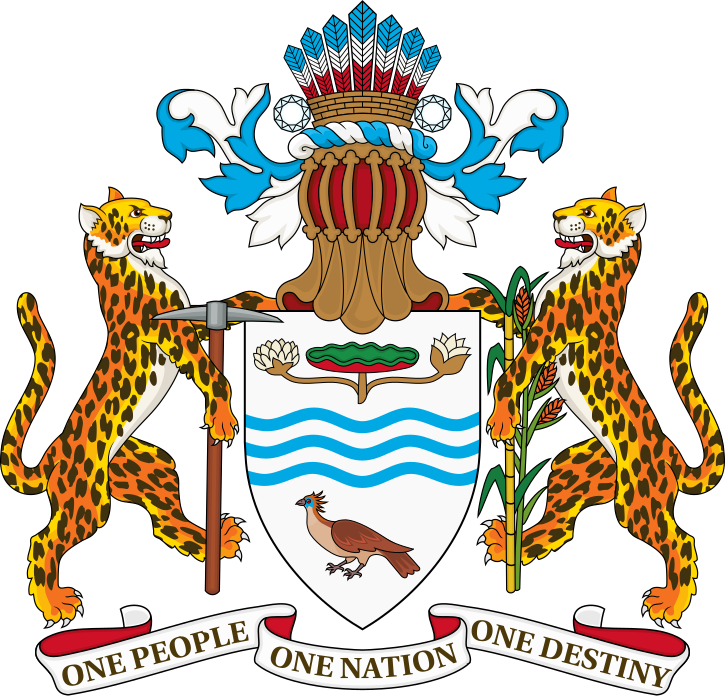
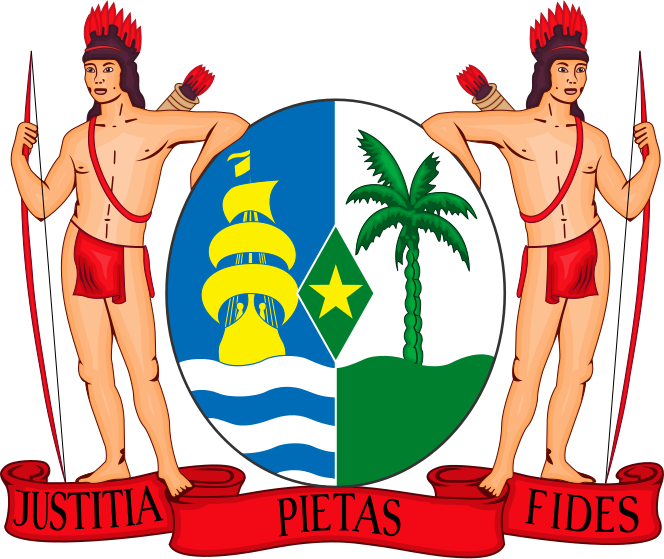
The eleventh and twelfth South American states arrived on independence a century and a half after the 1810–1825 wave. Guyana became independent from the United Kingdom on 26 May 1966; Suriname from the Netherlands on 25 November 1975. Their heraldry belongs to the post-war decolonisation vocabulary, not to the Iberian tradition.
Guyana’s “Golden Arrowhead” — designed by the American vexillologist Whitney Smith — carries five colours (green, yellow, red, white, black) unique on the continent. Suriname’s horizontal green-white-red-white-green with a golden five-pointed star at the centre borrows nothing from the Sun of May and everything from the visual conventions of the newly-independent states of Africa and the Caribbean. Both flags remind us that South America is a geographical continent, not a heraldic one: two of its twelve nations sit entirely outside the shared vocabulary of the other ten.
Because eleven of them were designed within a single fifteen-year window — 1810 to 1825 — by a small overlapping circle of revolutionaries (Miranda, Belgrano, San Martín, Bolívar, O’Higgins) who consciously drew on a shared vocabulary: the Sun of Inti, the Phrygian cap, the Andean condor, the cornucopia and the laurel. The visual family is the material trace of a single continental political moment.
The oldest surviving South American national tricolour is the yellow-blue-red flag first hoisted by Francisco de Miranda aboard the Leander at Jacmel, Haiti, on 12 March 1806. All three modern Bolivarian national flags (Colombia, Ecuador, Venezuela) descend from it. Belgrano’s Argentine blue-and-white cockade, raised at Rosario six years later on 27 February 1812, opened a second family in the Southern Cone.
Because Brazil became independent as an empire under a Bragança prince, not through republican revolt against Spain. Its arms retain the Portuguese armillary sphere, the Bragança shield and the vert-and-or dynastic tinctures. Even after the Republic was proclaimed in 1889, the redesign kept the sphere and added the Southern Cross rather than importing the Sun of May or the Phrygian cap.
They aren’t. Both became independent much later — Guyana from the UK in 1966, Suriname from the Netherlands in 1975 — and their flags belong to the post-war decolonisation vocabulary. Neither uses the Sun of May, the condor, the Phrygian cap or the cornucopia.
Last reviewed by the Emblema Mundi editorial team on 5 July 2026.