Country · South America
The Uruguayan flag can be counted on your fingers: its nine stripes are the nine departments that existed when the country was born, and the Sun of May in the canton recalls the revolution that opened the way to River Plate independence. The coat of arms sums Uruguay up in four images: a pair of scales, the Cerro de Montevideo, a loose horse and an ox.
Click on a country to learn more
| Country | Oriental Republic of Uruguay |
|---|---|
| First national flag | Law of December 1828 — nine sky-blue stripes |
| Present design | Law of July 1830 — four blue stripes, nine in all |
| Official model | Decree of 18 February 1952 |
| Ratio | 2:3 |
| Canton | Sun of May, 16 rays (eight straight, eight flaming) |
| Coat of arms | Laws of 19 March 1829 and 12 July 1906; decree of 26 October 1908 |
| Quarters | Scales, Cerro de Montevideo, horse, ox |
| Territorial division | 19 departments |
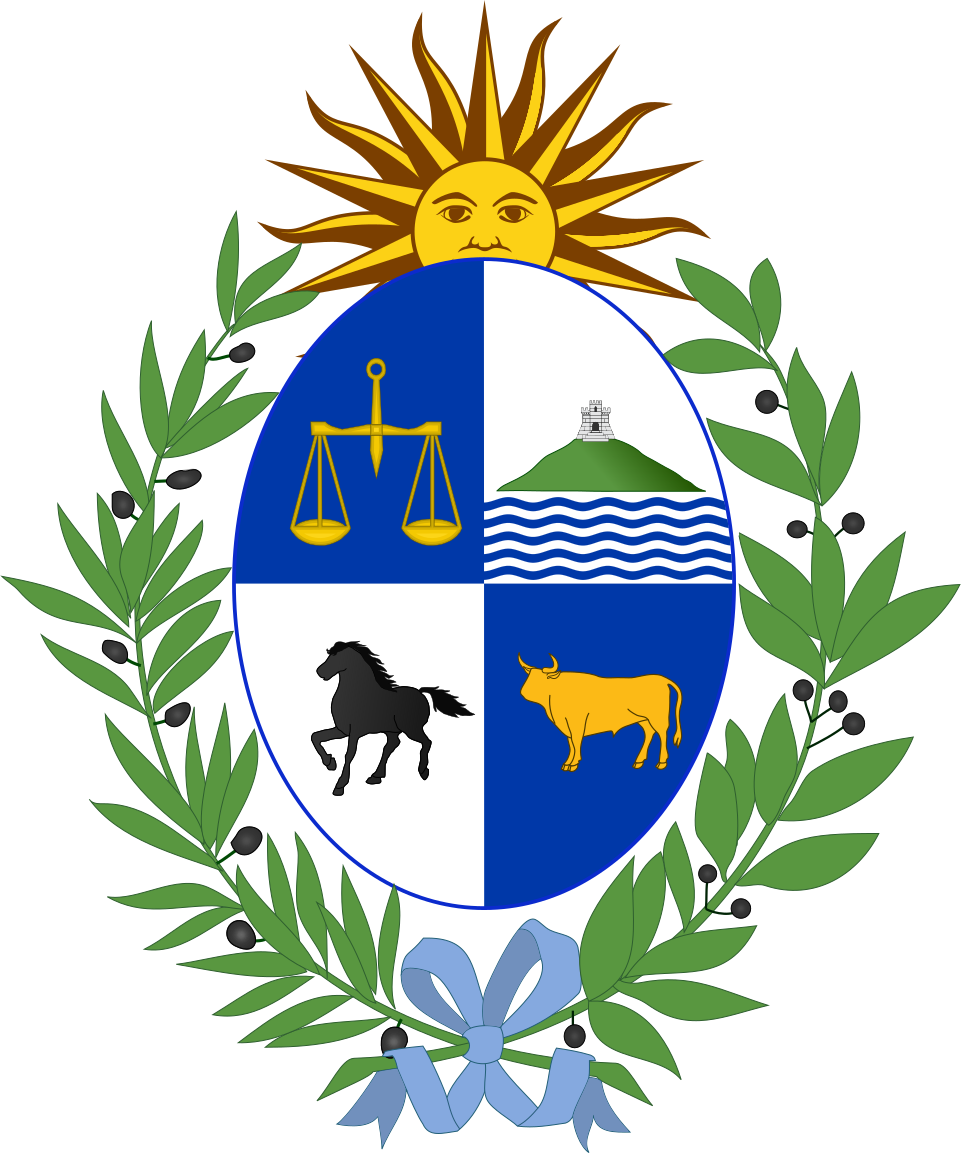
Coat of Arms — Scales (justice), Cerro de Montevideo (strength), horse (liberty) and ox (abundance); for a crest, the Sun of May.
An oval divided into four quarters, alternating azure and argent. In the upper dexter quarter, azure, a pair of scales, emblem of equality and justice. In the upper sinister, argent, the Cerro de Montevideo, emblem of strength. In the lower dexter, argent, a loose horse, emblem of liberty. In the lower sinister, azure, an ox, emblem of abundance. For a crest, the Sun of May, three quarters of it visible, with disc and face, of seven lance-head rays alternating with six flaming rays. Around the oval, a laurel branch to the left and an olive branch to the right, joined at the base by a sky-blue ribbon.
The Uruguayan coat of arms tells no battle: it lists four promises. The scales and the horse are ideas — justice, liberty; the Cerro and the ox are concrete things — the fortified hill that guards the bay of Montevideo, and the cattle that were for centuries the country’s entire wealth.
It was approved by the law of 19 March 1829 and revised by the law of 12 July 1906. The decree of 26 October 1908 adopted as the official model the one submitted by Miguel Copetti, which removed the military and naval trophies that had ornamented earlier versions and left the oval as it is used today.
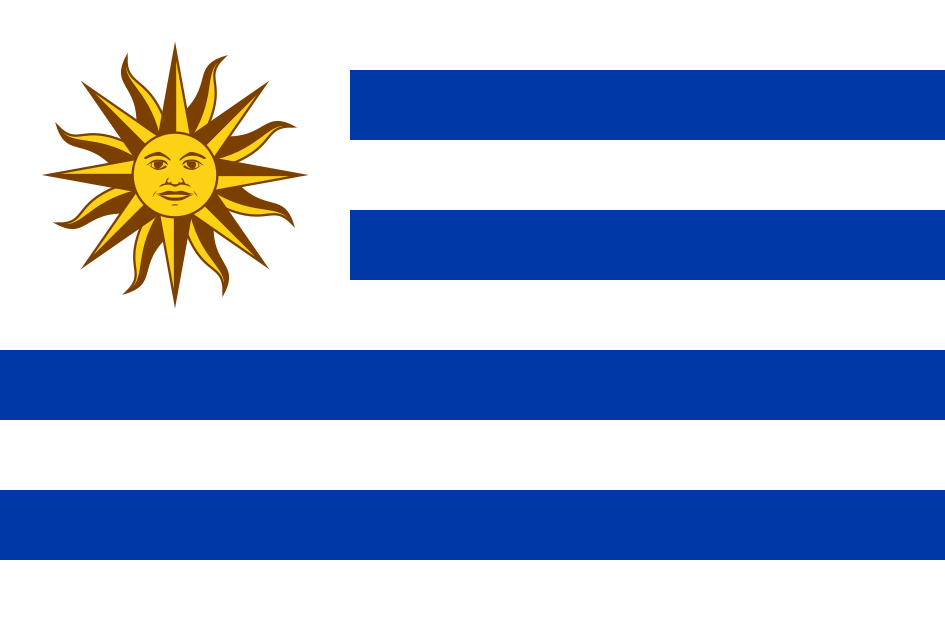
National Flag — Nine stripes for the nine founding departments; the Sun of May in the canton.
The National Flag is a white field crossed by four horizontal sky-blue stripes — nine stripes counting the white ones — with a white square in the upper corner by the staff holding the Sun of May. The ratio is 2:3.
The law of the first national flag, voted by the General Constituent and Legislative Assembly in December 1828, laid down that “the Flag of the State shall be white with nine horizontal and alternating stripes of sky-blue colour, leaving in the upper angle on the staff side a white square in which the sun shall be placed”. Those nine blue stripes stood for the nine departments of the time: Canelones, Cerro Largo, Colonia, Durazno, Maldonado, Montevideo, Paysandú, San José and Soriano. The initiative is credited to the provisional governor Joaquín Suárez.
Less than two years later, the law of July 1830 cut the blue stripes to four — the design read better at a distance — without touching the meaning: the nine stripes are still the nine founding departments, even though the country now has nineteen.
The sun in the canton is the same emblem the Argentine flag carries: it recalls the May Revolution of 1810, from which the whole River Plate independence movement grew. The decree of 18 February 1952, which fixed the official models of the national symbols, describes it as “a radiant circle, with a face and bordered by 16 rays”, eight straight and eight flaming, alternating. Worth noting: the sun on the coat of arms is not the same as the one on the flag — only three quarters of it are visible, and it has thirteen rays.
On the exact dates: decree 557/976 refers to “the laws of 16 December 1828 and 12 July 1930” — an obvious slip for 1830 — while other sources give 18 December 1828 and 11 July 1830. The discrepancy is a matter of days and does not affect what the laws say.
Uruguay recognises three flags as national symbols. The decree of 18 February 1952 set their official models and the precedence of the National Flag over the other two.
All three are used together: the flags of Artigas and of the Thirty-Three accompany the National Flag at official ceremonies, so that the country shows at once its flag of State and the two ensigns of its founding.
Uruguay is today divided into 19 departments, ten more than the nine the flag still counts. It is the smallest country in South America after Suriname, and nearly half its population lives in Montevideo and its surroundings.
Each department has its own coat of arms, and many take up the same motifs as the national arms — cattle, open country, the river — or bear arms in the Hispanic tradition inherited from colonial times. They can be explored on the interactive map on this page.
They stand for the nine departments into which the Eastern territory was divided at independence: Canelones, Cerro Largo, Colonia, Durazno, Maldonado, Montevideo, Paysandú, San José and Soriano. The first national flag carried nine sky-blue stripes on a white field; the 1830 reform cut them to four blue and five white — nine stripes in all — while keeping the same meaning.
It is the sun with a human face that fills the white canton next to the staff. The decree of 18 February 1952 defined it as “a radiant circle, with a face and bordered by 16 rays”, eight straight and eight flaming, alternating. It recalls the May Revolution of 1810 in Buenos Aires, from which the whole River Plate independence movement grew.
The oval is divided into four quarters alternating blue and silver: a pair of scales for equality and justice; the Cerro de Montevideo for strength; a loose horse for liberty; and an ox for abundance. The Sun of May sits above as the crest, and a laurel branch and an olive branch surround the oval, tied at the base with a sky-blue ribbon.
The National Flag, the Flag of Artigas and the Flag of the Thirty-Three Orientals. The last two were declared national symbols by the decree of 18 February 1952, which also established the precedence of the National Flag over the other two.
The first national flag was created by a law of the General Constituent and Legislative Assembly in December 1828, with nine blue stripes. The law of July 1830 gave it its present form by cutting them to four. The decree of 18 February 1952 fixed the official model in use today.
Last reviewed by the Emblema Mundi editorial team on 21 September 2026.