Country · South America
Colombia shares with Venezuela and Ecuador the tricolour of Miranda — yellow, blue and red — inherited from Bolívar’s Gran Colombia. But its coat of arms is unique on the continent: a golden pomegranate recalling the old name of New Granada, an isthmus between two seas proclaiming the country as the only one in South America washed by two oceans, and, above, the Andean condor with the motto Libertad y Orden.
Click on a country to learn more
| Country | Republic of Colombia |
|---|---|
| Adopted by Gran Colombia | 17 December 1819 |
| Current flag arrangement | Decree of 26 November 1861 |
| Coat of arms | Law of 9 May 1834; regulated by Decree 861 of 1924 |
| Motto | Libertad y Orden (“Liberty and Order”) |
| Colours | Yellow, blue, red |
| Territorial divisions | 32 departments and the Capital District of Bogotá |
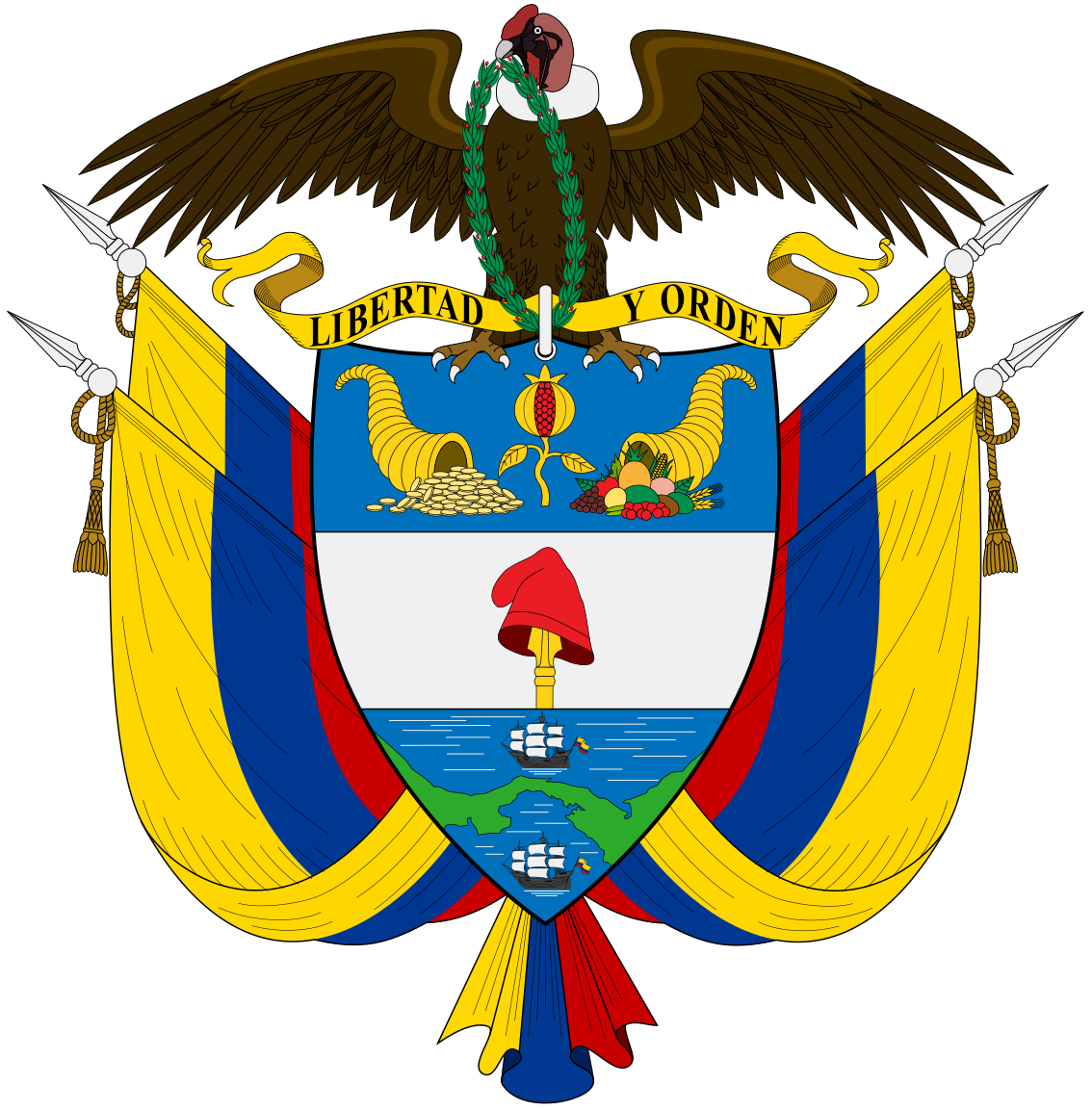
Coat of Arms — A golden pomegranate between cornucopias; a Phrygian cap on a pike; an isthmus between two seas with ships; crested by the condor with the motto Libertad y Orden.
Party per fess into three. In the upper band, on azure, a golden pomegranate open and seeded gules, flanked by two cornucopias: the dexter pours coins and the sinister tropical fruits. In the central band, on platinum, a Phrygian cap gules on a pike. In the lower band, the Isthmus of Panama with the two seas wavy argent and a ship under full sail in each. For crest, an Andean condor with outstretched wings, holding a laurel wreath from which hangs a ribbon with the motto Libertad y Orden. For supporters, four national flags.
Each element names a part of the country: the pomegranate recalls the old New Granada; the cornucopias, its mineral and agricultural wealth; the Phrygian cap, republican liberty and, by tradition, the platinum of its soil; the isthmus between two seas, the country's two ocean coasts. The arms were fixed by the law of 9 May 1834, under President Francisco de Paula Santander, and regulated in their final form by Decree 861 of 1924.
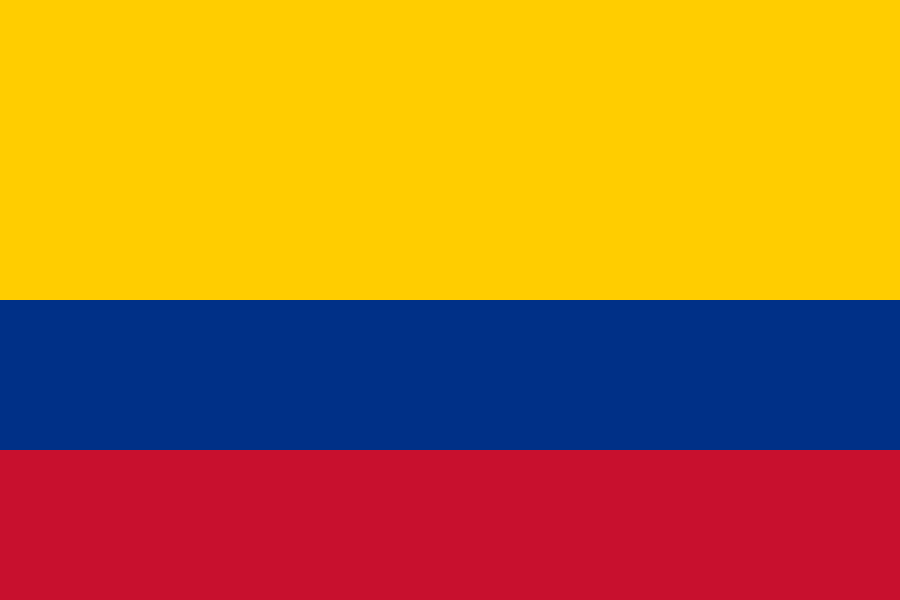
Flag — Yellow in the upper half, blue and red a quarter each.
The flag is a horizontal tricolour in which the yellow band takes the upper half, and the blue and red bands a quarter each. Its origin is the tricolour conceived by Francisco de Miranda and adopted by Gran Colombia on 17 December 1819. When that republic dissolved, the same colours continued in Colombia, Ecuador and Venezuela. The present arrangement was fixed by decree on 26 November 1861.
The modern official reading gives the colours thus: yellow for the wealth of the soil, the sun and sovereignty; blue for the sky, the rivers and the two oceans that wash the country; and red for the blood shed by the patriots in the struggle for independence. Law 28 of 1925 set 7 August — the anniversary of the Battle of Boyacá — as Flag Day.
Colombia belongs, together with Venezuela and Ecuador, to the Bolivarian family of flags: the three all descend from the tricolour of Miranda that Bolívar made the ensign of Gran Colombia. The flag is thus a material memory of that great state which, between 1819 and 1831, gathered the three countries under a single pavilion.
What is most distinctly Colombian lies in the arms rather than the flag: the pomegranate of its old name, the condor shared with the Andean republics, and above all the isthmus between two seas, an image no other coat of arms on the continent displays so plainly.
Colombia is a unitary republic divided into 32 departments and the Capital District of Bogotá. Each department has its own coat of arms and flag, and many cities also keep arms of Hispanic tradition.
The departments of Colombia can be explored one by one on the interactive map on this page.
It comes from the yellow, blue and red tricolour created by Francisco de Miranda, adopted by Gran Colombia on 17 December 1819. After Gran Colombia broke up, those colours continued in Colombia, Ecuador and Venezuela. The current arrangement, with yellow taking the upper half, was fixed by decree on 26 November 1861.
By the modern official reading, yellow stands for the wealth of the soil and sovereignty, blue for the sky, the rivers and the two oceans, and red for the blood shed by the patriots in the fight for liberty.
The golden pomegranate, open and seeded red, recalls the country's historic name, New Granada (Nueva Granada). It is flanked by two cornucopias: one pours coins (mineral wealth) and the other tropical fruits (agricultural wealth).
The lower band shows the Isthmus of Panama between two seas, each with a ship, to recall that Colombia is the only country in South America washed by two oceans, a symbol of trade. The isthmus has featured since Panama was part of Colombia, until 1903.
For crest, the Andean condor with outstretched wings holds a laurel wreath, from which hangs a ribbon with the national motto Libertad y Orden (Liberty and Order). The condor is the emblematic bird of the Andean republics, chosen in place of the imperial eagle of Europe.
Last reviewed by the Emblema Mundi editorial team on 21 September 2026.