Country · South America
Peru bears on its flag the simplest colours on the continent — red, white and red — but on its coat of arms a small compendium of the country: a vicuna for the animal kingdom, the cinchona tree for the vegetable, and a golden cornucopia for the mineral. The flag was born with San Martín in 1820; the arms, with Bolívar, in 1825.
Click on a country to learn more
| Country | Republic of Peru |
|---|---|
| Flag created | 21 October 1820, by José de San Martín |
| Coat of arms and current design | 25 February 1825, under Simón Bolívar |
| Modern standardisation | Decree-Law 11323, 31 March 1950 |
| Colours | Red and white |
| Coat of arms | Vicuña, cinchona tree and cornucopia (the three kingdoms) |
| Territorial divisions | 24 departments and the Constitutional Province of Callao |
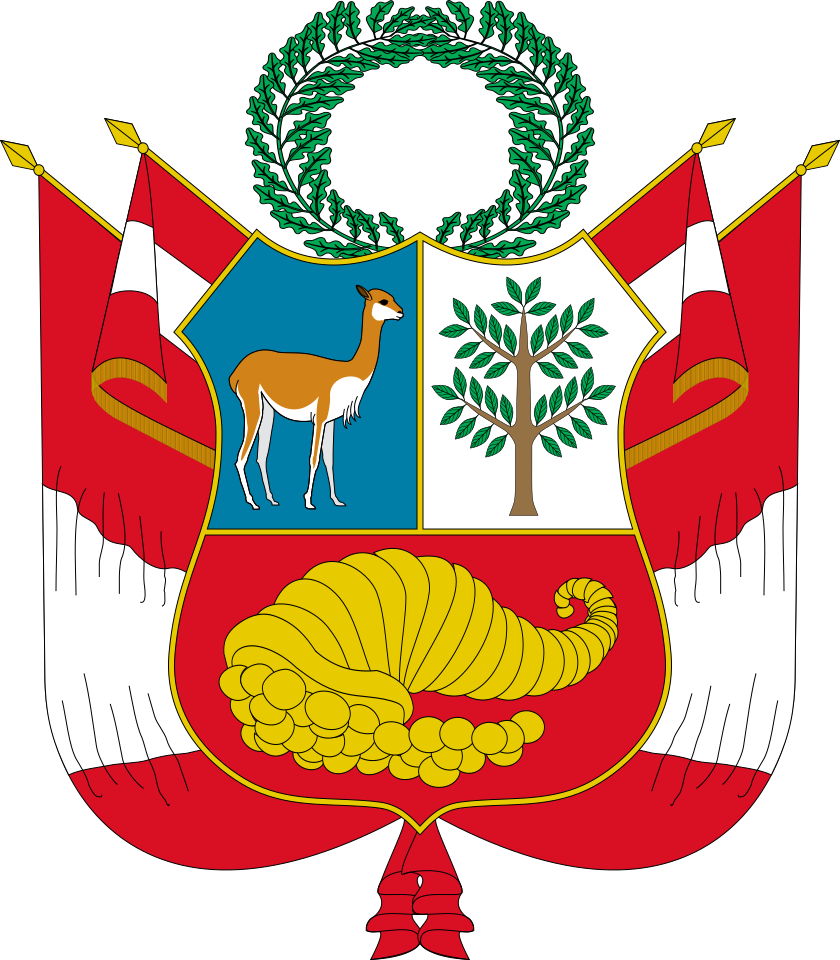
Coat of Arms — A vicuna (animal), the cinchona tree (vegetable) and a golden cornucopia (mineral); a civic crown of holm oak; flags and standards.
A shield of Polish shape divided into three fields. In the dexter chief, azure, a vicuna passant looking inward, for the animal kingdom. In the sinister chief, argent, the cinchona tree, for the vegetable kingdom. In the base, gules, a golden cornucopia spilling coins, for the mineral kingdom. For crest, a civic crown of holm oak seen from above; for supporters, four national flags and standards.
The arms are a small inventory of the country: the vicuna, a camelid of the Andes, for its wildlife; the cinchona tree — source of quinine, the cure for malaria — for its flora; and the cornucopia of coins for its metals, above all the silver that made Potosí and viceregal Peru famous. It was adopted by law on 25 February 1825 and its proportions were fixed by Decree-Law 11323 of 1950.
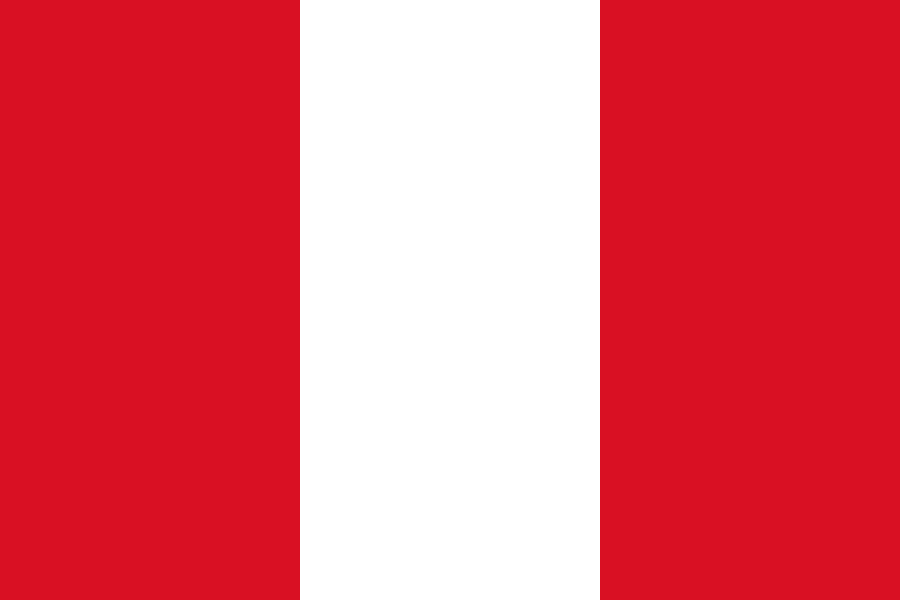
Flag — Three vertical bands, red, white and red.
The present flag is a simple vertical tricolour — red, white and red — at a ratio of 2:3. Its origin lies in the decree of José de San Martín of 21 October 1820, which created the first Peruvian flag: a complex design with a rising sun behind mountains within a laurel wreath. In 1825, the Constituent Congress under Simón Bolívar replaced that sun with the national coat of arms, and the simplified three-band version was finally fixed in 1950.
The law distinguishes three ensigns that share the same colours:
There is no certainty about the origin of the colours. The best-known theory, by the writer Abraham Valdelomar (1917), attributes them to the parihuanas, the Andean flamingos with red wings and a white breast that San Martín is said to have seen in the bay of Pisco.
Where its neighbours filled their arms with Suns of May, Phrygian caps and condors, Peru took a different path: a coat of arms that proclaims not so much the revolution as the nature of the country. Its three fields — animal, vegetable and mineral — form a small map of Peruvian wealth.
The choice was not neutral: the vicuna and the cinchona are emblematically Andean species, and the cornucopia of silver evokes the immense mineral wealth that had sustained the viceroyalty. The Peruvian arms are, in that sense, among the most “geographical” on the continent: they describe a territory rather than an ideology.
Peru is organised into 24 departments and the Constitutional Province of Callao, now turned into regions. Each has its own coat of arms, and many cities keep arms of Hispanic tradition, an inheritance of the Viceroyalty of Peru, the most important of Spanish America.
The regions of Peru can be explored one by one on the interactive map on this page.
The flag was created by General José de San Martín, by decree of 21 October 1820, during the Protectorate. The first version bore a sun rising behind mountains; the current design of three vertical red-white-red bands was fixed in 1825, when Bolívar replaced the sun with the national coat of arms.
The reasons for the choice are not officially known. The best-known theory, put forward by Abraham Valdelomar in 1917, attributes the colours to the parihuanas (Andean flamingos), with red wings and a white breast, which San Martín is said to have seen rise over the bay of Pisco.
The shield sums up the country's riches in the three kingdoms of nature: a vicuna for the animal kingdom, the cinchona tree for the vegetable, and a golden cornucopia spilling coins for the mineral.
It is the cinchona or quina tree, from which quinine, the remedy against malaria, is drawn. It stands for the vegetable kingdom and the botanical wealth of Peru, and even gave its name to a historic unit of currency.
The National Flag is the civil ensign, three red-white-red bands with no shield. The National Standard (Pabellón Nacional) bears the coat of arms at the centre with palm and laurel branches and is for state use only; the War Flag adds standards and is used by the armed forces.
Last reviewed by the Emblema Mundi editorial team on 21 September 2026.