Country of the United Kingdom · Celtic nation
Wales (Welsh: Cymru) carries two emblems from opposite ends of its history. Its flag, Y Ddraig Goch — the Red Dragon on green and white — descends from a beast that stood for the Britons a thousand years before it was made the official flag in 1959; it is often called the oldest national flag still flown. Its coat of arms, the four lions of Llywelyn ab Iorwerth, is the shield of the medieval princes of Gwynedd, revived in 2008 as the heart of the Royal Badge of Wales. Together they make Wales one of the six Celtic nations, cousin to Cornwall and Brittany.
Flag
Not available
Coat of Arms
Not available
| Country | Wales (Welsh: Cymru) |
|---|---|
| Status | Country of the United Kingdom; a Celtic nation |
| Flag | Y Ddraig Goch (“the Red Dragon”) — red dragon passant on white over green |
| Flag adopted | Officially recognised 1959 |
| Coat of arms | Quarterly Or and Gules, four lions passant guardant counterchanged |
| Arms of | Llywelyn ab Iorwerth (Llywelyn the Great) & the House of Aberffraw, Gwynedd, 13th c. |
| Royal Badge | Granted 2008 (Peter Gwynne-Jones, Garter King of Arms); motto Pleidiol wyf i’m gwlad |
| Patron saint | Dewi Sant (Saint David); St David’s Day, 1 March |
| Other emblems | The leek (cenhinen) and the daffodil (cenhinen Bedr) |
| Celtic nation | One of six, with Cornwall, Brittany, Scotland, Ireland and the Isle of Man |
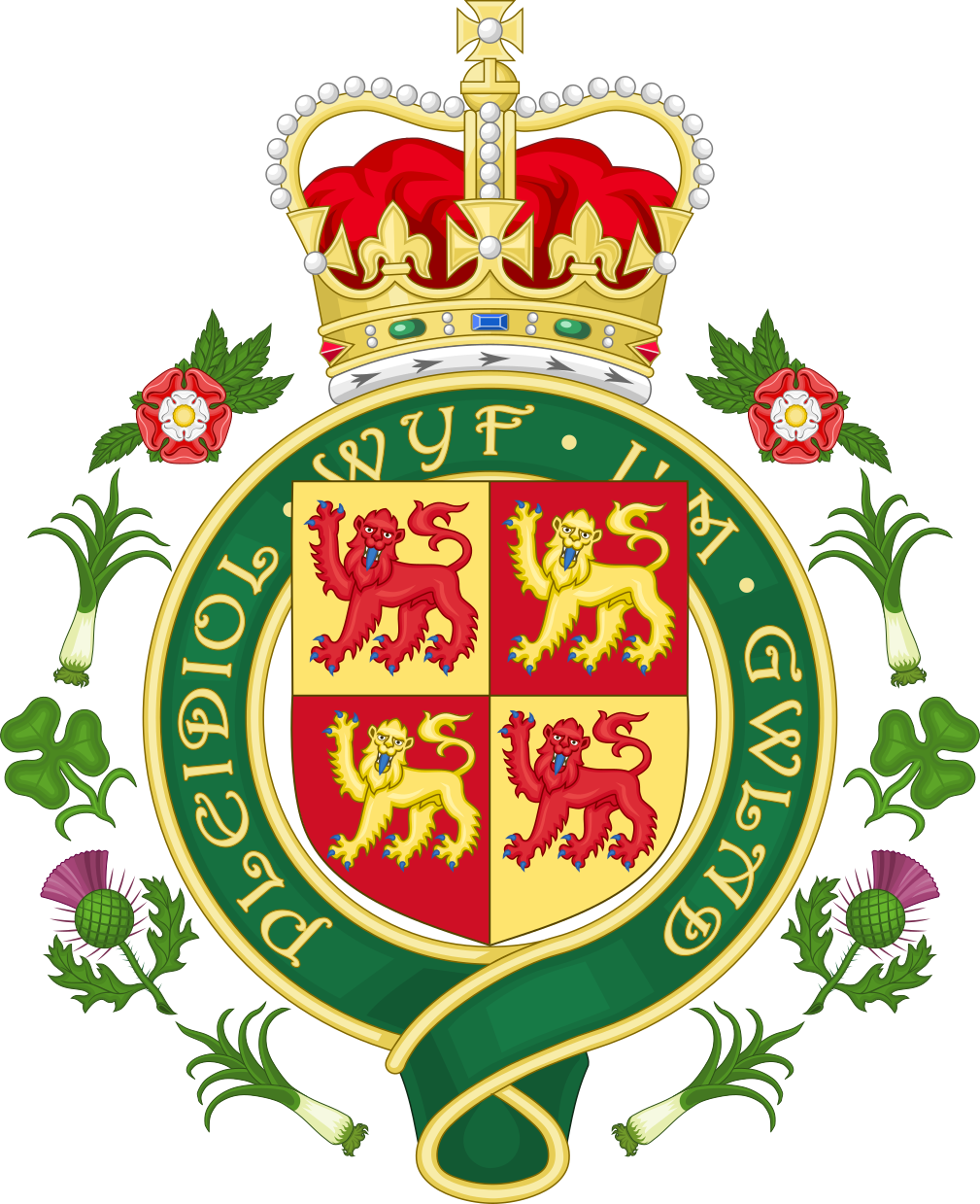
Coat of Arms of Wales — Quarterly Or and Gules, four lions passant guardant counterchanged. The arms of Llywelyn ab Iorwerth, now the shield of the Royal Badge of Wales.
Quarterly Or and Gules, four lions passant guardant counterchanged, armed and langued Azure.
The shield is divided into four quarters, gold and red set diagonally against each other. On each quarter walks a lion, and the lions take the opposite colour to their field — red lions on the gold quarters, gold lions on the red — the heraldic device called counterchanging. The result is one of the most elegant and instantly Welsh designs in medieval heraldry.
| Colour | Heraldic name | Element | Traditional symbolism |
|---|---|---|---|
| Gold | Or | Two quarters; two lions | Generosity, sovereignty of the princes of Gwynedd |
| Red | Gules | Two quarters; two lions | Martial courage; the red long associated with Wales |
| Blue | Azure | Claws and tongues (armed and langued) | Detailing of the lions’ teeth and claws |
These are the arms of Llywelyn ab Iorwerth — Llywelyn Fawr, “Llywelyn the Great” (c. 1173–1240) — and of the House of Aberffraw, the senior line of the princes of Gwynedd who came nearest to uniting native Wales into a single principality. They were borne after him by his grandson Llywelyn ap Gruffudd (Llywelyn Ein Llyw Olaf, “our last leader”), the last sovereign prince of Wales, killed in 1282 as Edward I of England completed his conquest.
A century later the four lions rose again in revolt. Owain Glyndŵr, proclaimed Prince of Wales in 1400, took up the same quartered shield — but with his lions rampant (rearing on their hind legs) rather than passant, marking his claim as a reigning prince. His arms remain a potent symbol of Welsh independence.
The medieval shield had no official standing in modern Wales until, in May 2008, it was placed at the centre of a new Royal Badge of Wales, designed by Peter Gwynne-Jones, Garter King of Arms. The four-lions shield is crowned and ringed by a scroll and a wreath bearing the plant emblems of the four UK nations — leek, thistle, clover and rose — with the motto Pleidiol wyf i’m gwlad (“I am true to my country”), a line from the Welsh anthem Hen Wlad Fy Nhadau. It now appears on Welsh legislation in place of the older royal arms.
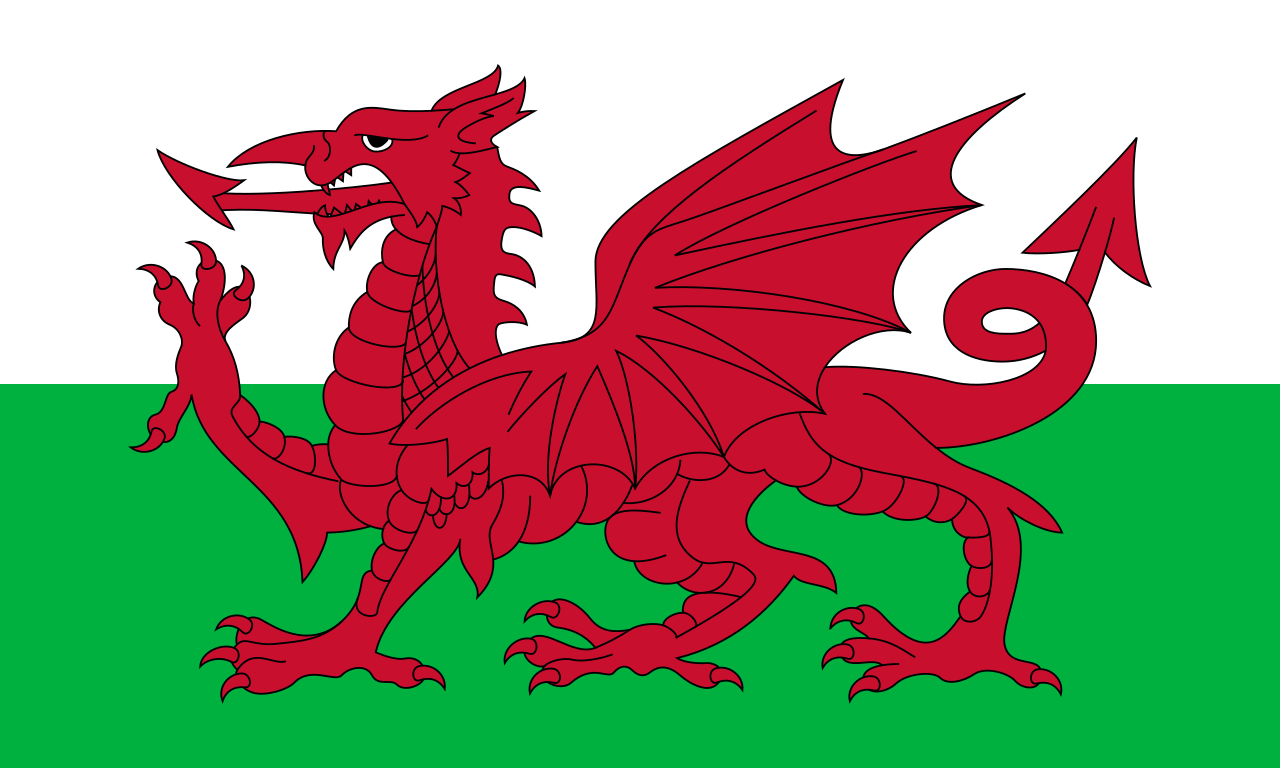
Y Ddraig Goch — a red dragon passant on white over green, the Tudor livery colours. Official flag of Wales since 1959.
The flag shows a red dragon (y ddraig goch), striding with one forefoot raised (passant), on a field split horizontally: white above, green below. Uniquely among national flags, its central charge is a living, snarling beast rather than a geometric device — and no two manufacturers draw the dragon exactly alike, since the law fixes the colours but not the precise form of the creature.
The dragon is far older than the flag. In the Historia Brittonum (9th century), the British king Vortigern cannot build his fortress at Dinas Emrys until two dragons are freed from beneath it: a red dragon and a white, which fight until the red at last drives out the white. The boy prophet (later identified with Myrddin, Merlin) reads them as the Britons and the invading Saxons. The red dragon of Cadwaladr, King of Gwynedd in the 7th century, carried the emblem into Welsh royal tradition; Owain Glyndŵr flew it in his rising; and Harri Tudur (Henry VII), of Welsh descent, raised the Red Dragon at Bosworth in 1485 before enshrining it at St Paul’s.
The green-and-white field beneath the dragon is not ancient but Tudor: white and green were the livery colours of the House of Tudor, and it is under the Tudors that the dragon settled onto this ground. The pairing was retained when the flag was standardised.
For a time the official Welsh flag was a badged design — the dragon on a green mount within a scroll bearing the motto Y Ddraig Goch Ddyry Cychwyn (“The Red Dragon Leads the Way”), added in 1953. Campaigners judged it fussy, and in 1959 the plain red dragon on white and green was recognised as the national flag — the form flown today.
Wales is the one home nation with no representation on the Union Flag, which combines the crosses of England, Scotland and Ireland only: when the Union Flag took shape, Wales was legally treated as part of the Kingdom of England. The omission is regularly raised in debate, and the red dragon is the usual candidate for any future redesign.
Wales is one of the six Celtic nations, with Cornwall, Brittany, Scotland, Ireland and the Isle of Man. Its language, Welsh (Cymraeg), is a Brittonic tongue — the branch it shares with Cornish and Breton — and, unlike its cousins, it was never lost: around a fifth of the population speaks it, and it holds official status alongside English. Where Cornwall reads its identity into a saint’s cross and Scotland into a saltire, Wales reads its own into a dragon that has fought for the Britons since the age of legend.
Y Ddraig Goch, the Red Dragon, is an emblem of the Britons, from whom the Welsh descend. In the legend of Vortigern in the Historia Brittonum, a red dragon (the Britons) fights and finally overcomes a white dragon (the Saxons). It was borne by Cadwaladr of Gwynedd and later by the Tudors, and became the official flag of Wales in 1959.
Green and white are the livery colours of the House of Tudor. Henry VII, a Welshman, carried the red dragon on a green-and-white ground at Bosworth in 1485; when the flag was standardised, the Tudor colours were kept beneath the dragon.
The plain red dragon on green and white was formally recognised as the national flag of Wales in 1959, replacing a fussier badged version of 1953. Because the dragon itself is medieval, it is often called the oldest national flag still in use.
The historic arms are blazoned Quarterly Or and Gules, four lions passant guardant counterchanged — a shield quartered gold and red, with four lions of alternating colour. They were the arms of Llywelyn ab Iorwerth and the princes of Gwynedd; in 2008 the shield became the centre of the Royal Badge of Wales.
The Union Flag combines the crosses of St George (England), St Andrew (Scotland) and St Patrick (Ireland). Wales is absent because, when the flag was assembled, it was legally treated as part of the Kingdom of England and so had no separate cross.
Yes — Wales (Cymru) is one of the six Celtic nations, with Cornwall, Brittany, Scotland, Ireland and the Isle of Man. Welsh (Cymraeg) is a living Brittonic language, close to Cornish and Breton, spoken by around a fifth of the population.
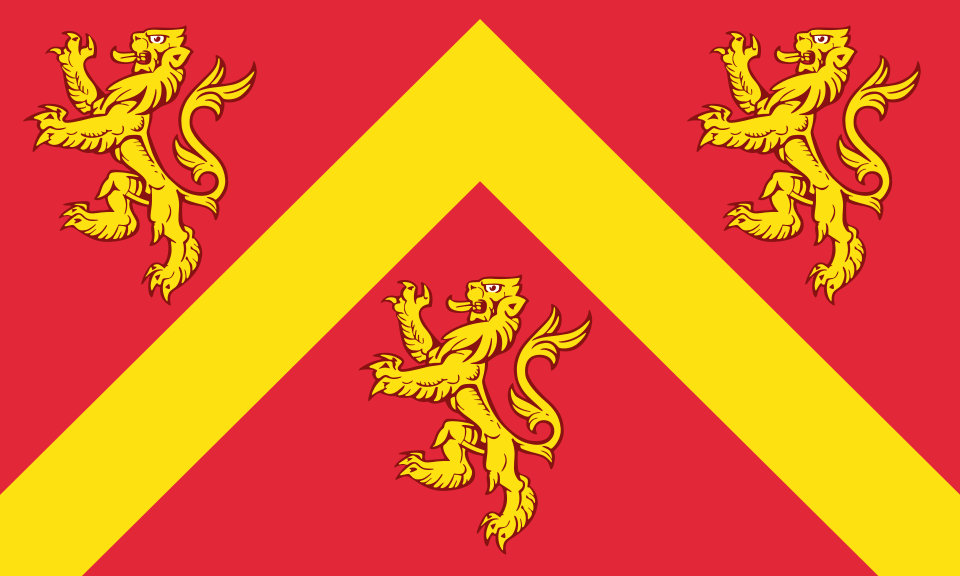
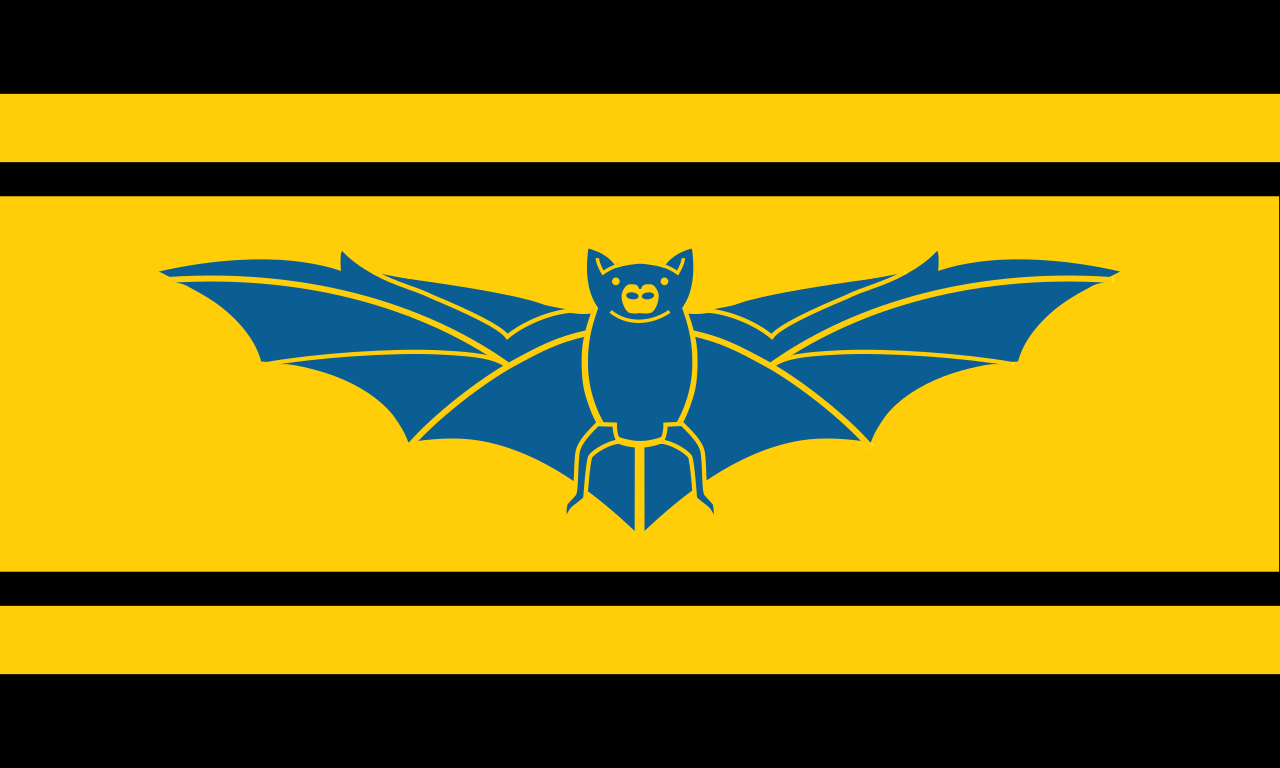
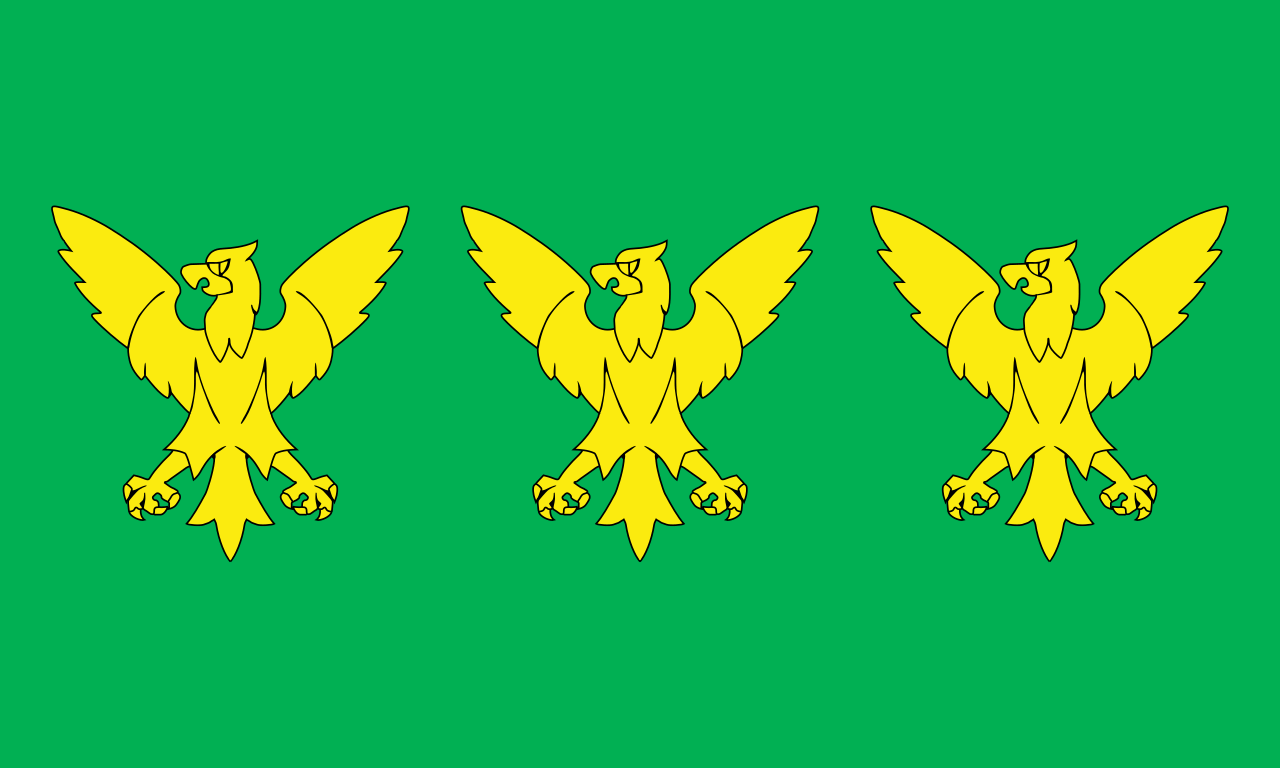
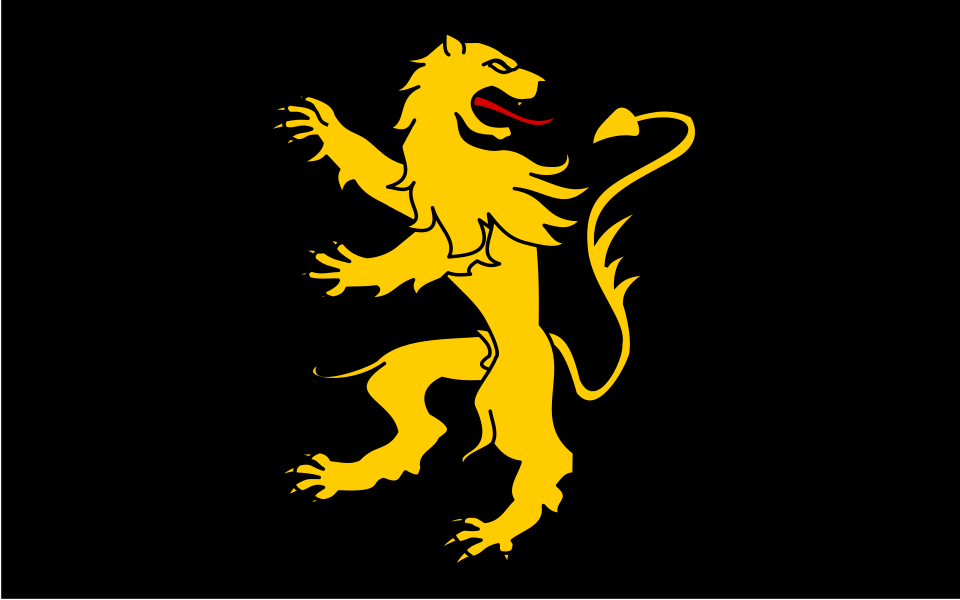
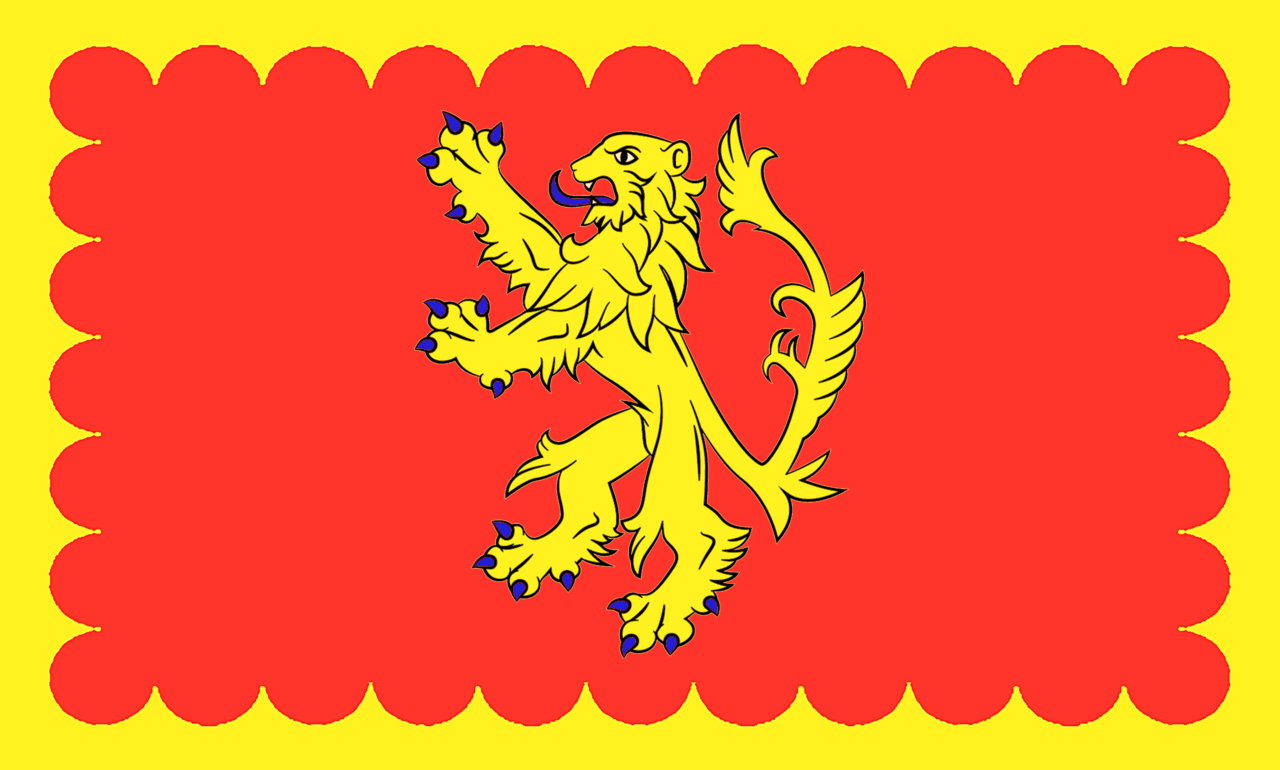
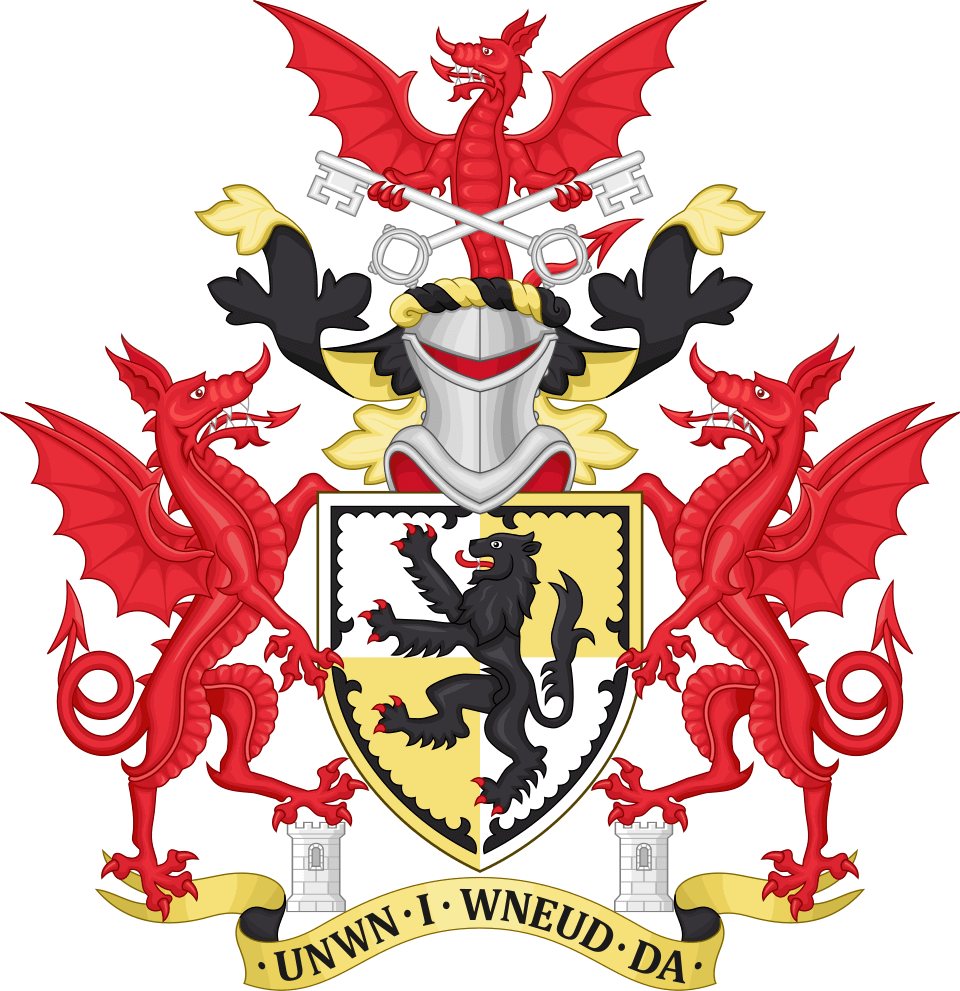
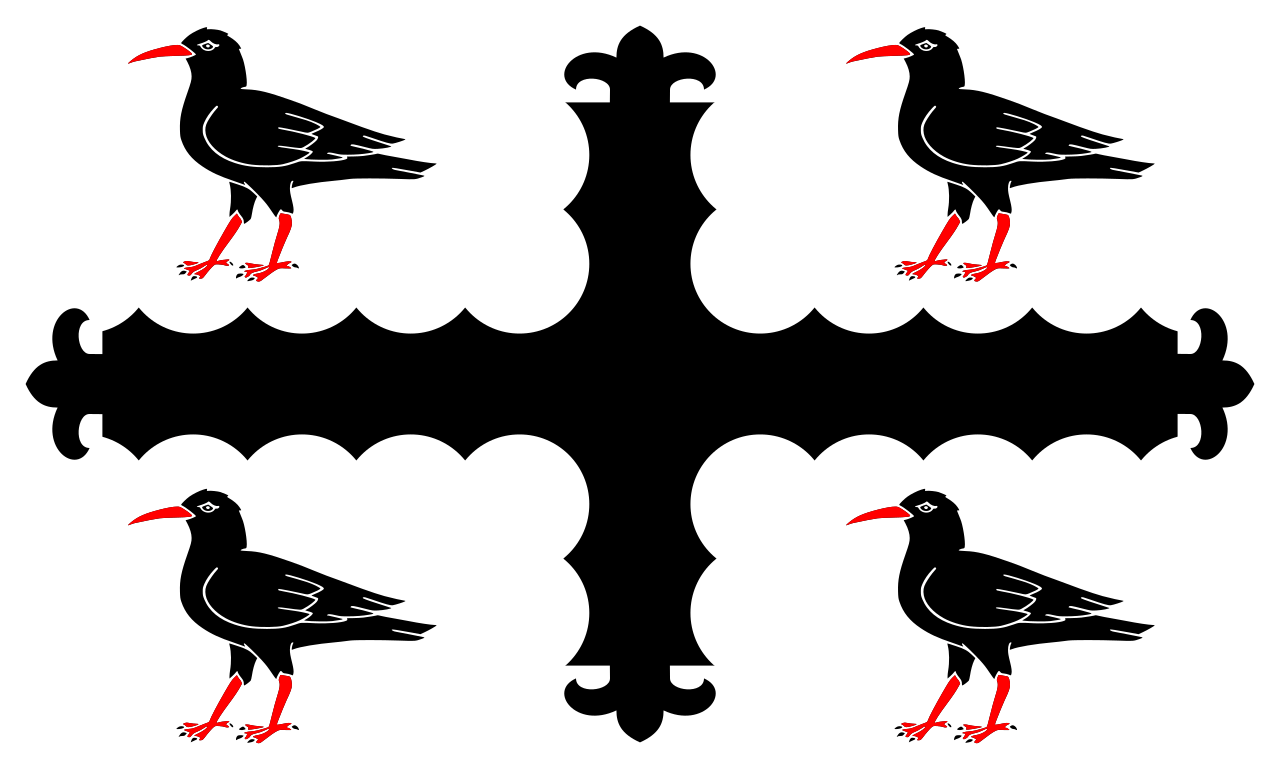
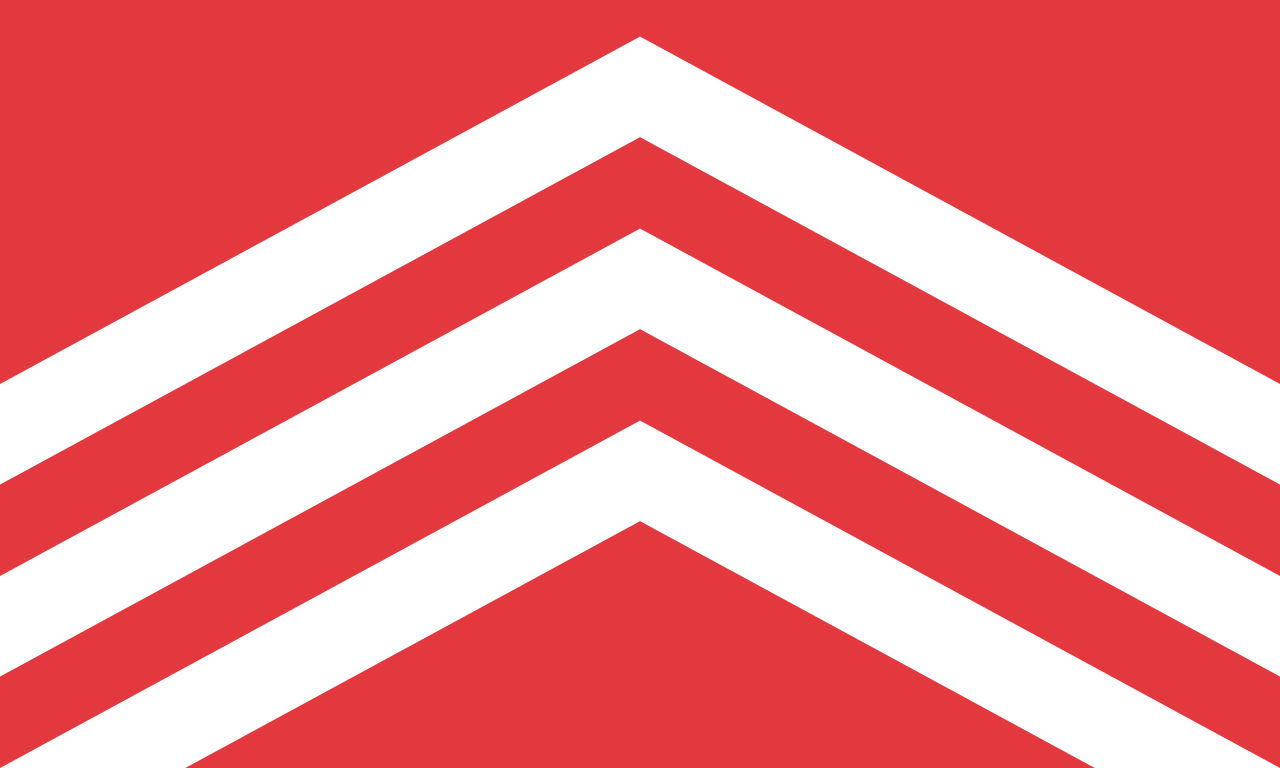
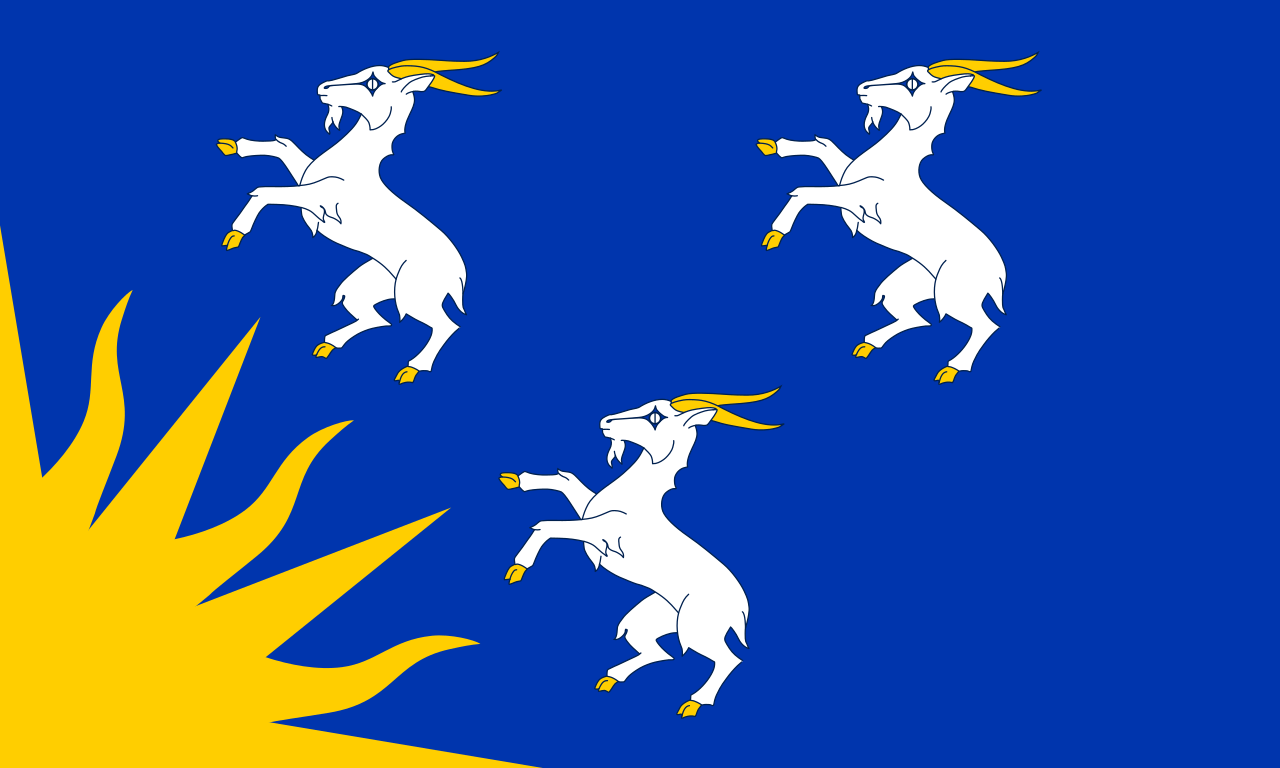
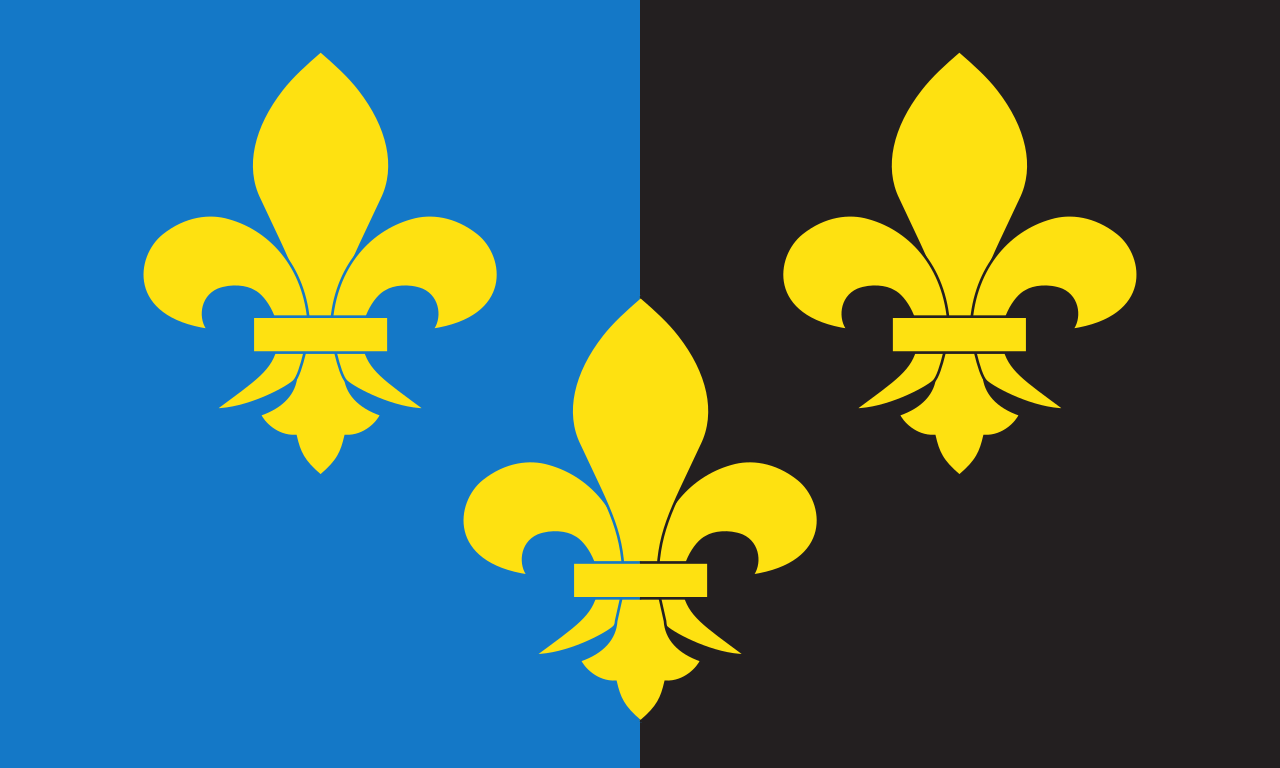
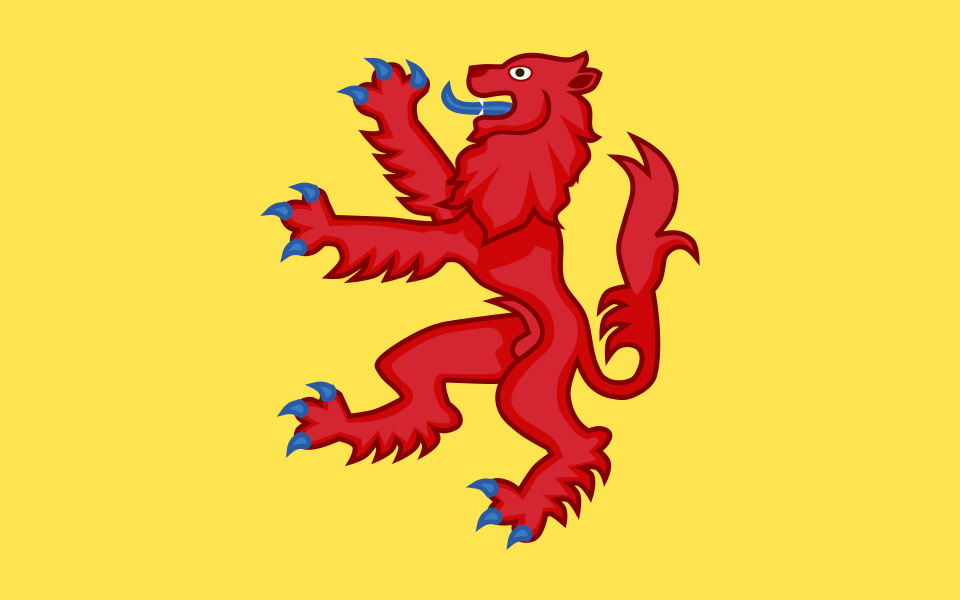
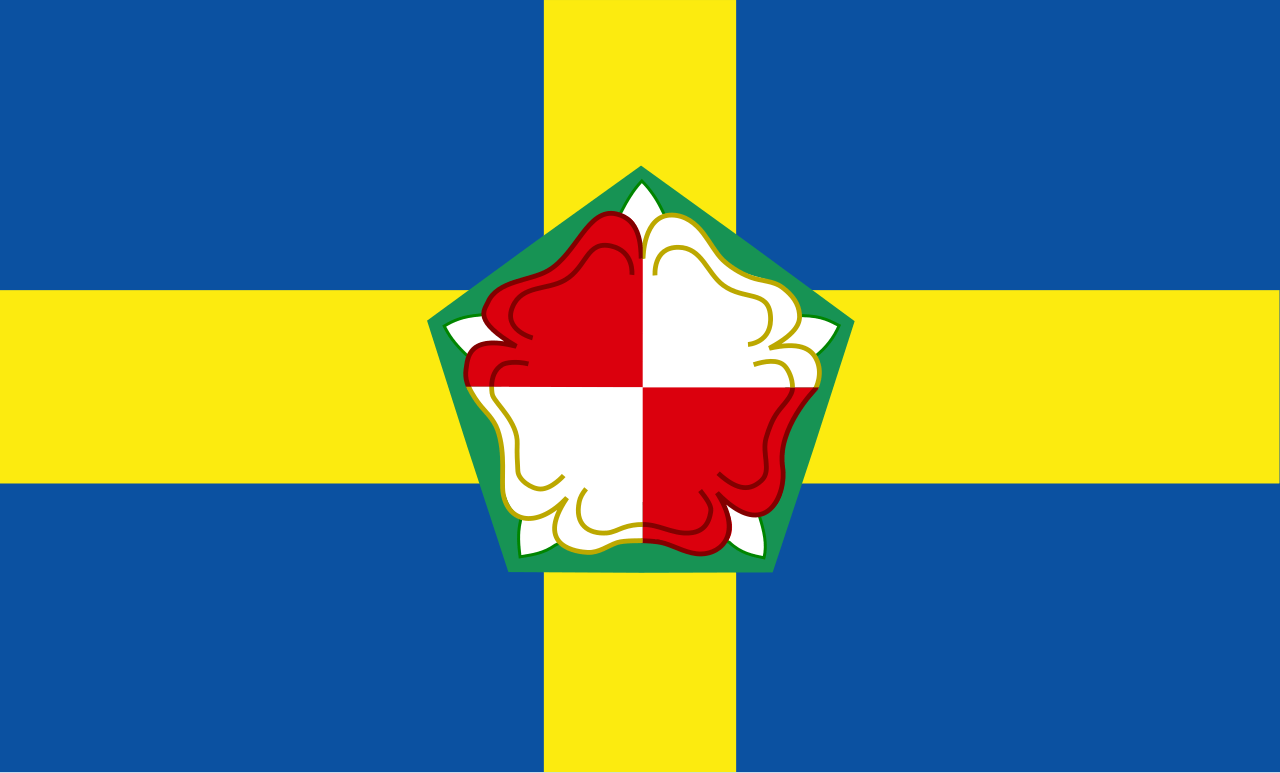
The thirteen historic counties of Wales, abolished as administrative units in 1974 but still the frame in which Welsh county heraldry is read. Their arms and flags outlived them.
Last reviewed by the Emblema Mundi editorial team on 12 July 2026.