Country
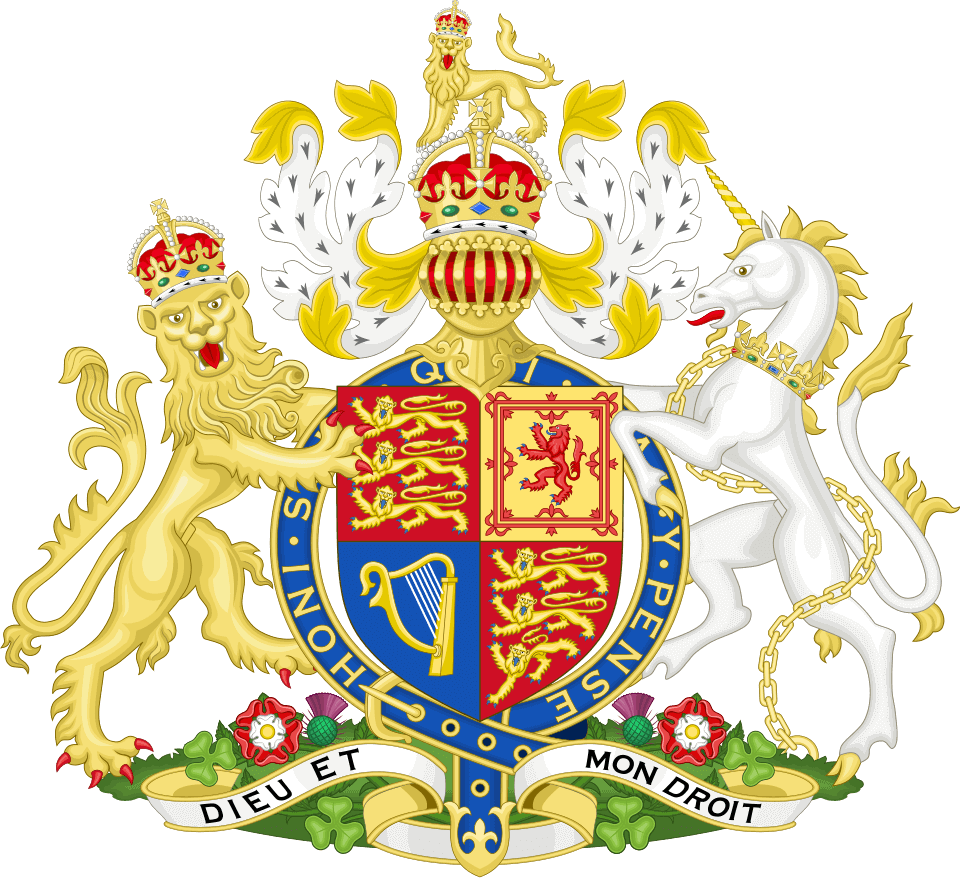
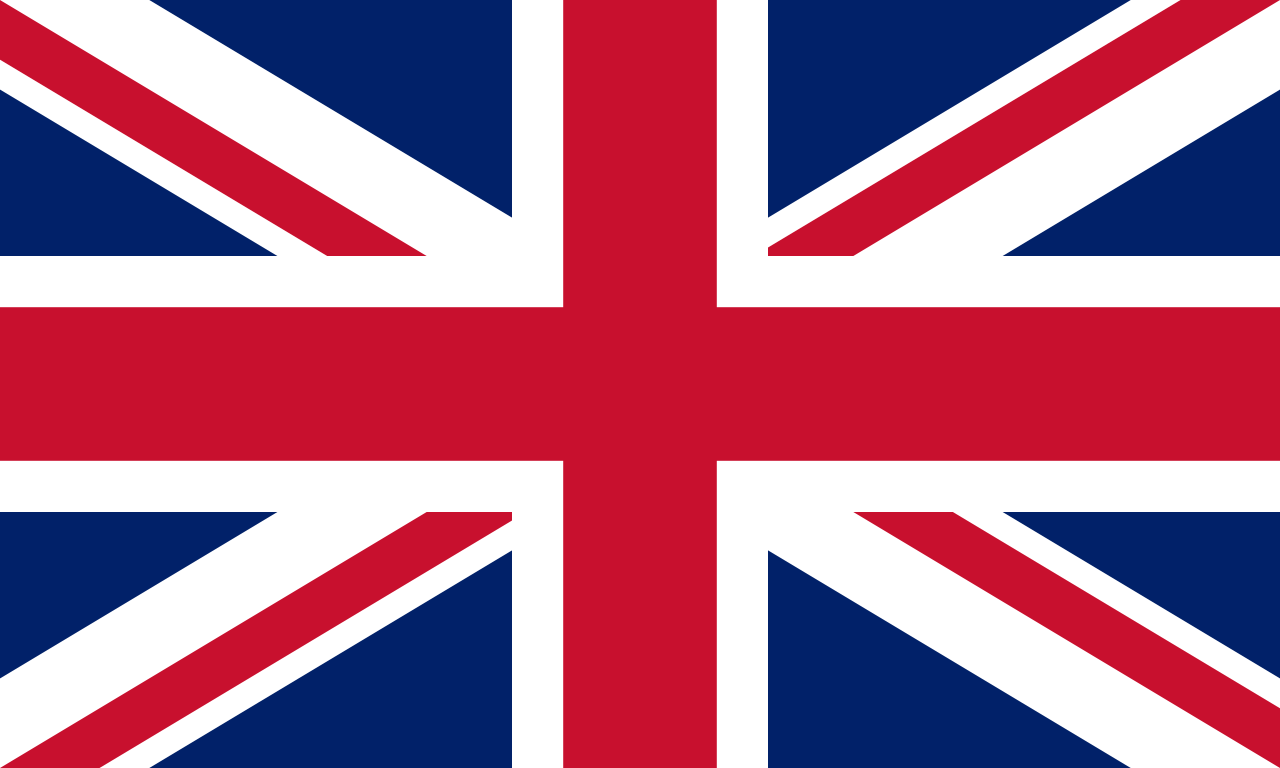
The Royal Arms of the United Kingdom quarter the emblems of three kingdoms — England’s three lions, Scotland’s lion rampant and Ireland’s golden harp — flanked by a crowned lion and a chained unicorn beneath the motto Dieu et mon droit. The Union Jack, one of the most recognisable flags in the world, layers the crosses of St George, St Andrew and St Patrick, a composite design first created for James VI & I in 1606 and expanded to its present form in 1801.
Flag
Not available
Coat of Arms
Not available
| Official name | United Kingdom of Great Britain and Northern Ireland |
|---|---|
| Capital | London |
| Government | Constitutional monarchy, parliamentary democracy |
| Head of State | Charles III (since 2022) |
| Population | ≈ 67 million |
| Area | 242,495 km² |
| Royal motto | Dieu et mon droit (God and my right) |
| Order of the Garter motto | Honi soit qui mal y pense |
| Flag adopted | 1606 (first Union Flag); 1801 (current design) |
| Heraldic authorities | College of Arms (England, Wales, NI); Court of the Lord Lyon (Scotland) |
Royal Arms — Quarterly: England, Scotland, Ireland; supporters a crowned lion and a chained unicorn
Quarterly: I and IV, Gules three lions passant guardant in pale Or armed and langued Azure (England); II, Or a lion rampant within a double tressure flory-counterflory Gules (Scotland); III, Azure a harp Or stringed Argent (Ireland). The shield is encircled by the Garter bearing the motto Honi soit qui mal y pense, ensigned by the Royal Crown. Supporters: dexter a lion rampant guardant Or crowned with the Royal Crown; sinister a unicorn Argent armed, crined and unguled Or, gorged with a coronet composed of crosses pattée and fleurs-de-lys, a chain affixed thereto reflexed over the back also Or. Motto: Dieu et mon droit.
The Royal Arms are arms of dominion, representing the sovereign’s authority over the three historic kingdoms united under the Crown. The first and fourth quarters bear England’s three golden lions passant guardant — a device traced to Richard I (the Lionheart) in the 1190s. The second quarter carries Scotland’s red lion rampant within a double tressure flory-counterflory, attributed to William I “the Lion” of Scotland in the twelfth century. The third quarter displays Ireland’s golden harp, used as a symbol of the lordship — and later kingdom — of Ireland since the reign of Henry VIII.
The shield is flanked by a crowned golden lion (England) on the dexter and a silver unicorn in chains (Scotland) on the sinister. The unicorn is chained because, in medieval lore, an unchained unicorn was considered a dangerous beast. Encircling the shield, the blue Garter of the Most Noble Order of the Garter — founded by Edward III around 1348 — bears the inscription Honi soit qui mal y pense (“Shame on him who thinks evil of it”). Below, a scroll carries the royal motto Dieu et mon droit, adopted as the English royal motto by Henry V after the Battle of Agincourt (1415).
In Scotland, a different version of the Royal Arms is used: the Scottish quarters (lion rampant) take the first and fourth positions, while England’s three lions move to the second. The supporters are reversed — the unicorn stands on the dexter, crowned with the Crown of Scotland, while the lion moves to the sinister. The shield is encircled by the collar of the Order of the Thistle with the motto Nemo me impune lacessit (“No one provokes me with impunity”).
1198 — Richard I adopts three lions passant guardant as the arms of England.
1340–1801 — English (and later British) monarchs quarter the arms of France (Azure, three fleurs-de-lys Or) with those of England, asserting their claim to the French throne.
1603 — James VI of Scotland inherits the English and Irish crowns; the arms of Scotland and Ireland are quartered with those of England and France for the first time.
1707 — Acts of Union merge England and Scotland into Great Britain; the arms are re-quartered accordingly.
1801 — The Act of Union with Ireland produces the present quartering; the French arms are finally dropped.
1837 — The Hanoverian inescutcheon is removed when the personal union with Hanover ends under Queen Victoria.
2022 — Charles III accedes; the arms remain unchanged in form.
Flag — The Union Jack: crosses of St George, St Andrew and St Patrick on a blue field
When James VI of Scotland became James I of England in 1603, he wanted a flag to symbolise the union of the two crowns. By Royal Decree of 12 April 1606, a new flag was created combining the red Cross of St George (England) with the white Saltire of St Andrew (Scotland) on a blue field. This “King’s Colours” was initially intended for maritime use only. In 1634, Charles I restricted its use to vessels of the Royal Navy.
Following the Acts of Union 1800, which merged the Kingdom of Ireland into the United Kingdom on 1 January 1801, the red Saltire of St Patrick was added to the flag. To prevent either cross from taking precedence, the St Patrick’s saltire was placed counterchanged with St Andrew’s — each taking the superior position on alternate halves of the flag, creating its distinctive asymmetrical appearance.
Wales is not separately represented in the Union Jack. When the first Union Flag was designed in 1606, Wales had been legally incorporated into the Kingdom of England since the Laws in Wales Acts of 1535 and 1542. It was therefore considered part of England’s representation through St George’s Cross. Periodic proposals to add the Welsh dragon or the Cross of St David have not resulted in any official change.
Both “Union Jack” and “Union Flag” are considered correct. The term “Jack” may derive from the jack staff at the bow of naval vessels. The flag has no single statute defining it; its design rests on Royal Proclamation and long-established convention. It may be flown by any person or body in the United Kingdom without restriction.
The United Kingdom is home to one of the oldest and most active heraldic systems in the world. Two separate authorities govern the granting and regulation of arms:
English heraldry was formalised from the mid-twelfth century, with the earliest recorded grants dating to the reign of Henry III. The heraldic visitations of the sixteenth and seventeenth centuries — tours by heralds to verify and record armorial bearings across each county — created a rich documentary archive that remains a cornerstone of genealogical research.
The four constituent countries and the historic counties of the United Kingdom each carry distinctive heraldic identities:
The shield is quartered: the first and fourth quarters bear the three golden lions passant guardant of England, the second quarter the red lion rampant within a double tressure flory-counterflory of Scotland, and the third quarter the golden harp of Ireland. Together they represent the three kingdoms united under the British Crown.
The name “Union Jack” (or “Union Flag”) reflects the union of three crosses of the patron saints: St George’s red cross for England (1606), St Andrew’s white saltire for Scotland (1606), and St Patrick’s red saltire for Ireland (added in 1801). The term “Jack” may derive from the jack staff on the bow of naval vessels where the flag was originally flown.
When the first Union Flag was created in 1606 by James VI & I, Wales was already legally incorporated into the Kingdom of England under the Laws in Wales Acts of 1535 and 1542. It was therefore considered part of England’s heraldic representation through St George’s Cross, and no separate Welsh element was added.
The College of Arms in London is the heraldic authority for England, Wales and Northern Ireland, responsible for granting and recording coats of arms. The Court of the Lord Lyon in Edinburgh serves the same function for Scotland under Scots law, with the Lord Lyon King of Arms holding judicial authority to enforce heraldic regulations — a power unique among heraldic offices worldwide.
The motto Dieu et mon droit (French for “God and my right”) has been the royal motto of England since Henry V. The supporters are a crowned golden lion (for England) and a silver unicorn in chains (for Scotland). The Garter surrounding the shield bears the Order of the Garter motto Honi soit qui mal y pense (“Shame on him who thinks evil of it”).
Last reviewed by the Emblema Mundi editorial team on 2026-06-21.