Country
Scotland possesses two of the most celebrated national symbols in European heraldry. The coat of arms — a red lion rampant within a double tressure flory-counter-flory on gold — has represented Scottish kingship since William the Lion in the 12th century, making it one of the oldest royal blazons in continuous use. The national flag — the Saltire, St Andrew’s white diagonal cross on blue — is traditionally dated to 832 AD and is considered one of the oldest flags in the world. Together with its rich tradition of clan heraldry overseen by the Court of the Lord Lyon, Scotland maintains one of the most distinctive and legally rigorous heraldic systems in Europe.
Flag
Not available
Coat of Arms
Not available
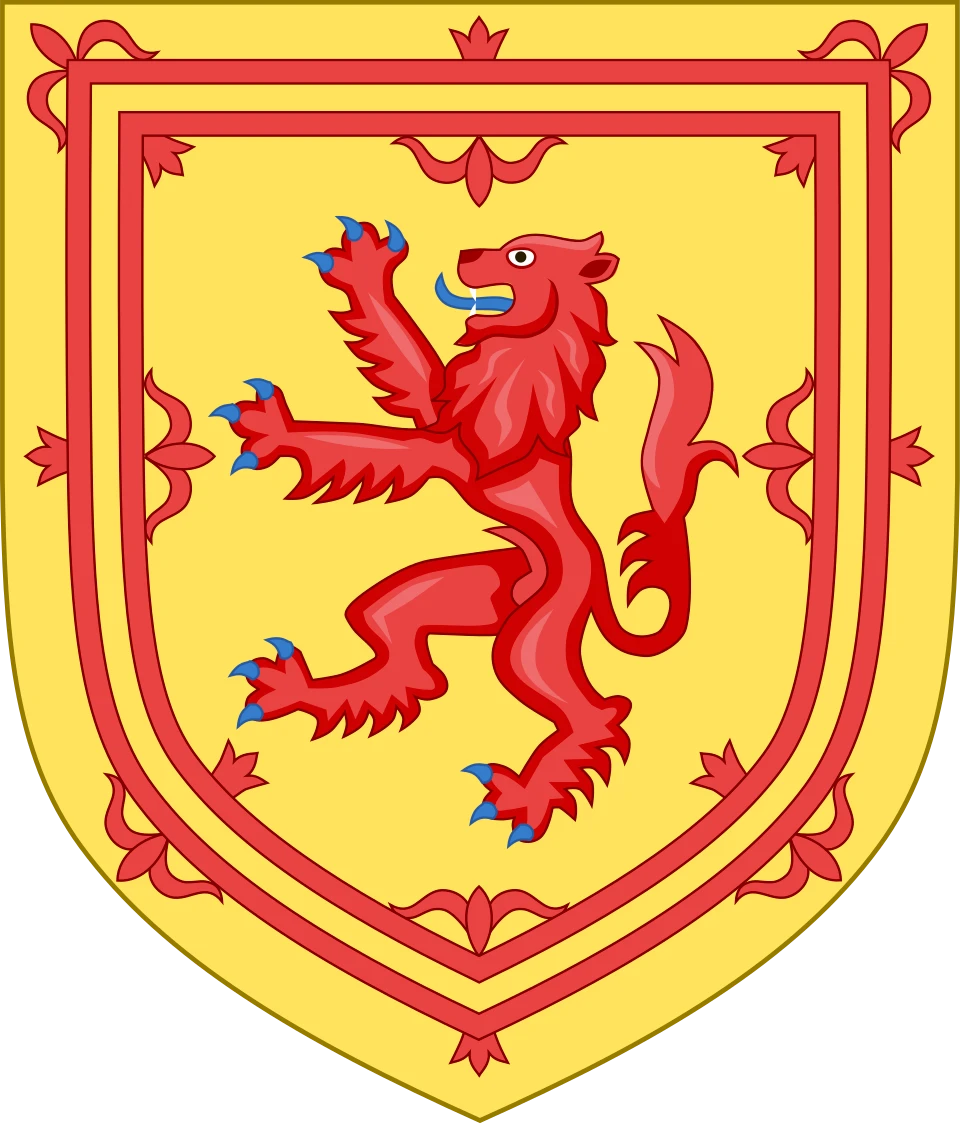
Coat of Arms of Scotland — Or, a lion rampant Gules within a double tressure
The Royal Arms of Scotland are among the most elegant and recognisable in European heraldry:
Or, a lion rampant Gules armed and langued Azure within a double tressure flory-counter-flory Gules.
A red lion rearing with blue claws and tongue on a gold field, enclosed by a double border decorated with alternating fleurs-de-lys pointing inward and outward.
William I (1143–1214), known as William the Lion, is traditionally credited with adopting the red lion rampant as the symbol of Scottish kingship. The earliest documented use, however, dates to the seal of Alexander II in 1222. The distinctive double tressure — the ornamental double border set with fleurs-de-lys — was added during the reign of Alexander III (1249–1286), possibly reflecting the Franco-Scottish alliance (the Auld Alliance).
The Royal Banner of Scotland — the Lion Rampant rendered as a flag — is technically the personal banner of the monarch and its use is legally restricted. In practice, it is widely flown at sporting events, especially during rugby and football internationals, and at national celebrations. The Court of the Lord Lyon has the power to prosecute unauthorised use, though enforcement is rare.
Within the United Kingdom, the Royal Arms take a different form in Scotland: the Scottish lion occupies the 1st and 4th quarters (rather than the English lions), and the Scottish unicorn supporter stands on the dexter (right) side. The motto changes from Dieu et mon droit to In Defens (short for In My Defens God Me Defend), and the Order of the Thistle replaces the Order of the Garter.
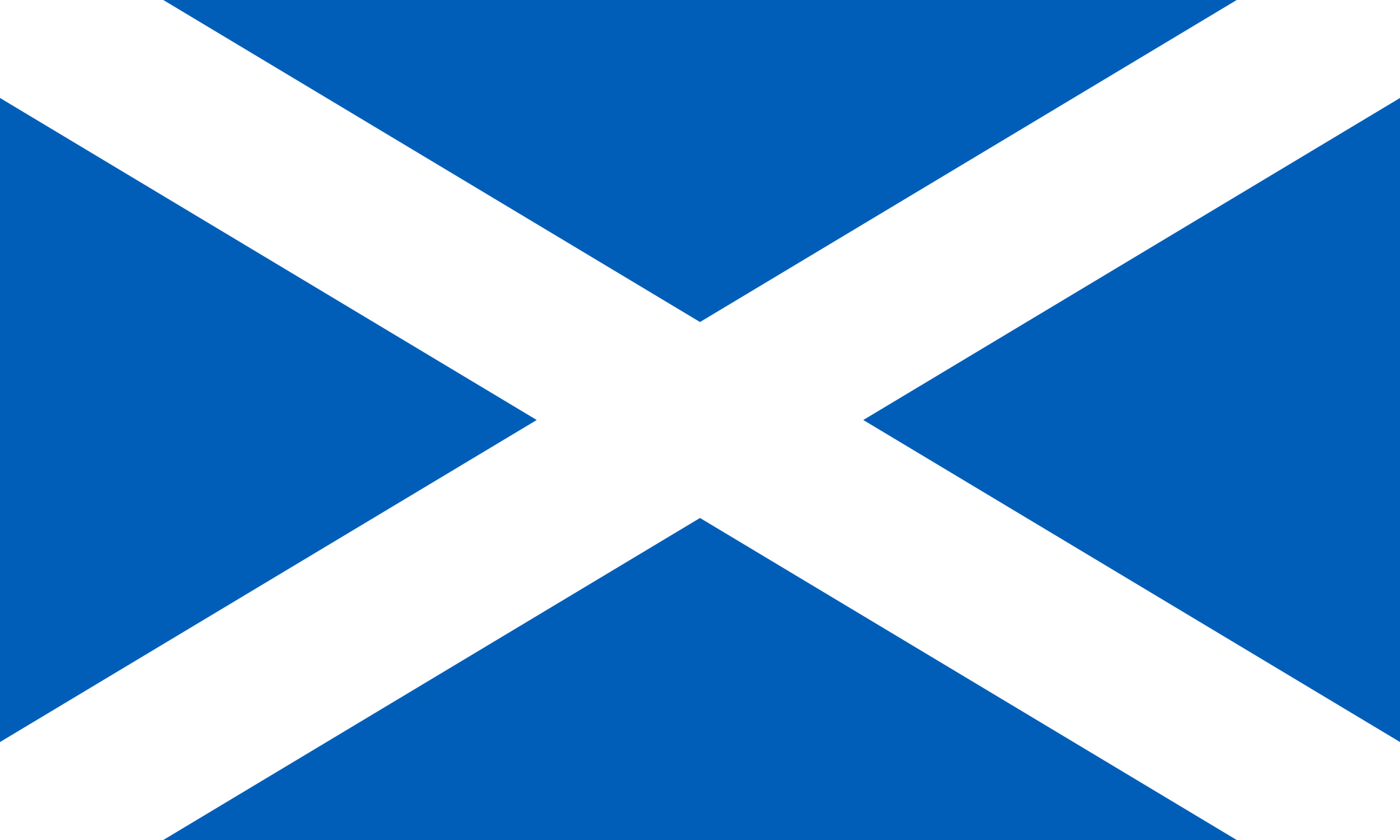
Flag of Scotland — The Saltire, St Andrew’s Cross
The Saltire — Azure, a saltire Argent — is a white diagonal cross on a blue field, the cross of Scotland’s patron saint, St Andrew.
According to tradition, a joint force of Picts and Scots under King Óengus faced a Northumbrian army near Athelstaneford in East Lothian in 832 AD. The night before the battle, Óengus prayed for victory. As dawn broke, a formation of white clouds appeared against the bright blue sky, forming a diagonal cross — the cross of St Andrew. The Picts and Scots won the battle, and the Saltire became Scotland’s flag. While the historical details are debated (the named Athelstan was born decades later), the legend has been central to Scottish identity for over a millennium.
The Saltire is widely considered one of the oldest national flags in continuous use. When James VI of Scotland became James I of England in 1603, St Andrew’s Cross was combined with St George’s Cross to form the first Union Flag. The Saltire remains the dominant diagonal element of the modern Union Jack.
Scottish heraldry is regulated by the Court of the Lord Lyon, one of the oldest functioning heraldic courts in the world and unique in having the power of a court of law. The Lord Lyon King of Arms has legal jurisdiction over all matters of heraldry and the right to arms in Scotland — including the power to fine or imprison those who bear arms unlawfully.
Scotland’s heraldic culture is inseparable from its clan system. Each clan chief bears arms granted by the Lord Lyon, and clan members may display their chief’s crest badge (crest within a strap and buckle) as a mark of allegiance. Explore the crests of over 180 Scottish clans on the Emblema Mundi Scottish Clans interactive map.
The Royal Arms of Scotland are blazoned Or, a lion rampant Gules armed and langued Azure within a double tressure flory-counter-flory Gules — a red lion rearing on a gold field, surrounded by a double border decorated with fleurs-de-lys. The lion has been associated with Scottish royalty since the 12th century.
The Saltire (St Andrew’s Cross) is Scotland’s national flag: a white diagonal cross on a blue field (Azure, a saltire Argent). It is considered one of the oldest national flags in the world, traditionally dated to 832 AD and the legendary Battle of Athelstaneford.
William I (1143–1214), known as William the Lion, is traditionally credited with adopting the red lion rampant as the symbol of Scottish kingship, though the earliest documented use dates to Alexander II in 1222. The double tressure was added under Alexander III (1249–1286).
The Court of the Lord Lyon is Scotland’s heraldic authority, one of the oldest functioning heraldic courts in the world. Unlike England’s College of Arms, the Lord Lyon’s court has the power of a court of law and can fine or imprison those who bear arms unlawfully.
The Saltire (white cross on blue) is the national flag, flown by all Scots. The Lion Rampant (red lion on gold) is the Royal Banner — technically the personal banner of the monarch. Its use is legally restricted, though in practice it is widely flown at sporting events.
Last reviewed by the Emblema Mundi editorial team on 2026-06-23.
Scotland is one of the six Celtic nations — see the Saltire and the red lion rampant beside the emblems of Wales, Ireland, Brittany, Cornwall and the Isle of Man.