City of France
The arms of Lille, prefecture of Nord and capital of the Hauts-de-France region, show a silver fleur-de-lis florencée on a red field. French Wikipedia dates them to 1199; they would stand for the city, lilia meaning lily in Latin. Replaced by imperial arms under Napoléon Ier, they were restored by the mayor Gustave Delory.
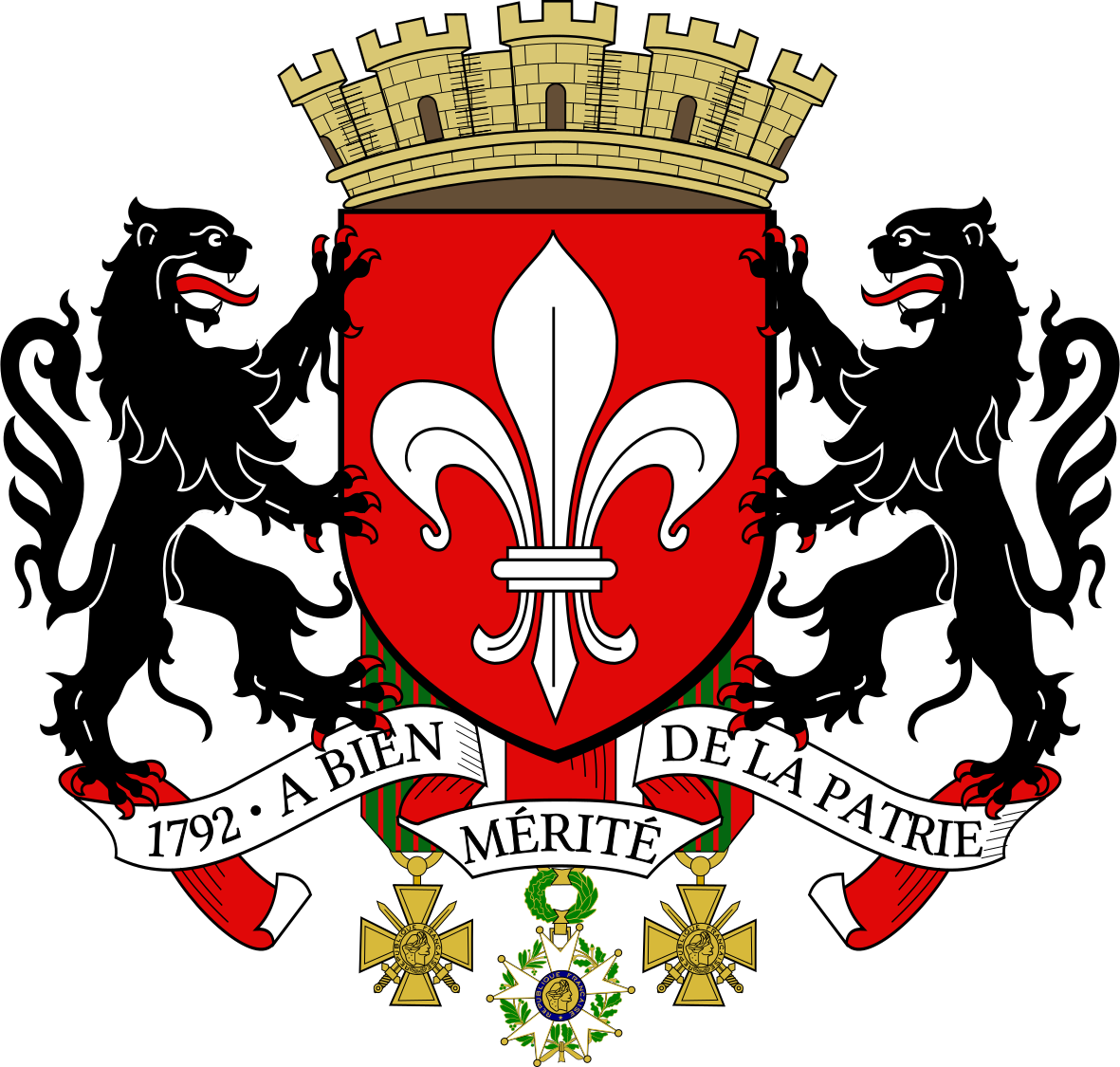
Coat of Arms
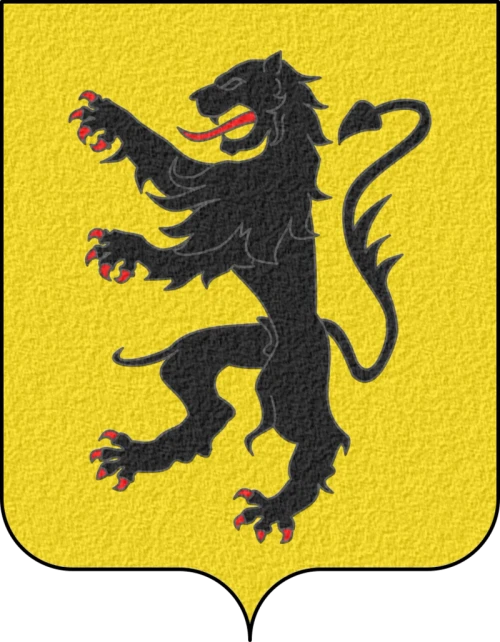
Not available
| City | Lille (Dutch: Rijsel; French Flemish: Rysel; Picard: Lile), prefecture of Nord and capital of the Hauts-de-France region |
|---|---|
| Inhabitants | Lillois and Lilloises |
| Arms | Gules, a fleur-de-lis florencée Argent |
| Nickname | Capitale des Flandres |
The greater arms of Lille, after Robert Louis.
De gueules à la fleur de lys florencée d’argent.
That is: on a red field, a silver fleur-de-lis florencée. This is the blazon given by French Wikipedia’s article on the city and by its armorial of the communes of Nord. The drawing shown here, from Wikimedia Commons, is the greater arms of Lille after Robert Louis.
According to the article on the city, the arms of Lille date from 1199, when they bore a fleur-de-lis with five leaves or petals. The three-branched fleur-de-lis appeared in 1235 on the charter of Jeanne de Flandre. These arms would stand for the city, lilia meaning lily in Latin, florencée to recall the water iris that grew in the marshes around the city. Their present drawing dates from 1926.
Lille has known other arms. In 1811, Napoléon Ier gave the city imperial arms: Coupé d’azur et de gueules, l’azur au drapeau en lance d’argent orlé d’or ; le gueules à la ville fortifiée et bombardée, le tout d’argent au chef cousu des bonnes villes. That is: divided blue over red, the blue with a silver flag bordered gold, on a lance, the red with a fortified and bombarded city, all silver, under the sewn-on chief of the bonnes villes. Such shields can still be seen on the dome of the post office on the place de la République and, according to the article on the city, on the façade of the prefecture.
The bees, an imperial symbol, were later replaced by stars: under the Third Republic according to the article on the city, at the end of the 19th century according to the armorial. In 1901, the mayor of Lille, Gustave Delory, finally restored the original arms, according to the article on the city.
Lille is a city of northern France, prefecture of the Nord department and capital of the Hauts-de-France region. It is the tenth most populous commune of France and the main commune of the Métropole européenne de Lille, which brings together 94 other communes, among them Roubaix, Tourcoing and Villeneuve-d’Ascq. Still nicknamed in France the Capitale des Flandres, Lille and its surroundings belong to the historic region of Flandre romane, a former territory of the county of Flanders.
Often besieged, Lille belonged in turn to the kingdom of France, the Burgundian State, the Holy Roman Empire and the Spanish Netherlands, before being definitively joined to the France of Louis XIV after the War of the Spanish Succession. A merchant city from its origins and a manufacturing one from the 16th century, it became a great industrial capital with the Industrial Revolution, mainly in textiles and engineering.
The name is attested in Latin forms such as Insula from the 11th century, then in French as Lile in 1224 and Lysle in 1259. It is a medieval place-name based on the Romance word isle, island, from the Latin insula; the forms of 1224 and 1259 show an early addition of the article la. Raymond Schmittlein, starting from the Dutch form Rijsel, had instead seen a Germanic personal name, while Maurits Gysseling considers that Rijsel also comes from the word for island.
Gules, a fleur-de-lis florencée Argent: a silver fleur-de-lis florencée on a red field.
According to French Wikipedia, the arms would stand for the city, lilia meaning lily in Latin, florencée to recall the water iris that grew in the marshes around the city.
The article on the city dates them to 1199, with a lily of five leaves or petals; the three-branched lily appeared in 1235 and the present drawing dates from 1926.
In 1811, Napoléon Ier gave Lille divided blue and red arms, with a silver flag on a lance and a fortified, bombarded city, under the chief of the bonnes villes.
The mayor of Lille, Gustave Delory, restored the original arms, in 1901 according to the article on the city.
Illustration: Wikimedia Commons. Coat of arms: drawing by Rijsselovitch (CC BY-SA 4.0).
Last reviewed by the Emblema Mundi editorial team on 10 November 2026.