US State Capital
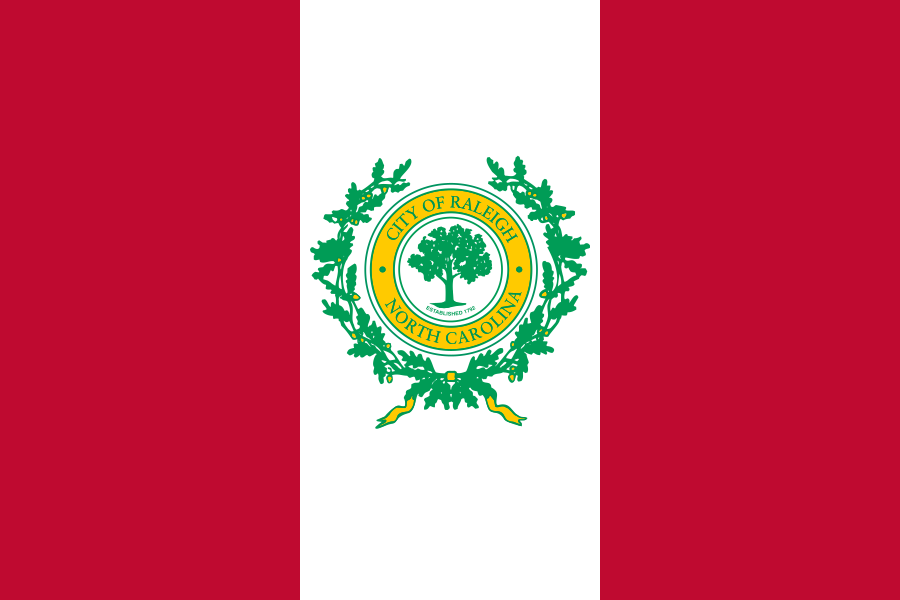
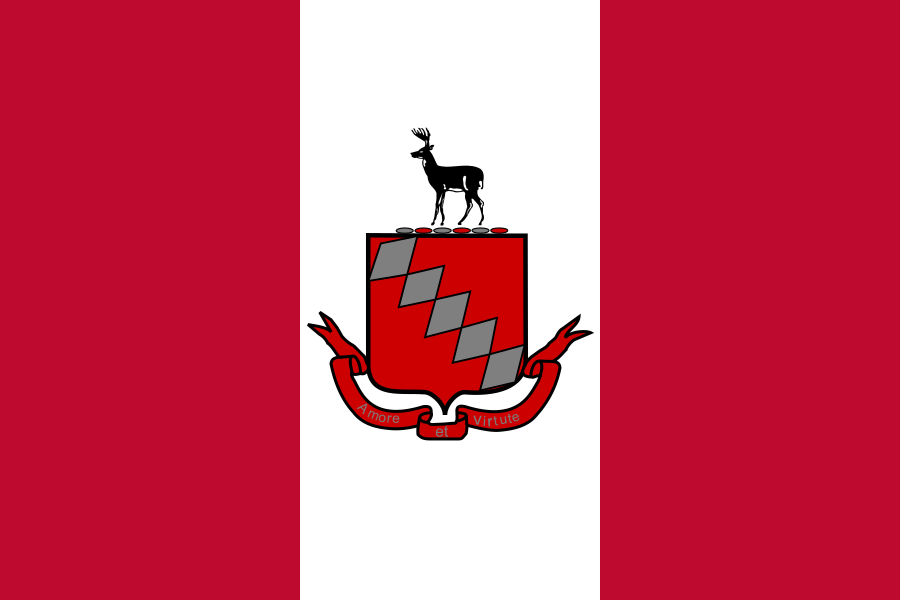
Raleigh flies one of the very few flags in the United States with a different front and back. On a red-white-red field, one face shows the city seal — an oak tree ringed with the words City of Raleigh, Established 1792 — and the other shows the coat of arms of Sir Walter Raleigh, the Elizabethan courtier the city is named for, complete with a black stag and the motto Amore et Virtute, “By Love and Valour.” Here is what each side means.
Click on a country to learn more
| City | Raleigh, capital of North Carolina |
|---|---|
| Named for | Sir Walter Raleigh (c. 1552–1618), Elizabethan courtier and colonial sponsor |
| Capital site chosen | 1792, the date kept on the city seal (“Established 1792” added by resolution in 1960) |
| Flag | Red-white-red triband; first designed October 1899 |
| Flag — obverse | The city seal: an oak tree in a wreath, “City of Raleigh, North Carolina, Established 1792” |
| Flag — reverse | Sir Walter Raleigh’s arms: a red shield with a band of silver lozenges, a black stag, and the motto Amore et Virtute |
| Distinctive | One of only a few U.S. flags with a different obverse and reverse |
| Nickname | The City of Oaks |
Flag of Raleigh, obverse — the red-white-red triband with the city seal on the white bar: an oak tree ringed by “City of Raleigh, North Carolina, Established 1792.”
Almost every flag is the same on both sides. Raleigh’s is not. It is one of a small handful of United States city flags deliberately made with a different obverse and reverse, and reading it means turning it over. The field is the same on each face — a red-white-red triband, in the red and white of Sir Walter Raleigh’s own arms — but the emblem on the central white bar changes from front to back.
The obverse carries the official seal of the city: an oak tree within a wreath of oak leaves and acorns, ringed by the words City of Raleigh, North Carolina, Established 1792. The design was first drawn up in October 1899, after the idea of a city flag was proposed that April; a City Council resolution of 1960 added the word “Established” before the date. The oak is no accident — Raleigh is the City of Oaks.
Flag of Raleigh, reverse — Sir Walter Raleigh’s arms: a red shield crossed by a band of silver lozenges, a black stag above, and the motto Amore et Virtute, “By Love and Valour.”
Turn the flag over and the city’s namesake appears. The reverse carries a version of the arms of Sir Walter Raleigh: a red shield crossed from upper left to lower right by a band of connected silver lozenges — the “diamonds” of his family arms — and beneath it, on a scroll, his motto Amore et Virtute, “By Love and Valour.” Raleigh sponsored the first English attempts to colonise the coast of what is now North Carolina, and the state capital carries his name.
Above the shield stands a black stag, and it is there for the name itself. “Raleigh” is usually traced to Old English roots meaning the meadow or clearing of the deer — a roe deer’s lea. The stag is a canting charge, heraldry’s way of drawing a name aloud: on the reverse of the flag, the deer says “Raleigh.”
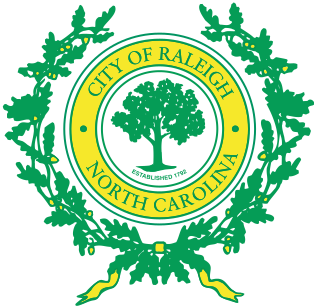
Seal of Raleigh — an oak tree in a wreath of oak leaves and acorns, ringed by “City of Raleigh, North Carolina, Established 1792.” The oak stands for the City of Oaks.
The seal on the flag’s front stands on its own as the emblem of the city: an oak tree set in a wreath of oak leaves and acorns. The tree is the city’s nickname made visible — Raleigh has been called the City of Oaks for its tree-lined streets since the nineteenth century — and the ring of lettering carries the founding date the city keeps everywhere, Established 1792.
That date is the reason Raleigh exists. Unlike cities that grow at a harbour or a ford, Raleigh was planned: in 1792 the state bought land in Wake County expressly to build a permanent capital for North Carolina, and named it for Sir Walter Raleigh. The seal keeps the year of that decision, and the flag carries the seal.
Because it is one of the few U.S. city flags made that way on purpose. On a red-white-red field, the obverse carries the city seal (an oak tree and “Established 1792”) and the reverse carries the arms of Sir Walter Raleigh, the city’s namesake.
Sir Walter Raleigh’s arms: a red shield with a band of silver lozenges, a black stag above, and the motto Amore et Virtute, “By Love and Valour.”
The stag is a pun on the name: “Raleigh” comes from Old English roots understood as “the deer’s meadow.” The deer makes the name visible on the arms.
It is Latin for “By Love and Valour,” the motto of Sir Walter Raleigh, carried on the reverse of the city flag.
It stands for Raleigh’s nickname, the City of Oaks. The oak-and-wreath device, ringed by “City of Raleigh, North Carolina, Established 1792,” is the official city seal and the front of the flag.
Sir Walter Raleigh, the Elizabethan courtier and explorer who sponsored the first English colonies on the North Carolina coast. The site was chosen for a new state capital in 1792.
Last reviewed by the Emblema Mundi editorial team on 16 September 2026.