US City
Miami’s emblems are built from very little: a palm tree and a date on the seal, and on the flag two colours that stand for fruit and leaves. Look closer and two oddities appear. The palm on the seal gained a frond when the city adopted a new charter in 1921, and the white stripe of the flag, according to the reference works, means nothing at all.
Click on a country to learn more
| City | Miami, Florida |
|---|---|
| Seal | A palm tree of eight fronds on a mound, “Incorporated 1896” |
| Flag | Horizontal tribar of orange, white and green, the seal on the white; 2:3 |
| Flag adopted | 13 November 1933 |
| Flag designer | Charles L. Gmeinder, Jr. |
| NAVA 2004 survey | 70th of 150 United States city flags |
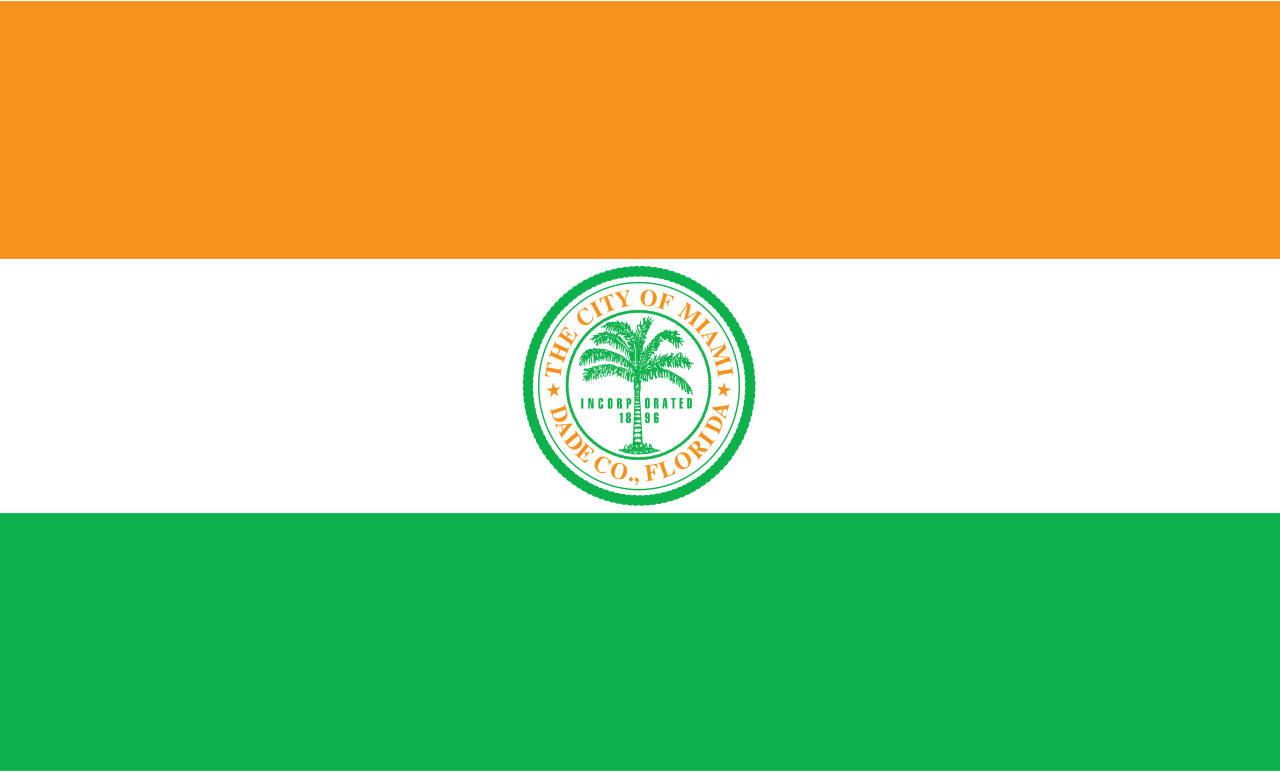
Flag of Miami — a horizontal tribar of orange, white and green, the city seal centred on the white. Orange for the citrus industry, green for the foliage; the white, on the record, has no meaning. Adopted 13 November 1933.
A horizontal tribar of orange, white and green in equal stripes, with the city seal centred on the white and standing nearly as tall as it. Proportions 2:3. It was adopted on 13 November 1933, and the design is credited to Charles L. Gmeinder, Jr.
Most civic flags find a meaning for every stripe after the fact. Miami’s record is candid that the middle one has none.
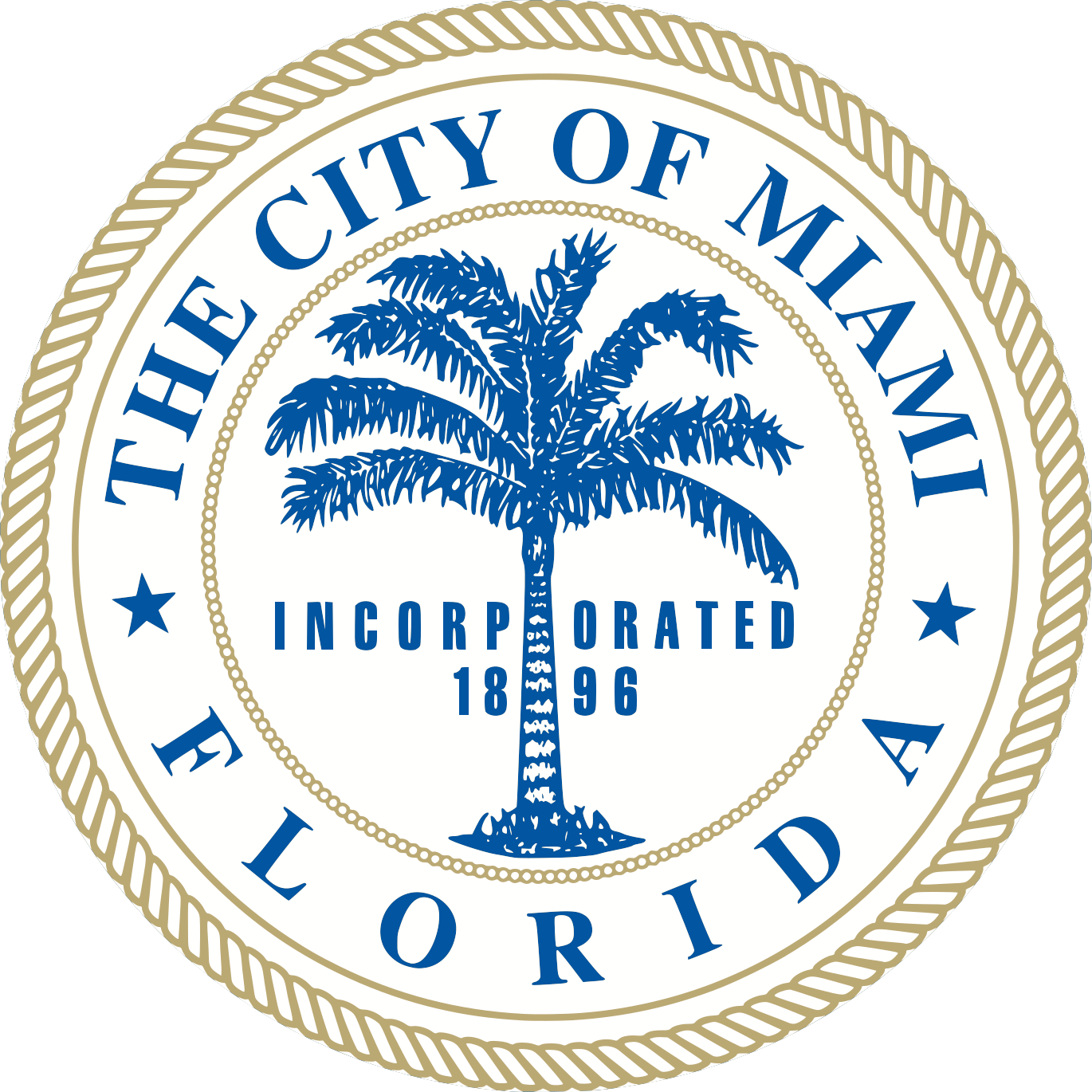
Seal of Miami — a palm tree of eight fronds on a mound, the word INCORPORATED divided by its trunk and 1896 below, within a ring set with two five-pointed stars. The reference works give it in green and orange; the version shown is the blue-and-gold rendering the city uses today.
At the centre, on a white ground, stands a palm tree with eight fronds rising from a mound. The word INCORPORATED is divided by its trunk, with the year 1896 below it — the year the city was incorporated. Around the centre runs a ring of two concentric circles with a bevelled outer edge, naming the city above and the county and state below, with a small five-pointed star at three and at nine o’clock.
The reference works give the tree, the ring and the lettering in green, and the name and the stars in orange. There is no motto and no scene: one charge and one date.
The palm originally had seven fronds. It was redrawn with eight after the city adopted a new charter in 1921, and no source explains why. In heraldry the number of a charge is part of the arms — three lions are not four — so a count that changes without comment is worth recording.
A palm tree of eight fronds on a mound, with the word Incorporated divided by its trunk and the year 1896 below, within a ring naming the city, county and state and set with two five-pointed stars.
It had seven originally. It was redrawn with eight after the city adopted a new charter in 1921, and no source explains the change.
Orange stands for the Florida citrus industry and green for the tropical foliage of the city. The white stripe has no stated meaning; it is simply the ground for the seal.
Charles L. Gmeinder, Jr. The flag was adopted on 13 November 1933.
A note on method. Both emblems are described from the published descriptions, not from the drawing. The seal is reproduced here in the blue and gold the city uses today, which differs from the green and orange the reference works describe; no published account of when that rendering was adopted could be found.
Last reviewed by the Emblema Mundi editorial team on 30 September 2026.