US City
Los Angeles carries its whole history on two emblems. The flag, adopted in 1931 for the city’s 150th birthday, is a jagged tricolour of green, gold and red — the olives, oranges and vineyards of the old ranchos — with the city seal at its heart. The seal, from 1905, gathers four coats of arms on a single shield: Spain, Mexico, California and the United States, the powers that have governed the pueblo founded in 1781. Here is what each of them means.
Click on a country to learn more
| City | Los Angeles, California; founded 1781 as El Pueblo de Nuestra Señora la Reina de los Ángeles |
|---|---|
| Flag adopted | 22 July 1931, for the city’s sesquicentennial (150 years since 1781) |
| Flag designers | Roy E. Silent and E. S. Jones |
| Flag design | Vertical tricolour green–gold–red with serrated (zig-zag) edges, the city seal centred on the gold |
| Colours | Green (olive trees), gold (orange groves), red (vineyards); also gold-red for Spain, green-red for Mexico |
| Seal adopted | 27 March 1905 |
| Seal shield | Quartered: United States, California (Bear Flag), Mexico, Spain (Castile and León) |
| Seal border | Grapes, olives and oranges, within a rosary of beads; legend “Founded 1781” |
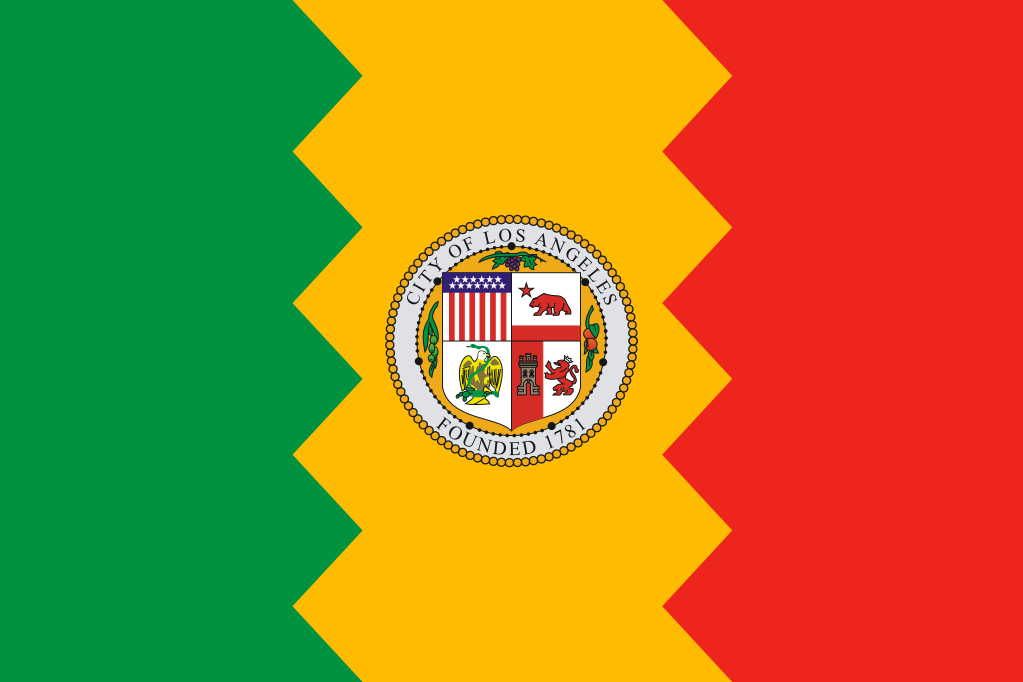
Flag of Los Angeles — green, gold and red in serrated vertical bands, with the city seal on the gold. Adopted 22 July 1931.
Los Angeles adopted its flag on 22 July 1931, in the middle of the fiesta that marked the city’s sesquicentennial — a hundred and fifty years since its founding as a Spanish pueblo in 1781. It was designed by Roy E. Silent and E. S. Jones, and it wraps the city’s existing seal, adopted a generation earlier, in three broad bands with jagged, saw-tooth edges.
The three colours are read two ways at once, and both are official. They are the old crops of the Los Angeles basin: green for its olive trees, gold for its orange groves, red for its vineyards — the wealth of the ranchos before the city covered them. And they are the flags of the two nations that made the town: gold and red for Spain, which founded it, and green and red for Mexico, which governed it after winning independence from Spain. One palette holds the farm and the history together.
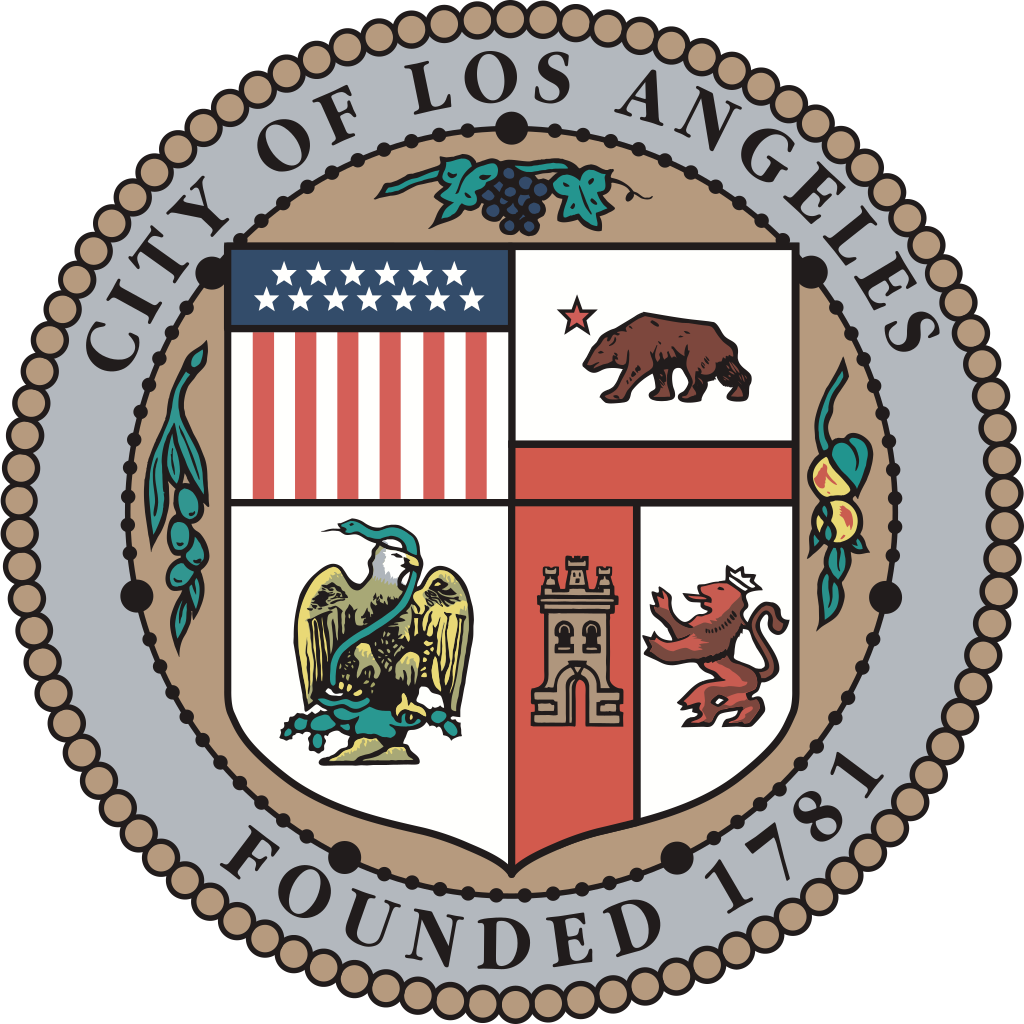
Seal of Los Angeles — a quartered shield ringed by grapes, olives and oranges and a chain of beads, lettered “The Seal of the City of Los Angeles, Founded 1781.” Adopted 1905.
The seal is older than the flag: it was adopted on 27 March 1905, and when the city wanted a flag a quarter-century later it simply set the seal on a field of colour. At the centre is a quartered heraldic shield; around it runs the story of the land and its faith.
The shield is wreathed in the three crops that made the region rich — grapes, olives and oranges — the same fruits the flag’s colours name. Enclosing them is a chain of round beads, a rosary, for the Spanish Franciscan missions that first planted those vines and groves along the coast. The outer ring carries the legend The Seal of the City of Los Angeles, Founded 1781 — keeping, like so many American city seals, the year the place began.
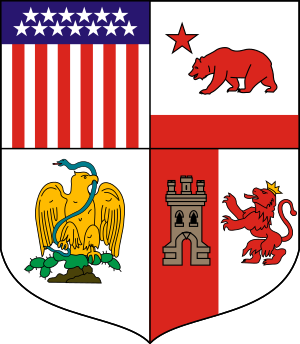
The shield at the heart of the seal — quartered for the United States, California, Mexico and Spain: the four sovereignties Los Angeles has lived under.
The quartered shield is a short history of who has ruled Los Angeles. One quarter carries the stars and stripes of the United States; one, the Bear Flag of California, now the state flag; one, the eagle and serpent of Mexico; and one, the castle of Castile and the lion of León, for Spain.
They follow the order in which the flags actually changed over the town. Los Angeles was founded under the Spanish crown in 1781; it became Mexican when Mexico won its independence in 1821; it passed to the United States after the Mexican–American War in 1848, two years before California entered the Union. Like St. Louis and a handful of other cities born on a shifting frontier, Los Angeles keeps every one of its former sovereigns quartered together on a single shield.
Green for olive trees, gold for orange groves, red for vineyards — the old crops of the region. The colours also recall the two founding nations: gold and red for Spain, green and red for Mexico.
Roy E. Silent and E. S. Jones designed it, and it was adopted on 22 July 1931 for the city’s sesquicentennial, 150 years after the founding of 1781. The city seal sits on the central gold band.
The central shield is quartered for the United States, California (the Bear Flag), Mexico (the eagle and serpent) and Spain (the castle of Castile and the lion of León) — the four sovereignties Los Angeles has lived under since 1781.
Grapes, olives and oranges — the region’s three great crops — within a chain of beads recalling the rosary of the Spanish missions, and the legend “The Seal of the City of Los Angeles, Founded 1781.” The seal was adopted in 1905.
In 1781, as the Spanish pueblo El Pueblo de Nuestra Señora la Reina de los Ángeles, “the town of Our Lady the Queen of the Angels.” The date is kept on the city seal.
Last reviewed by the Emblema Mundi editorial team on 16 September 2026.