US State
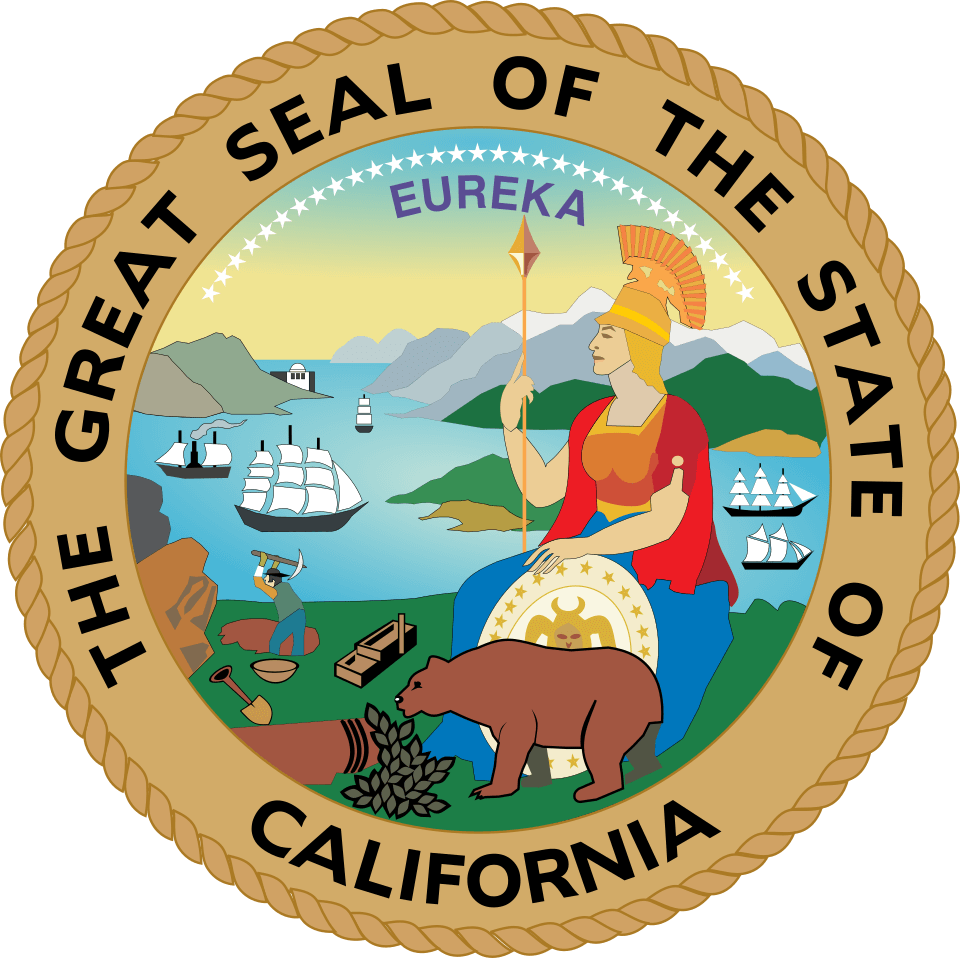
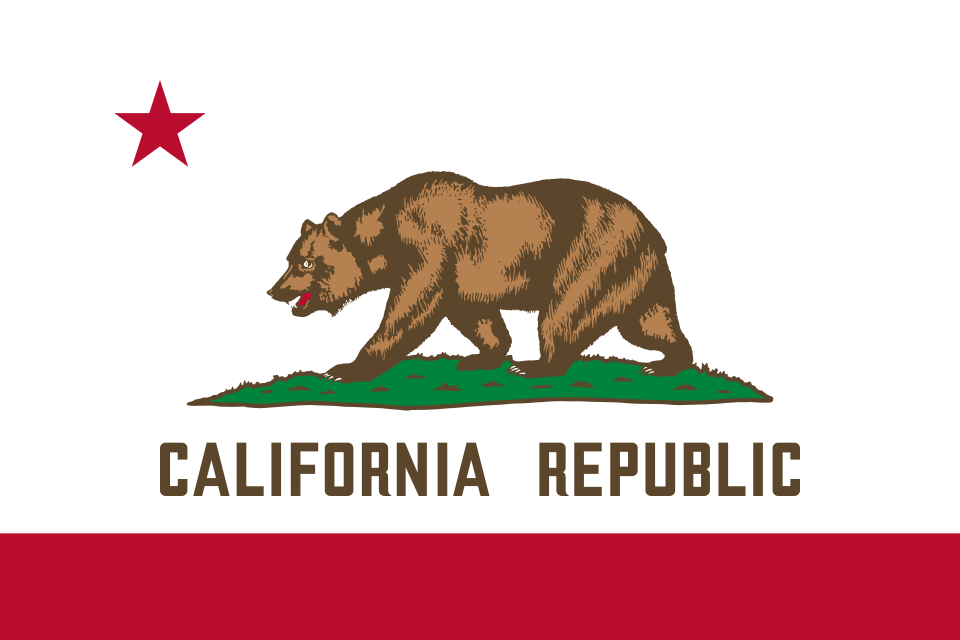
California’s state symbols tell the story of a land that went from Mexican frontier to Gold Rush boomtown to the world’s fifth-largest economy in barely two centuries. The Great Seal — designed at the 1849 Constitutional Convention in Monterey — places Minerva (Athena) at its centre because the goddess was born fully grown, just as California was never a territory but entered the Union directly as the 31st state. Around her stand the icons of California’s identity: a grizzly bear feeding on grape vines, a Gold Rush miner, sailing ships on the Sacramento, and the motto Eureka (“I have found it”). The flag — the beloved Bear Flag — was born in a 25-day revolution at Sonoma on 14 June 1846, painted on cotton cloth by William Todd, and its grizzly bear has been the most recognisable state animal emblem in America ever since.
Flag
Not available
Seal
Not available
| State | California (31st state, admitted 9 September 1850) |
|---|---|
| State seal | Minerva, grizzly bear, miner, ships, grain, 31 stars |
| Seal adopted | 1849 Constitutional Convention; standardised 1937 |
| Seal designers | Major R. S. Garnett (design) & Caleb Lyon (proposal) |
| Motto | Eureka (“I have found it”) |
| State flag | Bear Flag — grizzly bear, red star, “California Republic” |
| Flag origin | Bear Flag Revolt, 14 June 1846, Sonoma |
| Original flag painter | William Todd |
| Capital | Sacramento |
| Nickname | The Golden State |
Bear Flag of California — Born at Sonoma, 14 June 1846
The Bear Flag features a California grizzly bear walking on a patch of green grass, a red five-pointed star in the upper left, the words “California Republic”, and a red stripe along the bottom — all on a white field.
Before dawn on 14 June 1846, about 30 American settlers led by William Ide and Ezekiel Merritt marched on the Mexican garrison at Sonoma and captured it without firing a shot. They surrounded the home of General Mariano Guadalupe Vallejo and demanded his surrender — Vallejo invited them in for breakfast and wine. The insurgents proclaimed the California Republic and raised a hastily painted flag.
William Todd — a nephew of Mary Todd Lincoln — painted the original Bear Flag on domestic cotton cloth supplied by Dorcas Prigmore. The red star was borrowed from the 1836 Lone Star revolt of Juan Alvarado and Isaac Graham. The grizzly bear represented the strength and ferocity of the Californian settlers.
The California Republic lasted only 25 days. On 9 July 1846, US Navy Lieutenant Joseph Revere raised the American flag over the Sonoma Barracks, ending the republic. But the Bear Flag survived: it was adopted as the official state flag in 1911, and its grizzly bear became the most iconic state animal emblem in America.
Great Seal of California — Minerva, grizzly bear, miner, Eureka
The Great Seal was adopted at the 1849 California Constitutional Convention in Monterey, designed by Major R. S. Garnett of the United States Army and proposed by Caleb Lyon, a convention clerk.
The seal has undergone minor design changes since 1849, with the last standardisation occurring in 1937. The Secretary of State’s office controls the use of the Great Seal, which may not be reproduced without authorisation.
Minerva (the Roman Athena) appears because she was born fully grown from Jupiter’s head — symbolising the fact that California was never a US territory. It skipped territorial status entirely and was admitted directly as the 31st state on 9 September 1850, “born adult” like the goddess.
Eureka (Greek: εύρηκα) means “I have found it.” It is the state motto, referring both to the discovery of gold during the Gold Rush and to the principle of immediate statehood.
The Bear Flag originates from the Bear Flag Revolt of 14 June 1846, when American settlers captured the Mexican garrison at Sonoma and proclaimed the California Republic. William Todd painted the original flag on cotton cloth. The republic lasted only 25 days before US forces took control.
The seal includes Minerva/Athena (direct statehood), a grizzly bear on grape vines (wine), a miner with rocker (Gold Rush), a sheaf of grain (agriculture), sailing ships on the Sacramento (commerce), the Sierra Nevada, 31 stars (31st state), and the motto Eureka.
The seal was designed by Major R. S. Garnett and proposed by Caleb Lyon at the 1849 Constitutional Convention in Monterey. It was standardised in 1937.
Last reviewed by the Emblema Mundi editorial team on 2026-06-24.