Oblast — Federal Subject of Russia
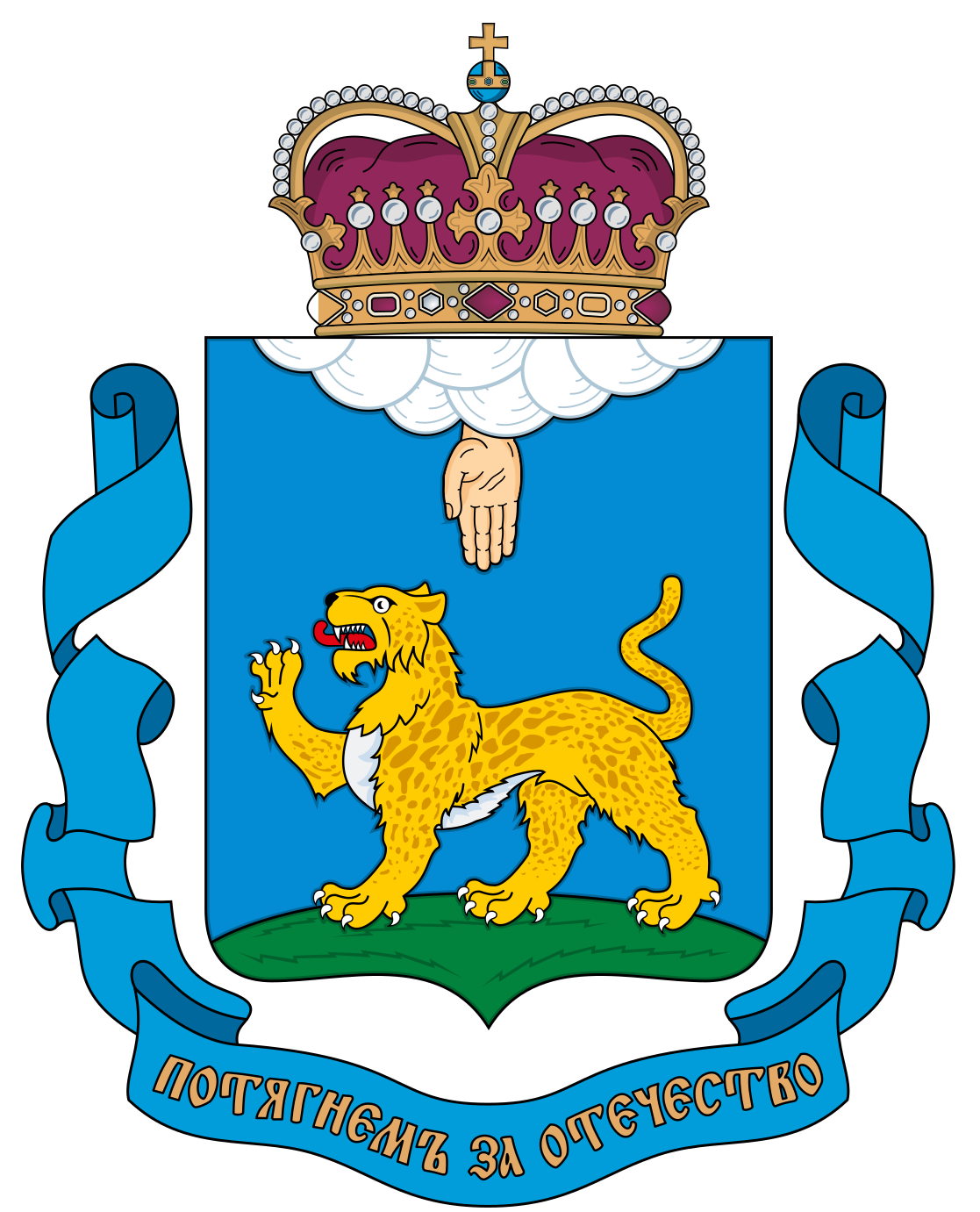
The coat of arms of Pskov Oblast (Герб Псковской области) is among the most ancient territorial emblems in Russia, known from seals since the 14th century. The golden leopard on a blue field, crowned and with a hand issuing from the clouds above, was the emblem of the independent Pskov Republic — a self-ruling city-state on the western border of Rus’, guardian against the Teutonic Knights.
Flag
Not available
Coat of Arms
Not available
| Status | Oblast (federal subject of Russia) |
|---|---|
| Capital | Pskov |
| Area | 55,399 km² |
| Founded | c. 903 (first mention of Pskov); oblast created 1944 |
| Coat of arms adopted | 28 March 1995 |
| Notable sites | Pskov Kremlin, Pskov-Pechory Caves Monastery |
Coat of Arms of Pskov Oblast — Coat of Arms of Pskov Oblast — Azure, a leopard passant Or crowned; a hand Or from clouds. Known since the 14th century; restored 28 March 1995.
Azure, a leopard passant Or, crowned Or, tail erect; above in the dexter flank a hand Or issuing from clouds Argent.
The arms of Pskov are among the most ancient territorial emblems in Russia, known from seals since the 14th century. The golden leopard on a blue field is the emblem of the independent Pskov Republic, which governed itself as a self-ruling city-state until its annexation by Moscow in 1510. The hand from the clouds represents divine authority or the protecting hand of God over the city. The leopard in Russian heraldry often denotes what English heraldry would call a “lion passant” — the distinction between lion and leopard being less strict in the Russian tradition.
| Colour | Heraldic name | Element | Traditional symbolism |
|---|---|---|---|
| Blue | Azure | Field | The rivers of Pskov — the Velikaya and the Pskova |
| Gold | Or | Leopard, crown, hand | Sovereignty, the independence of the Pskov Republic |
| Silver | Argent | Clouds | The divine mandate underpinning the city’s authority |
Like Novgorod, Pskov was a self-governing merchant republic in medieval Russia, nominally subordinate to Novgorod but functionally independent by the 14th century. The city controlled a strategically vital position on the western border of Rus’, guarding against the Teutonic Knights and the Livonian Order to the west. The Pskov Republic was famous for its military fortifications and for its school of icon painting, which produced some of the finest medieval Russian religious art.
In 1242, the Novgorodian-Pskovian prince Alexander Nevsky defeated the Livonian Knights on the frozen surface of Lake Peipus — the famous Battle on the Ice (Ледовое побоище). This battle halted the westward advance of the Teutonic Order and secured the Orthodox Christian identity of the northwestern borderlands. Alexander Nevsky was later canonised by the Russian Orthodox Church.
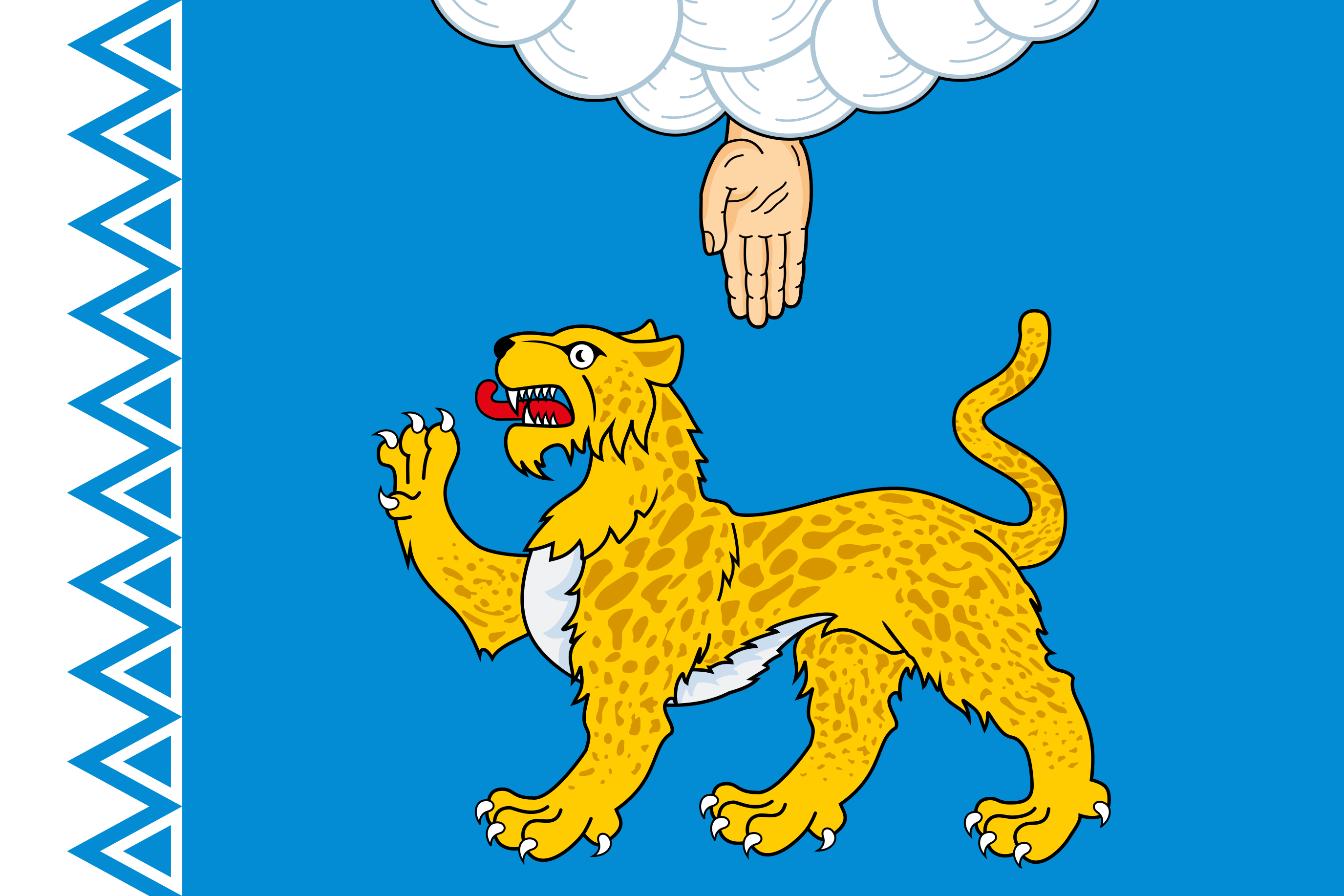
Flag of Pskov Oblast — Flag of Pskov Oblast — Dark red field with a blue vertical stripe at the hoist bearing the coat of arms. Adopted 28 March 1995.
The flag of Pskov Oblast features a dark red field with a blue vertical stripe at the hoist bearing the oblast coat of arms — the golden leopard. The dark red and blue echo the traditional colours of Pskov and its rivers. Adopted on 28 March 1995.
The golden leopard (or "lion passant" in Western heraldic terms) on a blue field is the ancient emblem of the Pskov Republic, known from city seals since the 14th century. It represents the sovereign power of Pskov as an independent city-state. The distinction between lion and leopard in Russian heraldry was less strict than in Western European traditions.
The Pskov Republic was a self-governing city-state in northwestern Russia, nominally subordinate to Novgorod but functionally independent from the 14th century until its annexation by Ivan III of Moscow in 1510. Like Novgorod, it was governed by a popular assembly (veche) and controlled important trade routes to the Baltic.
On 5 April 1242, Alexander Nevsky led a Novgorodian-Pskovian army against the Livonian Knights of the Teutonic Order on the frozen Lake Peipus (Чудское озеро). The heavy cavalry broke through the ice and were routed. The battle halted the crusading advance into Orthodox Russia from the west and made Alexander Nevsky a national hero.
The Pskov-Pechory Caves Monastery (Псково-Печерский монастырь), founded in 1473, is one of the largest and most important monasteries in Russia. Uniquely, it has never been closed — not even under Soviet rule — because its location near the Estonian border gave it a measure of protection. Its cave churches, carved into the hillside, contain the tombs of thousands of monks.
The Pskov school of icon painting was a distinct artistic tradition that flourished in the 14th–15th centuries, known for its expressive, emotionally intense style, bold colour contrasts (deep reds and greens against dark backgrounds), and loose, dynamic brushwork. Pskovian icons influenced the development of Russian religious art as a whole.
Last reviewed by the Emblema Mundi editorial team on 3 July 2026.