Oblast — Federal Subject of Russia
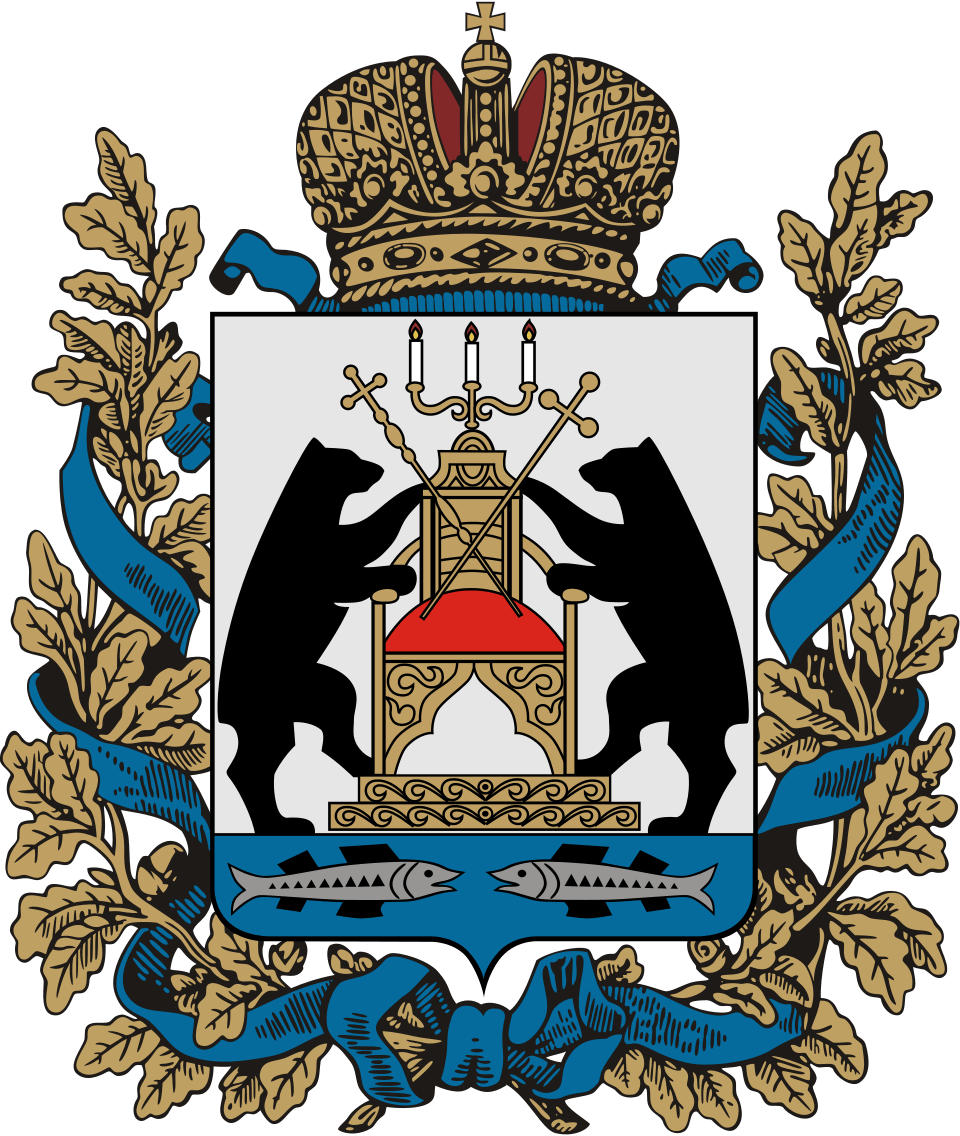
The coat of arms of Novgorod Oblast (Герб Новгородской области) reproduces the ancient arms of Veliky Novgorod, one of the oldest civic emblems in Russian history. The throne, three candles, and two flanking bears encode the democratic tradition of the Novgorod Republic — a self-governing merchant city-state that rivalled the great trading empires of medieval Europe for three centuries.
Flag
Not available
Coat of Arms
Not available
| Status | Oblast (federal subject of Russia) |
|---|---|
| Capital | Veliky Novgorod |
| Area | 54,501 km² |
| Founded | 859 (Novgorod); oblast created 1944 |
| Coat of arms adopted | 24 December 1997 (restitution of the medieval arms) |
| UNESCO site | Historic Monuments of Novgorod and Surroundings (since 1992) |
Coat of Arms of Novgorod Oblast — Coat of Arms of Novgorod Oblast — Or, a throne with three candles between two bears Gules; chief Gules with crosses and fish. Adopted 24 December 1997.
Or, on a throne Azure a golden candlestick with three candles Argent, between two bears Gules passant respectant; on a chief Gules, two crosses Argent and a fish Or between them.
The arms of Novgorod Oblast reproduce the ancient arms of Veliky Novgorod. The throne evokes the democratic tradition of the Novgorod Republic — the veche (popular assembly) that governed the city for centuries. The three candles represent the Trinity or the three parts of the city. The two bears flanking the throne are the ancient supporters of the Novgorodian arms, symbolising the strength of the republic. The red chief with two crosses and a fish alludes to the trade and Christian faith of this great merchant city.
| Colour | Heraldic name | Element | Traditional symbolism |
|---|---|---|---|
| Gold | Or | Field, fish, throne | The wealth of the Novgorod merchant republic |
| Blue | Azure | Throne | Wisdom, the legislative tradition of the Novgorod veche |
| Red | Gules | Chief, bears | Courage, the power of the republic and its military force |
| Silver | Argent | Candles, crosses | The Orthodox faith, the many churches of Novgorod |
Veliky Novgorod (Great Novgorod) was one of the most important cities of medieval Europe — not as a monarchy, but as a merchant republic governed by the veche, a popular assembly of free citizens. From the 12th to the 15th centuries, Novgorod controlled a vast trading empire stretching from the Baltic to the Urals and the Arctic, dealing in furs, wax, honey, and amber with the Hanseatic League. It was the wealthiest city in Russia until Ivan III crushed its independence in 1478 and incorporated it into the Muscovite state.
Novgorod’s wet clay soil has preserved thousands of birchbark letters (gramoty) — notes, letters, and lists written on birch bark by ordinary citizens from the 11th to the 15th centuries. These documents give an unparalleled picture of medieval urban life, revealing that literacy was widespread across all social classes in Novgorod, including women and craftsmen.
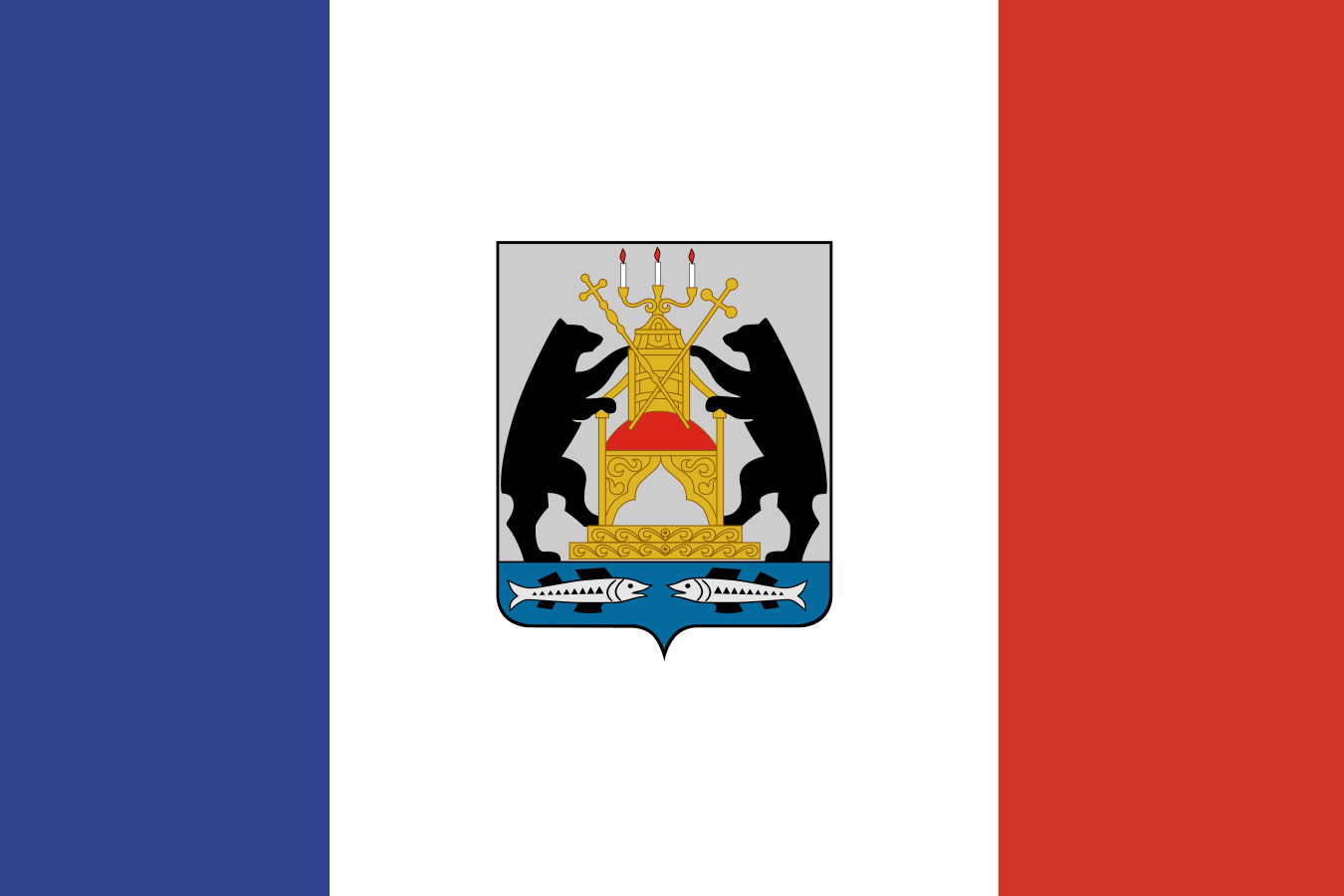
Flag of Novgorod Oblast — Flag of Novgorod Oblast — Dark red (carmine) field bearing the coat of arms in gold. Adopted 24 December 1997.
The flag of Novgorod Oblast is a dark red (carmine) rectangle bearing the coat of arms of the oblast in gold. The carmine red evokes the medieval tradition of the Novgorodian republic and its military colours. Adopted on 24 December 1997.
Veliky Novgorod was one of medieval Europe's most powerful city-states, governed from the 12th to the 15th centuries not by a prince but by the veche — a popular assembly of free citizens that elected its own officials and controlled trade. Its merchant empire stretched from the Baltic to the Urals. Ivan III of Moscow destroyed its independence in 1478.
The throne on the Novgorod arms traditionally represents the seat of justice and civic authority — the veche's power to govern the republic without a permanent prince. Some interpretations also see it as the throne of Saint Sophia (divine wisdom), the patron of Novgorod's great cathedral.
Since 1951, archaeologists have discovered over 1,100 birchbark letters (gramoty) in Novgorod's exceptionally wet clay soil, preserved for 700–900 years. Written by merchants, craftsmen, women, and children, they show that literacy was widespread among ordinary Novgorodians.
Novgorod was one of the four original Kontore (foreign trading posts) of the Hanseatic League. German Hanseatic merchants maintained the "German Court" (Nemeckiy Dvor) in Novgorod from the 12th century, exchanging Rhenish cloth for Russian furs, wax, honey, and amber.
The historic monuments of Veliky Novgorod — including Saint Sophia Cathedral (1045–1052, the oldest stone church in Russia), the Novgorod Kremlin, and dozens of medieval frescoed churches — were listed as a UNESCO World Heritage Site in 1992 for their outstanding universal value.
Last reviewed by the Emblema Mundi editorial team on 3 July 2026.