Oblast — Federal Subject of Russia
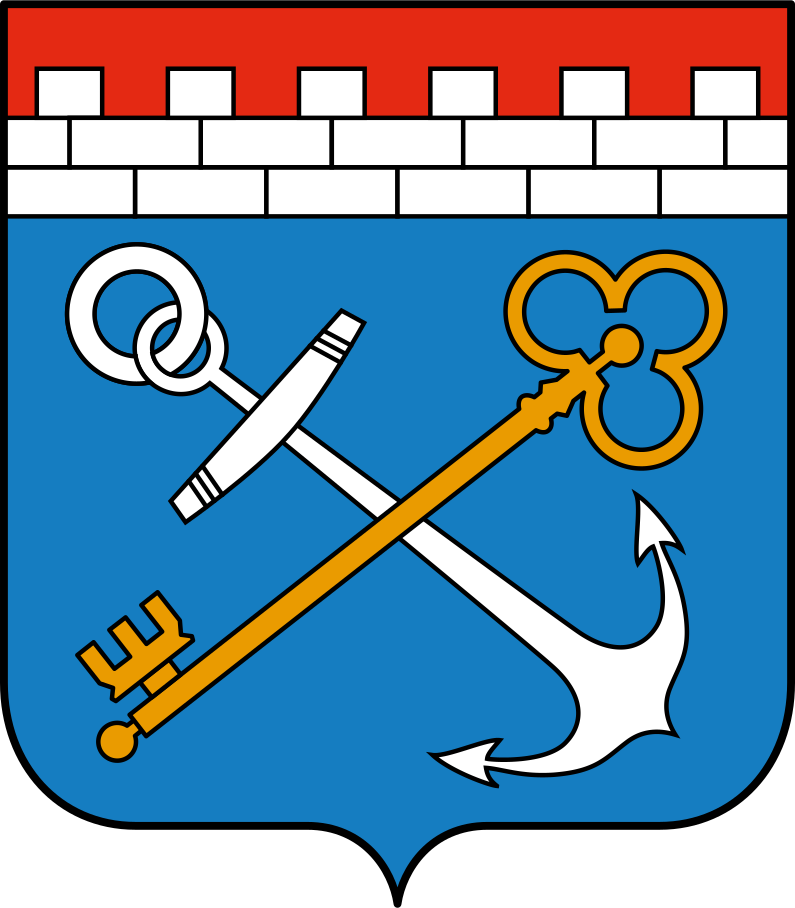
The coat of arms of Leningrad Oblast (Герб Ленинградской области) features a red fortress gate with three towers on a golden field, with a blue chief bearing a silver bend representing the Neva River. The fortress evokes the great medieval stone strongholds that defended the northwestern approaches of Russia: Staraya Ladoga, Koporye, and Yam. The oblast surrounds Saint Petersburg and contains some of the world’s most magnificent imperial palace complexes.
Flag
Not available
Coat of Arms
Not available
| Status | Oblast (federal subject of Russia) |
|---|---|
| Administrative centre | Gatchina (oblast admin); enclaves Saint Petersburg |
| Area | 83,908 km² |
| Founded | 1927 (Leningrad Oblast created) |
| Coat of arms adopted | 28 January 2000 |
| Notable sites | Peterhof, Tsarskoye Selo, Staraya Ladoga, Valaam Monastery |
Coat of Arms of Leningrad Oblast — Coat of Arms of Leningrad Oblast — Or, a fortress gate with three towers Gules; on a chief Azure, a bend Argent. Adopted 28 January 2000.
Or, a fortress gate with three towers Gules, the portcullis Or, raised; on a chief Azure, a bend Argent.
The arms of Leningrad Oblast feature a red fortress gate with three towers on a gold field — a composite symbol evoking the great medieval stone fortresses that defended the northwestern approaches of Russia: Staraya Ladoga (the first capital of Rus’), Koporye, and Yam. The open portcullis signals welcome and peace in times of security. The blue chief with a silver bend represents the Neva River, which flows through the oblast from Lake Ladoga to the Gulf of Finland.
| Colour | Heraldic name | Element | Traditional symbolism |
|---|---|---|---|
| Gold | Or | Field | Prosperity, the imperial splendour surrounding the capital |
| Red | Gules | Fortress walls | The blood shed in centuries of defence of the northwest |
| Blue | Azure | Chief | The Baltic Sea, Lake Ladoga, the Gulf of Finland |
| Silver | Argent | Bend on chief | The Neva River — the lifeline of the region |
The territory of modern Leningrad Oblast includes Staraya Ladoga, considered by many historians to be the first capital of Kievan Rus’. According to the Primary Chronicle, it was here that the Varangian (Viking) prince Rurik was invited to rule in 862, founding the Rurikid dynasty that would rule Russia for seven centuries. Staraya Ladoga’s stone fortress, one of the oldest in Russia, still stands on the Volkhov River.
Leningrad Oblast contains some of the most magnificent imperial palace complexes in the world: Peterhof (“the Russian Versailles”, with its famous gilded fountains), Tsarskoye Selo (containing the Amber Room), Pavlovsk, and Gatchina — all UNESCO World Heritage Sites.
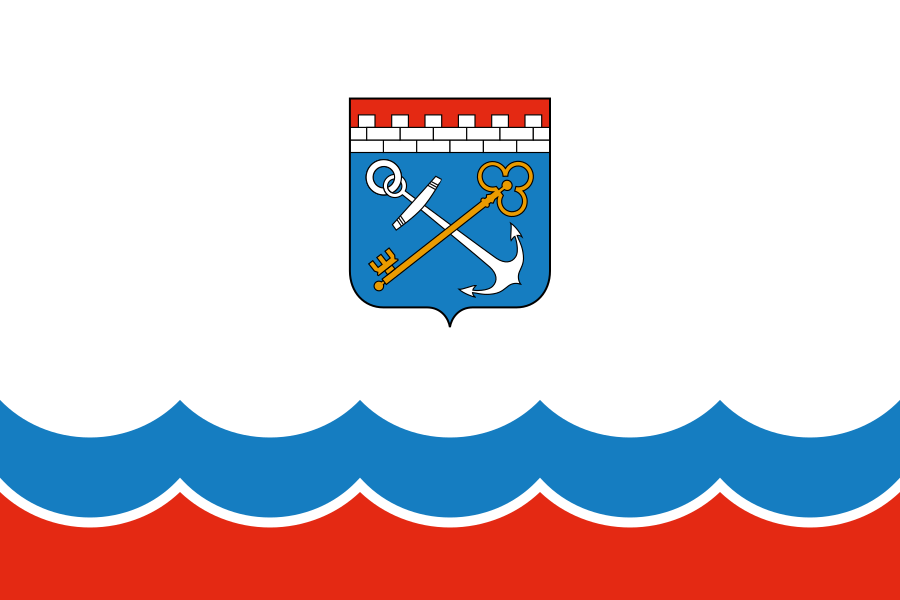
Flag of Leningrad Oblast — Flag of Leningrad Oblast — White and blue horizontal bicolour with the coat of arms. Adopted 28 January 2000.
The flag is a horizontal white and blue bicolour with the oblast coat of arms centred on the white upper band. The blue stripe represents the Baltic Sea, Lake Ladoga, and the Gulf of Finland. Adopted on 28 January 2000.
The city of Saint Petersburg (renamed Leningrad in 1924) restored its historical name by referendum in 1991. However, the surrounding oblast — which is a separate federal subject — retained the name Leningrad Oblast. Changing the oblast's name would require a complex legislative process, and successive regional administrations have not pursued it.
Staraya Ladoga (Old Ladoga) is a small town on the Volkhov River in Leningrad Oblast, considered by many historians to be the earliest capital of Kievan Rus'. The Primary Chronicle records that in 862 the Varangian chieftain Rurik was invited to rule here, founding the Rurikid dynasty. Its stone fortress, one of Russia's oldest, dates to the 9th century.
The oblast contains several UNESCO-listed imperial palace complexes: Peterhof (Pyotr Velikiy's seaside palace with its famous golden fountains), Tsarskoye Selo (containing the Amber Room in the Catherine Palace), Pavlovsk (Paul I's neoclassical park palace), and Gatchina (Aleksandr III's preferred residence).
The oblast was almost entirely occupied by German and Finnish forces from 1941 to 1944. The Siege of Leningrad (September 1941 – January 1944) cut the city off for 872 days; the only supply route was the "Road of Life" across the ice of Lake Ladoga in winter.
Lake Ladoga is the largest lake in Europe, covering 17,700 km² in eastern Leningrad Oblast and the Republic of Karelia. It drains via the Neva River into the Gulf of Finland. During the Siege of Leningrad, the lake surface in winter became the "Road of Life" (Дорога жизни) — a supply route across the ice that kept the besieged city alive.
Last reviewed by the Emblema Mundi editorial team on 3 July 2026.