Republic — Federal Subject of Russia
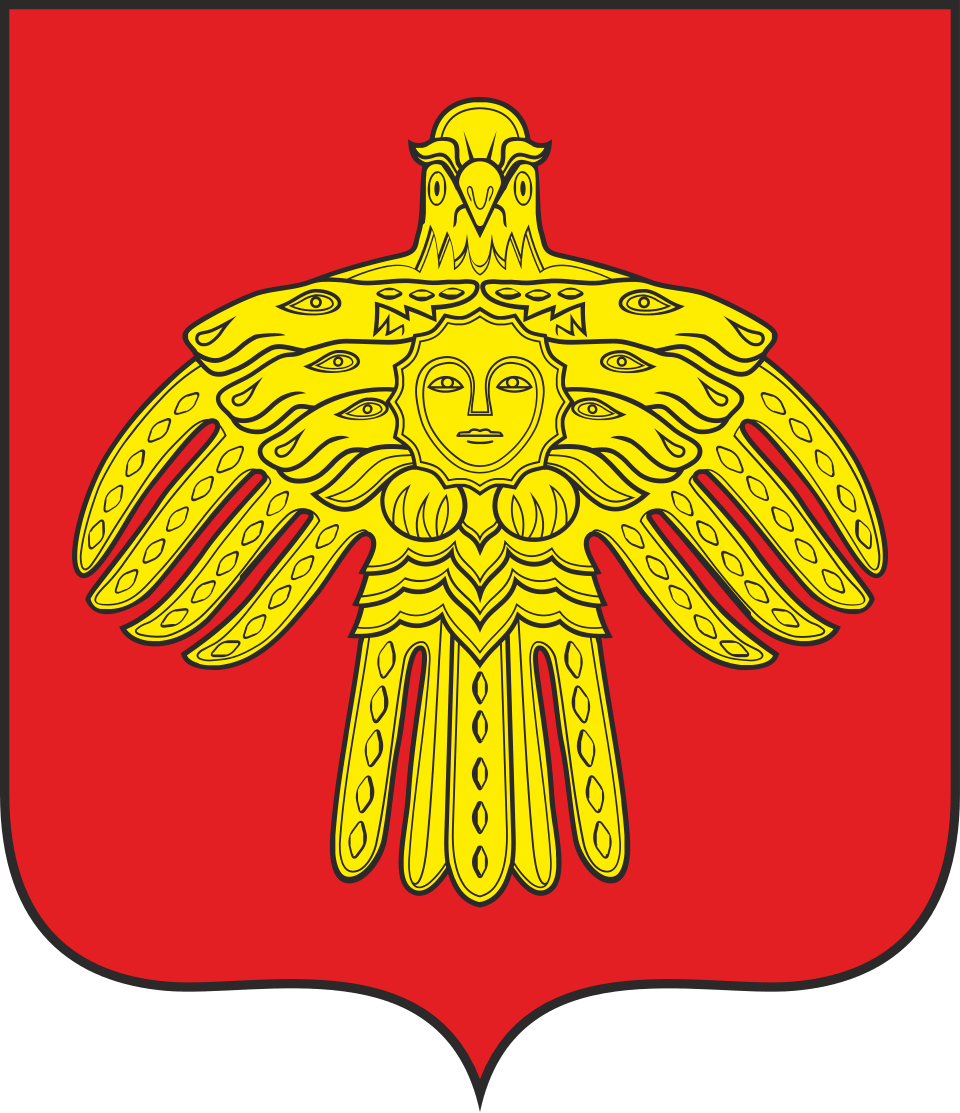
The coat of arms of the Komi Republic (Герб Республики Коми) is rooted in the cosmology of the Komi people (Zyryans), a Finno-Ugric nation of northeastern European Russia. The golden bear — a sacred ancestor in Komi tradition — holds a human hand, expressing the bond between the human world and the forest spirits. A solar disc with a running deer is charged on its breast.
Flag
Not available
Coat of Arms
Not available
| Status | Republic (federal subject of Russia) |
|---|---|
| Capital | Syktyvkar |
| Area | 416,774 km² |
| Population | c. 820,000 |
| Indigenous people | Komi (Zyryans) — a Finno-Ugric people |
| Coat of arms adopted | 28 May 1992 |
Coat of Arms of Komi Republic — Coat of Arms of the Komi Republic — Or, a bear passant Gules holding a hand Argent; solar disc with deer Gules on breast. Adopted 28 May 1992.
Or, a bear passant Gules, in its dexter forepaw a hand Argent; charged on the breast with a disc Or bearing a deer passant Gules.
The coat of arms of the Komi Republic is rooted in the cosmology of the Komi people (also called Zyryans), a Finno-Ugric nation of northeastern European Russia. The bear is the totemic ancestor of the Komi in their traditional belief system, and the paw grasping a human hand (lalun in Komi) represents the bond between the human world and the spirit world of the forest. The solar disc with a running deer alludes to the reindeer herding traditions of the northern Komi.
| Colour | Heraldic name | Element | Traditional symbolism |
|---|---|---|---|
| Gold | Or | Field, disc | The riches of the Komi land — coal, oil, timber |
| Red | Gules | Bear, deer | Vitality, the power of the bear in Komi mythology |
| Silver | Argent | Hand | Justice, the human presence in an immense wilderness |
The Komi (Zyryans) are a Finno-Ugric people related to the Udmurts, the Mansi, and more distantly to the Finns and Estonians. In traditional Komi belief, the bear is a sacred ancestor, a forest spirit that mediates between the living and the dead. Bear ceremonies — including the ritual of speaking to a killed bear as though it were still alive — persisted in the taiga villages of the Komi well into the 20th century. The bear on the coat of arms is not merely decorative: it encodes an entire cosmology.
The republic sits atop enormous reserves of coal (Vorkuta and Inta coalfields, among the most productive in the USSR), oil and gas (Ukhta oilfields, among the first developed in Russia), and timber. The Vorkuta coalfields were developed largely by Gulag labour — the Komi was one of the main territories of the Soviet camp system — a history that adds a dark dimension to the human hand on the arms.
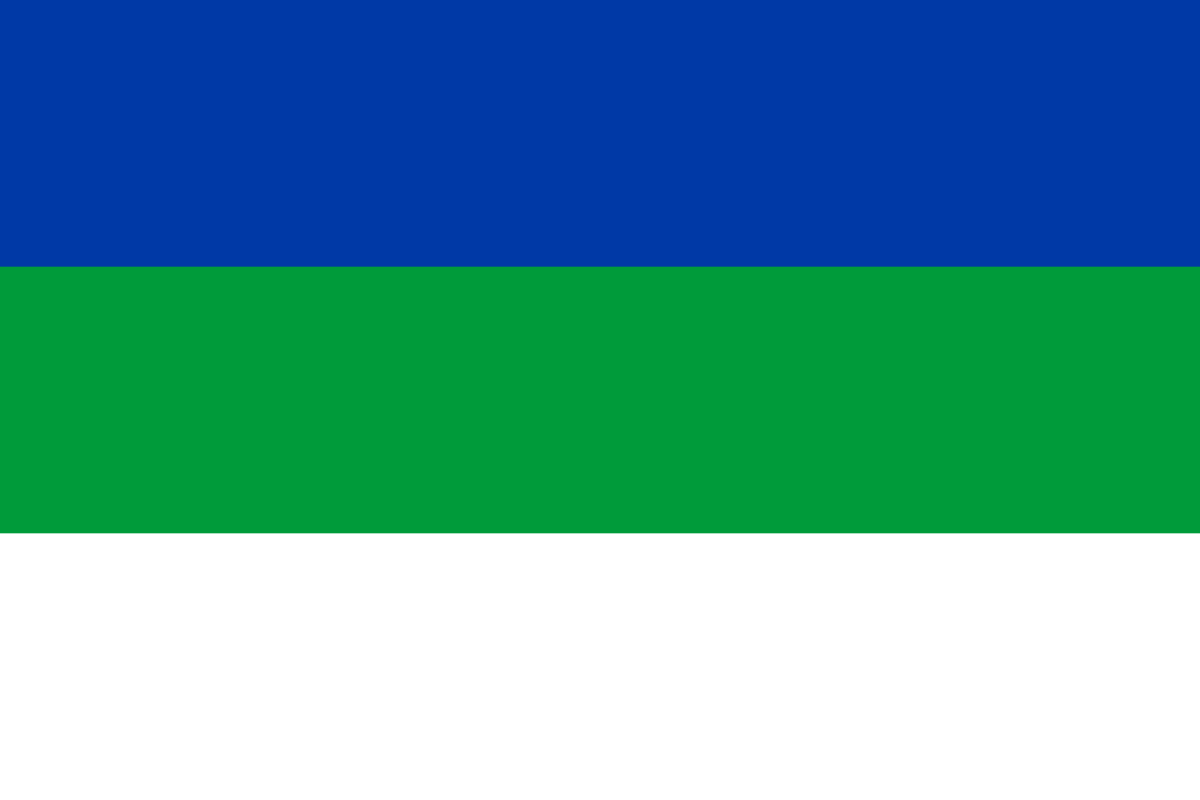
Flag of Komi Republic — Flag of the Komi Republic — Diagonal tricolour blue, green and white, with the solar symbol of the Komi people. Adopted 28 May 1992.
The flag of the Komi Republic features three diagonal bands — blue, green, and white — running from lower-left to upper-right, with the solar symbol of the Komi people in the upper-left canton. Adopted on 28 May 1992, the flag draws on Komi folk-art motifs rather than on Soviet or Russian heraldic conventions, asserting the republic’s Finno-Ugric cultural identity.
In Komi (Zyryan) traditional belief, the bear is a sacred ancestor and forest spirit that mediates between the human world and the spirit world. The bear grasping a human hand represents this bond between humanity and the forest spirits. It is one of the few Russian regional arms rooted directly in indigenous cosmology rather than Slavic or European heraldic tradition.
The Komi (also called Zyryans) are a Finno-Ugric people indigenous to the Komi Republic in northeastern European Russia. They are related to the Udmurts (their closest linguistic relatives) and more distantly to the Finns, Estonians, and Hungarians. The Komi language is written in Cyrillic and has official status in the republic alongside Russian.
The Komi Republic is rich in coal (Vorkuta and Inta coalfields), oil and gas (Ukhta), and timber. It also has deposits of bauxite, titanium, and gold. These resources were exploited intensively in the Soviet era, often through Gulag forced labour.
Vorkuta is a mining city in the far north of the Komi Republic, built almost entirely by Gulag prisoners in the 1930s–1950s to exploit the Pechora coalfield. At its peak, the Vorkutlag camp complex held over 70,000 prisoners. A major prisoner uprising in Vorkuta in 1953, shortly after Stalin's death, was one of the largest revolts in the history of the Gulag.
The diagonal design distinguishes the Komi flag from conventional horizontal tricolours and draws on the diagonal motifs found in traditional Komi textile art (woven belts, embroidery). It reflects the republic's assertion of a distinct Finno-Ugric cultural identity, separate from Slavic Russia.
Last reviewed by the Emblema Mundi editorial team on 3 July 2026.