Oblast — Federal Subject of Russia (Exclave)
The coat of arms of Kaliningrad Oblast (Герб Калининградской области) deliberately echoes the heraldic tradition of Prussia: the black eagle on gold — classic emblem of the Hohenzollern Kingdom of Prussia and the Teutonic Knights before them — charged with a silver inescutcheon bearing a black moose, the ancient symbol of the Sambian peninsula. The arms encode both the German history of the territory and its Russian present. Kaliningrad, formerly Königsberg, is today a Russian exclave entirely surrounded by EU and NATO territory.
Flag
Not available
Coat of Arms
Not available
| Status | Oblast (federal subject of Russia); exclave |
|---|---|
| Capital | Kaliningrad (formerly Königsberg) |
| Area | 15,125 km² |
| Renamed | Königsberg → Kaliningrad, 4 July 1946 |
| Coat of arms adopted | 9 December 2006 |
| Border | Lithuania (north and east), Poland (south); Baltic Sea (west) |
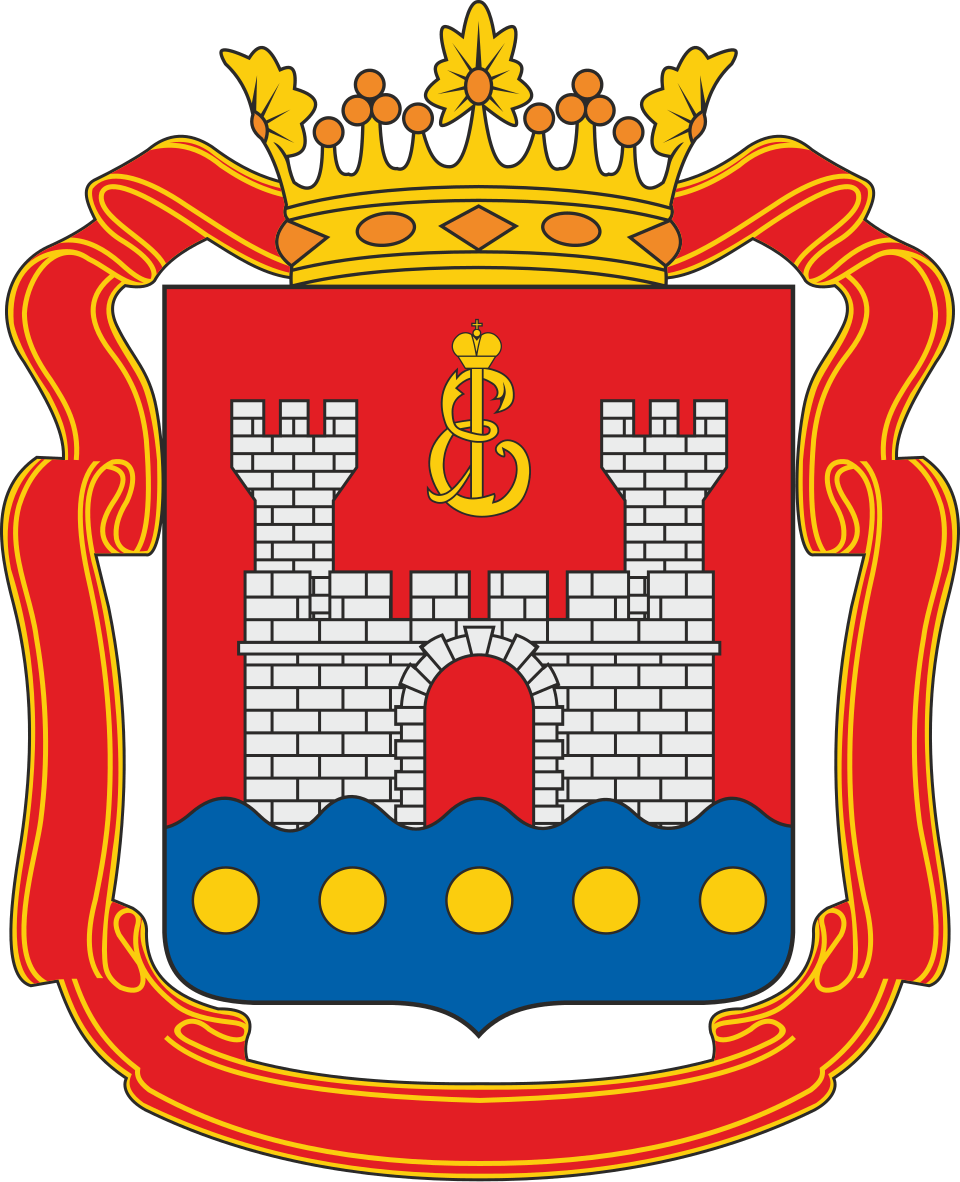
Coat of Arms of Kaliningrad — Coat of Arms of Kaliningrad Oblast — Or, an eagle Sable crowned; inescutcheon Argent with a moose Sable. Adopted 9 December 2006.
Or, an eagle displayed Sable, crowned, beaked and membered Or; charged on the breast with an inescutcheon Argent bearing a moose Sable.
The coat of arms of Kaliningrad Oblast echoes the heraldic tradition of Prussia — the black eagle on gold is the classic emblem of the Hohenzollern Kingdom of Prussia and of the Teutonic Knights who conquered the Baltic before them. The moose on the silver inescutcheon recalls the arms of the historic Sambian region (the peninsula on which Königsberg/Kaliningrad stands), whose medieval blazon featured this animal. The arms thus encode both the German history of the territory and its Russian present.
| Colour | Heraldic name | Element | Traditional symbolism |
|---|---|---|---|
| Gold | Or | Field, crown, beak | The Prussian heraldic tradition, sovereignty |
| Black | Sable | Eagle, moose | The Prussian eagle (Hohenzollern), strength |
| Silver | Argent | Inescutcheon | Purity, the Baltic coast |
The territory of Kaliningrad Oblast was East Prussia until 1945 — the easternmost province of Germany, separated from the rest of Germany by the Polish Corridor after 1919. The city of Königsberg (founded 1255 by the Teutonic Knights) was a major centre of German culture: Immanuel Kant was born, lived, and died here. In 1944–1945, the Soviet offensive overran East Prussia in brutal fighting; the German population was expelled or fled; and the city was renamed Kaliningrad in 1946.
Since 1991, Kaliningrad Oblast has been a Russian exclave — a piece of Russian territory entirely surrounded by EU member states (Lithuania and Poland) and the Baltic Sea. It has no land border with the rest of Russia. This geopolitical situation makes it strategically crucial (home of Russia’s Baltic Fleet) and a recurring point of tension between Russia and the European Union.
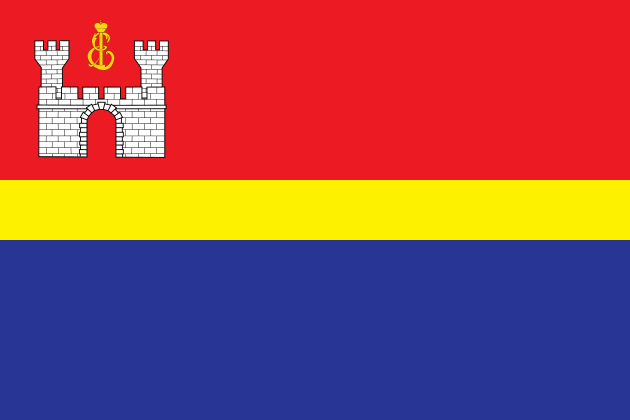
Flag of Kaliningrad — Flag of Kaliningrad Oblast — Red field with a gold vertical stripe at the hoist bearing the coat of arms. Adopted 9 December 2006.
The flag of Kaliningrad Oblast features a red field with a vertical gold stripe near the hoist, bearing the coat of arms. The red and gold intentionally evoke both Russian national colours and the Prussian-Hohenzollern heraldic palette. Adopted on 9 December 2006.
After World War II, the Potsdam Agreement (1945) transferred the northern part of East Prussia — including Königsberg — to the USSR, while the southern part went to Poland. The German population was expelled; Soviet citizens settled in the territory. The USSR renamed the capital Kaliningrad in 1946. Since 1991, it has been a Russian exclave separated from the Russian mainland by Lithuania and Belarus.
Immanuel Kant (1724–1804) was one of the most influential philosophers in Western history, the author of the Critique of Pure Reason. He was born in Königsberg, studied and taught at its university, and never left the city in his entire life. His tomb is at Kaliningrad Cathedral (the former Königsberg Cathedral), and his philosophy was inseparable from this city.
The Teutonic Knights — a German crusading military order — conquered the Baltic Prussian tribes in the 13th century and founded Königsberg in 1255. They ruled the region for two centuries until their defeat at the Battle of Grunwald (Tannenberg) in 1410. The Hohenzollerns then took the territory as the Duchy of Prussia in 1525.
Kaliningrad is home to Russia's Baltic Fleet and is heavily militarised. As an exclave surrounded by NATO and EU members, it is Russia's westernmost military outpost on the Baltic Sea. Russia has stationed Iskander missile systems in Kaliningrad, capable of reaching targets across much of central Europe.
The moose (elk) on the silver inescutcheon derives from the historical arms of the Sambian region — the peninsula on which Königsberg/Kaliningrad stands — whose medieval heraldry featured this animal. The moose is also the largest wild mammal still found in the Kaliningrad region today.
Last reviewed by the Emblema Mundi editorial team on 3 July 2026.