Oblast — Federal Subject of Russia
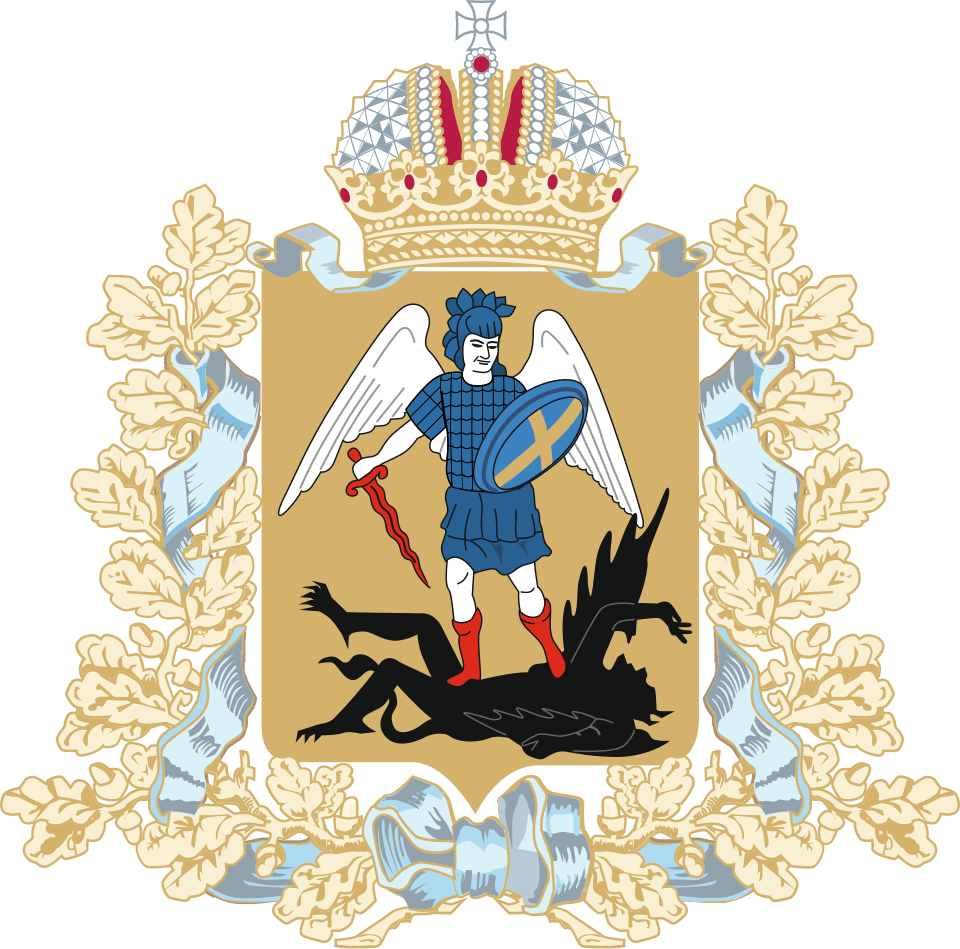
The coat of arms of Arkhangelsk Oblast (Герб Архангельской области) features the Archangel Michael — the very figure from which the city and oblast take their name — trampling a black devil. Arkhangelsk (Архангельск) means “city of the archangel.” Russia’s first major seaport, it was the sole maritime gateway to Western Europe before Pyotr Velikiy founded Saint Petersburg in 1703.
Flag
Not available
Coat of Arms
Not available
| Status | Oblast (federal subject of Russia) |
|---|---|
| Capital | Arkhangelsk |
| Area | 587,400 km² (including Nenets Autonomous Okrug) |
| Founded | 1784 (Arkhangelsk Governorate) |
| Coat of arms adopted | 1781 (Catherine II grant); restored 12 January 2000 |
| Notable territory | Solovetsky Islands (UNESCO World Heritage Site) |
Coat of Arms of Arkhangelsk Oblast — Coat of Arms of Arkhangelsk Oblast — Or, the Archangel Michael Argent robed Azure, holding a flaming sword and a blue shield, trampling a devil Sable. Arms granted by Catherine II, 1781.
Or, the Archangel Michael Argent, robed Azure, winged Argent, holding a flaming sword Or and a shield Azure charged with a cross Or; his foot upon a devil Sable overturned.
The arms of Arkhangelsk Oblast feature the Archangel Michael — the figure from which the city takes its name. Arkhangelsk (Архангельск) means “city of the archangel,” named after the Archangel Michael Monastery established here in the 12th century. Michael’s victory over the devil expresses the triumph of light over darkness, of Christian Russia over the pagan wilderness of the far north.
| Colour | Heraldic name | Element | Traditional symbolism |
|---|---|---|---|
| Gold | Or | Field, sword, shield cross | Divine light, the wealth of the White Sea trade |
| Silver | Argent | Archangel Michael, wings | Purity, the heavenly messenger |
| Blue | Azure | Robe, shield | The White Sea, heaven, loyalty |
| Black | Sable | Devil | Defeated evil, the adversary cast down |
Before the founding of Saint Petersburg in 1703, Arkhangelsk was Russia’s only significant seaport. English and Dutch merchants discovered the White Sea route in 1553 (Richard Chancellor’s expedition) and established the Muscovy Company, which traded furs, timber, and hemp through Arkhangelsk for over a century. Pyotr Velikiy’s founding of Saint Petersburg on the Baltic in 1703 shifted Russian maritime trade westward, but Arkhangelsk remained a key Arctic port.
Within the oblast lie the Solovetsky Islands in the White Sea — a UNESCO World Heritage Site since 1992. The Solovetsky Monastery, founded in the 15th century, was one of the great centres of Orthodox monasticism. Under the Soviet regime (1923–1939), it became the SLON (Solovetsky Special Purpose Camp), the prototype of the Gulag system.
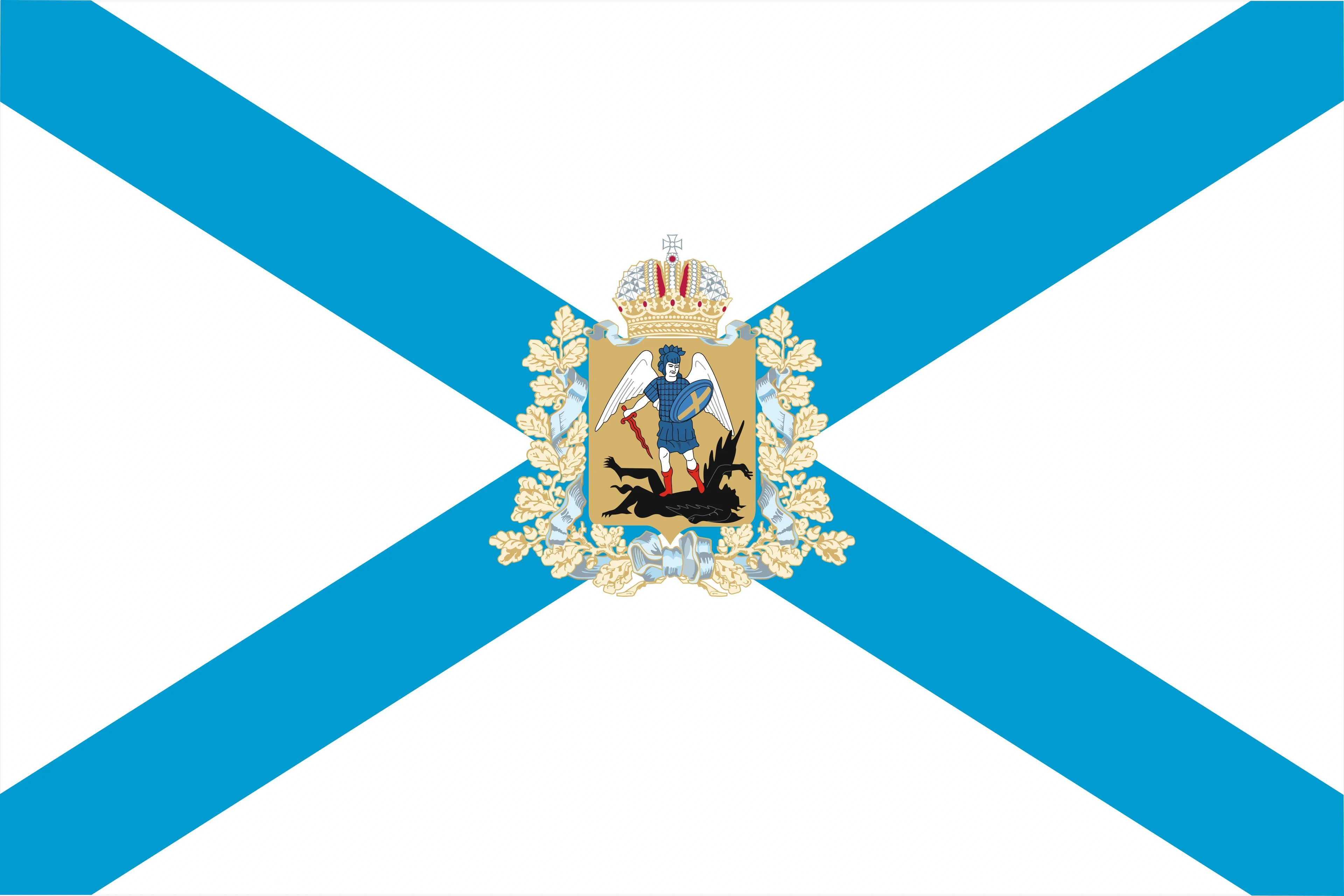
Flag of Arkhangelsk Oblast — Flag of Arkhangelsk Oblast — Yellow (Or) field bearing the oblast coat of arms. Adopted 12 January 2000.
The flag of Arkhangelsk Oblast is a yellow (gold) rectangle bearing the oblast coat of arms — the Archangel Michael — in the centre. Adopted on 12 January 2000, the flag’s golden field reproduces the heraldic Or of the arms, making the entire flag a simplified version of the coat of arms.
The name comes from the Archangel Michael Monastery (Михайло-Архангельский монастырь), founded on the Dvina River delta in the 12th century. When Ivan IV ordered the first trading port to be built here in 1584, it was named after the monastery — Arkhangelsk, "city of the archangel."
Yes. Before Pyotr Velikiy founded Saint Petersburg in 1703, Arkhangelsk was Russia's only significant outlet to the sea. English merchants of the Muscovy Company reached it via the White Sea in 1553, and for 150 years it was the hub of Russia's trade with Western Europe.
A UNESCO World Heritage Site in the White Sea, the Solovetsky Islands are home to the Solovetsky Monastery, a major centre of Russian Orthodox monasticism since the 15th century. Under Soviet rule (1923–1939), the monastery complex became the first major camp in what would become the Gulag system.
During World War II, Arkhangelsk was a crucial Allied supply port. The Arctic Convoys — Allied ships running through the Norwegian Sea and Barents Sea from Britain and the USA — delivered vital war matériel (tanks, aircraft, food) to the USSR through Arkhangelsk and Murmansk.
Saint Michael the Archangel, in Christian tradition, is the commander of the heavenly armies and the defeater of Satan. On the Arkhangelsk coat of arms he is shown trampling a black devil — the triumph of divine power over evil. He also directly names the city: Arkhangelsk means "city of the archangel."
Last reviewed by the Emblema Mundi editorial team on 3 July 2026.