State
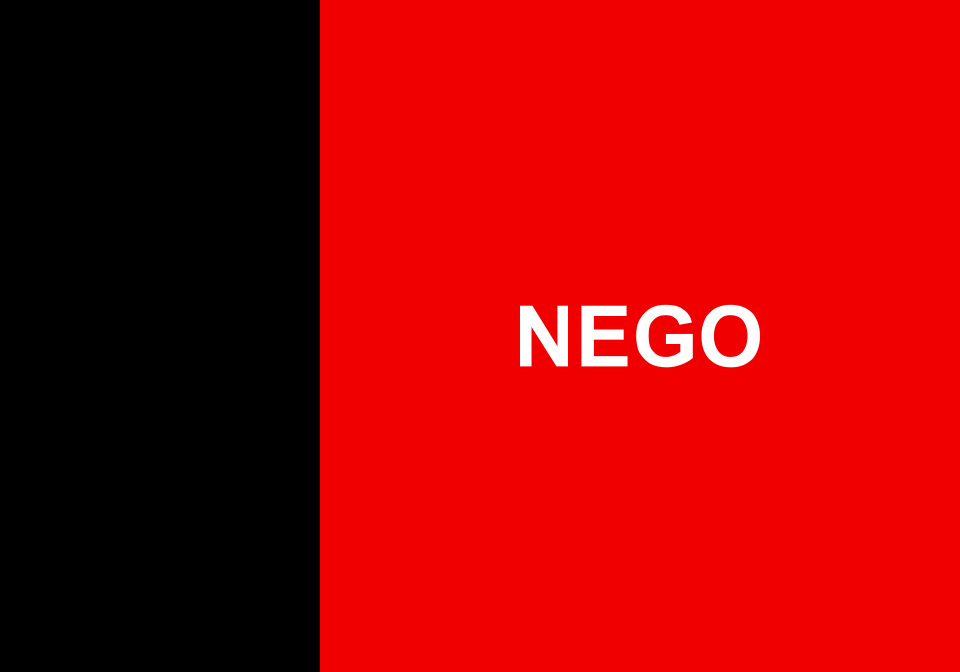
Few Brazilian state flags carry as blunt a message as Paraíba's: a single word, NEGO — "I refuse" — set in white on a field of black and red. The flag, in its present form fixed in 1965, commemorates the 1930 assassination of state president João Pessoa, whose refusal to back the government's chosen presidential successor helped ignite the Revolution of 1930. The state's older coat of arms, designed in 1907 by Genésio de Andrade, tells a calmer story — sugar cane and cotton, a coastal sunrise, and sixteen stars for the comarcas of a territory whose Portuguese hold was only secured by a peace treaty in 1585.
Flag
Not available
| State | Paraíba (Brazil, Northeast Region) |
|---|---|
| Capital | João Pessoa (founded 1585 as Cidade Real de Nossa Senhora das Neves; renamed Filipeia in 1588, Parahyba in 1599, and João Pessoa in 1930) |
| Coat of arms | Designed by Genésio de Andrade under state president Monsenhor Walfredo Leal; established by State Law 266 of 1907 |
| Flag adopted | Initial version by State Law 704 of 25 September 1930; suppressed 1937–1945; current form by Decree 3,919 of 26 July 1965 |
| Flag colours | Black and red, with white lettering |
| Flag nickname | Bandeira do Nego ("Flag of the Refusal") |
| State admitted | 15 November 1889, with the Proclamation of the Republic and the conversion of the former province into a state |
Emblema Mundi does not yet have a coat-of-arms image on file for Paraíba (only the state flag); this section is based entirely on the sourced heraldic text below and should be read alongside official reproductions.
The coat of arms of Paraíba was designed in 1907 by Genésio de Andrade and established by State Law 266, under the administration of state president Monsenhor Walfredo Leal (1905–1908). The original legal text describes a shield with three angles at the top and one at the bottom, bearing sixteen stars — fifteen arranged in a circular wreath and one at the shield's summit — surrounding a central Phrygian cap. Within the shield are two landscape scenes: a coastal view with a rising sun, and an inland pastoral scene with a herdsman and grazing cattle. The whole is wrapped in a ramage of sugar cane on the left and cotton on the right, tied by a ribbon inscribed with the date 5 de agosto de 1585.
Wikipedia's Portuguese-language entry on the arms notes that the 1907 legal description "lacks heraldic rigour" and never fixed an official colour scheme, so the tincture of these elements has varied across reproductions; the version most commonly reproduced today follows a drawing by José Wasth Rodrigues published in his reference work Brasões e Bandeiras do Brasil. We could not verify a later decree that formally revised or re-standardised the arms after 1907; this should be treated as an open question rather than a settled fact.
Portuguese attempts to settle the Paraíba coast met sustained resistance: an initial fort, São Filipe, was built in 1584 but abandoned and burned within a year under pressure from Potiguara warriors and their French trading partners. The conquest was only secured after the 5 August 1585 peace agreement with the rival Tabajara, and the settlement — first named Cidade Real de Nossa Senhora das Neves, then Filipeia de Nossa Senhora das Neves from 1588 in honour of King Philip II of the united Iberian crowns, then simply Parahyba from 1599 — grew around a natural harbour on the Rio Sanhauá known as the Varadouro.
During the Dutch occupation of the Brazilian Northeast (1634–1654), the town was renamed Frederikstad after Frederick Henry, Prince of Orange, and the captaincy received a coat of arms from the Dutch administration featuring six sugar loaves beneath a crown and a border of orange blossoms alluding to the House of Orange-Nassau — a design distinct from, and a full century older than, the 1907 arms described above. The Paraíba-born soldier André Vidal de Negreiros, who fought against Dutch forces in Paraíba in 1636 and later played a leading role in the campaigns that expelled the Dutch from Pernambuco, is among the best-known military figures of this period, though he was not the founder of the captaincy — he was born in 1606, two decades after the 1585 settlement.
After the Portuguese restoration, the territory reverted to Parahyba do Norte, later becoming an imperial province and, with the Proclamation of the Republic on 15 November 1889, a state of the federation under its first president, Venâncio Neiva. The current coat of arms dates from this Republican period, echoing the neoclassical, allegorical style favoured by other Brazilian states after 1889.
Flag — Black and red vertical bands with the white inscription NEGO, known as the Bandeira do Nego.
The flag's story begins with a political rupture. On 29 July 1929, João Pessoa Cavalcanti de Albuquerque, state president (governor) of Paraíba, sent a telegram announcing that his party would not support Júlio Prestes, the presidential candidate favoured by outgoing President Washington Luís — breaking with the informal arrangement (the "café com leite" alternation) that had governed Republican presidential succession. Pessoa instead joined the opposition Aliança Liberal ticket as running mate to Getúlio Vargas.
On 26 July 1930, Pessoa was shot and killed at the Confeitaria Glória in Recife by João Dantas, a political rival and journalist; the killing followed a personal and political scandal involving private letters, and its motives were mixed rather than purely ideological. The killing nonetheless became a national rallying point for the Aliança Liberal and is widely credited as a catalyst for the Revolution of 1930, which deposed Washington Luís and brought Vargas to power. Weeks later, on 4 September 1930, State Law 700 renamed the capital from Parahyba to João Pessoa in his honour.
An initial black-and-red flag bearing the word NÉGO (with an acute accent, later dropped) was adopted by State Law 704 of 25 September 1930, reportedly after the Legislative Assembly overrode a gubernatorial veto. Like other subnational symbols, it was suppressed during the Estado Novo dictatorship (1937–1945); it was restored by Article 139 of the 1947 state constitution, and its current, precisely specified form was fixed by Decree 3,919 of 26 July 1965, signed by governor Pedro Moreno Gondim on the 35th anniversary of the assassination.
The flag is a vertical bicolour in a 7:10 proportion: a black band at the hoist, covering one third of the flag's width, and a red field covering the remaining two-thirds, with the word NEGO in white capital letters centred on the red field (occupying roughly one-twentieth of the flag's width, per the 1965 specification). Black stands for the mourning that gripped Paraíba after João Pessoa's death; red represents the Aliança Liberal, the political movement on whose ticket he ran. NEGO — the first-person singular present indicative of the Portuguese verb negar, "to refuse" — recalls his 1929 telegram rejecting Júlio Prestes' candidacy, retrospectively turned into a memorial slogan after his death.
The flag is flown on state public buildings and displayed at official ceremonies alongside the national flag. It is most visible each 26 July, the anniversary of João Pessoa's assassination, when the state holds civic commemorations, and it remains widely known across Brazil by its popular name, the Bandeira do Nego.
NEGO is the first-person singular present tense of the Portuguese verb negar, meaning "I refuse". It recalls the telegram of 29 July 1929 in which João Pessoa, president (governor) of Paraíba, announced that his party would not support Júlio Prestes as presidential candidate, breaking with President Washington Luís. The word was added to the flag after Pessoa's assassination in 1930, turning a political slogan into a memorial.
The black band, at the hoist and covering a third of the flag, represents the mourning that followed the assassination of João Pessoa on 26 July 1930. The red field, covering the remaining two-thirds, stands for the Aliança Liberal, the political movement on whose ticket Pessoa ran as vice-presidential candidate alongside Getúlio Vargas.
An initial version was adopted by State Law 704 of 25 September 1930, weeks after João Pessoa's death. It was suppressed during the Estado Novo dictatorship (1937–1945), restored by Article 139 of the 1947 state constitution, and given its definitive current form by Decree 3,919 of 26 July 1965, signed by governor Pedro Moreno Gondim on the 35th anniversary of the assassination.
A shield with three angles at the top and one at the bottom, bearing sixteen stars (fifteen in a circular wreath and one at the summit) around a central Phrygian cap. Inside, two landscape scenes show a coastal sunrise and a pastoral inland view, and the shield is wrapped in branches of sugar cane on one side and cotton on the other, tied by a ribbon inscribed 5 de agosto de 1585, the date of the peace agreement that secured the Portuguese hold on the territory. It was designed by Genésio de Andrade and established by State Law 266 of 1907.
The capital, historically called Parahyba (earlier Filipeia de Nossa Senhora das Neves, and Frederikstad under Dutch rule), was renamed by State Law 700 of 4 September 1930 in honour of João Pessoa Cavalcanti de Albuquerque, the state president assassinated six weeks earlier in Recife, an event that helped trigger the Revolution of 1930.
Last reviewed by the Emblema Mundi editorial team on 2026-07-04.