Prefecture
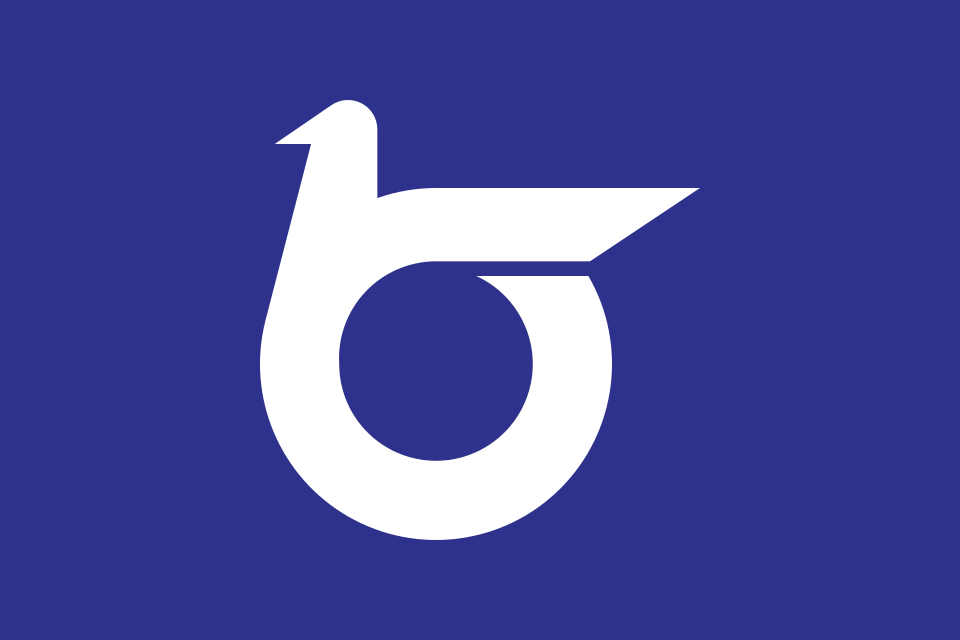
Tottori (鳥取県, Tottori-ken) flies a navy-blue flag bearing a white emblem: a bird in flight whose silhouette is shaped from the hiragana character “と” (to) — the first syllable of the prefecture’s name. Adopted in 1968 to mark the centennial of the Meiji Restoration, the design is officially said to represent freedom, peace, and Tottori’s progress toward the future. Note that Tottori Prefecture and its capital, Tottori City, are distinct administrative bodies with their own separate emblems — this page covers the prefectural symbol only.
Flag
Not available
| Prefecture | Tottori (鳥取県, Tottori-ken) |
|---|---|
| Type | Ken (県) — an ordinary prefecture |
| Region | Chūgoku, on the Sea of Japan coast |
| Capital | Tottori City |
| Established | 14 July 1871 (haihan-chiken), from the former provinces of Inaba and Hōki; merged into Shimane Prefecture 1876–1881; re-established as an independent prefecture 12 September 1881 |
| Population | Japan’s least populous prefecture |
| Crest / flag | White bird-shaped hiragana “と” on navy blue; adopted 23 October 1968 |
| Official tree | Daisen kyaraboku (mountain yew), designated 1966 |
| Official flower | Nijisseiki pear blossom, designated 1954 |
| Official bird | Mandarin duck (oshidori), designated 1964 |
Flag of Tottori Prefecture — Navy blue field, white bird-in-flight emblem, adopted 1968
The flag of Tottori Prefecture is a navy-blue field bearing the prefecture’s white emblem (県章, kenshō) at its centre: a bird shown in flight, its outline drawn so that it simultaneously forms the hiragana character “と” (to) — the opening syllable of “Tottori.” The double reading rewards a closer look: read as a bird, it evokes a creature in flight; read as a letter, it names the prefecture directly. According to the prefectural government, the design expresses “freedom and peace” and Tottori’s “progress toward the future.”
Despite Tottori’s fame for its coastal Tottori Sand Dunes (Tottori Sakyū) — the largest dune system in Japan — the official emblem makes no reference to the dunes; its motif is built entirely around the bird-and-hiragana wordplay on the prefecture’s name.
Unlike emblems that trace back to feudal-era mon or Meiji-era municipal marks, Tottori’s prefectural crest is a comparatively modern creation. It was formally adopted on 23 October 1968, a date chosen because 1968 marked the centennial of the Meiji Restoration (Meiji 1 being 1868). The same day also saw the adoption of the prefectural anthem, “Wakiagaru Chikara” (“Rising Power”), as part of the same commemorative programme.
The prefecture itself has a more layered administrative history. It was first created on 14 July 1871 during the haihan-chiken reforms that abolished Japan’s feudal domains, combining the former provinces of Inaba and Hōki. In 1876 it was merged into neighbouring Shimane Prefecture; after five years of local opposition to the merger, Tottori was re-established as an independent prefecture on 12 September 1881, with Tottori City confirmed as its capital — the configuration that has remained ever since.
A navy-blue field with a white emblem: a bird in flight shaped from the hiragana character “と” (to), the first syllable of “Tottori.” It represents freedom, peace, and the prefecture’s progress toward the future.
No. Tottori Prefecture and its capital, Tottori City, are separate levels of government, each with its own official emblem. This page describes the prefectural flag and crest, adopted in 1968 — not the city’s own distinct civic mark.
The emblem and flag were adopted on 23 October 1968, timed to commemorate the centennial of the Meiji Restoration. Some secondary sources cite other years for Japanese prefectural flags in general, but the prefectural government and independent vexillological references agree on this 1968 date for Tottori specifically.
The Daisen kyaraboku, a mountain yew native to the slopes of Mount Daisen (designated 1966); the Nijisseiki pear blossom, honouring a pear cultivar central to local agriculture (designated 1954); and the mandarin duck (oshidori), a protected waterfowl found in the prefecture’s ponds and marshes (designated 1964).
Last reviewed by the Emblema Mundi editorial team on 2026-07-04.