Prefecture
Tokushima Prefecture (徳島県, Tokushima-ken) flies an indigo-blue flag bearing a yellow crest (県章, kenshō): the hiragana characters “toku” (とく) — the first syllables of “Tokushima” — stylised into the shape of a flying bird. Chosen by public competition and adopted in 1966, the design expresses harmony, unity, and the prefecture’s soaring development, while its deep blue ground recalls Awa-ai, the natural indigo dye for which the region has been famous since the Edo period.
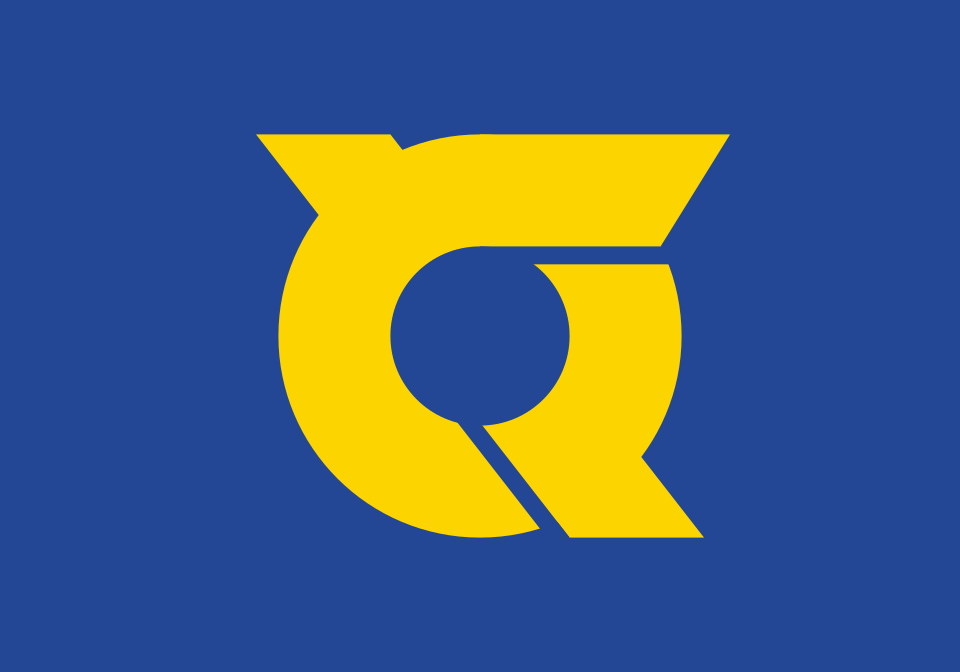
Flag
Not available
| Prefecture | Tokushima (徳島県, Tokushima-ken) |
|---|---|
| Type | Ken (県) — ordinary prefecture |
| Region | Shikoku, facing the Kii Channel and the Pacific |
| Capital | Tokushima City (a separate municipal entity with its own emblem) |
| Established | Modern prefecture reconstituted 1880, after the 1871 haihan-chiken abolished the former Tokushima Domain (Awa Province, held by the Hachisuka clan) and a brief period as Myōdō Prefecture |
| Crest (kenshō) | Hiragana “toku” (とく) stylised as a flying bird, yellow on indigo; adopted 18 March 1966 (Notice No. 166) |
| Official tree | Yamamomo (Myrica rubra), designated 13 September 1966 |
| Official flower | Sudachi blossom, designated 4 October 1974 |
| Official bird | Shirasagi (white heron), designated 1 October 1965 |
| Official colour | Indigo (藍色), designated 21 March 2017 |
Flag of Tokushima Prefecture — Indigo field, yellow flying-bird crest, adopted 1966
The flag of Tokushima Prefecture is an indigo-blue field bearing the prefecture’s yellow crest (県章, kenshō): the hiragana characters とく (“toku”), the opening syllable of “Tokushima,” stylised into the silhouette of a bird in flight. According to the prefectural government, the design is intended to express “harmony, unity, soaring ambition, and the development of the prefecture” in a single, simple emblem. Some flag variants add the prefecture’s name in white beneath the crest. The indigo ground is not merely decorative: it is a direct reference to Awa-ai, the natural indigo dye historically produced across the region (the former Awa Province), which became a nationally traded commodity during the Edo period and remains closely associated with Tokushima’s identity — a link the prefecture made official in 2017 by formally designating indigo as its prefectural colour.
The crest was not inherited from an older feudal or municipal mark, unlike some other prefectures. It was selected through a public design competition and formally adopted on 18 March 1966 by Prefectural Notice No. 166. The design has remained unchanged since.
The prefecture itself has a more complex administrative lineage. The region corresponds to the historical Awa Province, ruled through the Edo period by the Hachisuka clan from Tokushima Castle. Following the 1871 haihan-chiken (abolition of the domains), the former Tokushima Domain briefly became Tokushima Prefecture, was renamed Myōdō Prefecture later that year, and was absorbed into Kōchi Prefecture in 1876 after a period administering neighbouring Kagawa and Awaji as well. Tokushima Prefecture was re-established in its modern form in 1880, corresponding closely to the borders of old Awa Province.
Tokushima is widely known outside Japan for the Awa Odori, a centuries-old summer dance festival held every August in Tokushima City, and for its historic role as Japan’s foremost producer of natural indigo dye. It is worth noting, however, that neither of these cultural symbols appears directly in the prefectural crest itself — the crest’s only explicit motif is the stylised “toku” bird. The indigo association is expressed through the flag’s background colour rather than through the crest’s shape, and the Awa Odori is not referenced in the emblem’s official design at all. Readers should be careful not to over-read either motif into the crest’s geometry.
An indigo-blue field with a yellow crest: the hiragana characters とく (“toku”), the first syllable of Tokushima, stylised as a flying bird, expressing harmony, unity, and the prefecture’s development.
No. Tokushima Prefecture and its capital, Tokushima City, are separate administrative bodies, each with its own official emblem. This page covers the prefectural crest and flag only; the city’s municipal emblem is a distinct design and is not shown here.
The indigo ground recalls Awa-ai, the natural indigo dye historically produced in the region (former Awa Province), a major trade good since the Edo period. The prefecture formally adopted indigo as its official colour on 21 March 2017, and it remains Japan’s leading indigo-producing region.
The crest was adopted on 18 March 1966 (Prefectural Notice No. 166), chosen through a public design competition, and has not changed since.
Last reviewed by the Emblema Mundi editorial team on 2026-07-04.