Prefecture
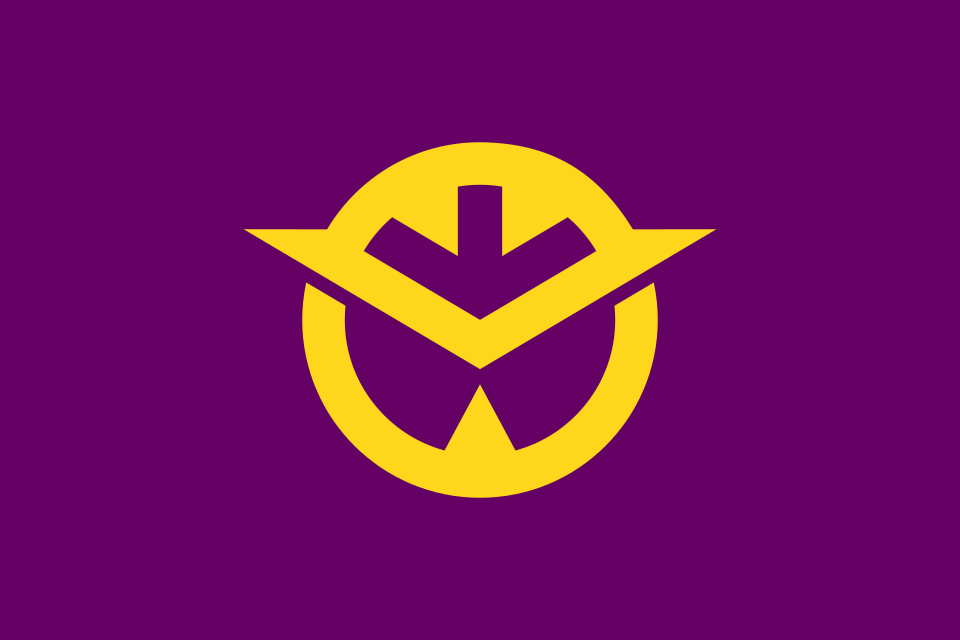
Okayama Prefecture (岡山県, Okayama-ken) flies a dark purple flag bearing a gold circular crest: the kanji character “岡” (oka, the first character of the prefecture’s name) stylised into a circular emblem. Adopted in 1967, it replaced an earlier and famously unpopular 1919 design. Note that this page describes the prefectural emblem — Okayama City, the prefecture’s capital, is a separate municipal government with its own distinct city crest.
Flag
Not available
| Prefecture | Okayama (岡山県, Okayama-ken) |
|---|---|
| Type | Ken (県) — ordinary prefecture |
| Region | Chūgoku (San’yō subregion), facing the Seto Inland Sea |
| Capital | Okayama City (a separate municipal entity with its own emblem) |
| Established | 1871, in the Meiji-era haihan-chiken reforms, from the former provinces of Bizen, Bitchū, and part of Mimasaka; present borders fixed by 1876 |
| Crest (kenshō) | Gold circular “岡” on a dark purple (eggplant) field; adopted 22 November 1967, Prefectural Notice No. 883 |
| Official tree | Japanese red pine (akamatsu), designated 1966 |
| Official flower | Peach blossom (momo no hana), customary since around 1950 |
| Official bird | Green pheasant (kiji), designated 1994, replacing the lesser cuckoo (1964–1994) |
Flag of Okayama Prefecture — Dark purple field, gold circular “岡” crest, adopted 1967
The flag of Okayama Prefecture is a dark purple field — often described in Japanese as nasu-kon, an “eggplant navy” shade — bearing the prefecture’s crest (県章, kenshō) in gold: the kanji character “岡” (oka, meaning “hill,” the first character of Okayama) stylised and curved into a circular form. A simplified white-outline version of the crest is authorised for informal or abbreviated use. The prefecture describes the design as symbolising “the unity of the prefecture’s people and its vigorous development and advancement.”
1919 — first prefectural emblem. Okayama’s original emblem, adopted in Taishō 8 (1919), also stylised the character “岡,” but in a bell-like shape. Minor design revisions followed in 1935 and 1948. The design never won public affection, and it is widely reported that a mid-century prefectural governor likened it to “a fainting pig,” after which it fell out of everyday use.
1956 — interim staff badge. With the original crest unpopular, the prefecture adopted a simpler staff badge — two semicircles representing a hill (岡), spanned by a mountain-shaped “∧” and encircled — and used it in place of an official crest for over a decade.
22 November 1967 — the current emblem. To mark the 20th anniversary of Japan’s Local Autonomy Law, the prefecture held a public design competition that drew 786 entries. The winning design, by an Okayama City–based designer, was formally adopted the same day by Prefectural Notice No. 883 as both the official crest and the basis of the prefectural flag. Sources are not fully consistent on the designer’s exact name in Latin transliteration, so it is given here simply as an Okayama City designer selected by public competition.
Because the prefecture and its capital share the same name, their emblems are sometimes confused online. Okayama Prefecture is the broader administrative region covering the former provinces of Bizen, Bitchū, and part of Mimasaka; its crest is the gold-on-purple “岡” roundel described above. Okayama City (岡山市), the prefectural capital and seat of government, is a distinct municipality with its own separate city emblem and flag, not covered on this page.
A dark purple field with a gold crest: the kanji “岡” (oka) stylised into a circular shape, representing the unity and development of the prefecture’s people.
No. Okayama Prefecture and Okayama City, its capital, are separate levels of government, each with its own distinct official emblem. This page describes only the prefectural crest and flag, adopted in 1967.
The current emblem was adopted on 22 November 1967 (Prefectural Notice No. 883), chosen from 786 public submissions. An earlier, bell-shaped “岡” emblem dated to 1919 but proved unpopular and was informally superseded by a staff badge from 1956 onward.
The Japanese red pine (akamatsu, designated 1966) is the official tree. The peach blossom has been the customary official flower since around 1950, reflecting Okayama’s fame for peach growing and its association with the Momotarō folktale. The green pheasant (kiji) has been the official bird since 1994, when it replaced the lesser cuckoo, which had held the title since 1964.
Last reviewed by the Emblema Mundi editorial team on 2026-07-04.