Prefecture
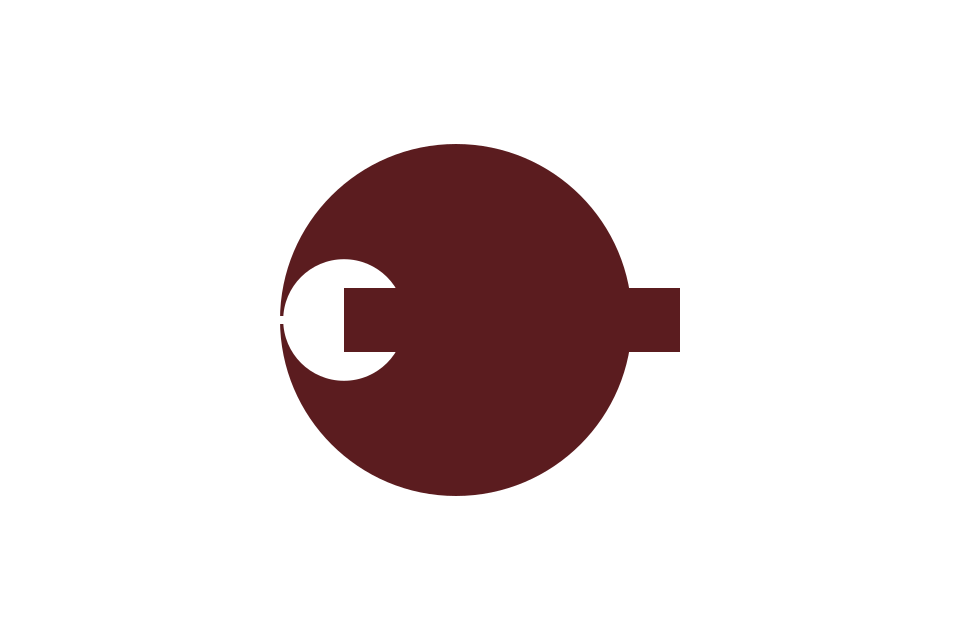
Nara Prefecture (奈良県, Nara-ken) flies a white flag bearing a crimson emblem: a stylised katakana letter “na” (ナ), the opening sound of the prefecture’s name, built from two circles and a horizontal bar. The design was formally adopted on 1 March 1968. Note that this emblem belongs to the prefecture — the modern administrative region — and is distinct from the emblem of Nara City, the prefectural capital that was also, many centuries earlier, an imperial capital of Japan (710–784).
Flag
Not available
| Prefecture | Nara (奈良県, Nara-ken) |
|---|---|
| Type | Ken (県) — ordinary prefecture |
| Region | Kansai (Kinki) |
| Capital | Nara City |
| Established | 1871 (haihan-chiken); merged into Sakai Prefecture 1876, absorbed into Osaka 1881; re-established as independent prefecture 1 December 1887 |
| Crest / emblem | Crimson stylised “na” (ナ), two circles and a bar, on white; adopted 1 March 1968 (Notice No. 536) |
| Official tree | Japanese cedar (sugi), designated September 1966 |
| Official flower | Nara yaezakura (double-flowered cherry cultivar), designated March 1968 |
| Official bird | Japanese robin (komadori), chosen by public ballot, June 1966 |
Flag of Nara Prefecture — White field, crimson “na” emblem, adopted 1968
The flag of Nara Prefecture is a white field bearing the prefecture’s crimson emblem (県章, kenshō): a stylised rendering of the katakana character “na” (ナ), the first syllable of Nara. According to the prefectural government’s own explanation, the design is built from an outer circle representing the natural beauty of Mahoroba Yamato (the ancient, poetic name for the Nara basin), an inner circle expressing the spirit of harmony — a reference to the maxim “harmony is to be valued” (和を以て貴しとなす) from Prince Shōtoku’s Seventeen-Article Constitution — and a horizontal bar running through both circles, symbolising the steady, continuous progress of prefectural administration.
The emblem and its accompanying flag were formally adopted on 1 March 1968 (Shōwa 43), under Prefectural Notice No. 536. The flag’s proportions follow a 2:3 ratio, with the crimson disc sized at 55/100 of the flag’s height. This 1968 emblem is the prefecture’s only official crest; it should not be confused with any historical mon or badge associated with the old province of Yamato, which the modern prefecture’s borders largely correspond to.
Because Nara City shares its name with the prefecture it belongs to, the two are frequently conflated. Nara City is one of Japan’s most historically significant places: as Heijō-kyō, it served as the imperial capital of Japan from 710 to 784, giving its name to the Nara period of Japanese history and hosting landmarks such as Tōdai-ji and its Great Buddha. However, that ancient significance belongs to the city, not to the modern prefectural government, which is a nineteenth-century creation with its own separate 1968 emblem. Nara City maintains its own distinct municipal emblem, unrelated in design to the prefectural one shown on this page.
Nara Prefecture was first created in 1871 as part of the haihan-chiken reforms that abolished Japan’s feudal domains. It did not survive as an independent unit for long: in 1876 it was merged into Sakai Prefecture, which was itself absorbed into Osaka Prefecture in 1881. Nara was only re-established as a separate prefecture on 1 December 1887, under its first governor, Saishō Atsushi — the administrative lineage that continues, essentially unchanged in territory, to the present day.
A white field with a crimson emblem: a stylised katakana letter “na” (ナ), formed from an outer circle, an inner circle, and a horizontal bar, representing Yamato’s natural beauty, the spirit of harmony, and steady administrative progress.
No. Nara Prefecture and Nara City (its capital) are distinct administrative bodies that happen to share a name, and each has its own separate official emblem. This page covers only the prefectural emblem and flag — not the city’s municipal mark, and not the historical significance of the ancient capital of Heijō-kyō, which refers to the city alone.
The emblem and flag were formally adopted on 1 March 1968 (Shōwa 43), under Prefectural Notice No. 536.
The Japanese cedar (sugi, designated September 1966), the Nara yaezakura double-flowered cherry (designated March 1968), and the Japanese robin (komadori, chosen by public ballot in June 1966).
Last reviewed by the Emblema Mundi editorial team on 2026-07-04.