Prefecture
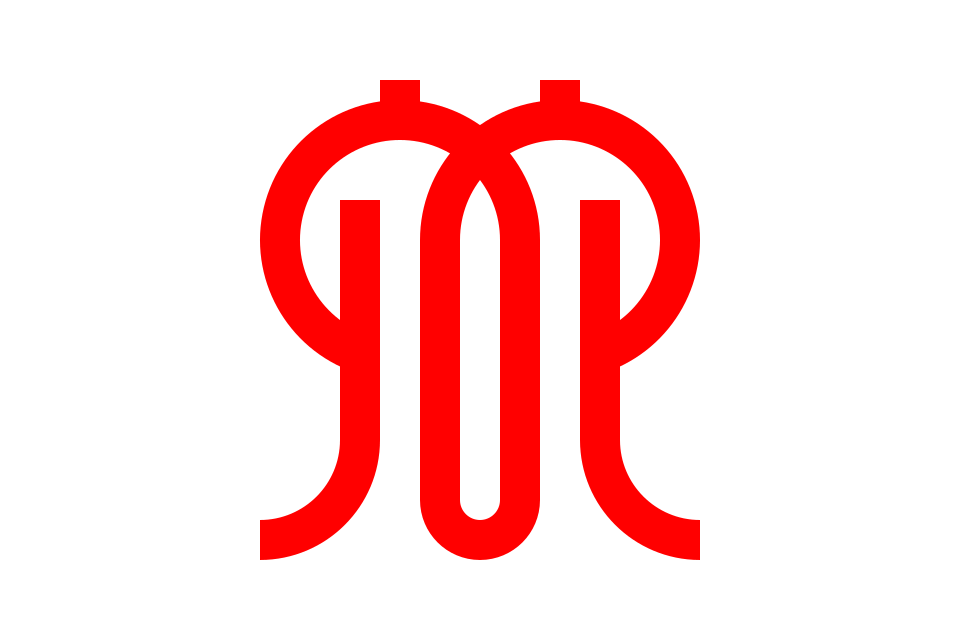
Kanagawa (神奈川県, Kanagawa-ken) flies a white flag bearing a red emblem: a symmetrical, stylised rendering of the character 神 (“kan”), the first character of the prefecture’s own name. The design was chosen through a nationwide public competition and formally adopted in 1948. Kanagawa is home to Yokohama, the port city whose 1859 opening to foreign trade — a few years after Commodore Perry’s 1854 Convention of Kanagawa first forced Japan open — made the prefecture one of the principal gateways of modern Japan.
Flag
Not available
| Prefecture | Kanagawa (神奈川県, Kanagawa-ken) |
|---|---|
| Type | Ken (県) — ordinary prefecture |
| Region | Kantō |
| Capital | Yokohama |
| Established | 1868 as Kanagawa-fu, renamed Kanagawa Prefecture later that year; present borders reached 1893 |
| Emblem (kensho) | Red, stylised character 神 on white; adopted 4 November 1948 by public design competition |
| Official tree | Ginkgo (ichō), chosen by public vote, 1966 |
| Official flower | Mountain lily (yamayuri), designated January 1951 — Japan’s first official prefectural flower |
| Official bird | Common gull (kamome), designated 1965 |
Flag of Kanagawa — White field, red emblem, adopted 1948
The flag of Kanagawa is a white field bearing the prefecture’s emblem (県章, kenshō) in red: a left-right symmetrical, geometrically stylised rendering of the kanji 神 (“kan”, meaning roughly “god” or “divine”), the opening character of the prefecture’s name, 神奈川 (Kanagawa). The mark is used across official prefectural publications and signage as well as on the flag itself.
Like many Japanese prefectural emblems introduced in the years following the Second World War, Kanagawa’s mark was selected from designs submitted by the public in a nationwide call for entries, reflecting the emphasis on civic participation and local identity that followed the 1947 postwar constitution. The Kanagawa Prefectural Government's own records date the winning design's selection to 3 November 1948, while the official gazette notice confirming it is dated 4 November 1948 — sources vary on which date to cite. Because it entered official use more than fifty years ago, the emblem itself entered the public domain under Japanese copyright law on 1 January 1999.
The prefecture’s name is historically tied to one of the pivotal moments of modern Japanese history. Commodore Matthew Perry of the United States Navy landed in the Kanagawa area in 1853 and again in 1854, and it was there that he signed the Convention of Kanagawa, the treaty that first compelled Japan to open the ports of Shimoda and Hakodate to American ships after more than two centuries of near-total isolation. A separate agreement, the 1858 Harris Treaty, then led to the opening of further ports; in 1859, the nearby fishing village of Yokohama — now the prefecture’s capital and Japan’s second-largest city — was opened as one of the country’s first treaty ports for foreign trade, rapidly growing into the major harbour city it remains today. Kanagawa Prefecture itself was established in 1868, in the earliest wave of prefectures created during the Meiji Restoration, with its present-day borders reached by 1893 after several territorial adjustments.
A symmetrical, stylised rendering of the kanji character 神 (“kan”), the first character of “Kanagawa”, shown in red on a white field. It was chosen through a public design competition rather than drawn by a single named designer.
The prefectural government dates the emblem's selection to 3 November 1948, with the official gazette notice confirming it dated 4 November 1948 — sources vary on which to cite. It was introduced in the early postwar period when many Japanese prefectures adopted official marks chosen by public submission.
Commodore Matthew Perry landed near Kanagawa in 1853–54 and signed the Convention of Kanagawa (1854), forcing Japan to open the ports of Shimoda and Hakodate to the United States. A separate agreement, the 1858 Harris Treaty, subsequently opened Yokohama, within the prefecture, to foreign trade in 1859 as one of Japan’s first treaty ports.
The ginkgo (chosen by public vote in 1966), the mountain lily (yamayuri, designated January 1951 as Japan’s first official prefectural flower), and the common gull (kamome, designated 1965 with reference to the port of Yokohama).
Last reviewed by the Emblema Mundi editorial team on 2026-07-04.