Prefecture
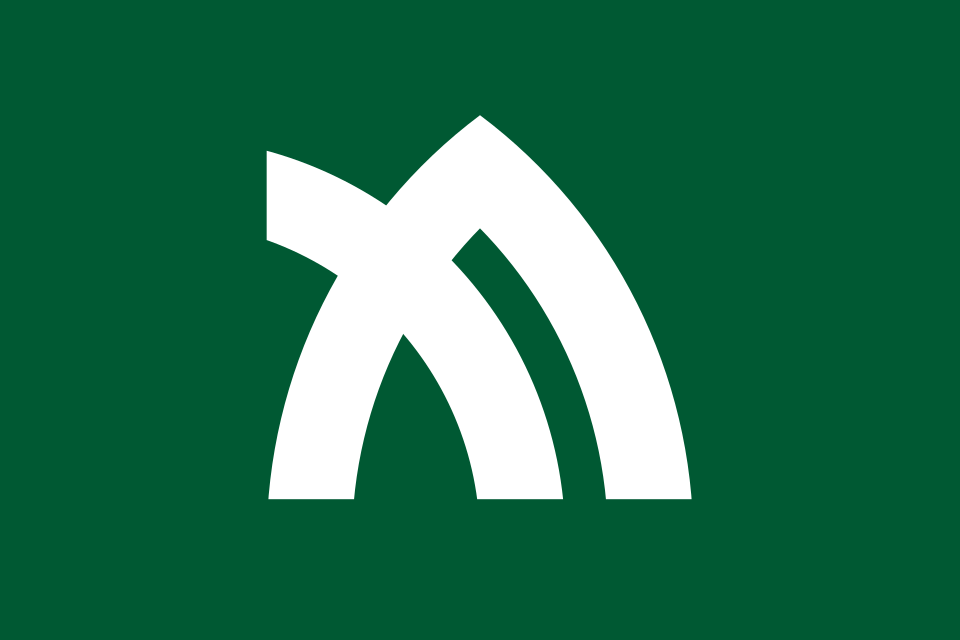
Kagawa (香川県, Kagawa-ken) flies an olive-green flag bearing a white prefectural emblem: a stylised katakana “カ” (ka), the first sound of the prefecture’s name, shaped to also suggest the local mountain silhouette and the leaves of the olive — Kagawa’s official tree and flower. Both the emblem and the flag were formally adopted on 1 October 1977. Japan’s smallest prefecture by area, Kagawa occupies the northeastern corner of Shikoku on the Seto Inland Sea and corresponds closely to the historical Sanuki Province.
Flag
Not available
| Prefecture | Kagawa (香川県, Kagawa-ken) |
|---|---|
| Type | Ken (県) — ordinary prefecture |
| Region | Shikoku, on the Seto Inland Sea |
| Capital | Takamatsu |
| Established | Corresponds to former Sanuki Province; created 1871–1872 after haihan-chiken, absorbed into Ehime Prefecture from 1876, permanently re-established as an independent prefecture 3 December 1888 |
| Emblem (kensho) | White stylised katakana “カ” evoking mountains and olive leaves, on an olive-green field; adopted 1 October 1977 (Public Notice No. 295) |
| Official tree | Olive, designated 10 September 1966 |
| Official flower | Olive, announced 1954 |
| Official bird | Lesser cuckoo (hototogisu), designated 10 May 1966 |
Flag of Kagawa — Olive-green field, white ka emblem, adopted 1977
The flag of Kagawa is an olive-green field bearing the prefecture’s white emblem (県章, kensho) at its centre. The mark is a stylised, slightly rotated rendering of the katakana character “カ” (ka) — the initial sound of “Kagawa” — drawn so that its curved strokes simultaneously suggest the prefecture’s distinctive mountain profile and the pointed leaves of the olive tree. According to the prefecture’s own explanation, the design symbolises Kagawa “continuing to advance and develop, nurtured by a blessed natural environment.” The background colour is specified in official guidelines by a precise Munsell colour reference, rendered as a deep olive green (in practice often shown as a brighter green in reproductions).
The current emblem and flag were both adopted on 1 October 1977, by Kagawa Prefectural Public Notice No. 295. Sources describe at least one earlier, less formal prefectural mark in use prior to this date, but the 1977 design is the one officially recognised today and the only one specified in current prefectural regulations.
The olive tree holds special significance in Kagawa: it was first successfully cultivated in Japan around 1910 on Shodoshima Island, part of the prefecture, and has remained closely associated with the region ever since. Olive was announced as Kagawa’s official prefectural flower in 1954, during an NHK broadcasting-station opening commemoration, and was separately designated the official prefectural tree on 10 September 1966 following a public nomination held as part of a nationwide greening campaign. The olive’s association with peace in European tradition, combined with its now-established place in Kagawa’s agriculture and landscape, made it a natural choice for both symbols — and for a place in the prefectural emblem itself.
The territory of modern Kagawa corresponds closely to the historical Sanuki Province. Following the abolition of the han system (haihan-chiken) in 1871, the former Takamatsu and Marugame domains were reorganised into short-lived prefectures that were soon consolidated into an early Kagawa Prefecture. Over the following years the prefecture was dissolved and merged more than once with neighbouring administrative units, including a lengthy absorption into Ehime Prefecture beginning in 1876. Kagawa was permanently re-established as an independent prefecture on 3 December 1888, the boundaries that have persisted to the present day.
An olive-green field with a white emblem: a stylised katakana “カ” (ka) whose curved form evokes both Kagawa’s mountain silhouette and the leaves of the olive, its official tree and flower.
Both were formally adopted on 1 October 1977, by Kagawa Prefectural Public Notice No. 295.
The olive was first grown successfully in Japan around 1910 on Shodoshima Island in Kagawa. It became the prefecture’s official flower in 1954 and its official tree on 10 September 1966, and its leaves are worked into the prefectural emblem itself.
No. Corresponding to the former Sanuki Province, Kagawa was created in 1871–1872 but was merged into neighbouring prefectures more than once, including a long absorption into Ehime Prefecture from 1876. It was permanently re-established as an independent prefecture on 3 December 1888.
Last reviewed by the Emblema Mundi editorial team on 2026-07-04.