Country
Sweden's national arms are among the oldest still in use in Europe. The Three Crowns (Tre Kronor) — three gold crowns on an azure field — appear in a painted frieze in Avignon as early as the 1330s under King Magnus Eriksson, and were formalised on the royal seal of Albert of Mecklenburg in 1364. The greater royal arms quarter them with the rampant lion of the medieval Folkung dynasty and, since 1818, carry an inescutcheon for the ruling House of Bernadotte impaling the Vasa sheaf. The yellow Scandinavian cross of the flag is, by ancient convention, simply the gold of the crowns set against the azure of the field.
Flag
Not available
Coat of Arms
Not available
| Country | Kingdom of Sweden (Konungariket Sverige) |
|---|---|
| Lesser arms attested | 1330s (Avignon frieze) under Magnus Eriksson; formalised on the 1364 royal seal of Albert of Mecklenburg |
| Greater arms — basis | Arms granted by King Charles VIII (Karl Knutsson Bonde) in 1448 |
| Greater arms — current form | Lag 1982:268 om Sveriges riksvapen, 29 April 1982 |
| Flag — first legal description | Royal warrant of 19 April 1562 (Erik XIV) |
| Flag — first modern law | Flag Law of 22 June 1906 |
| Flag — current law | Lag 1982:269 om Sveriges flagga, 29 April 1982 |
| Flag proportions | 10:16 (height:length); inner fields 4:5:4 and 4:9 |
| Royal motto | För Sverige – i tiden (For Sweden — with the times), of King Carl XVI Gustaf |
| Administrative units | 21 län (counties) |
Lesser Coat of Arms — Azure, three crowns or, set two and one. The Tre Kronor of Magnus Eriksson, attested since the 1330s.
Azure, three open crowns or, set two and one (Lilla riksvapnet).
The Lilla riksvapnet — the Lesser Arms — is one of the most economical national emblems in Europe: a blue field, three gold crowns, nothing else. It is what flies on Swedish embassies, what appears on the cover of the passport, and what is engraved on the seals of the central government. Its simplicity is medieval.
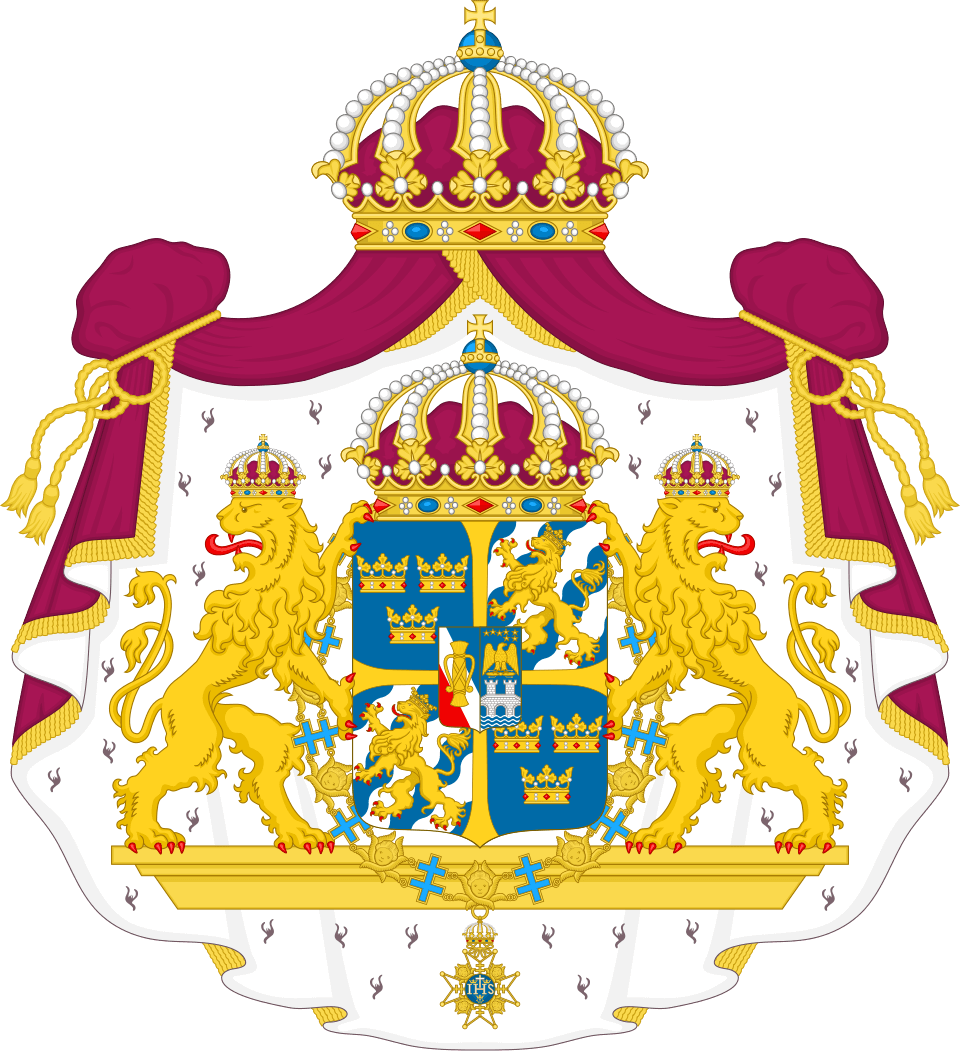
Quarterly, 1 and 4 azure three crowns or, set two and one (Sweden); 2 and 3 azure three bends sinister wavy argent, overall a lion rampant or, crowned and queue fourchée (the Folkung lion of Bjälbo); over all an inescutcheon party per pale, dexter for the House of Vasa (bendwise azure, argent and gules, charged with a vasa or — a sheaf), sinister for the House of Bernadotte (azure, issuant from a wavy base a three-arched bridge with two embattled towers argent, in the honour point an eagle regardant or resting on a thunderbolt, in chief the Big Dipper of the same). The whole within the collar of the Order of the Seraphim, surmounted by the royal crown, mantled ermine, and supported by two crowned lions queue fourchée.
The Stora riksvapnet — the Greater Arms — is a layered chronicle of Swedish dynastic history. The four quarters carry the two oldest national emblems (the Tre Kronor and the Folkung lion); the central inescutcheon updates with the ruling house. It is reserved for the monarch, the major orders of the realm and the most formal state occasions.
The traditional explanation long held that Albert of Mecklenburg (1338–1412) had brought the Three Crowns from Germany when he was crowned King of Sweden in 1364. That theory was overturned in 1982 by the discovery of a painted frieze in the palace of the Cardinal of Bayonne in Avignon, dated to the 1330s, in which the three crowns already appear as the emblem of the King of Sweden — half a century before Albert.
The frieze places the symbol firmly in the reign of Magnus Eriksson (1316–1374), who styled himself King of Sweden, Norway and Scania. The three crowns are now most often read as a heraldic claim to those three kingdoms — though older readings invoking the Three Wise Men (whose cult, centred on Cologne, was at its height in fourteenth-century Scandinavia) survive in the popular literature. Albert of Mecklenburg's seal of 1364 was decisive in another sense: it placed the three crowns alone in a shield, separated from his Mecklenburg personal arms, and so fixed them as the arms of the Swedish state rather than of the monarch.
The second great Swedish emblem is the lion of Bjälbo (Folkungalejonet) — a crowned rampant lion or on an azure field crossed by three silver bends sinister wavy. It originated with the House of Bjälbo (also called Folkung), the dynasty founded by Birger Jarl in 1248 that ruled Sweden until 1364. The lion entered the royal arms as a personal device of that house and was retained in the Greater Arms long after the dynasty had ended, becoming a second heraldic memory of medieval Sweden alongside the Tre Kronor.
The two halves of the inescutcheon record the two surviving dynastic claims of the modern monarchy:
1248 — Folkung foundation. Birger Jarl, regent and de facto founder of medieval Sweden, brings the lion of Bjälbo into the royal house.
1330s — Three Crowns. The Tre Kronor are already in use under Magnus Eriksson, depicted as Sweden's arms in the Avignon frieze.
1364 — Albert of Mecklenburg's seal. The crowns are fixed in a shield of their own, becoming the arms of the kingdom rather than of the king.
1448 — Charles VIII (Karl Knutsson Bonde). Quartering of Tre Kronor and Folkung lion is regularised in the form that remains the basis of the Greater Arms today.
1523 — Vasa accession. Gustav I Vasa adds the Vasa sheaf as the inescutcheon, marking the new dynasty and the break with the Kalmar Union.
1818 — Bernadotte accession. Jean-Baptiste Bernadotte succeeds as Karl XIV Johan; the Bernadotte arms are added beside the Vasa sheaf in the inescutcheon.
29 April 1982 — Lag 1982:268. The modern Swedish Riksvapen Act fixes the precise drawing, blazon and use of both the Lesser and Greater Arms still in force today.
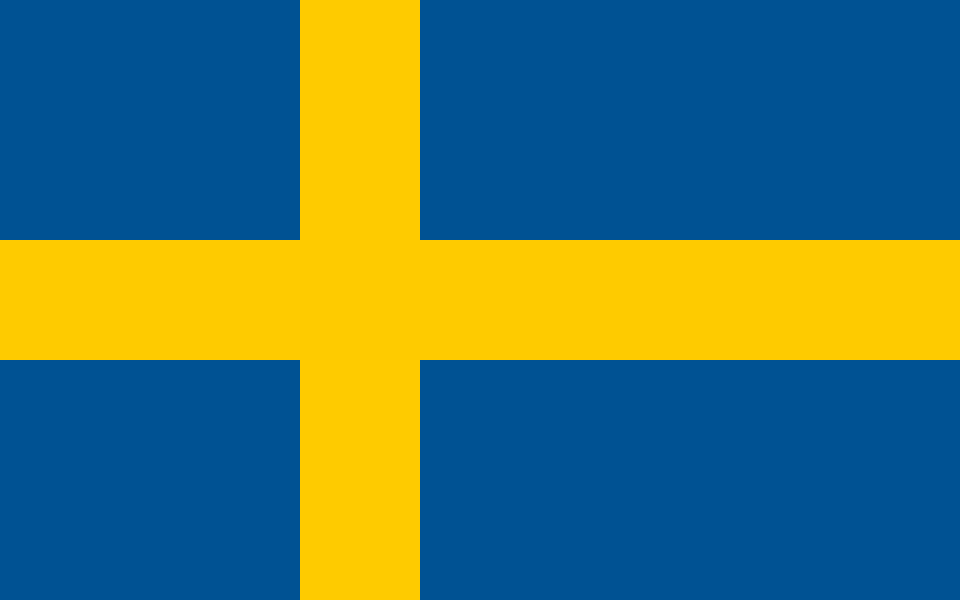
Flag — A yellow Scandinavian cross on a light blue field, the cross extending to the edges, offset toward the hoist.
Unlike most national flags, the Swedish flag did not invent its colours. They were already, in the fifteenth century, the colours of the realm: gold on azure, taken directly from the Three Crowns of the arms. When King Charles VIII formalised the quartered arms in 1448, the colours of the kingdom were settled; everything that followed — banners, military pennants, naval ensigns — derived from that palette.
The earliest legal description of a Swedish flag is found in a royal warrant of King Erik XIV dated 19 April 1562, which orders that "yellow in a cross fashioned on blue" be carried on the ships of the realm. The cross design itself is older — it is the Scandinavian cross shared with Denmark (whose Dannebrog is traditionally dated to 1219) and later adopted by Norway, Iceland, the Faroe Islands and Finland. Some scholars hold that the Swedish flag was deliberately patterned on the Dannebrog with the colours inverted; others read it as an independent development from the gold-on-blue heraldic tradition.
For three centuries the Swedish flag varied widely in shade and proportion: each navy, each regiment, each merchant guild kept its own version. The Flag Law of 22 June 1906 ended that drift. It fixed the colours as ljust mellanblå (light medium blue) and guldgul (golden yellow) — abandoning the deeper navy used in the nineteenth century — and set the proportions at 10:16, with inner fields of 4:5:4 (the horizontal arms of the cross) and 4:9 (the vertical arms).
The 1906 law was passed in the immediate aftermath of the dissolution of the union with Norway (1905), and was understood at the time as an affirmation of Swedish national identity now standing alone.
Lag 1982:269 om Sveriges flagga, passed on 29 April 1982, replaced the 1906 framework with the modern statute. It retained the 1906 colours and proportions and formalised the long-standing customary distinction between two flag forms:
6 June is the Sveriges nationaldag, observed since 1983 and a public holiday since 2005. It commemorates two events of the same date: the election of Gustav Vasa as king in 1523, which closed the Kalmar Union, and the adoption of the Instrument of Government of 1809, which began Sweden's modern constitutional history.
Swedish heraldry is unusually state-regulated for a European tradition. Since the seventeenth century, the design and registration of arms — royal, provincial, ecclesiastical, municipal — have been overseen by the office of the Statsheraldiker (State Herald), based at the Riksarkivet (National Archives) in Stockholm. Every county, every provincial city, every government agency that displays arms must have them approved by that office.
The consequence is a remarkably consistent national heraldic style: clean shields, restrained tinctures, a preference for natural local charges (waves, axes, sheaves, bears, elks, fish) over invented symbolism. Where French municipal heraldry tends to elaborate and Italian to multiply quarterings, Swedish heraldry simplifies — a visual discipline directly inherited from the Tre Kronor itself.
Alongside the arms, the Order of the Seraphim (Kungliga Serafimerorden, founded 1748) provides the highest decorative frame: its collar surrounds the Greater Arms, and its blue moiré ribbon and white-enamelled cross have become a secondary national emblem in their own right.
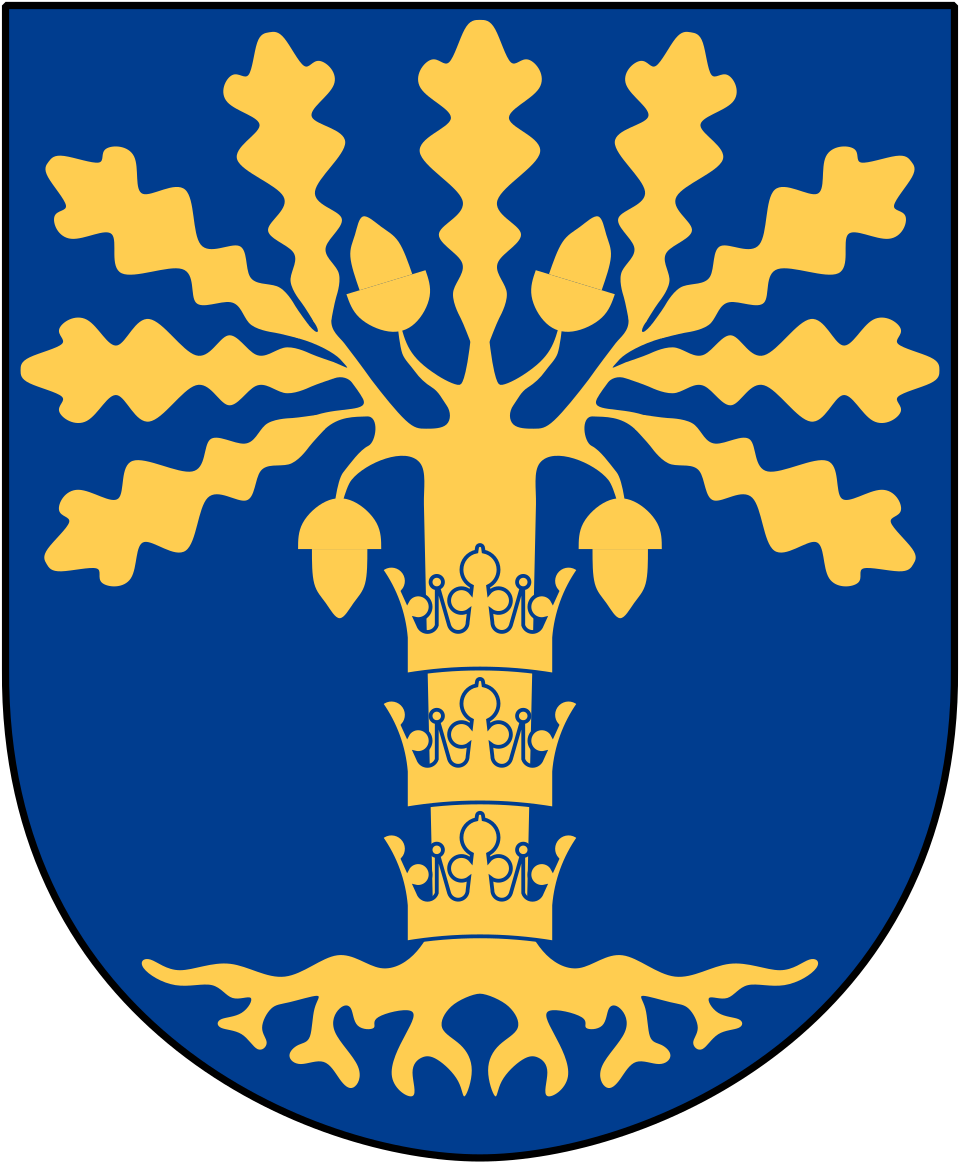
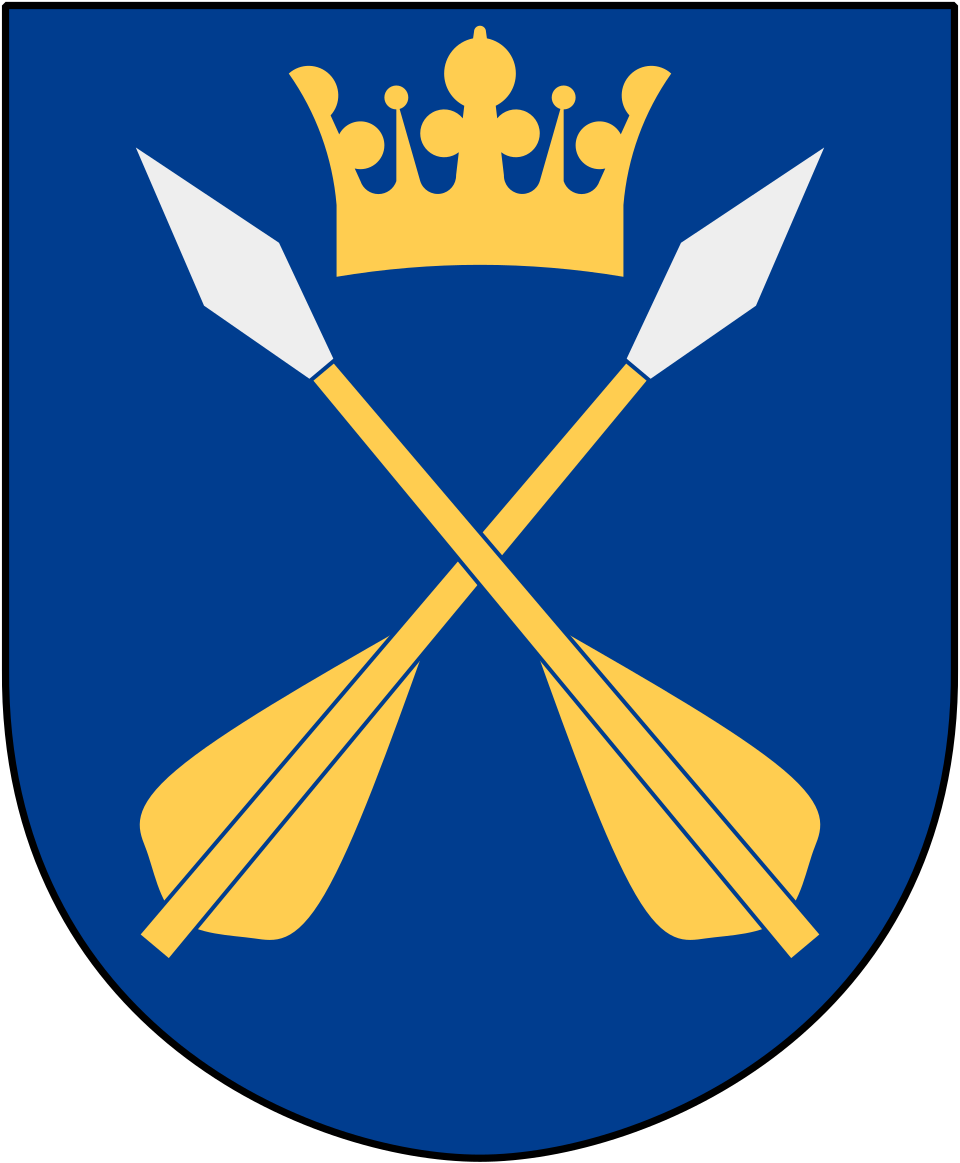
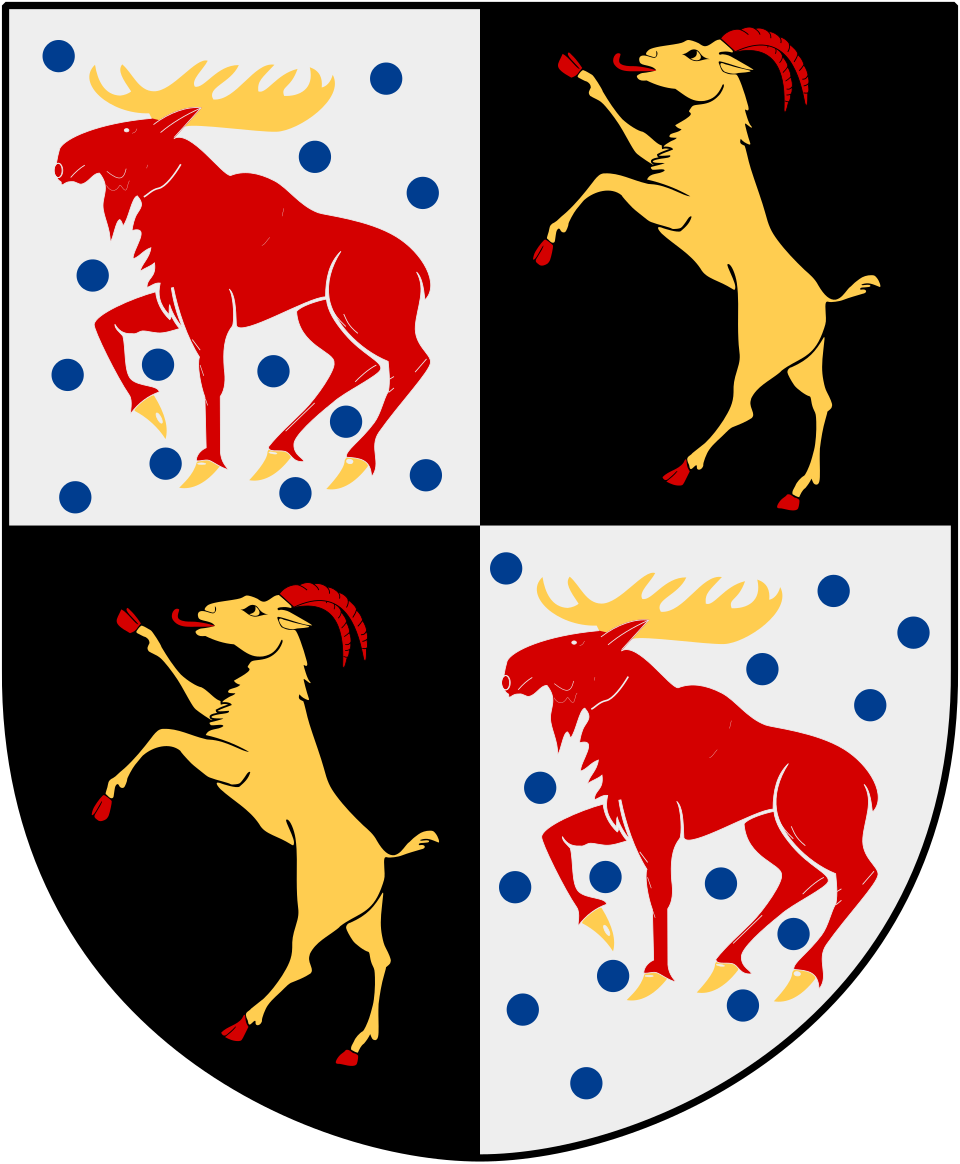
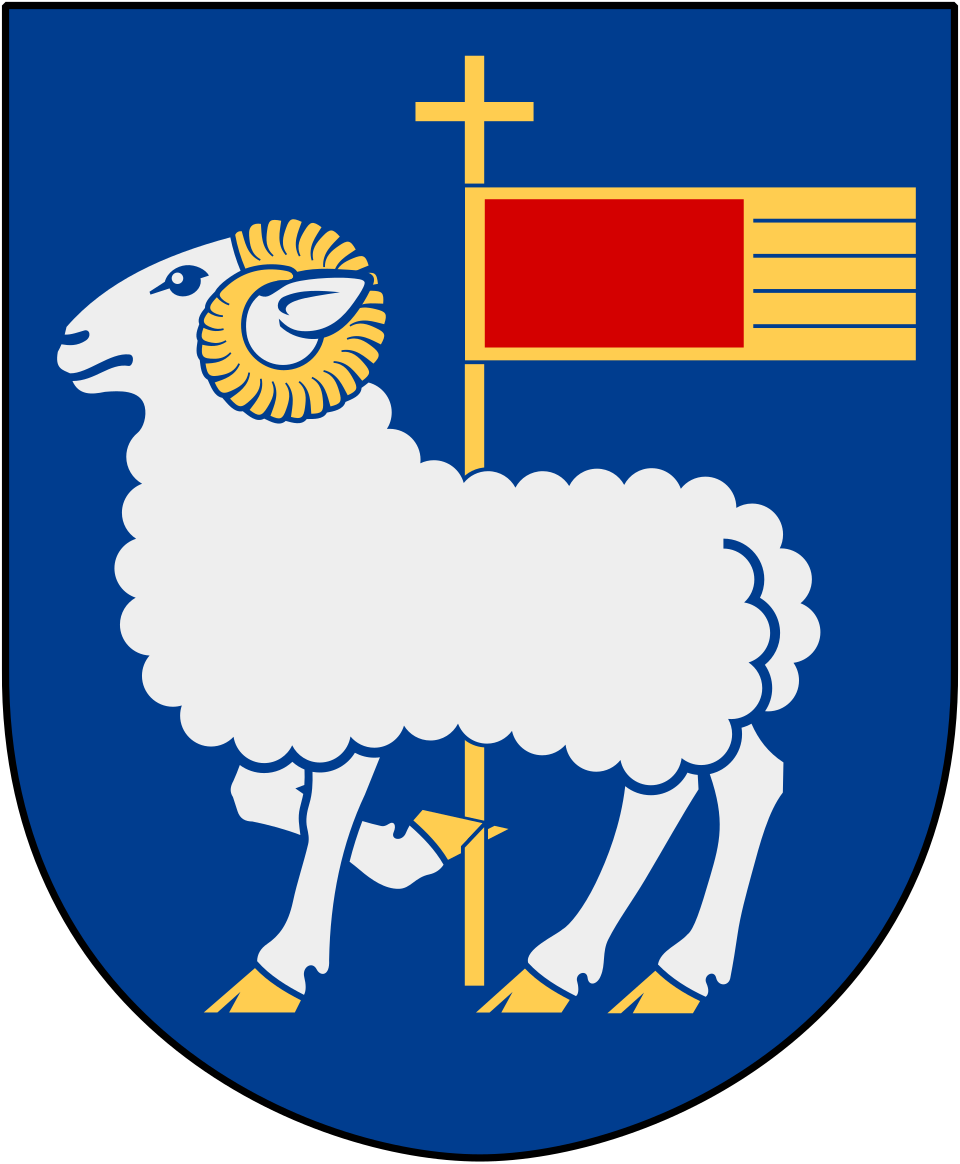
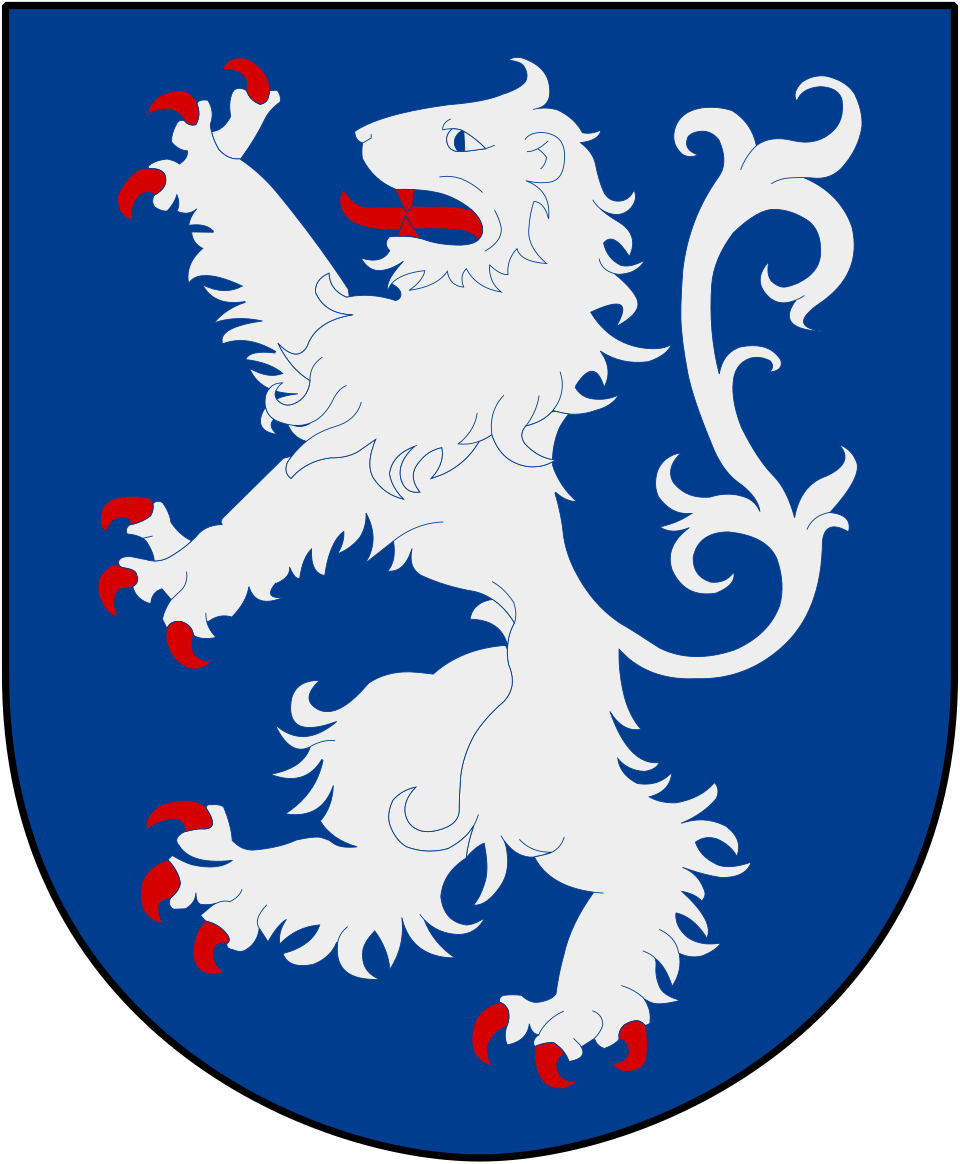
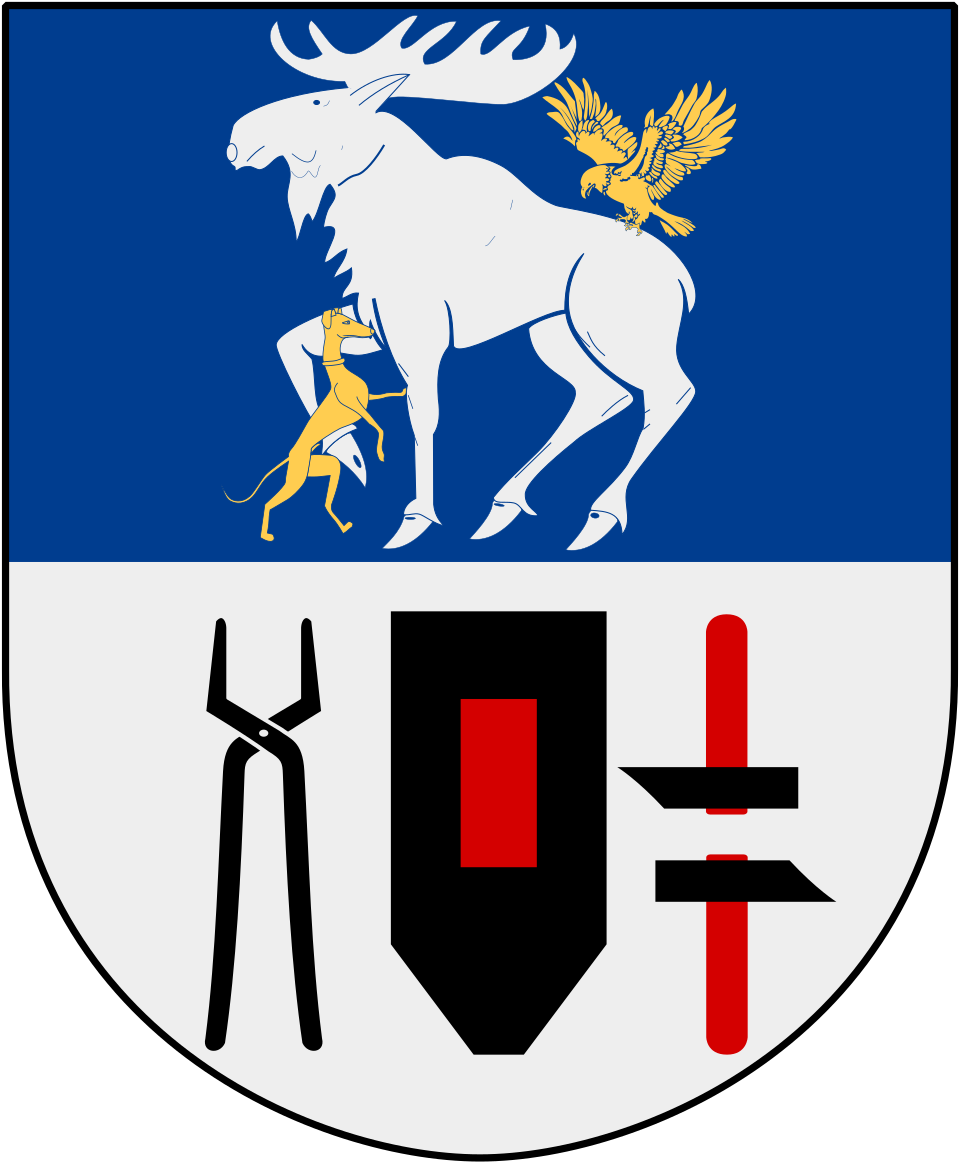
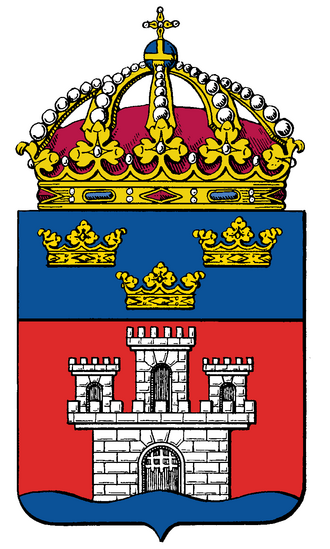
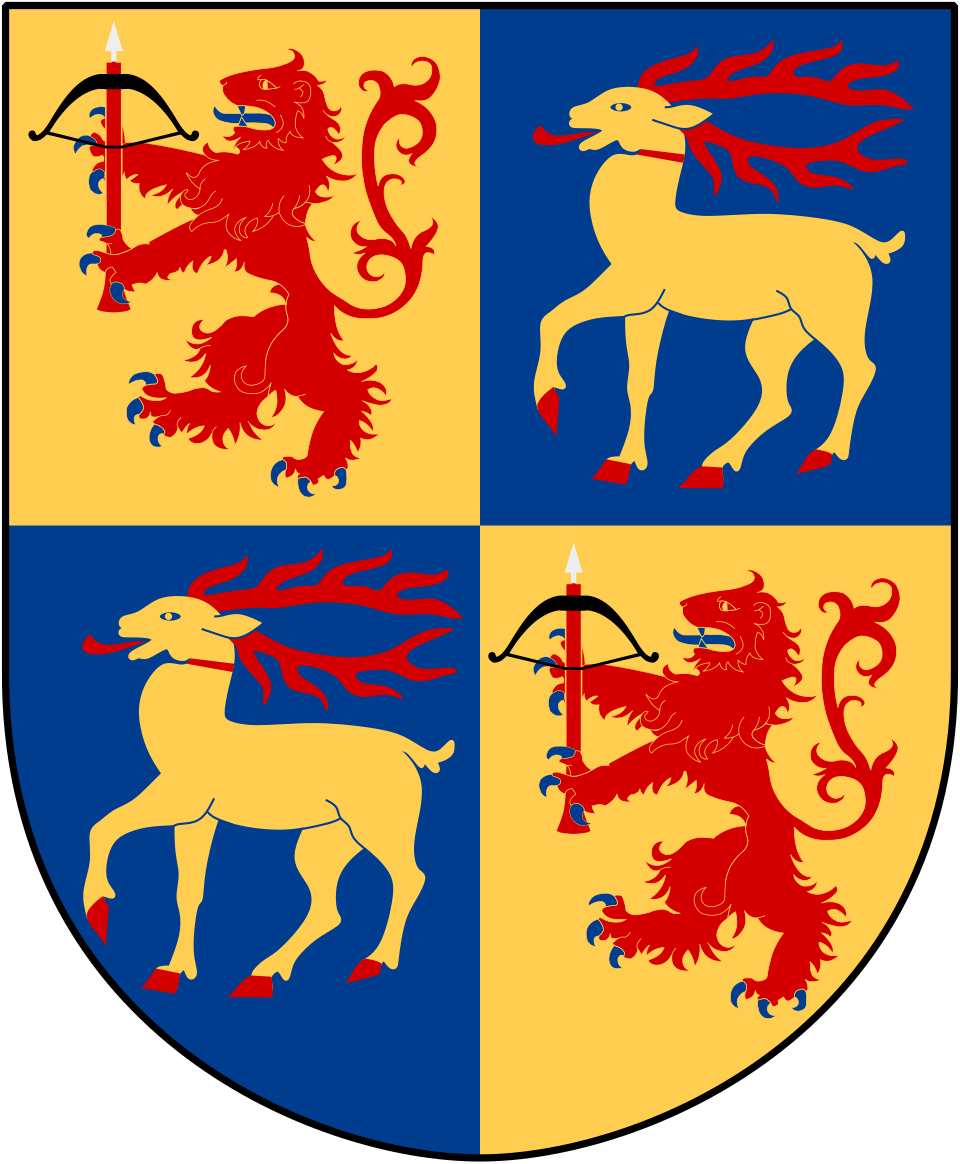
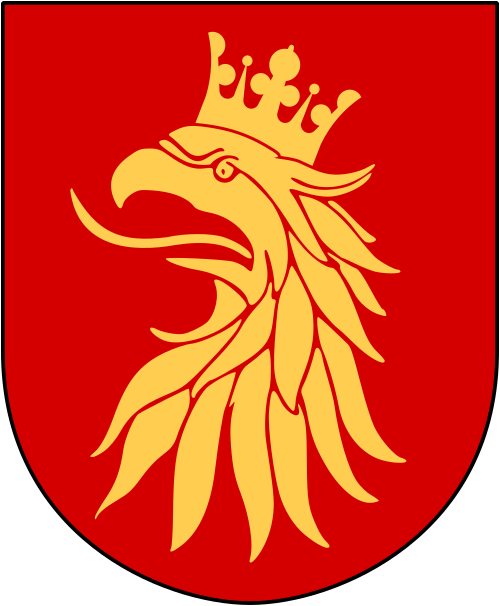
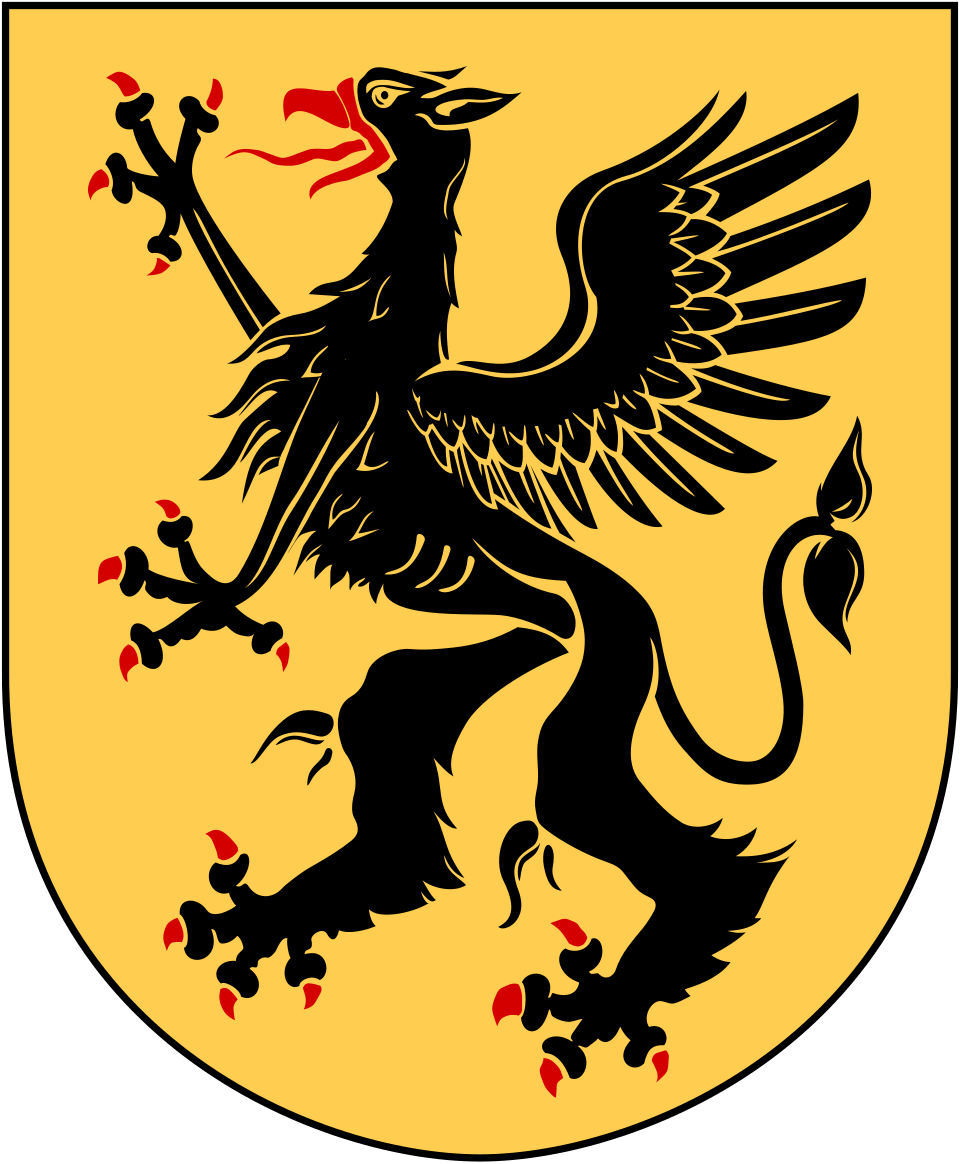
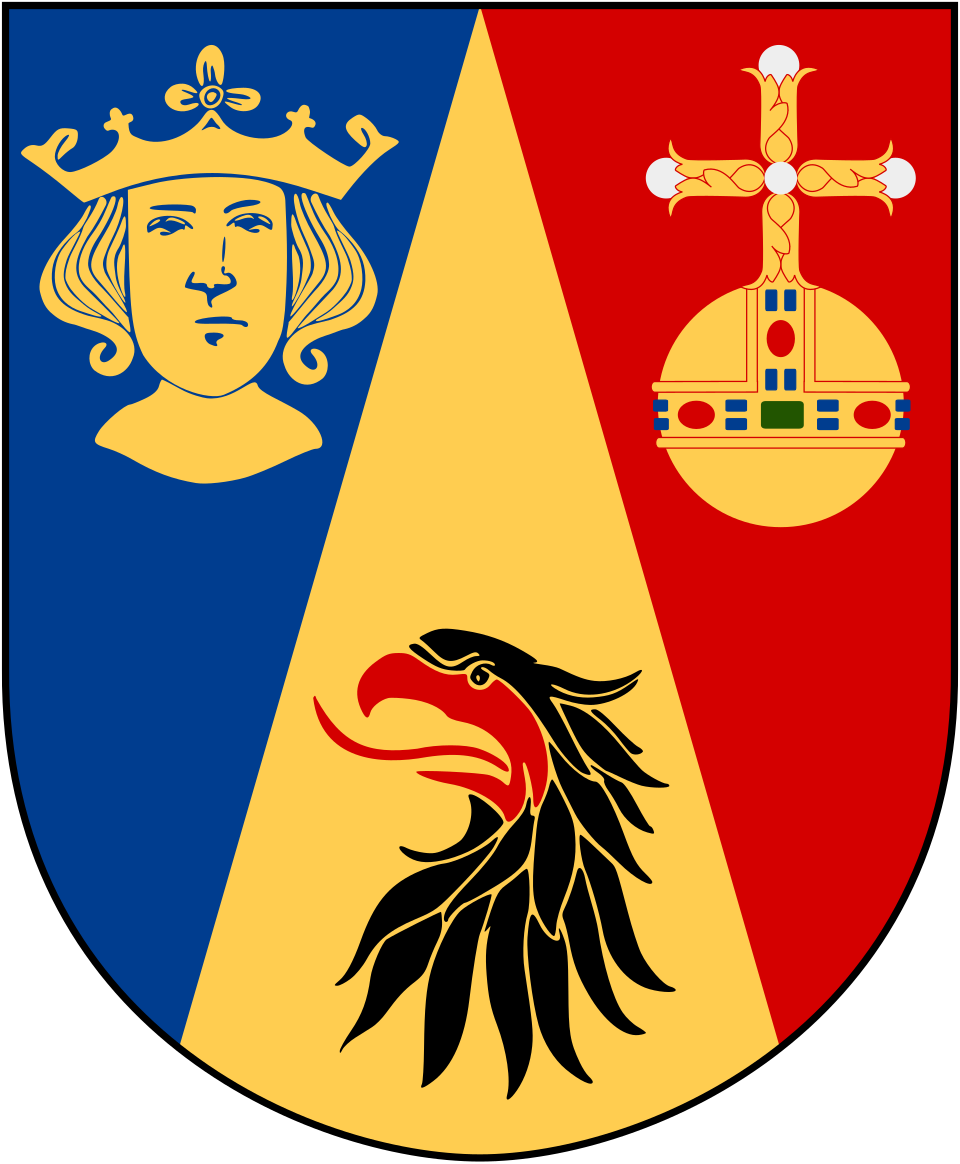
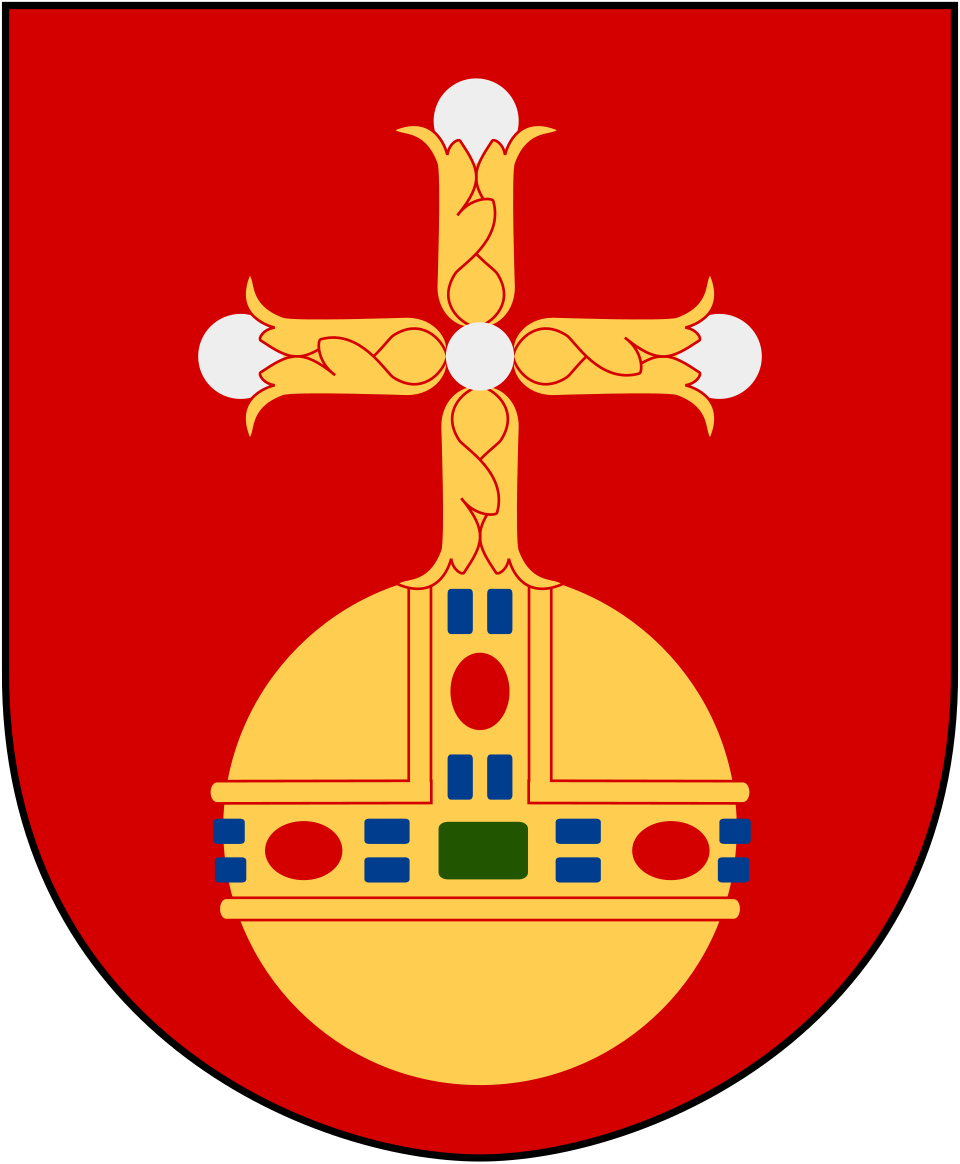
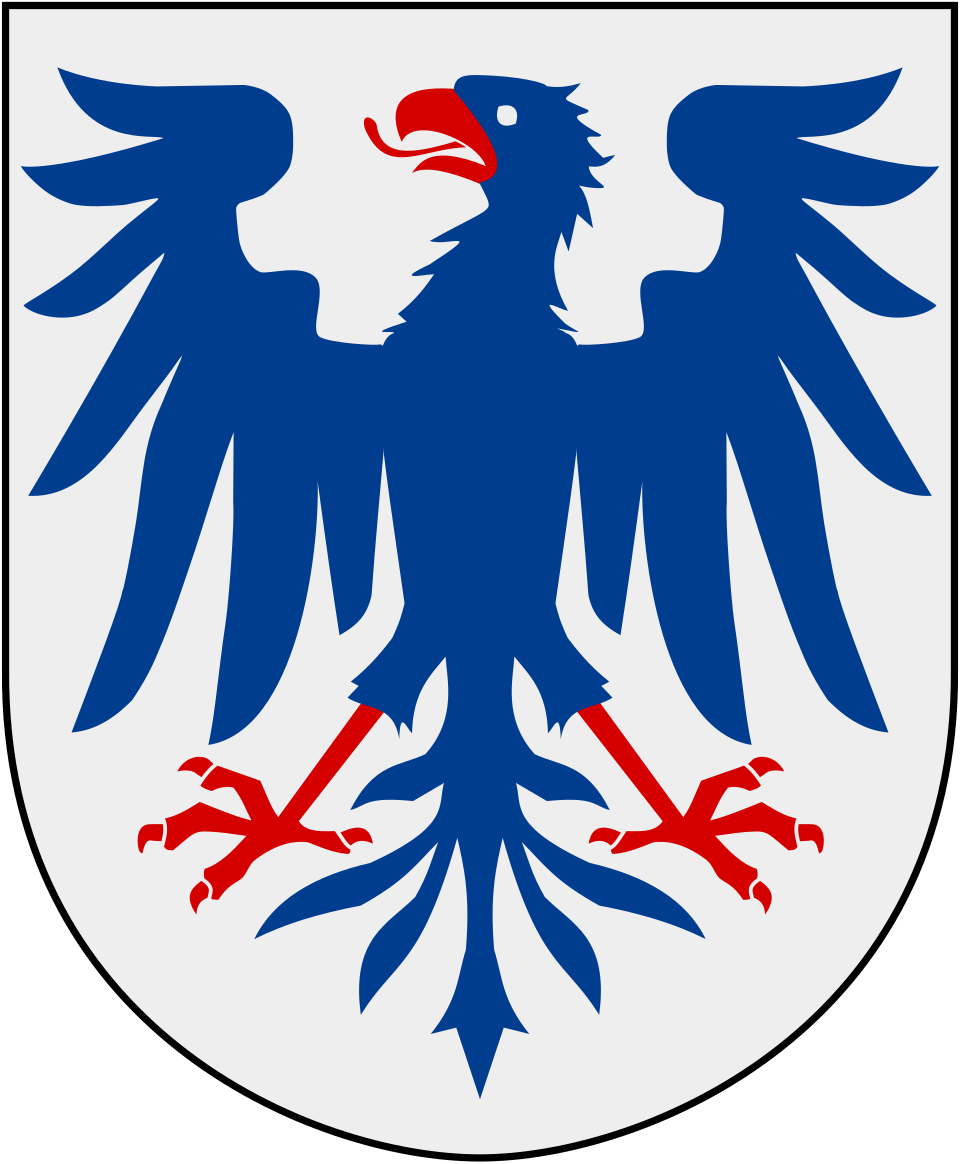
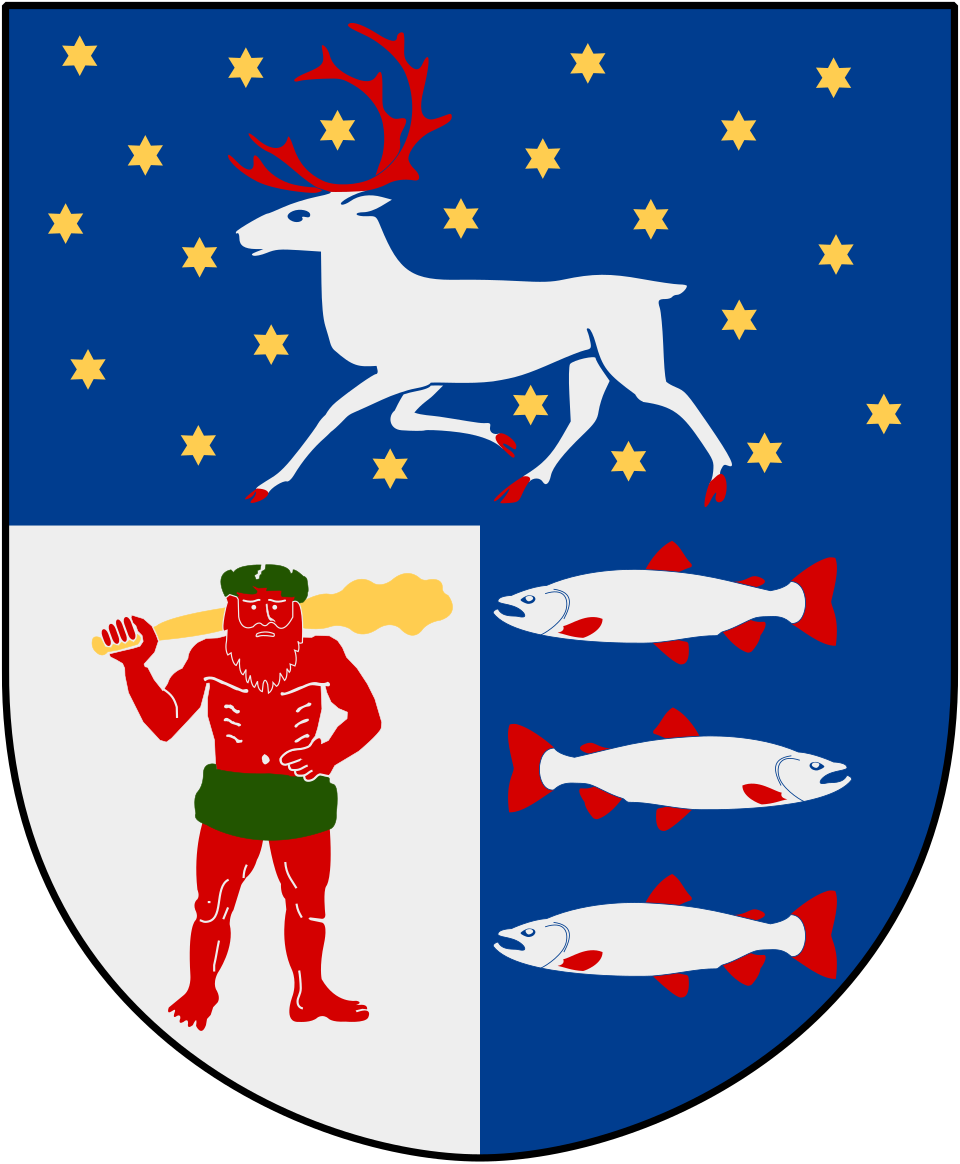
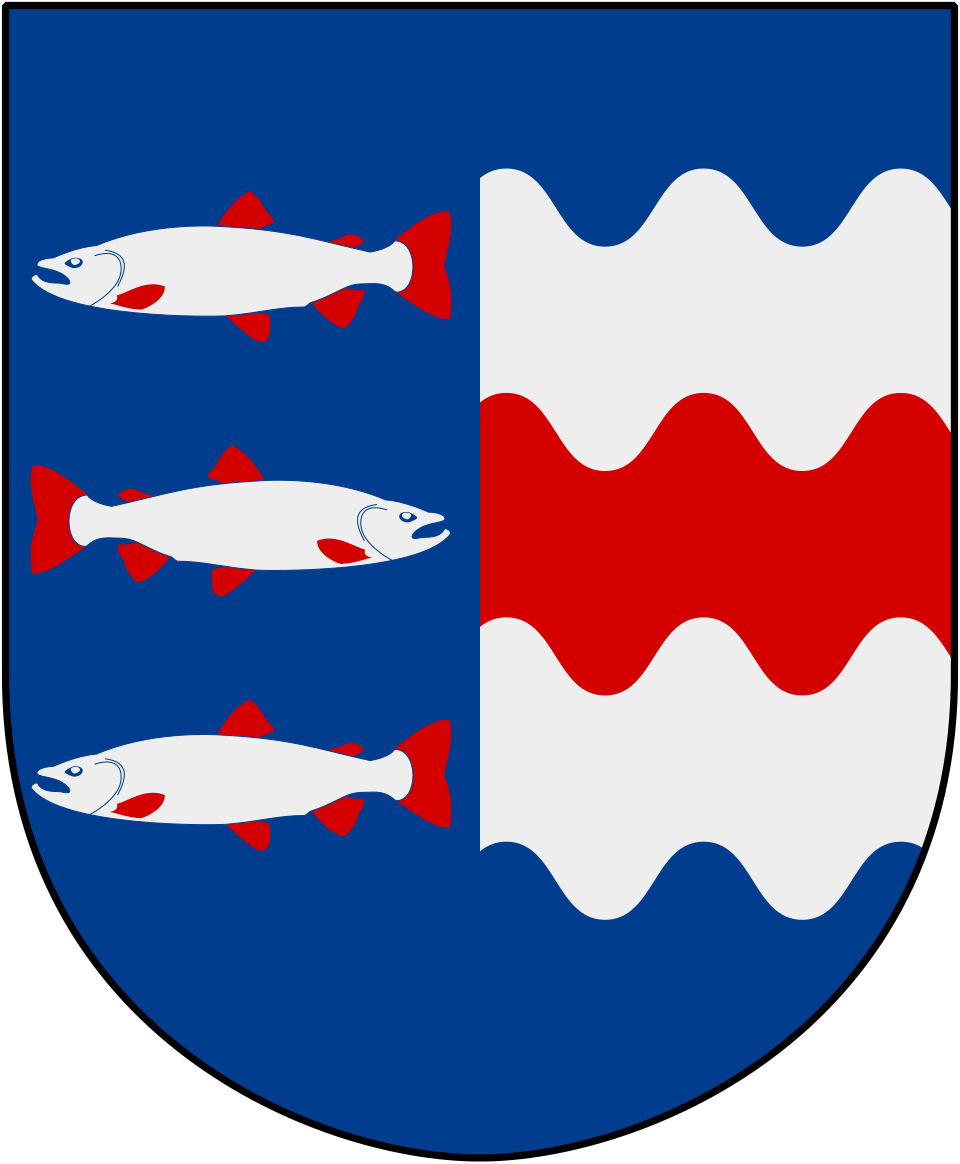
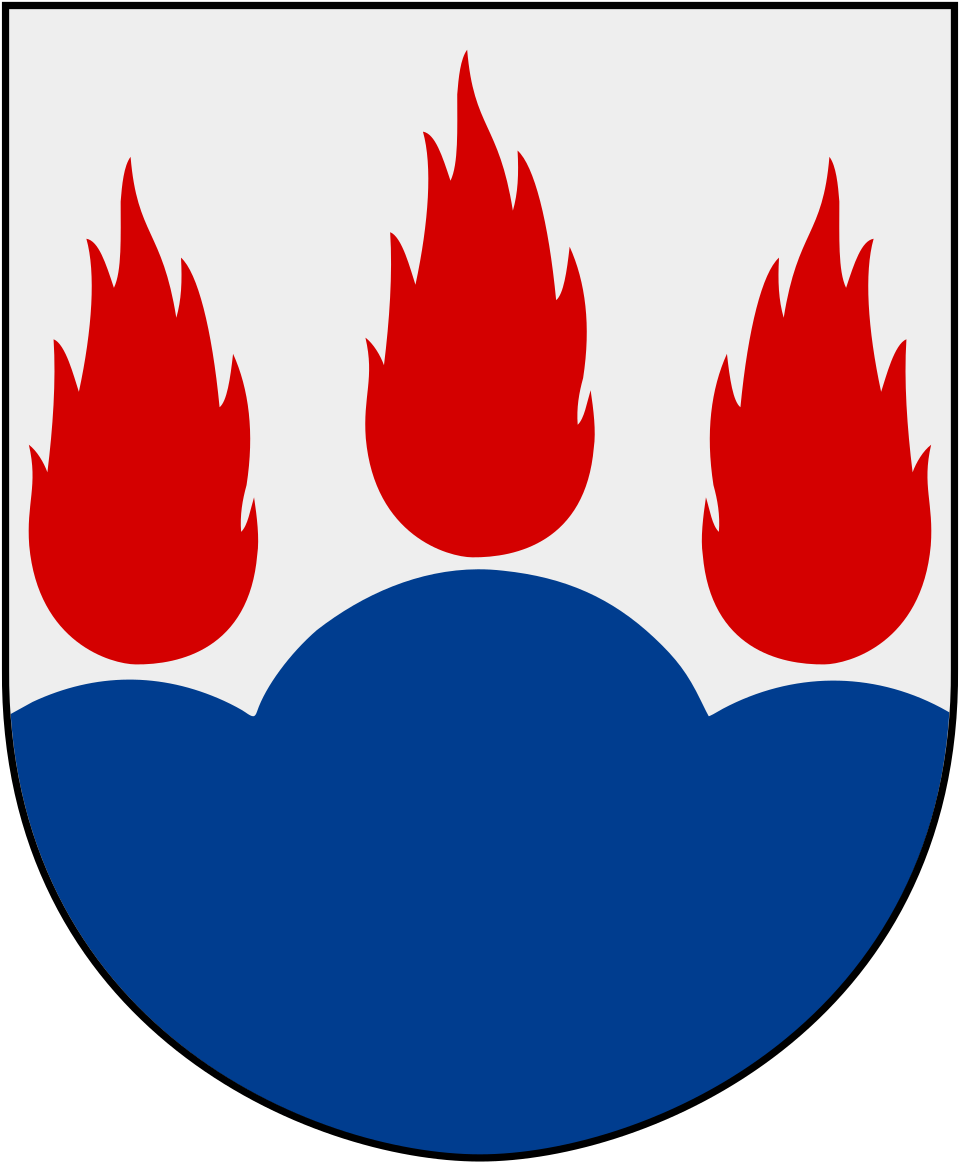
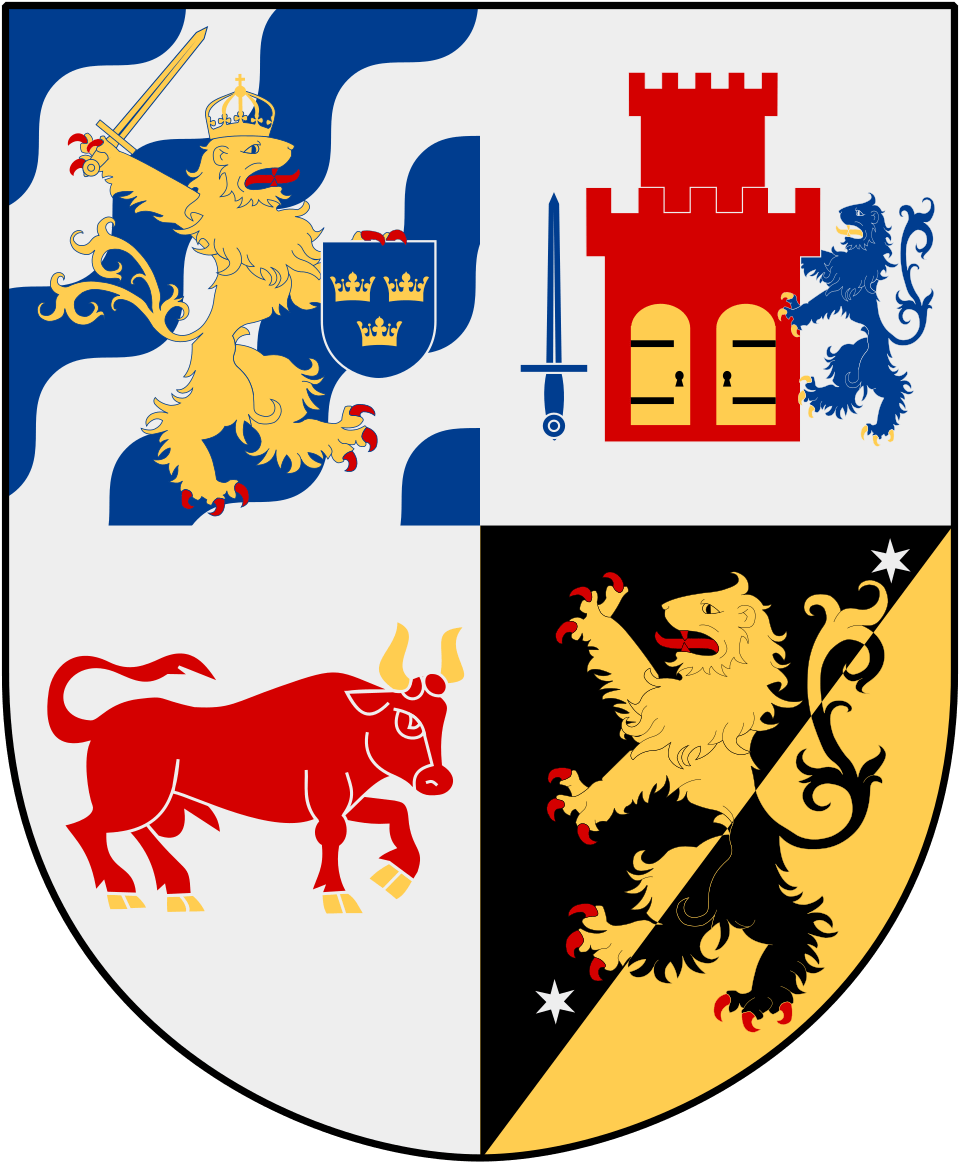
Sweden is divided into 21 counties (län), each with its own coat of arms, and historically into 25 provinces (landskap), the older cultural-geographic units whose arms are often older and more widely recognised than those of the modern counties. The län arms are normally based on the arms of the historic landskap they cover.
The full alphabetical list of all 21 län follows below.
The Tre Kronor were probably introduced by King Magnus Eriksson (1316–1374), who styled himself King of Sweden, Norway and Scania; the crowns are most often read as a claim to those three kingdoms. The earliest known depiction is a 1330s painted frieze in the palace of the Cardinal of Bayonne at Avignon, discovered in 1982. The symbol was formalised on the 1364 seal of Albert of Mecklenburg, who placed it in a shield of its own as the arms of the Swedish state.
The Lesser Arms (Lilla riksvapnet) are simply azure with the three gold crowns, and serve as the working state arms on documents, passports and government buildings. The Greater Arms (Stora riksvapnet), reserved for the monarch and the most formal state ceremonies, quarter the Three Crowns with the Folkung lion and add an inescutcheon for the House of Vasa impaling the House of Bernadotte, the whole encircled by the collar of the Order of the Seraphim and supported by two crowned lions queue fourchée.
In 1818 the French marshal Jean-Baptiste Bernadotte succeeded the childless King Charles XIII as Karl XIV Johan. The dynasty he founded brought its own arms — a bridge issuing from waves (the bridge of Pau, his birthplace), Napoleon's eagle on thunderbolts (recalling his marshalate of France), and the Big Dipper of the northern sky — which were added to the royal arms alongside the Vasa sheaf to mark the new ruling house, while preserving the Three Crowns and the Folkung lion of medieval Sweden.
The first legal description appears in a royal warrant of 19 April 1562 under Erik XIV — "yellow in a cross fashioned on blue". The modern colours and proportions were fixed by the Flag Law of 22 June 1906, which specified the precise shades of ljust mellanblå (light medium blue) and guldgul (golden yellow) and set the proportions at 10:16. The current statute is Lag 1982:269 om Sveriges flagga of 29 April 1982, which retained the 1906 framework.
The ordinary rektangulär flagga is used by civilians and most institutions. The tretungad flagga, with three swallow-tails cut into the fly, is reserved for the King and Royal Court, the armed forces and certain state vessels. Both flags carry the same yellow cross on the blue field; the difference is purely in the shape of the fly.
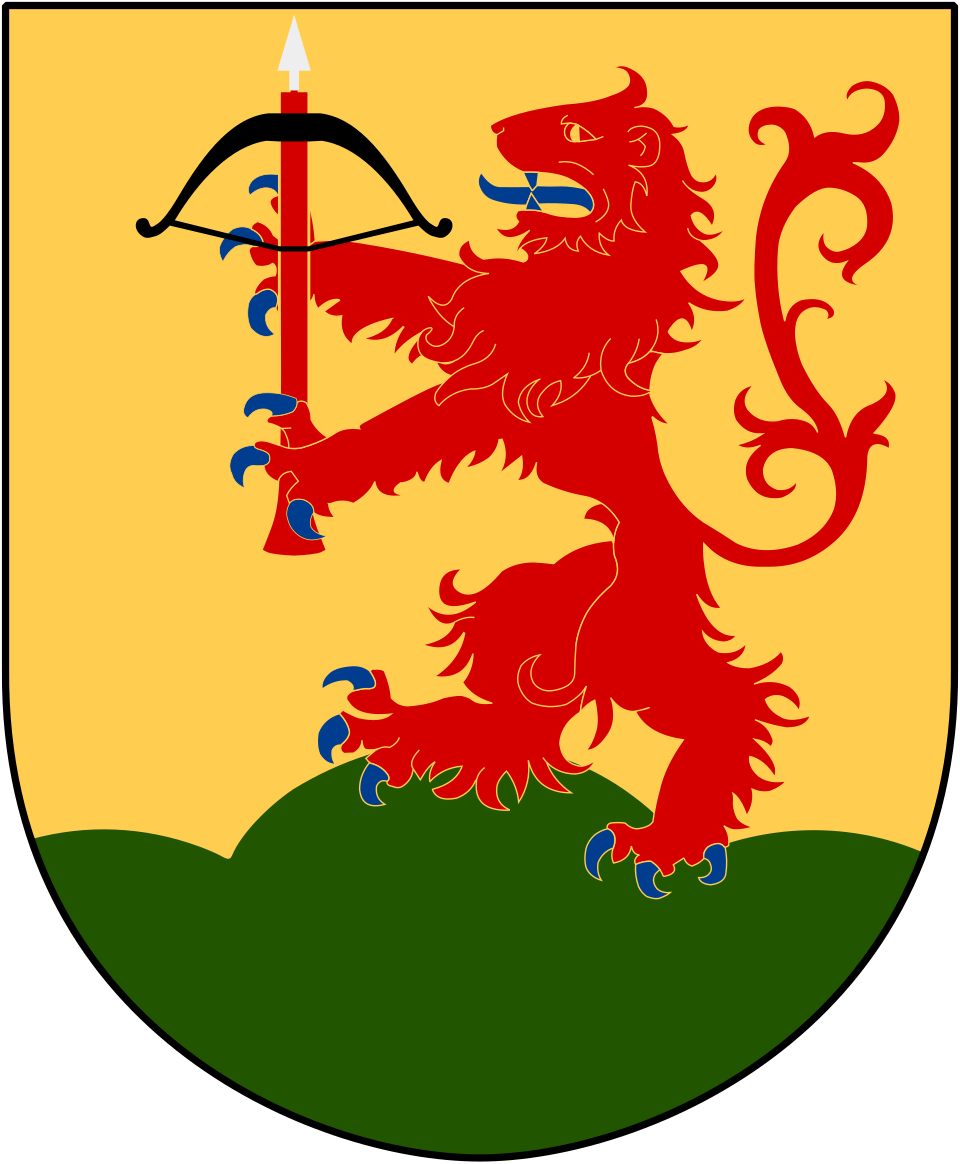
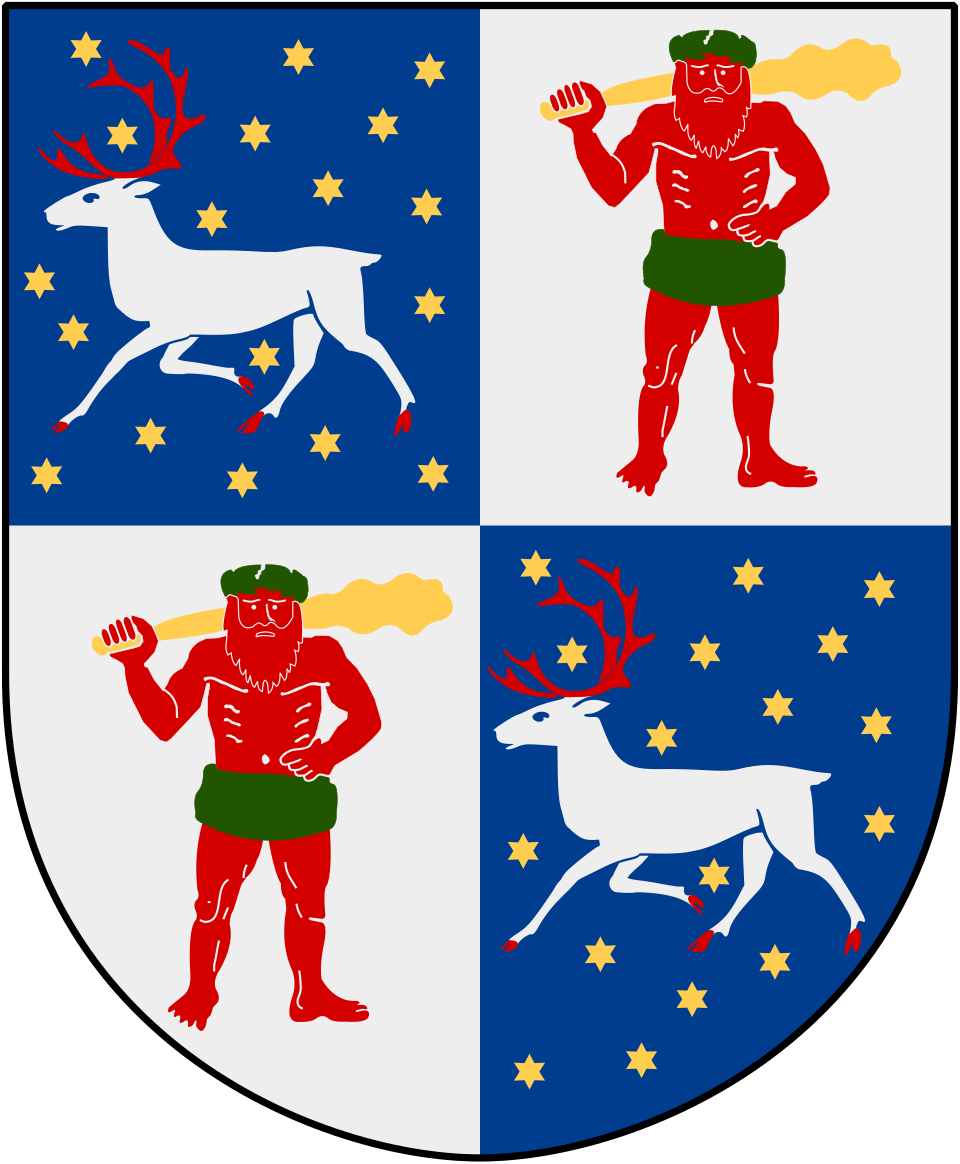
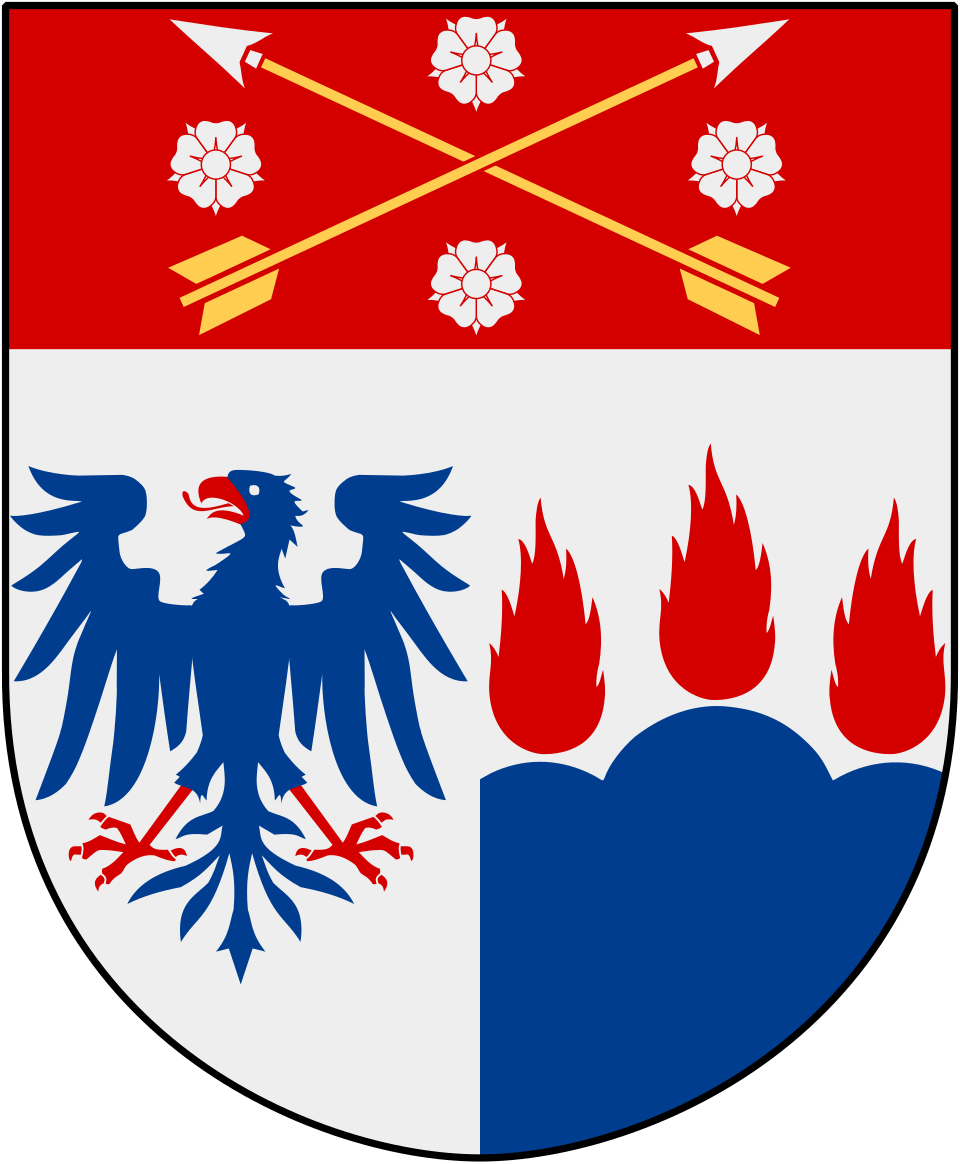
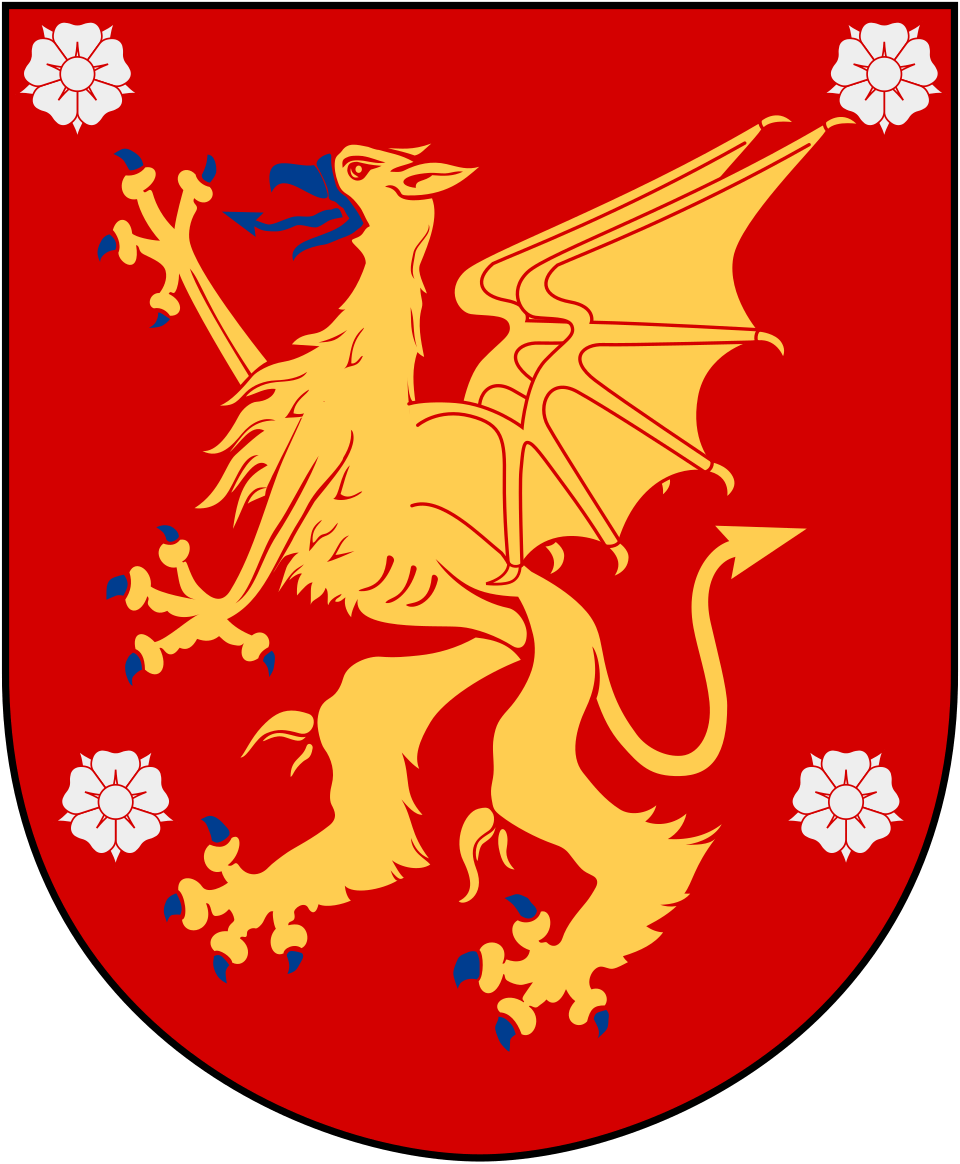
Each of the 21 Swedish counties (län) has its own coat of arms, normally based on the arms of the historic province (landskap) it covers. Click any county below to explore its arms in detail.
Last reviewed by the Emblema Mundi editorial team on 21 June 2026.