Country
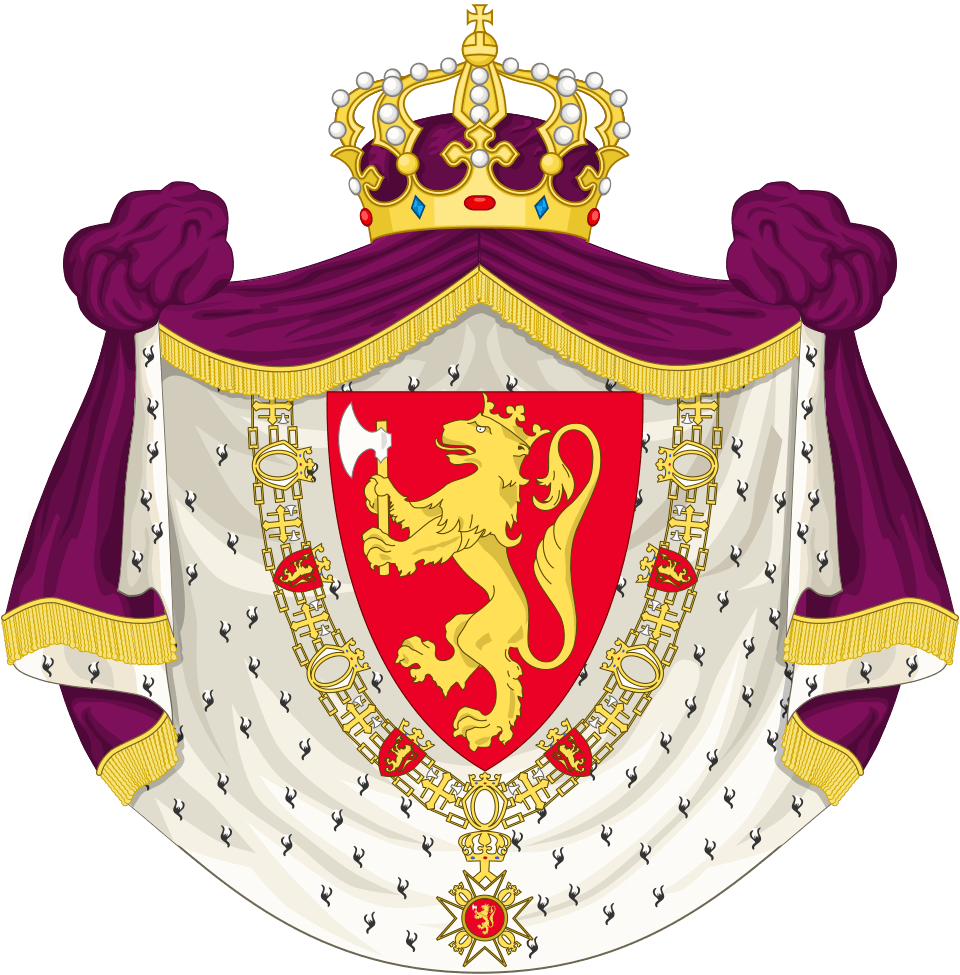
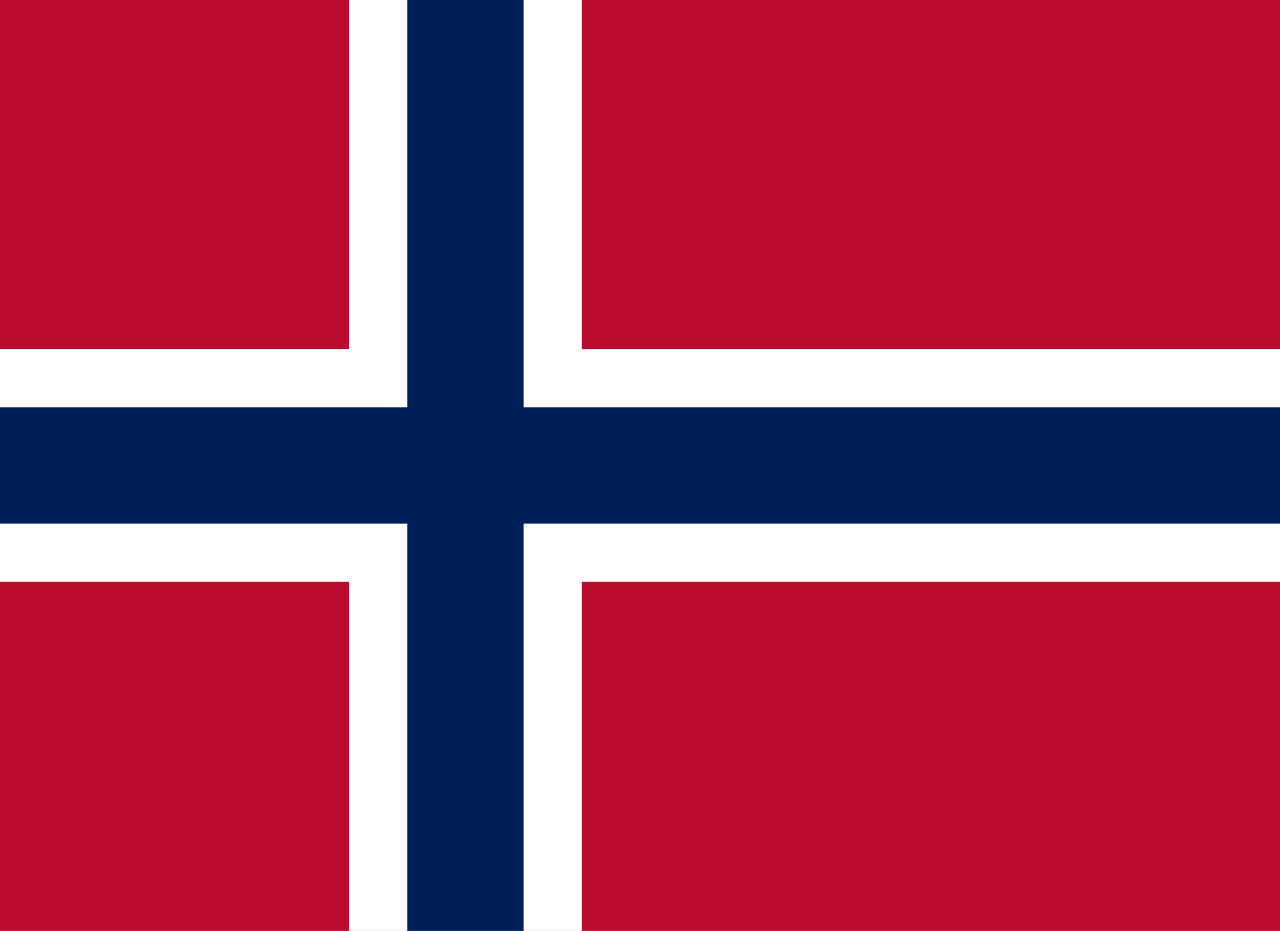
The coat of arms of Norway is a heraldic masterpiece of mediaeval simplicity: a golden crowned lion clutching the axe of Saint Olav on a red shield. The lion dates to the early 13th century and the axe was added around 1280, making it one of the oldest state coats of arms still in use. The national flag — a red field with a blue Nordic cross bordered in white — was designed by Fredrik Meltzer in 1821, who superimposed a blue cross on the Danish Dannebrog pattern to create a distinctively Norwegian symbol of independence. Red, white, and blue were chosen as the “three colours that now denote freedom.” Below, Norway’s historic fylker (counties) each carry their own coat of arms, many featuring charges drawn from the natural world — eagles, stags, ships, and the aurora borealis.
Flag
Not available
Coat of Arms
Not available
| Official name | Kongeriket Norge / Kongeriket Noreg |
|---|---|
| Coat of arms | Golden crowned lion with the axe of St Olav on red |
| Blazon | Gules, a lion rampant Or crowned Or holding an axe Or with blade Argent |
| Arms origin | 13th century (lion); c. 1280 (axe added) |
| National flag | Red with blue Nordic cross bordered in white |
| Flag designed | Fredrik Meltzer, approved 13 July 1821 |
| Capital | Oslo |
| Government | Unitary parliamentary constitutional monarchy |
| Head of State | Harald V (since 1991) |
| Counties | 15 fylker (since 2024 reform) |
Coat of Arms of Norway — Gules, a lion rampant Or, axe of St Olav
The Norwegian coat of arms is the arms of dominion of the King of Norway, representing both the monarch and the kingdom:
Gules, a lion rampant Or crowned Or holding an axe Or with blade Argent.
A golden lion rearing on a red field, wearing a golden crown and gripping a golden axe with a silver blade in its forepaws.
The golden lion on red first appeared as a royal charge in the early 13th century, under the Sverre dynasty. It represented the Norwegian monarchy’s claim to sovereignty and was used on seals, coins, and shields throughout the mediaeval period.
Around 1280, under King Magnus VI (the Lawmender) or the guardianship of his son Eric Magnuson, the lion was given a crown and the axe of Saint Olav. The axe is the attribute of King Olav II Haraldsson (995–1030), who Christianised Norway and was martyred at the Battle of Stiklestad in 1030. Venerated as Olav den Hellige (St Olav), he was declared the “Eternal King of Norway” (Rex Perpetuus Norvegiae). By placing St Olav’s axe in the lion’s paws, the Norwegian kings proclaimed themselves rightful heirs of the saint-king.
The lion-and-axe arms survived the Kalmar Union (1397–1523), the union with Denmark (1523–1814), and the personal union with Sweden (1814–1905). When Norway became fully independent in 1905, the ancient arms were retained unchanged — a testament to their power as a symbol of Norwegian continuity.
Flag of Norway — Designed by Fredrik Meltzer, 1821
The Norwegian flag is a red field bearing a navy blue Nordic cross bordered in white, with the vertical bar shifted toward the hoist in the Scandinavian tradition.
Fredrik Meltzer, a member of the Storting (Norwegian parliament), submitted his design on 4 May 1821. He took the Danish Dannebrog pattern (white cross on red) and superimposed a blue cross inside the white one. In an earlier letter, Meltzer explained his choice of red, white, and blue: they were “three colours that now denote freedom, such as we have seen in the French flag of freedom, and still see in that of the Dutch and Americans.”
The king (at that time the Swedish monarch, who also ruled Norway in personal union) refused to sign the flag into law but approved it for civilian use by royal order on 13 July 1821. Until 1838, the Norwegian flag could only be used in northern waters — in the Mediterranean, Norwegian ships still had to fly the Swedish or union flag for protection against Barbary pirates, with whom Norway had no treaty.
The Norwegian flag became the third Nordic cross flag after the Danish Dannebrog and the Swedish flag, and the first to use three colours in the cross design rather than two. This tricolour-within-a-cross approach would later inspire the flags of Iceland (1915) and the Faroe Islands (1919).
Norwegian heraldry is distinctive within Scandinavia for its strong emphasis on municipal and county arms. Norway’s fylker (counties) each carry official coats of arms, many designed in the 20th century with charges drawn from local nature and history: the eagle of Nordland, the Viking ship of Vestfold, the stag of Buskerud, and the stockfish of Troms and Finnmark.
The Riksarkivet (National Archives) oversees the registration of municipal arms, and Norwegian law requires that new arms be approved by the relevant authority. Unlike the more formal English or Scottish systems, Norwegian heraldry favours bold, simple designs — often a single charge on a single-colour field — making Norwegian municipal arms among the most visually striking in Europe.
The arms are blazoned Gules, a lion rampant Or crowned Or holding an axe Or with blade Argent — a golden crowned lion on a red field gripping a silver-bladed golden axe. The lion dates to the 13th century and the axe was added around 1280 as a symbol of Saint Olav, the “Eternal King of Norway.”
The axe is the attribute of Saint Olav (King Olav II Haraldsson, 995–1030), who Christianised Norway and was martyred at the Battle of Stiklestad in 1030. By placing St Olav’s axe in the lion’s paws, the Norwegian kings proclaimed themselves rightful heirs of the saint-king.
The flag was designed by Fredrik Meltzer, a member of the Storting, in 1821. He superimposed a blue cross on the Danish white-on-red pattern and chose red, white, and blue as “three colours that now denote freedom.” It was approved for civilian use on 13 July 1821.
The red field and white cross derive from the Danish Dannebrog, reflecting Norway’s 400-year union with Denmark. Fredrik Meltzer added a blue cross inside the white one to create a distinctively Norwegian design and incorporate the tricolour of freedom inspired by the French, Dutch, and American flags.
The golden lion on red dates to the early 13th century. The axe was added around 1280. The arms survived the unions with Denmark and Sweden and remain the arms of the Norwegian monarchy today — one of the oldest state arms in continuous use.
Last reviewed by the Emblema Mundi editorial team on 2026-06-24.