Country
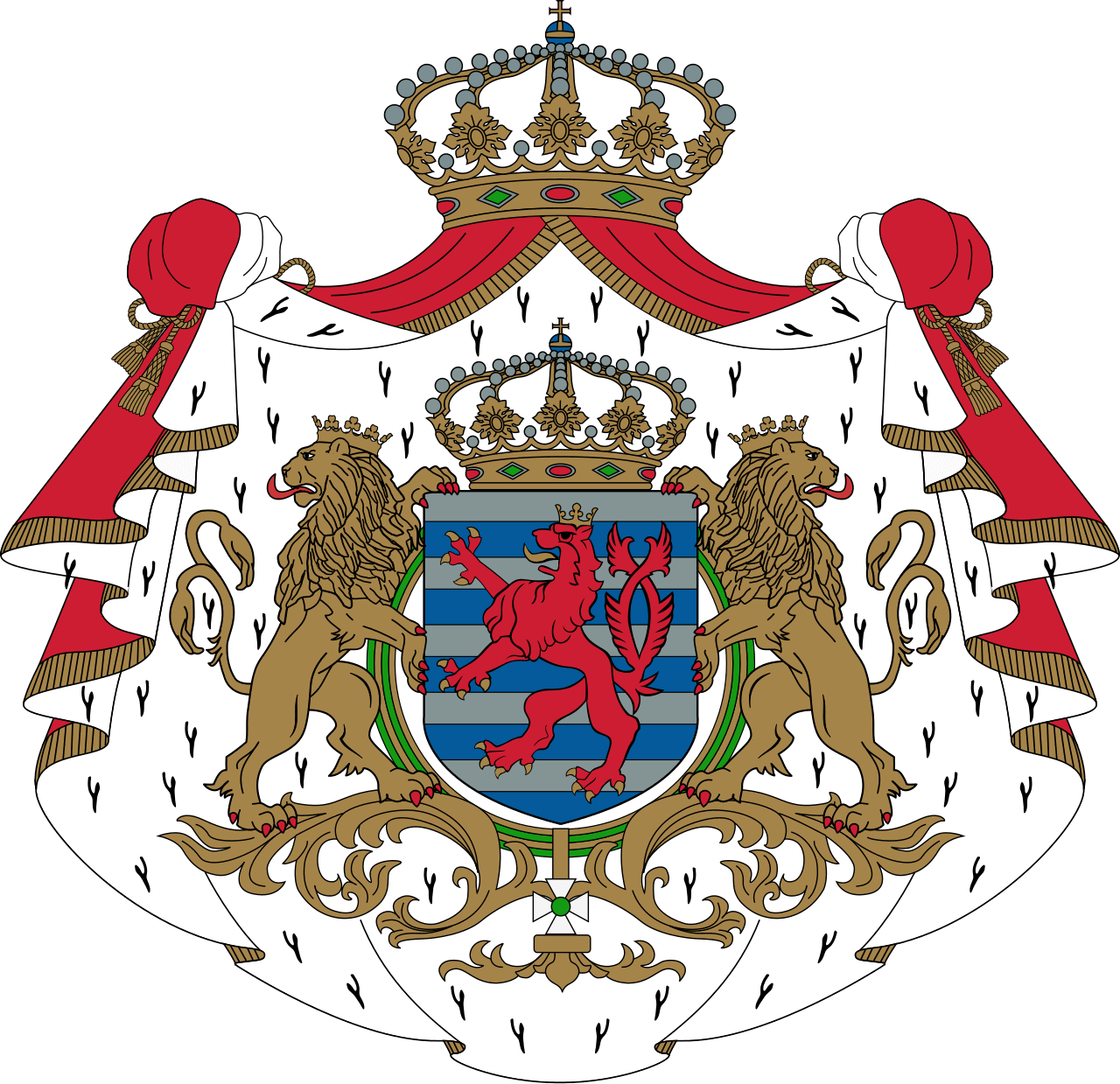
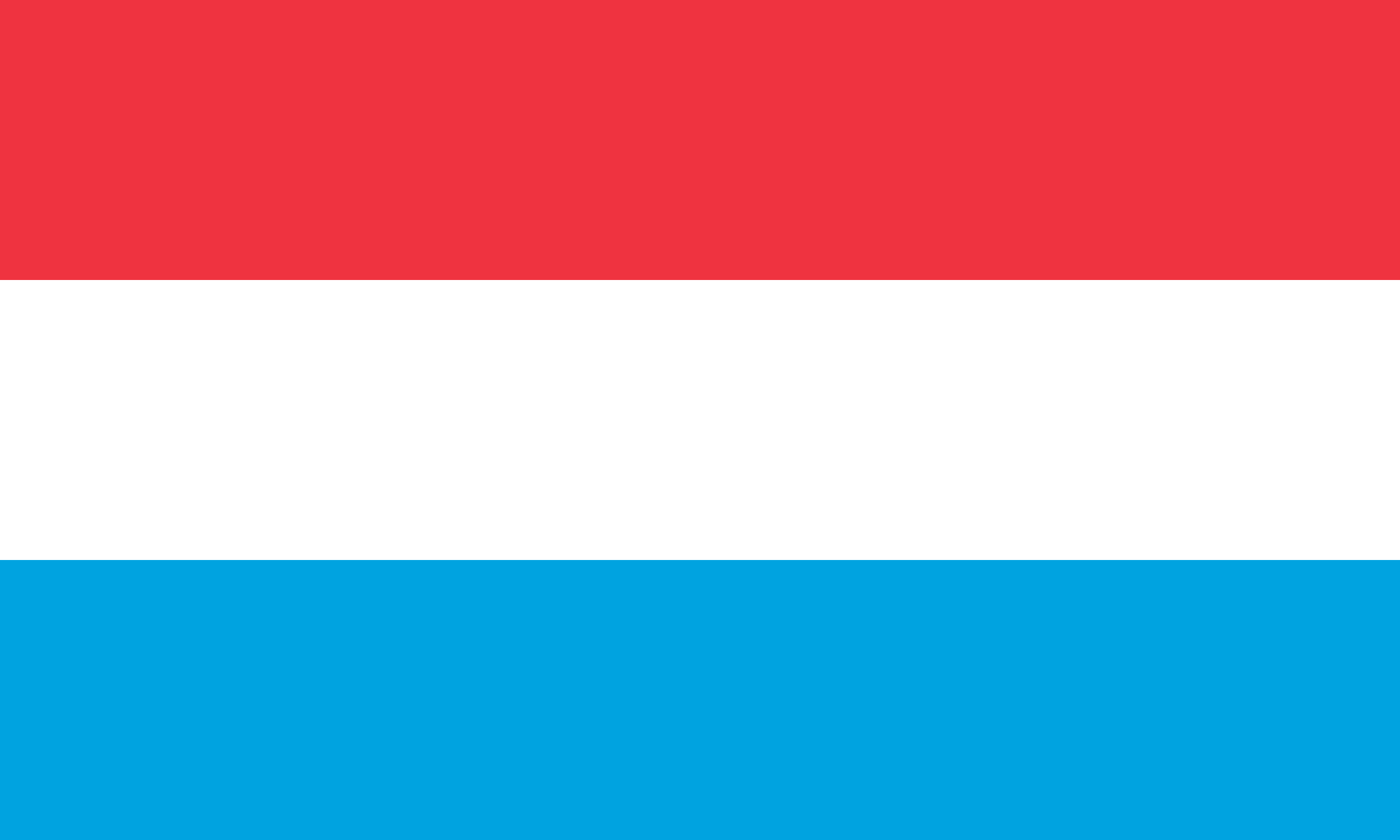
The Grand Duchy of Luxembourg bears one of the most striking coats of arms in European heraldry: a red double-tailed lion rampant on a field of alternating white and blue stripes. Blazoned Barry of ten Argent and Azure, a lion rampant queue forchée Gules crowned, armed and langued Or, the design dates to Count Henry V the Blond (1216–1281), who differentiated the Luxembourg arms from those of the Duchy of Limburg by adding the distinctive barry field. The national flag — the Rout-Wäiss-Blo (“Red-White-Blue”) — is a horizontal tricolour easily confused with the Netherlands flag, distinguished by its lighter sky-blue. Alongside it, the Roude Léiw (“Red Lion”) civil ensign renders the coat of arms as a banner, widely flown at the Fête nationale on 23 June.
Click on a country to learn more
| Official name | Groussherzogtum Lëtzebuerg / Grand-Duché de Luxembourg |
|---|---|
| Coat of arms | Red double-tailed lion on white-and-blue stripes |
| Blazon | Barry of ten Argent and Azure, a lion rampant queue forchée Gules crowned, armed and langued Or |
| Arms origin | Henry V the Blond, Count of Luxembourg (1216–1281) |
| National flag | Rout-Wäiss-Blo — horizontal red, white, light blue |
| Flag adopted | c. 1845; law of 1972; confirmed 1993 |
| Civil ensign | Roude Léiw (Red Lion banner) |
| Capital | Luxembourg City |
| Government | Unitary parliamentary constitutional monarchy |
| Head of State | Grand-Duc Guillaume (since 2024) |
Coat of Arms of Luxembourg — Barry of ten, a lion rampant queue forchée Gules
The arms of Luxembourg are among the most visually distinctive in European heraldry:
Barry of ten Argent and Azure, a lion rampant queue forchée Gules crowned, armed and langued Or.
A red lion with a forked tail, golden crown, claws, and tongue, rearing on a field of alternating white (Argent) and blue (Azure) horizontal stripes.
The arms originated with the Duchy of Limburg, whose dukes bore a red lion on a plain silver field. When Henry V the Blond (1216–1281) became Count of Luxembourg, he needed to distinguish his arms from those of his half-brother Henry IV, Duke of Limburg. His solution was elegant: he replaced the plain silver field with alternating white-and-blue bars (barry), creating one of the most memorable heraldic compositions in the Low Countries. The double tail (queue forchée) further distinguishes the Luxembourg lion.
When the male line of Orange-Nassau died out in 1890, the Grand Duchy passed to Grand Duke Adolphe of the Nassau-Weilburg branch. The grand-ducal arms combine the historic Luxembourg lion with the charges of the House of Nassau — a blue lion billetty on gold. The current Grand Duke, Guillaume, bears this combined achievement.
The Roude Léiw (“Red Lion”) is the coat of arms rendered as a banner flag — the full barry-and-lion design on a rectangular flag. It serves as the civil ensign of Luxembourg and is widely flown alongside the tricolour, particularly at the Fête nationale and sporting events. Many Luxembourgers consider it more distinctively national than the tricolour.
Flag of Luxembourg — Rout-Wäiss-Blo, adopted c. 1845
The national flag — the Rout-Wäiss-Blo — is a horizontal tricolour of red, white, and light blue.
The red, white, and blue colours derive from the coat of arms of the House of Luxembourg and were first used as a tricolour around 1845–1848. The design is nearly identical to the flag of the Netherlands — both are horizontal red-white-blue tricolours. Luxembourg’s flag is distinguished by its lighter sky-blue (versus Dutch cobalt) and slightly more elongated proportions.
Despite its long use, the flag was not formally regulated until the law of 1972, which specified the lighter shade of blue. Further amendments in 1993 confirmed the precise colour specifications and the permitted ratios of 3:5 or 1:2.
Because of the persistent confusion with the Dutch flag, there has been periodic debate about replacing the tricolour with the Roude Léiw as the sole national flag. While no official change has been made, the Red Lion banner enjoys enormous popular support and is the flag most commonly associated with Luxembourg abroad, especially in sport.
Luxembourg’s heraldic heritage punches far above its size. The House of Luxembourg produced four Holy Roman Emperors — Henry VII, Charles IV, Wenceslaus, and Sigismund — and their arms influenced heraldic traditions across Central Europe. The barry-and-lion composition can be found echoed in the arms of cities, families, and institutions from the Rhineland to Bohemia.
At the municipal level, Luxembourg’s 102 communes each maintain official coats of arms, many granted or confirmed by grand-ducal decree. The city of Luxembourg itself bears a distinctive set of arms featuring a castle (reflecting the Lucilinburhuc — “little fortress” — that gave the country its name), while towns such as Echternach, Vianden, and Diekirch carry charges rooted in their mediaeval lordships.
The arms are blazoned Barry of ten Argent and Azure, a lion rampant queue forchée Gules crowned, armed and langued Or — a red double-tailed lion on alternating white-and-blue horizontal stripes. The design dates to Count Henry V the Blond (1216–1281), who differentiated the Luxembourg arms from those of the Duchy of Limburg by adding the barry field.
The Roude Léiw (“Red Lion” in Luxembourgish) is the civil ensign and an alternative national flag. It features the coat of arms — the red lion on blue-and-white stripes — rendered as a banner. While the tricolour is the official national flag, the Roude Léiw is widely used at sporting events and cultural celebrations.
Both derive from the coat of arms of their respective ruling houses and share a red-white-blue horizontal tricolour. Luxembourg’s flag uses a lighter shade of blue (sky blue vs. Dutch cobalt) and is slightly more elongated. The 1972 law formally defined the lighter blue to distinguish the two flags.
The red-white-blue colours were first used as a tricolour around 1845–1848. A law of 1972 formally regulated the flag and specified the lighter shade of blue. The flag was definitively confirmed by law in 1993 with precise colour specifications.
Grand-Duc Guillaume (Guillaume de Nassau) has been the reigning Grand Duke since 2024, succeeding his father Grand Duke Henri. The Fête nationale of Luxembourg is celebrated on 23 June, with Guillaume celebrating his first National Day as sovereign in 2026.
Last reviewed by the Emblema Mundi editorial team on 2026-06-24.