Country
The Vytis — an armoured knight on a charging horse, sword raised, bearing a shield with the Jagiellonian double cross — is one of the oldest state emblems in Europe. Unlike most European coats of arms, which derive from dynastic charges, the Vytis evolved from ducal portrait seals of the Grand Duchy of Lithuania, formalised under Vytautas the Great in the early 15th century. The national flag — a yellow-green-red tricolour — was adopted on 25 April 1918, its colours drawn from Lithuanian folk art: yellow for the sun, green for the forests, red for the blood shed for the homeland. Both symbols were suppressed during Soviet occupation (1940–1990) and triumphantly restored at independence.
Flag
Not available
Coat of Arms
Not available
| Official name | Lietuvos Respublika |
|---|---|
| Coat of arms | Vytis — armoured knight on horseback on red field |
| Blazon | Gules, a knight on a horse salient Argent, sword Argent, shield Azure charged with a double cross Or |
| Arms origin | Seal of Vygantas, Duke of Kernavė, 1388; formalised under Vytautas (1392–1430) |
| National flag | Horizontal tricolour — yellow, green, red |
| Flag adopted | 25 April 1918; Constitution Article 15 (1992) |
| Capital | Vilnius |
| Government | Unitary semi-presidential republic |
| Head of State | Gitanas Nausėda (since 2019) |
| Counties | 10 apskritys |
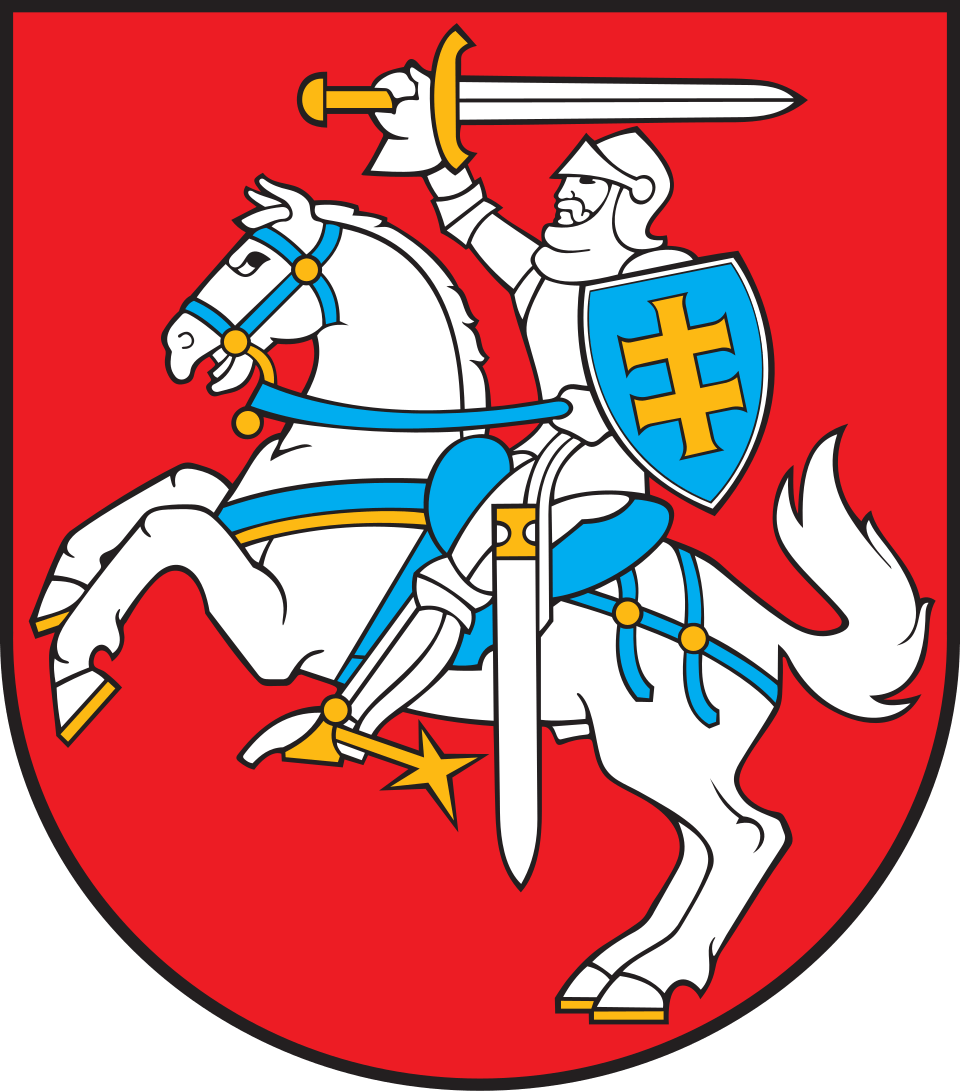
Coat of Arms of Lithuania — The Vytis, one of Europe’s oldest state emblems
The Vytis (“the Chaser” or “the Pursuer”) is unique among European state arms: it depicts not an abstract heraldic charge but a warrior in action.
Gules, an armoured knight on a horse salient Argent, holding in dexter hand a sword Argent above his head, at sinister shoulder a shield Azure charged with a double cross Or.
The mounted knight first appeared as a heraldic charge on the seal of Vygantas, Duke of Kernavė, in 1388 — making it the earliest documented use in Lithuanian heraldry. Under Grand Duke Vytautas the Great (1392–1430), the riding knight was formalised as the coat of arms of the vast Grand Duchy of Lithuania, one of the largest states in mediaeval Europe, stretching from the Baltic to the Black Sea.
The term Vytis can be interpreted as “Chaser,” “Pursuer,” “Knight,” or “Horseman” — related to the Slavic vityaz (valiant warrior). In Polish and Belarusian, the same symbol is known as Pogoń / Pahonia (“the Pursuit”). A 16th-century chronicler described it as representing “a mature ruler capable of defending his Homeland by the sword.”
The knight’s shield bears a golden double cross on blue — the Jagiellonian cross (Vytis Cross), associated with the Jagiellonian dynasty that ruled Lithuania (and later Poland-Lithuania) from 1386. It is also known as the Patriarchal cross or Cross of Lorraine in Western heraldry.
During Soviet occupation (1940–1990), the Vytis was replaced by the emblem of the Lithuanian SSR. It was restored as the state coat of arms on 11 March 1990, the day Lithuania declared independence from the Soviet Union. Article 15 of the 1992 Constitution confirms: “The Coat of Arms of the State shall be a white Vytis on a red field.”
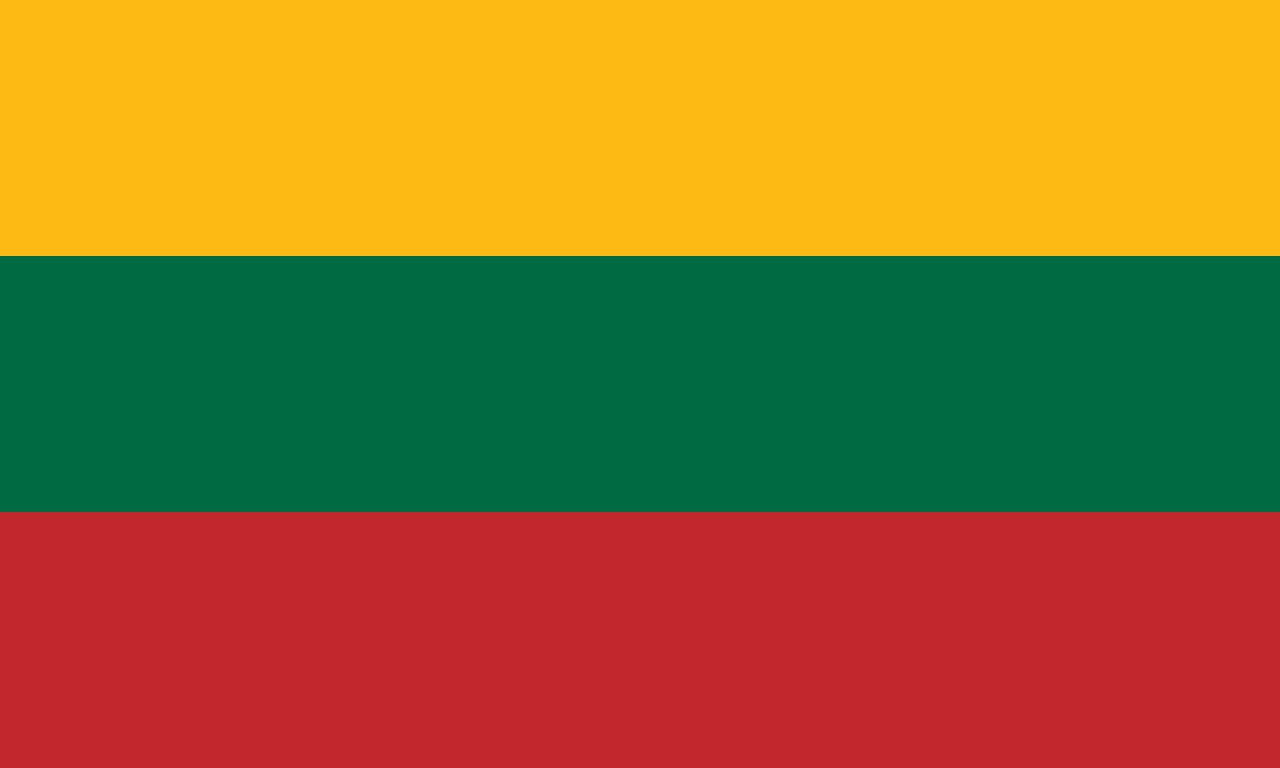
Flag of Lithuania — Yellow, green, red — adopted 25 April 1918
The Lithuanian flag is a horizontal tricolour of yellow (top), green (middle), and red (bottom).
The colours emerged at the Vilnius Conference of 1917. Artist Antanas Žmuidzinavičius decorated the conference hall with small red and green flags, but delegates found the combination too dark. Tadas Daugirdas suggested adding a yellow stripe between the red and green — symbolising the rising sun between the clouds and the forests.
A commission of Jonas Basanavičius, Tadas Daugirdas, and Antanas Žmuidzinavičius finalised the design. The Lithuanian Council approved it on 19 April 1918, and it was formally adopted on 25 April 1918. Basanavičius himself had initially advocated for the Vytis as the flag, but the Seimas chose the tricolour to distinguish the new republic from the Grand Duchy.
Lithuanian heraldry is rooted in the traditions of the Grand Duchy of Lithuania, one of the great heraldic cultures of Eastern Europe. The Vytis served as the state arms of the Grand Duchy and later of the Polish-Lithuanian Commonwealth (1569–1795), where it was quartered with the Polish White Eagle.
Lithuanian noble families (bajor&udot;) bore arms following a system influenced by both Polish and German heraldic traditions. The Columns of Gediminas — a red stylised castle or pillar on gold — are the second most important Lithuanian heraldic charge after the Vytis, associated with the Gediminid dynasty that founded the Grand Duchy.
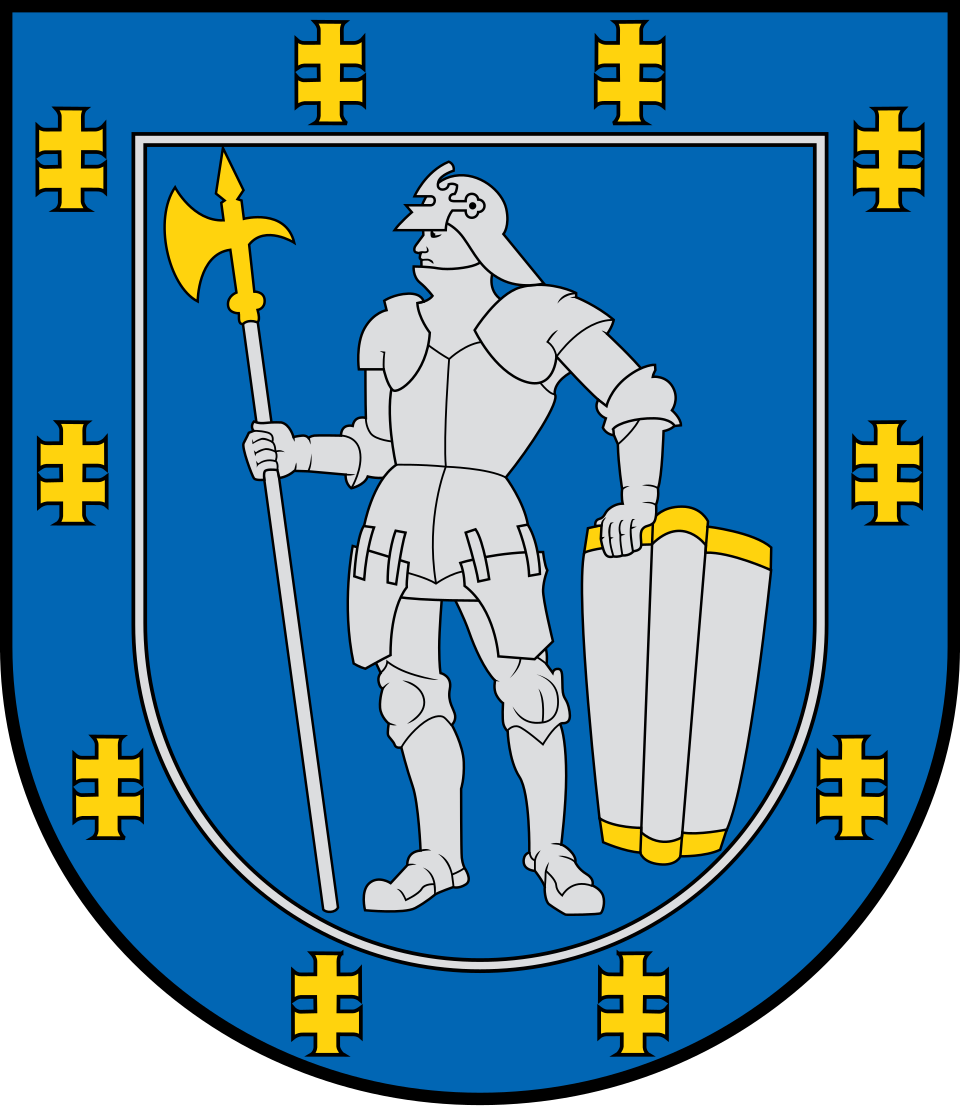
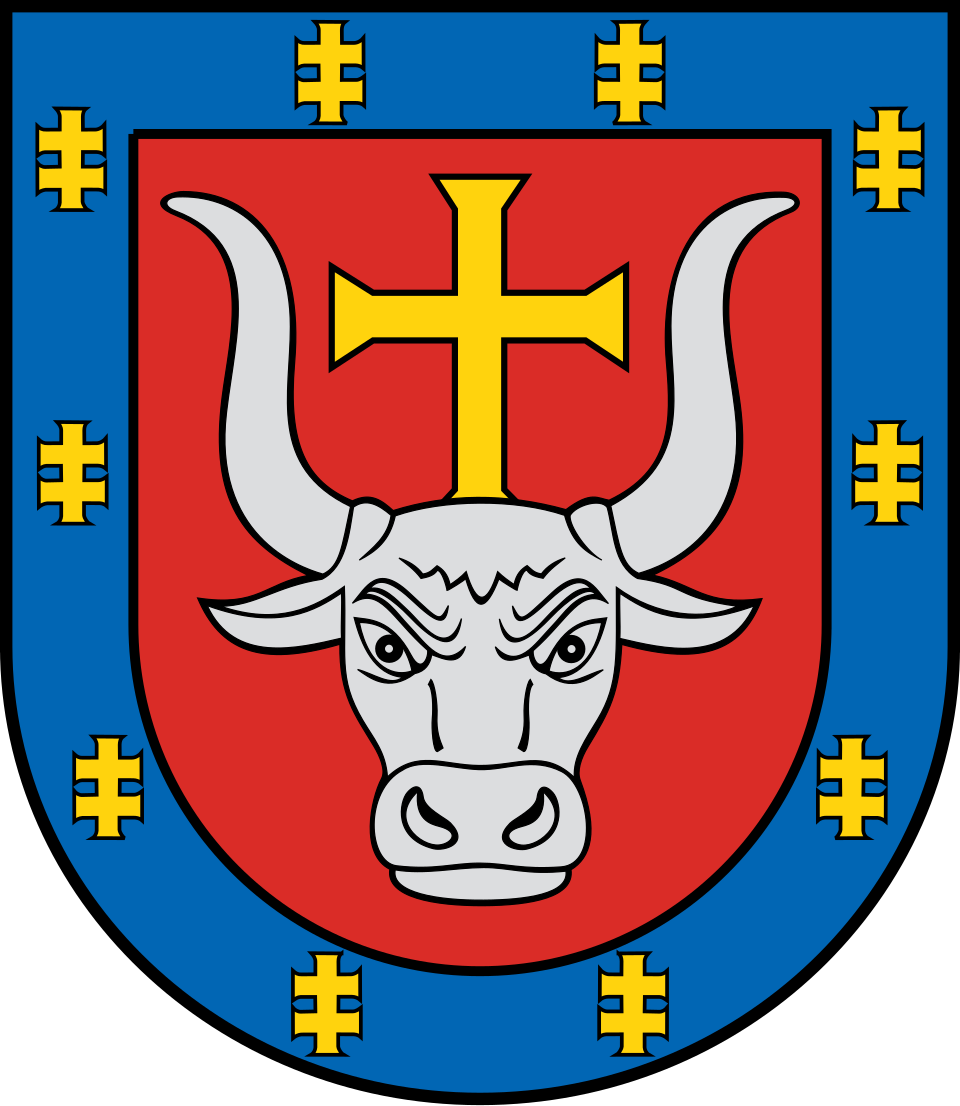
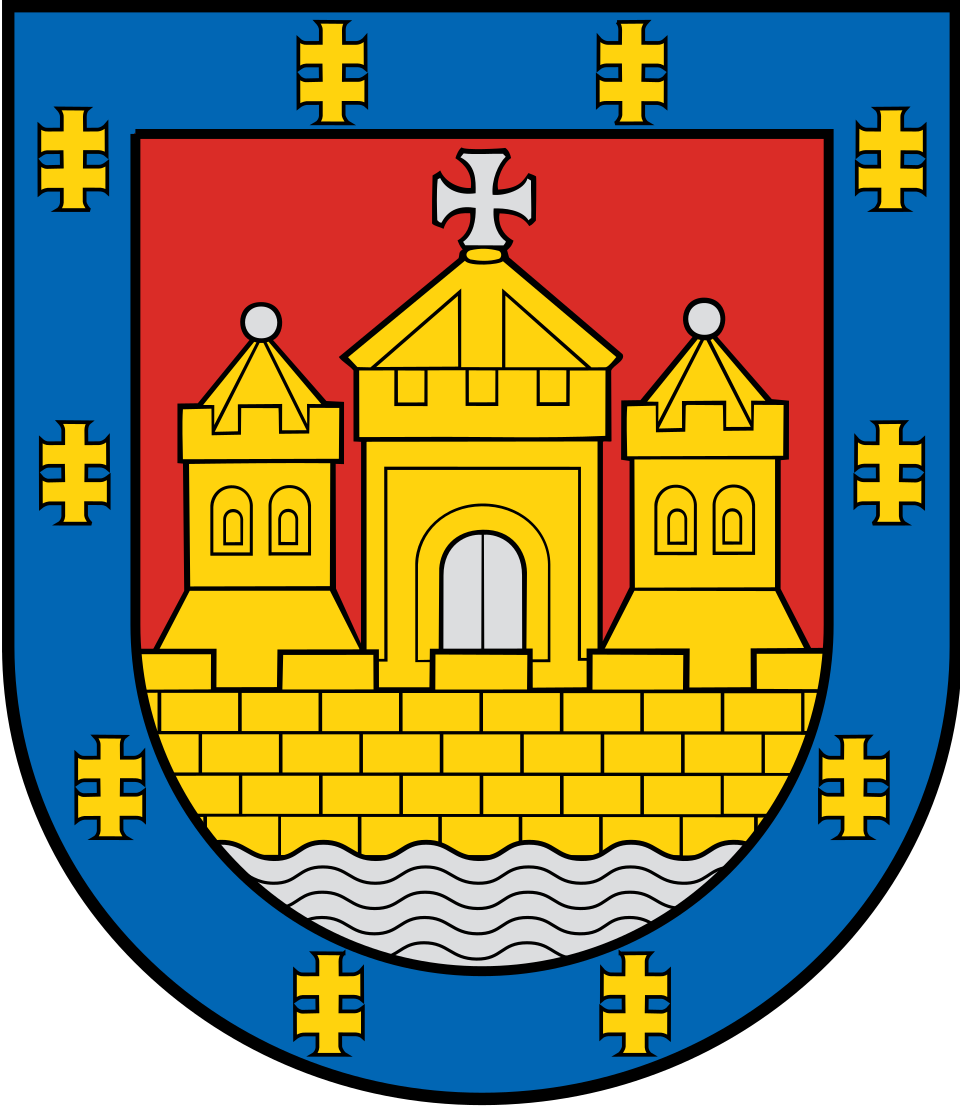
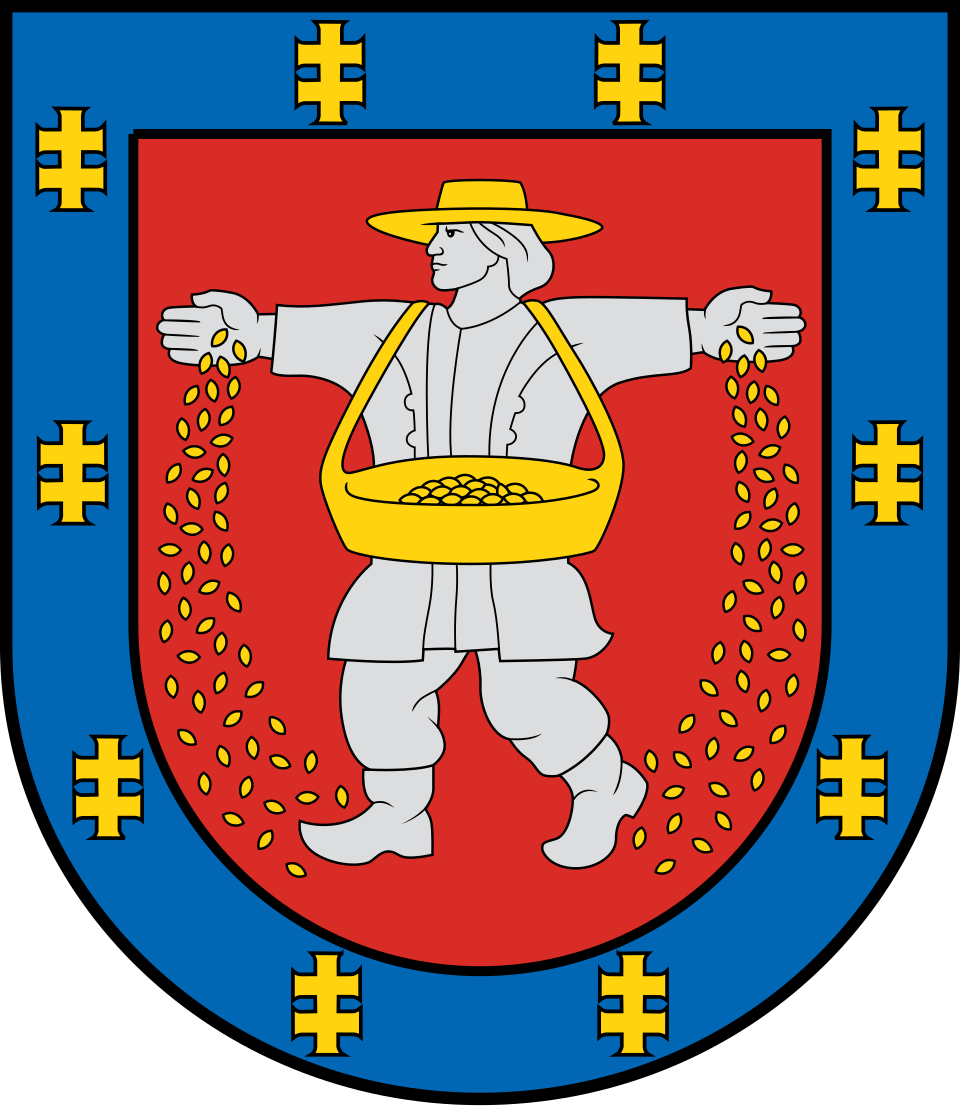
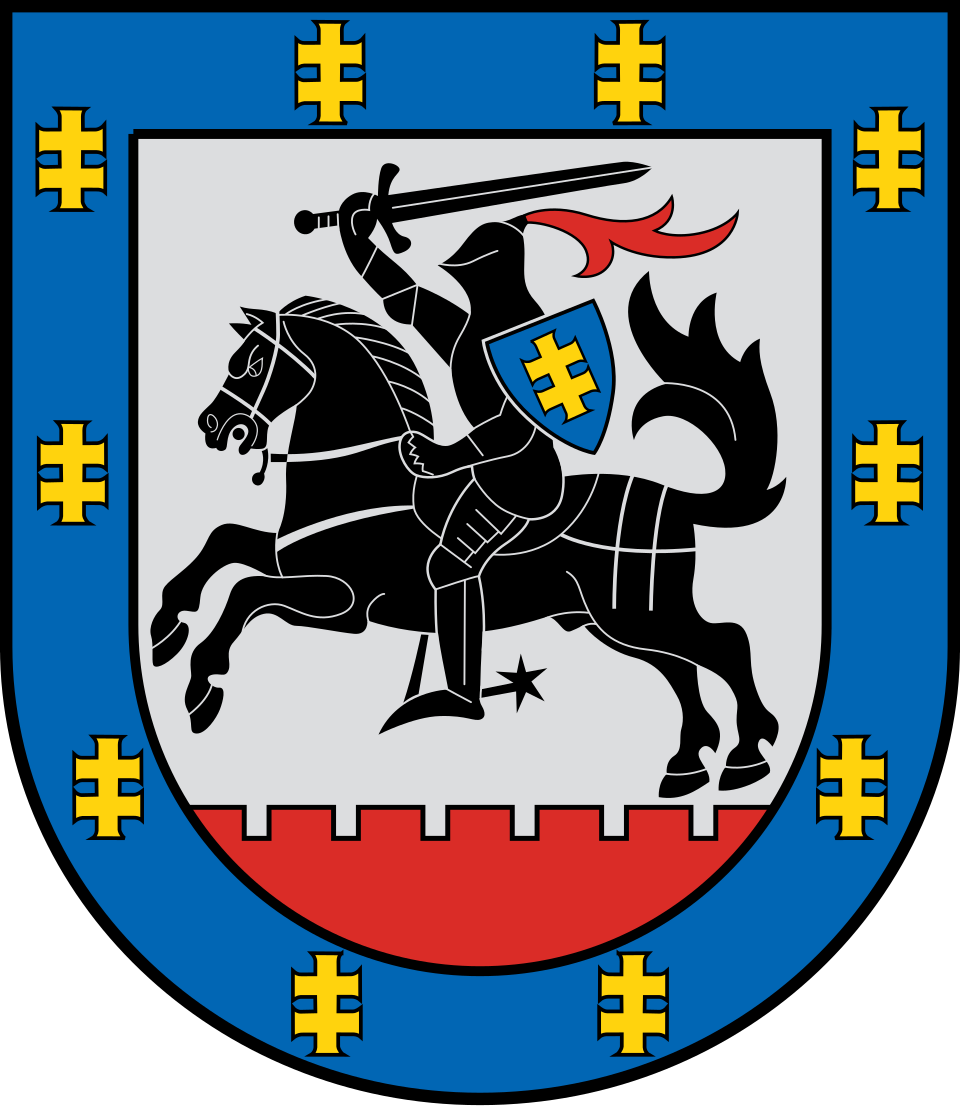
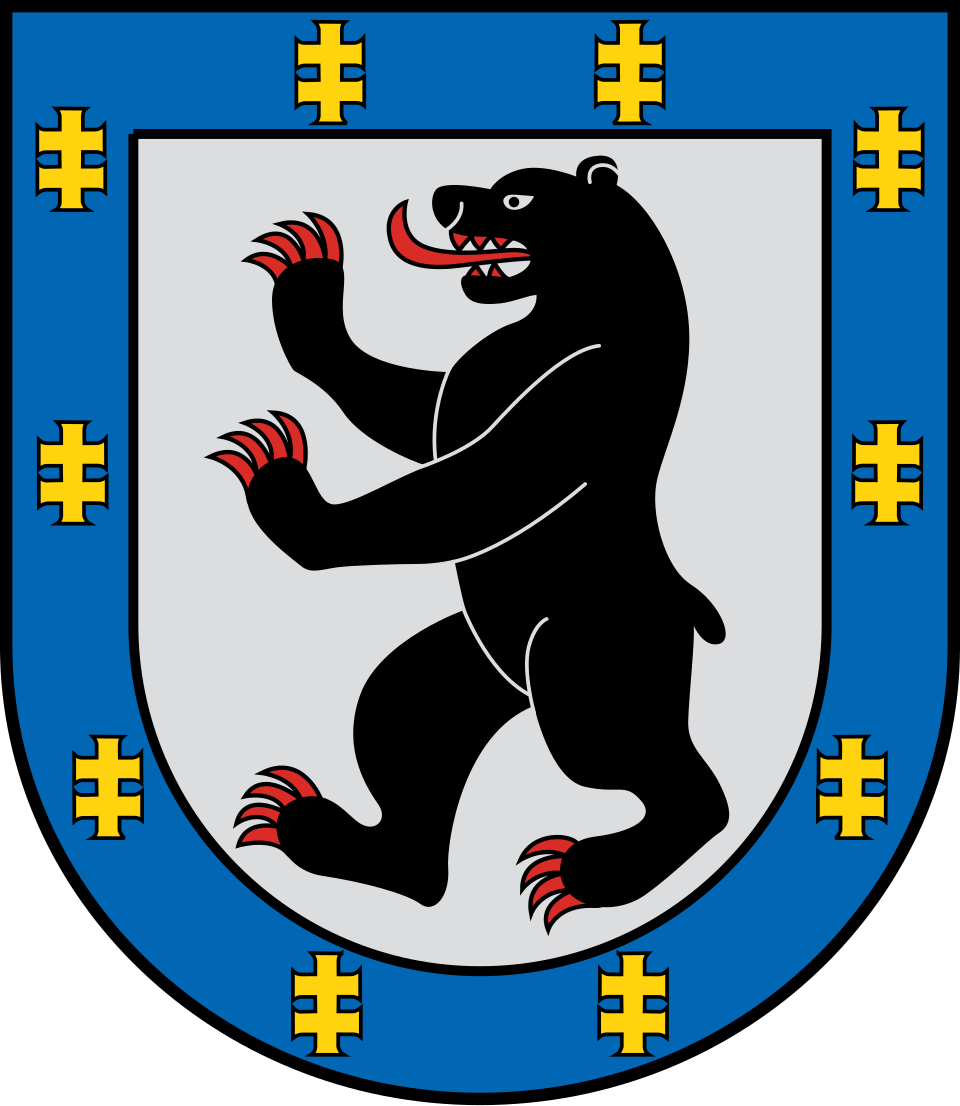
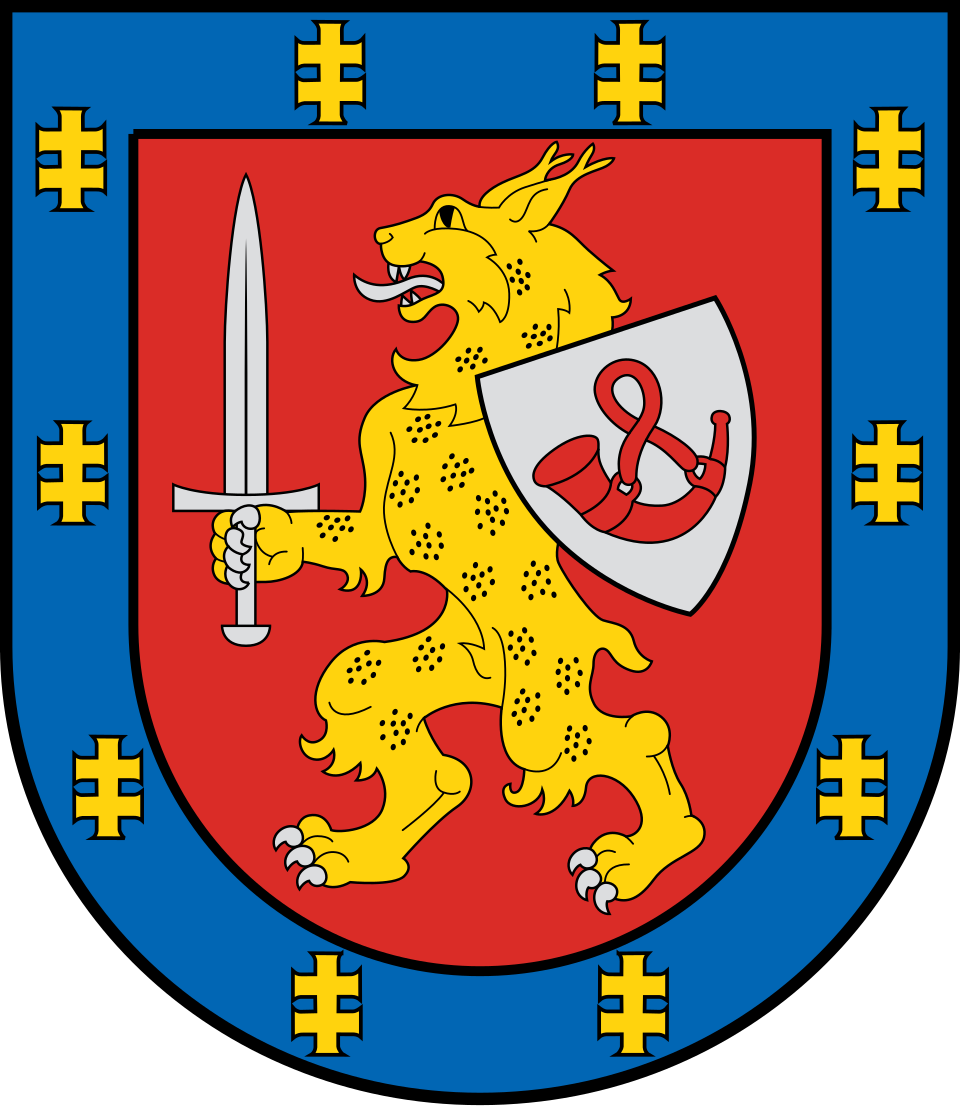
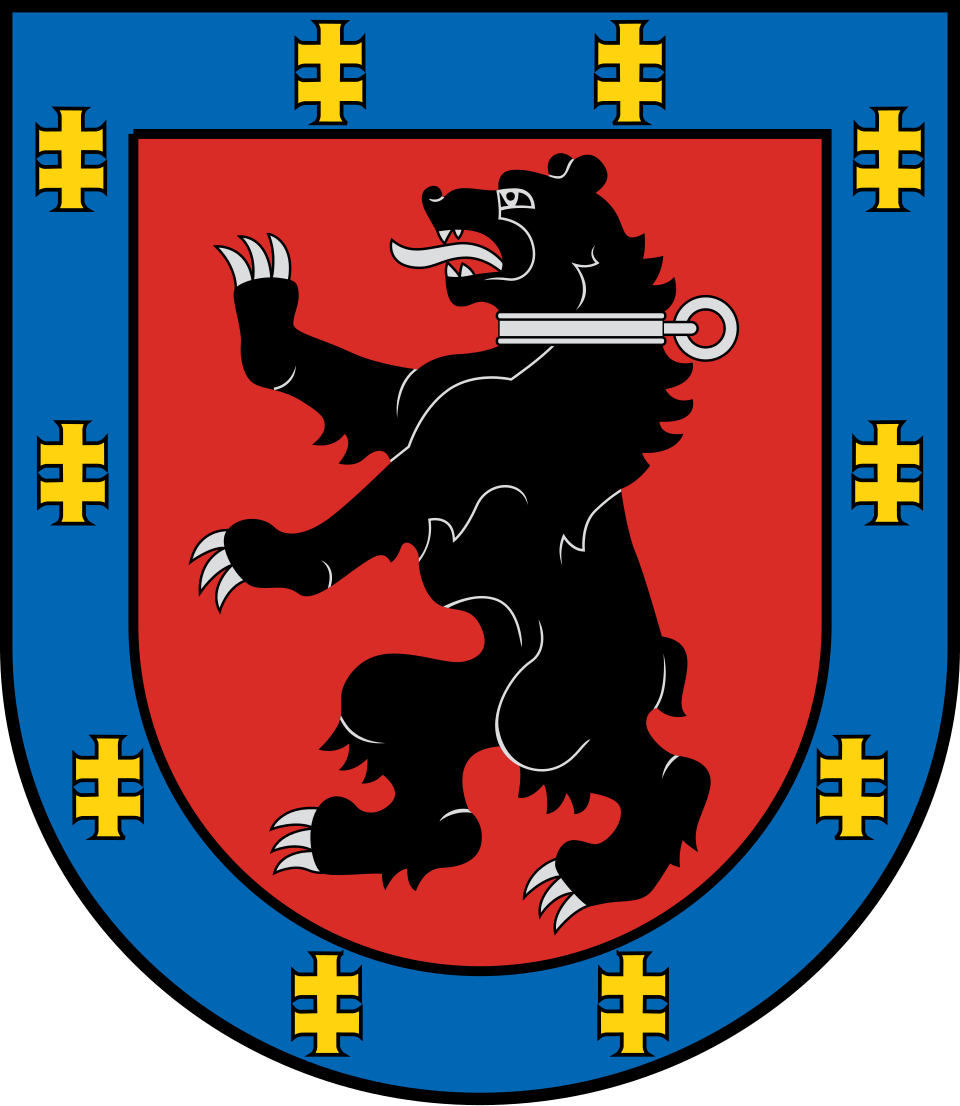
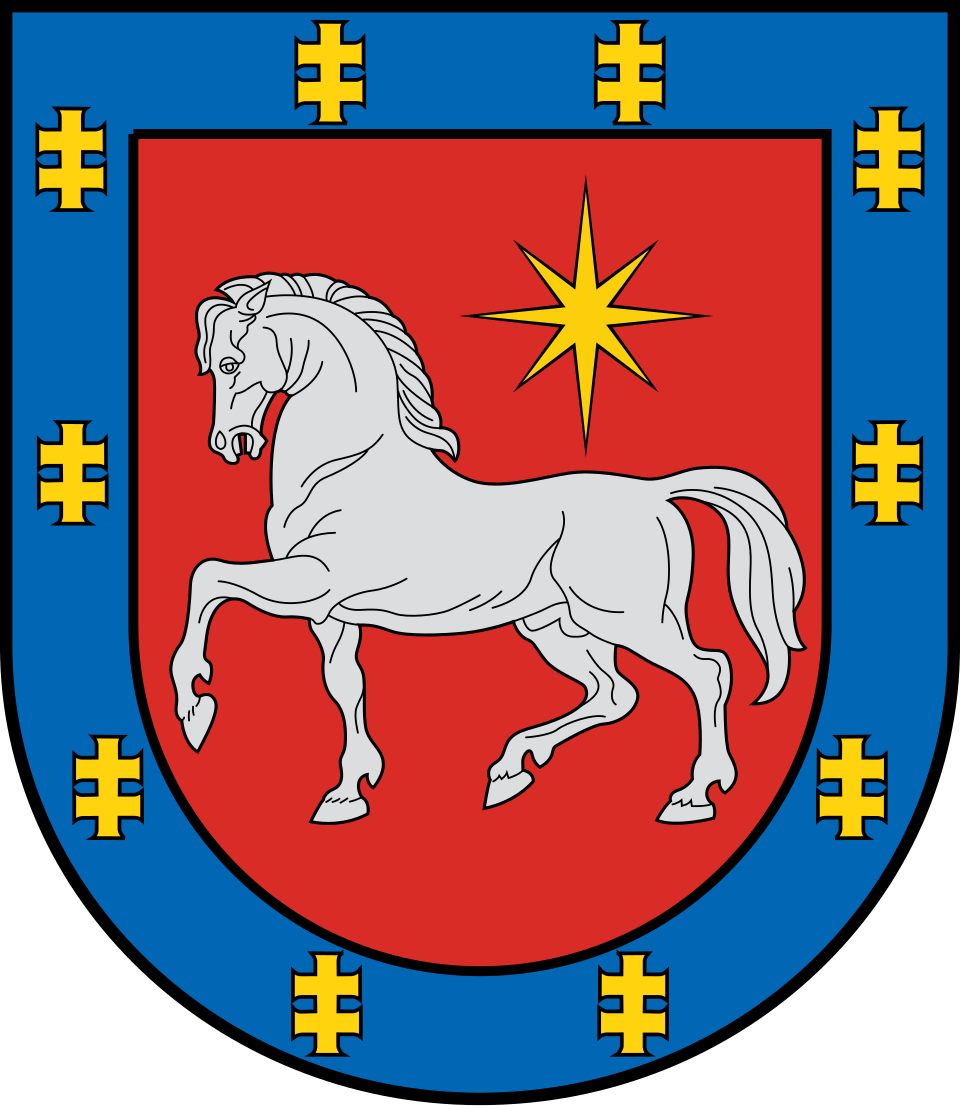
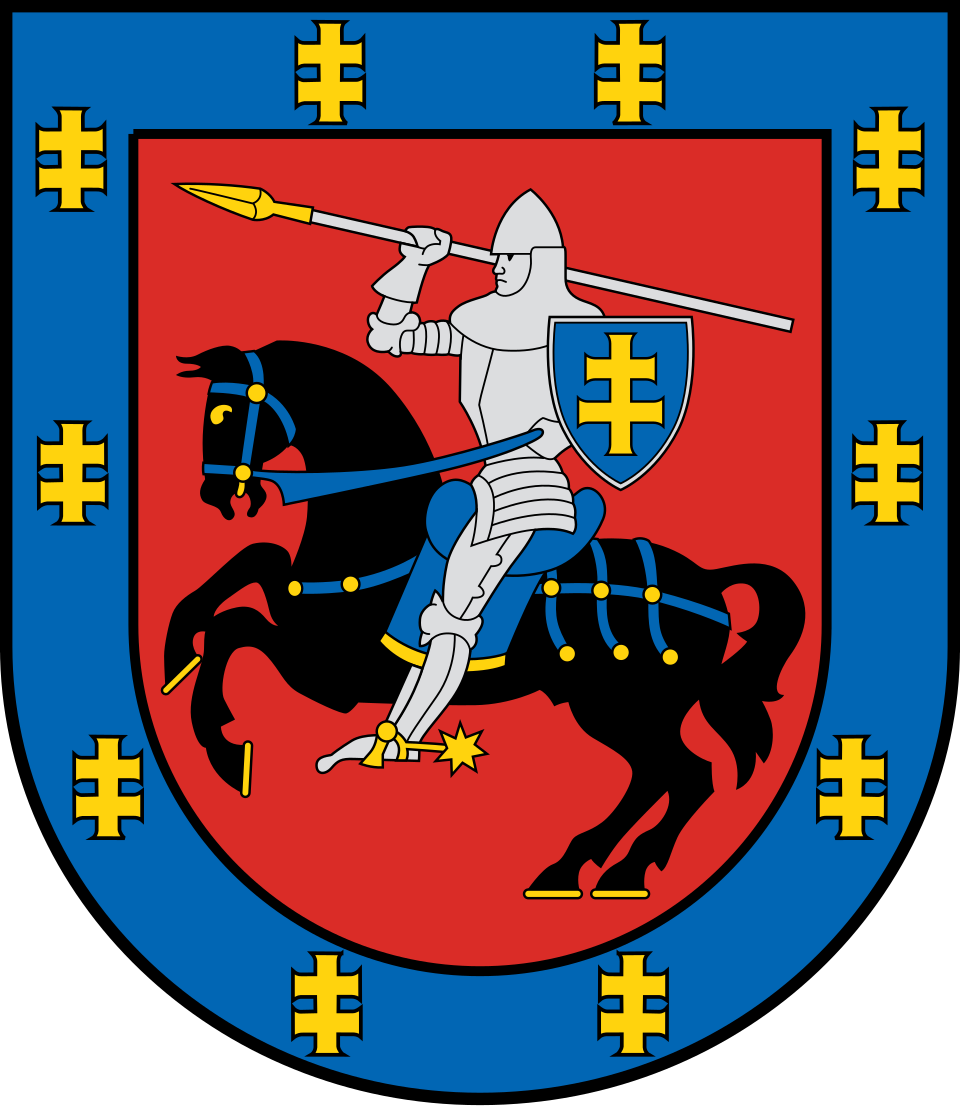
At the county level, Lithuania’s 10 apskritys each maintain official coats of arms, many incorporating charges from the historic Lithuanian lands: the Vytis of Vilnius, the bison of Kaunas, and the mounted knight variants of the eastern counties.
The Vytis (“the Chaser”) is an armoured knight on a charging white horse on a red field, brandishing a sword and bearing a blue shield with a golden double cross. It is one of the oldest state emblems in Europe, formalised under Vytautas the Great in the early 15th century.
The mounted knight first appeared on the seal of Vygantas, Duke of Kernavė, in 1388. Grand Duke Vytautas the Great (1392–1430) formalised it as the coat of arms of the Grand Duchy. It has been in continuous use — with interruptions during Soviet occupation — for over six centuries.
Yellow represents the sun, light, and prosperity; green symbolises nature, freedom, and hope; red stands for the earth, courage, and blood shed for the homeland. The tricolour was designed by a commission including Jonas Basanavičius and adopted on 25 April 1918.
The Vytis and the Belarusian Pahonia (“the Pursuit”) are variants of the same symbol — the mounted knight of the Grand Duchy of Lithuania, which encompassed both modern Lithuania and Belarus. After 1991, both countries briefly used versions of the knight, though Belarus replaced the Pahonia in 1995.
Lithuania has 10 counties (apskritys): Alytaus, Kauno, Klaipėdos, Marijampolės, Panevėžio, Šiauli&udot;, Tauragės, Telši&udot;, Utenos, and Vilniaus. Each maintains its own coat of arms.
Explore the coat of arms of each of Lithuania’s 10 apskritys (counties).
Last reviewed by the Emblema Mundi editorial team on 2026-06-24.