Country
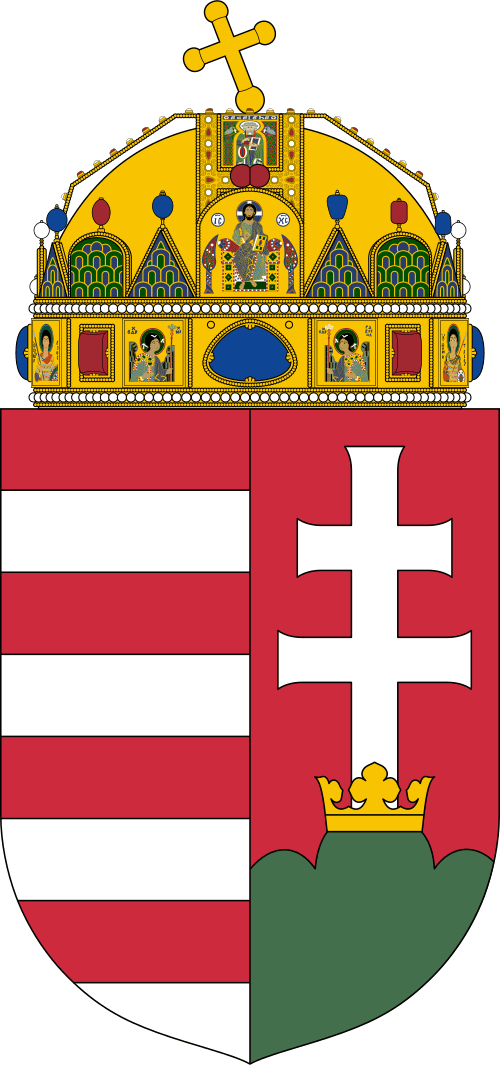
The coat of arms of Hungary is a masterpiece of mediaeval heraldry that has survived eight centuries of dynastic change, Ottoman occupation, Habsburg rule, and communist suppression. On the dexter side, the Árpád stripes — four red and four silver bars first attested on the seal of King Emeric in 1202 — recall the founding dynasty and the rivers of the Carpathian Basin. On the sinister side, a silver patriarchal cross rises from a golden crown atop a green triple hill, a composition documented since Béla III (1172–1196). Above it all rests the Holy Crown of St Stephen (Szent Korona), the single most sacred object in Hungarian national identity. The flag — a red-white-green tricolour — was hoisted on the Royal Palace in Buda on 15 March 1848, the opening day of the Hungarian Revolution.
Coat of Arms
Not available
| Official name | Magyarország |
|---|---|
| Coat of arms | Árpád stripes + patriarchal cross on trimount, Holy Crown |
| Blazon | Per pale: dexter, barry of eight Gules and Argent; sinister, Gules, on a trimount Vert a patriarchal cross Argent issuing from a crown Or |
| Arms restored | 3 July 1990 (elements date to 12th–13th c.) |
| National flag | Horizontal tricolour — red, white, green |
| Flag recognised | 11 April 1848 (Hungarian Revolution) |
| Capital | Budapest |
| Government | Unitary parliamentary republic |
| Head of State | Tamás Sulyok (since 2024) |
| Counties shown | 19 megyék + Budapest |
Coat of Arms of Hungary — Árpád stripes, patriarchal cross, Holy Crown
The Hungarian coat of arms is a vertically divided shield with a pointed base, surmounted by the Holy Crown. Its blazon reads:
Per pale: dexter, barry of eight Gules and Argent; sinister, Gules, on a trimount Vert a patriarchal cross Argent issuing from a crown Or. The Holy Crown surmounts the shield.
The four red and four silver horizontal bars are the heraldic legacy of the Árpád dynasty, the founding house of Hungary. First documented on the ornate seal of King Emeric in 1202, the stripes are traditionally said to represent four great rivers: the Duna (Danube), Tisza, Dráva, and Száva. They are among the oldest continuously used heraldic charges in Europe.
The silver patriarchal (double) cross on a green triple hill, rising from a golden crown, appears on the right side of the shield. The double cross first appeared on coins of Béla III (1172–1196), and on the royal seal of Béla IV (1235–1270). The three hills are traditionally interpreted as the Tátra, Mátra, and Fátra mountain ranges — though two of these now lie beyond Hungary’s modern borders, the symbolism endures.
The Holy Crown of Hungary surmounts the shield as the supreme symbol of Hungarian sovereignty. According to the Doctrine of the Holy Crown (Szentkorona-tan), sovereignty resides not in the monarch but in the Crown itself — a concept unique in European constitutional thought. The Crown is attributed to King Szent István (Saint Stephen), crowned in the year 1000. Its distinctive bent cross, a result of damage sustained over the centuries, has become an iconic feature.
The Árpád stripes and the patriarchal cross were first depicted together in the 14th century, and the arrangement with the Holy Crown on top was fixed in the 16th century. After decades of communist rule — during which a socialist emblem with a Kossuth coat of arms (1949) and later the Kádár emblem (1957) replaced it — the National Assembly restored the traditional arms on 3 July 1990.
The Hungarian flag is a horizontal tricolour of red (top), white (middle), and green (bottom). Its colours derive from the tinctures of the historic coat of arms.
The red-white-green tricolour first emerged as a symbol of national sovereignty during the Hungarian Revolution of 1848. It was hoisted on the Royal Palace in Buda on 15 March 1848 and officially recognised on 11 April 1848. After the defeat of the uprising in 1849, the Habsburgs banned the tricolour.
Following the Austro-Hungarian Compromise (Kiegyezés) of 1867, the tricolour became legal and was adopted as the official flag of the Kingdom of Hungary within the dual monarchy.
Hungarian heraldry is among the richest in Central Europe, shaped by the Kingdom of Hungary’s thousand-year continuity as a sovereign state. The Hungarian system blends Western European heraldic practice — inherited through the Angevin and Habsburg connections — with distinctive local features.
The Lands of the Crown of Saint Stephen (a Szent Korona országai) each bore separate arms within the composite royal achievement: Hungary proper (the Árpád stripes), Croatia (chequy), Dalmatia (three leopard heads), Slavonia (marten), Transylvania (eagle, sun, moon, and seven towers), and Fiume (double-headed eagle). This grand coat of arms was one of the most complex heraldic compositions in Europe.
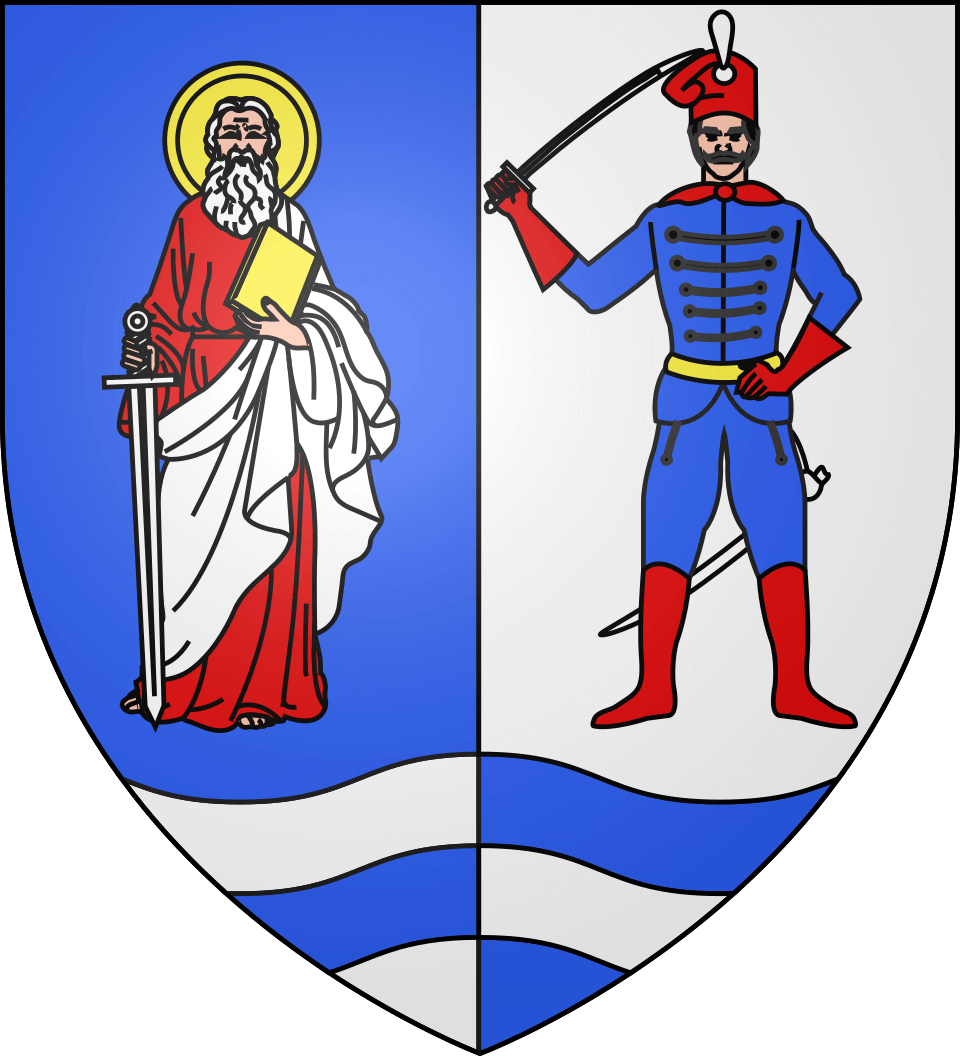
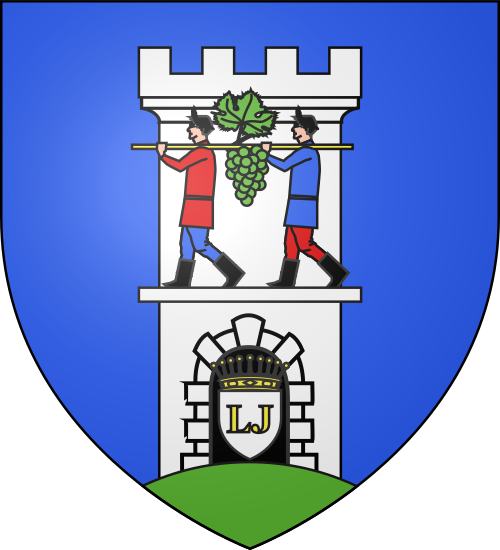
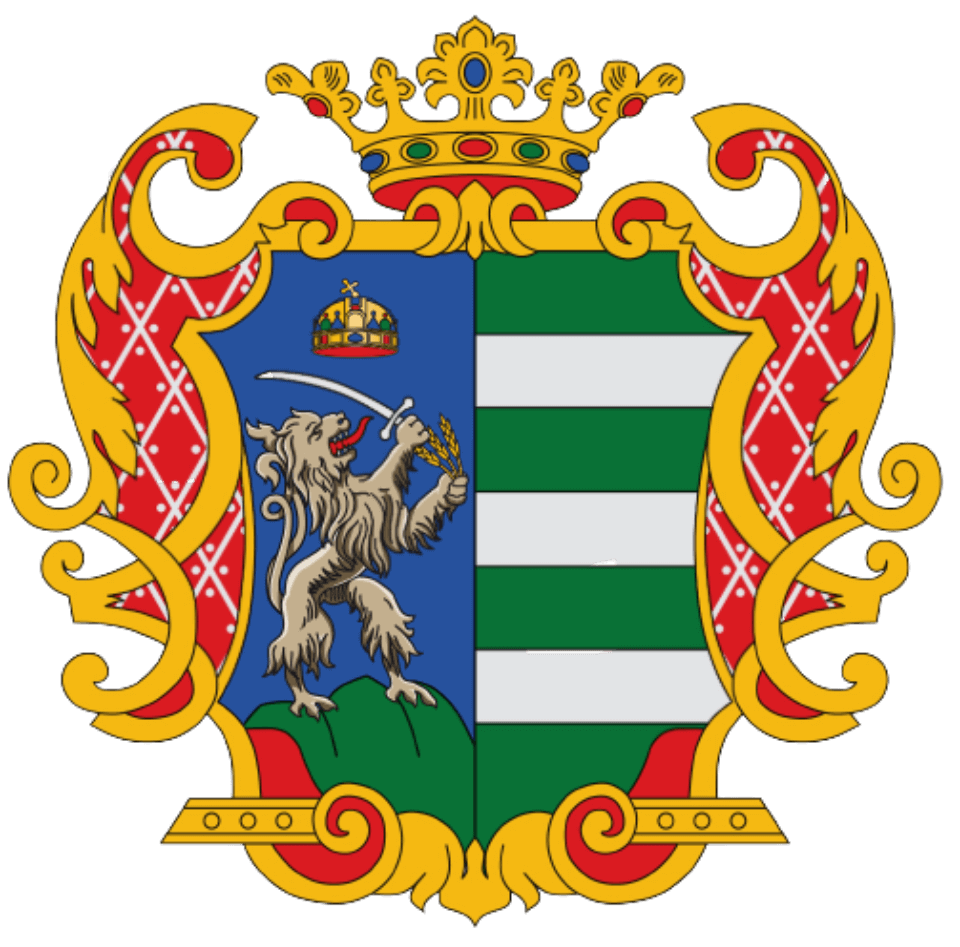
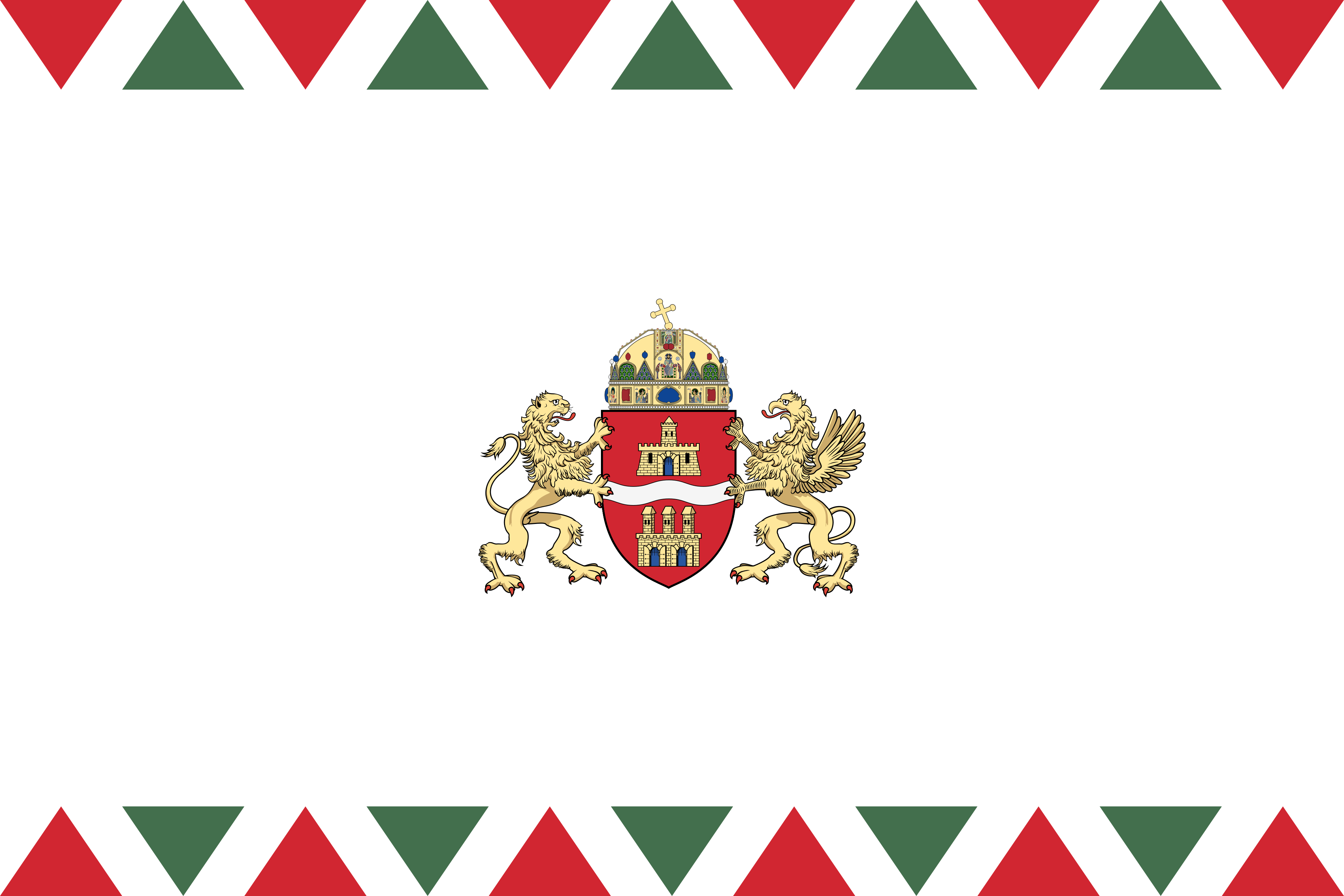
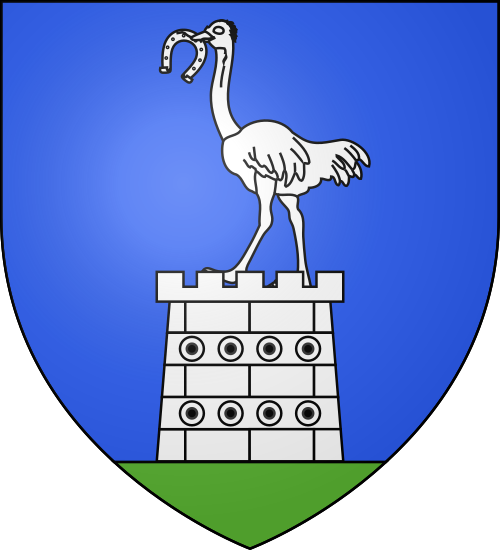
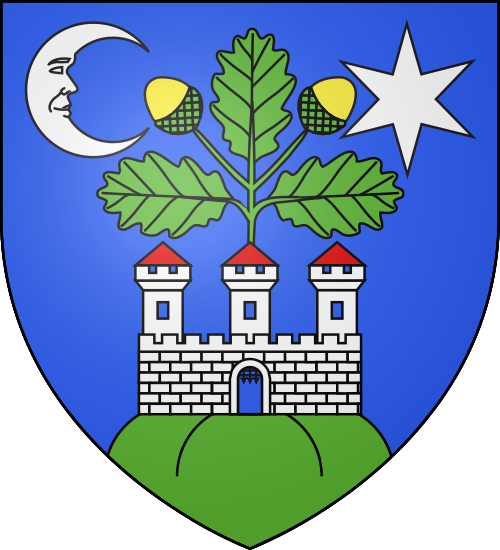
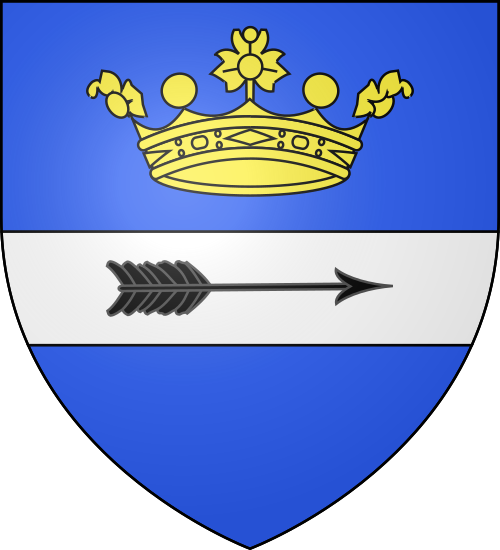
At the county level, Hungary’s 19 megyék (counties) and Budapest each maintain official coats of arms. Many incorporate charges dating to the mediaeval comitatus system, reflecting the deep continuity of Hungarian administrative and heraldic identity.
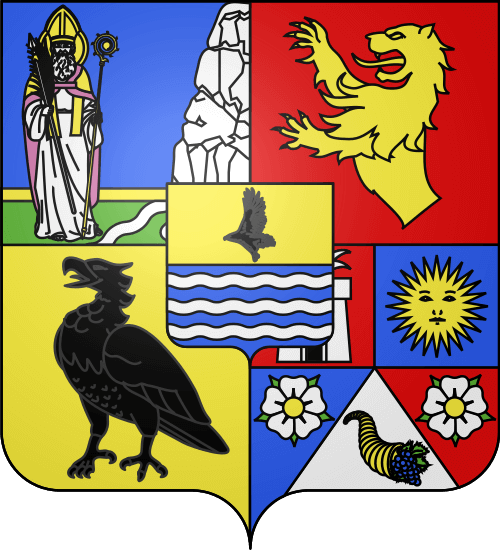
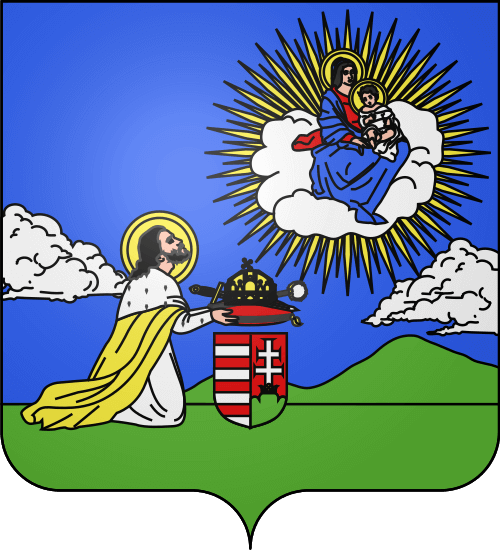
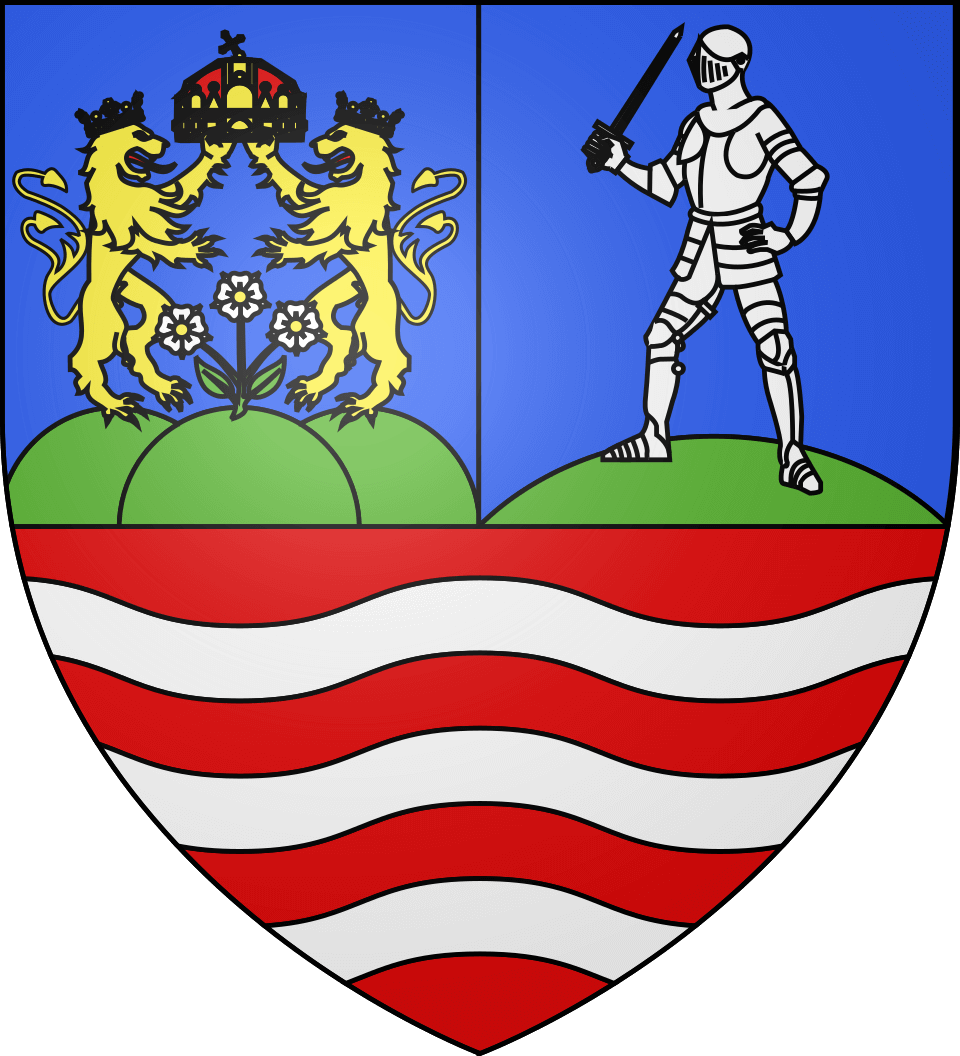
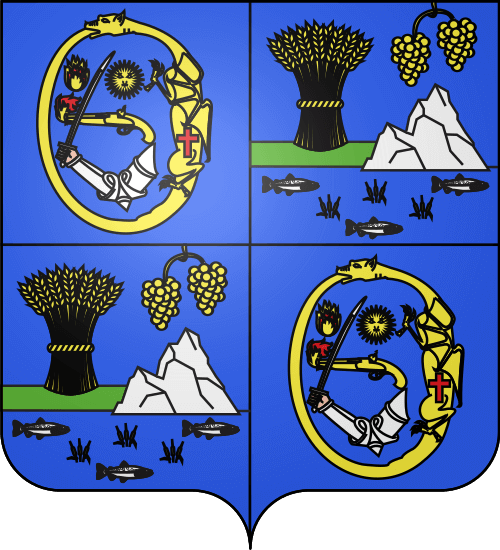
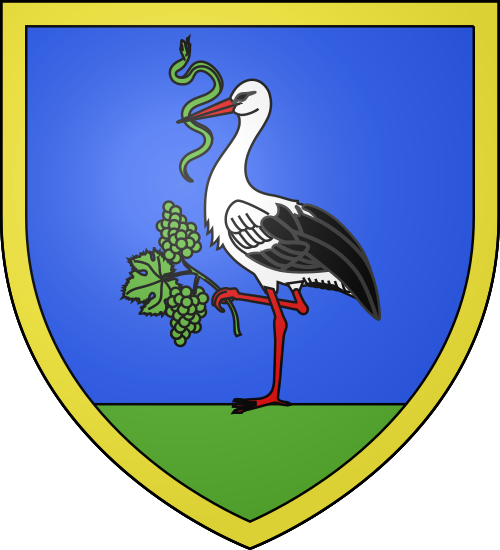
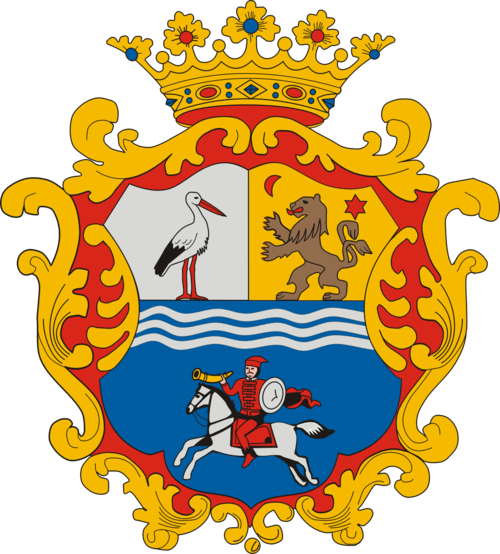
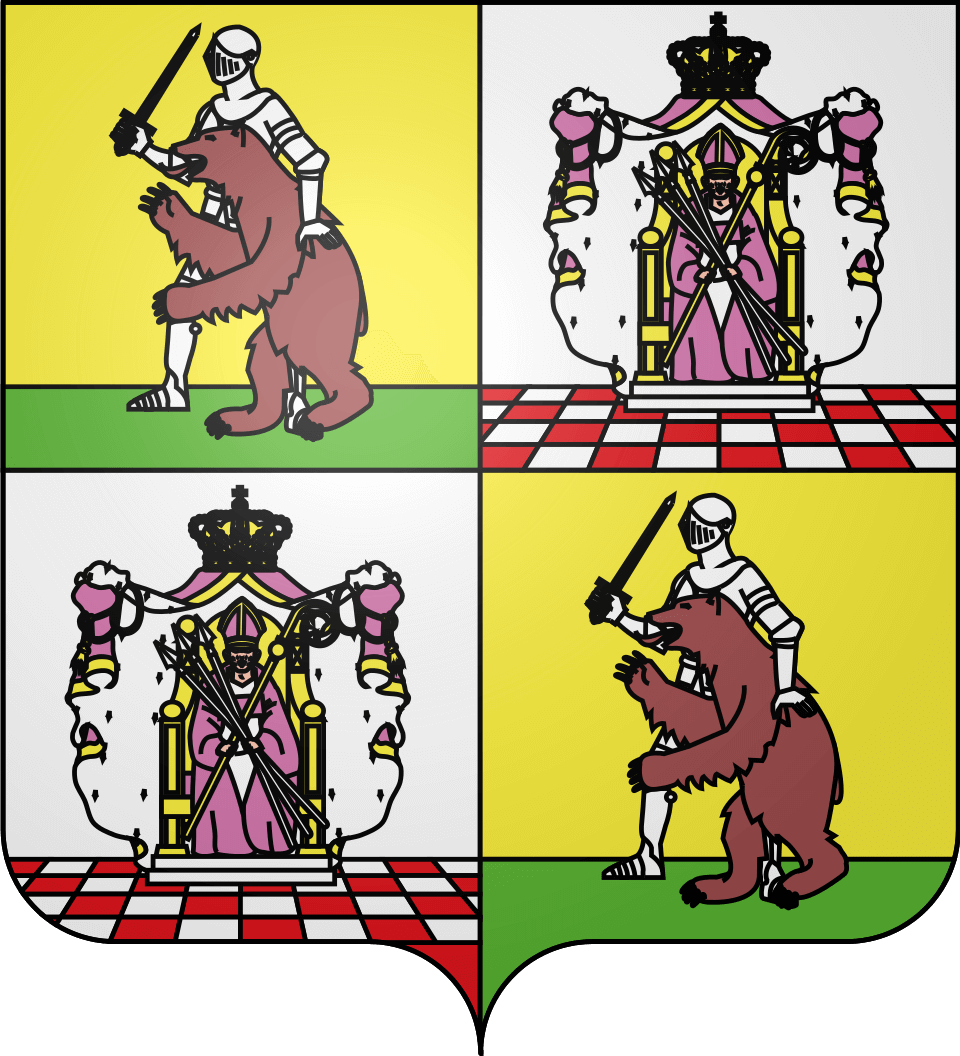
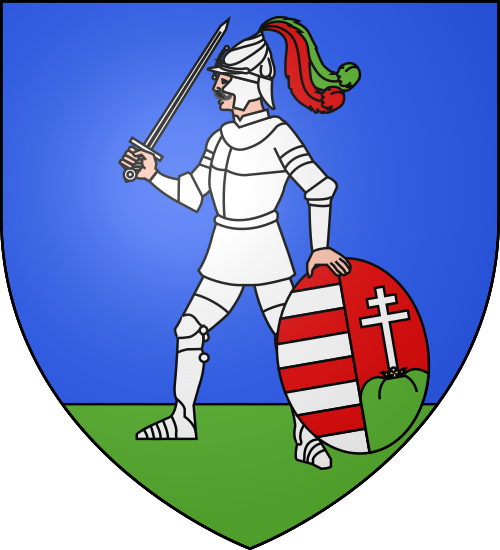
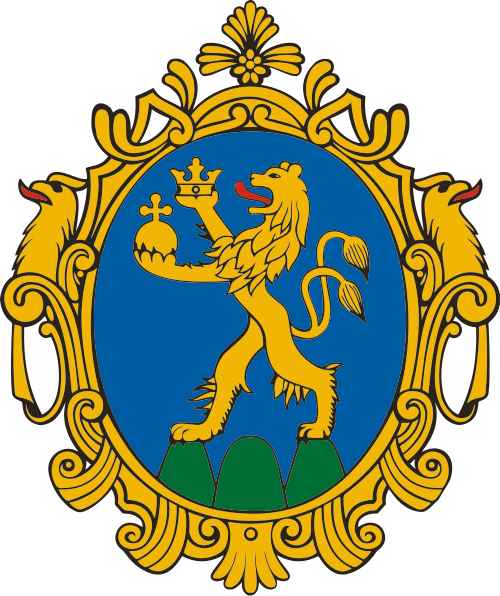
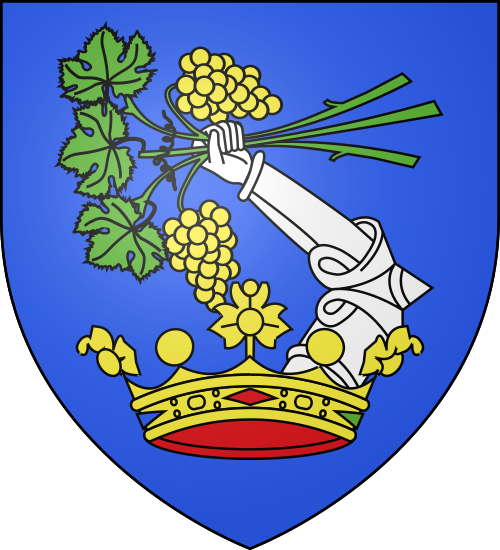
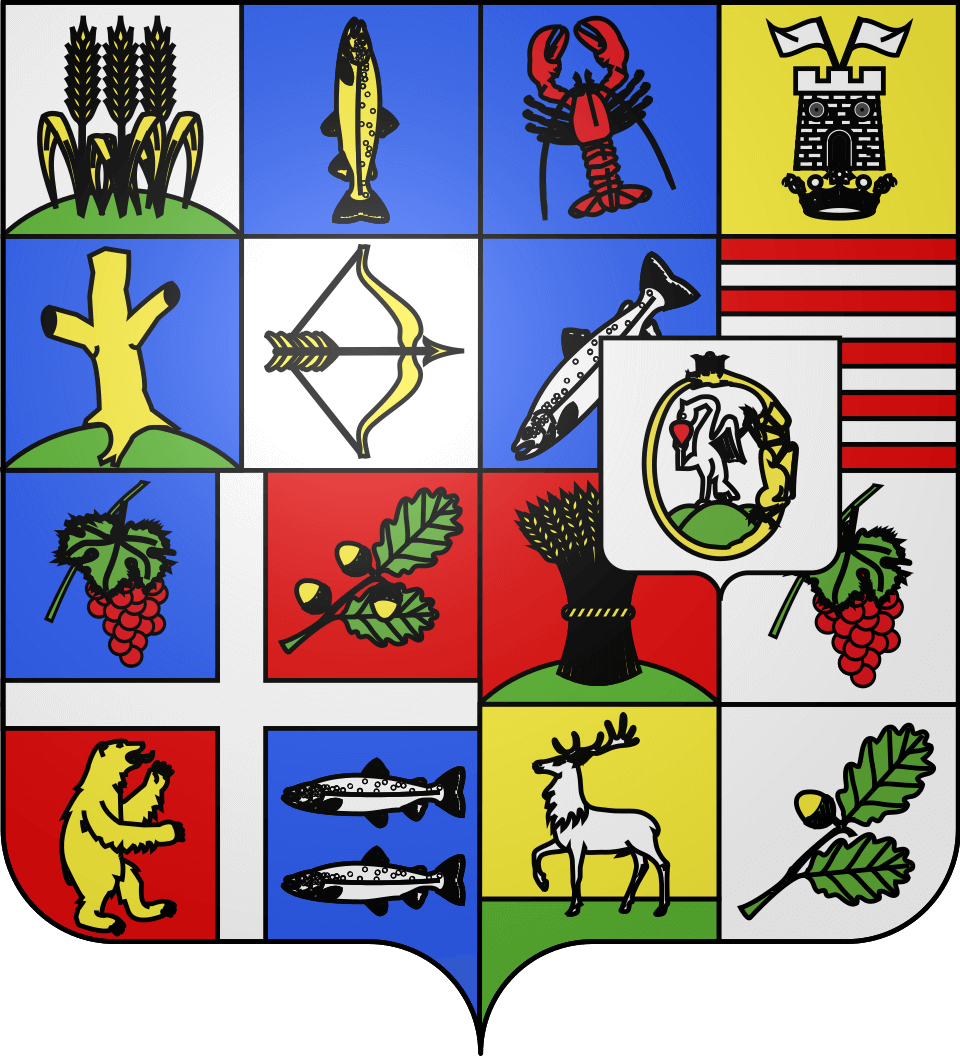
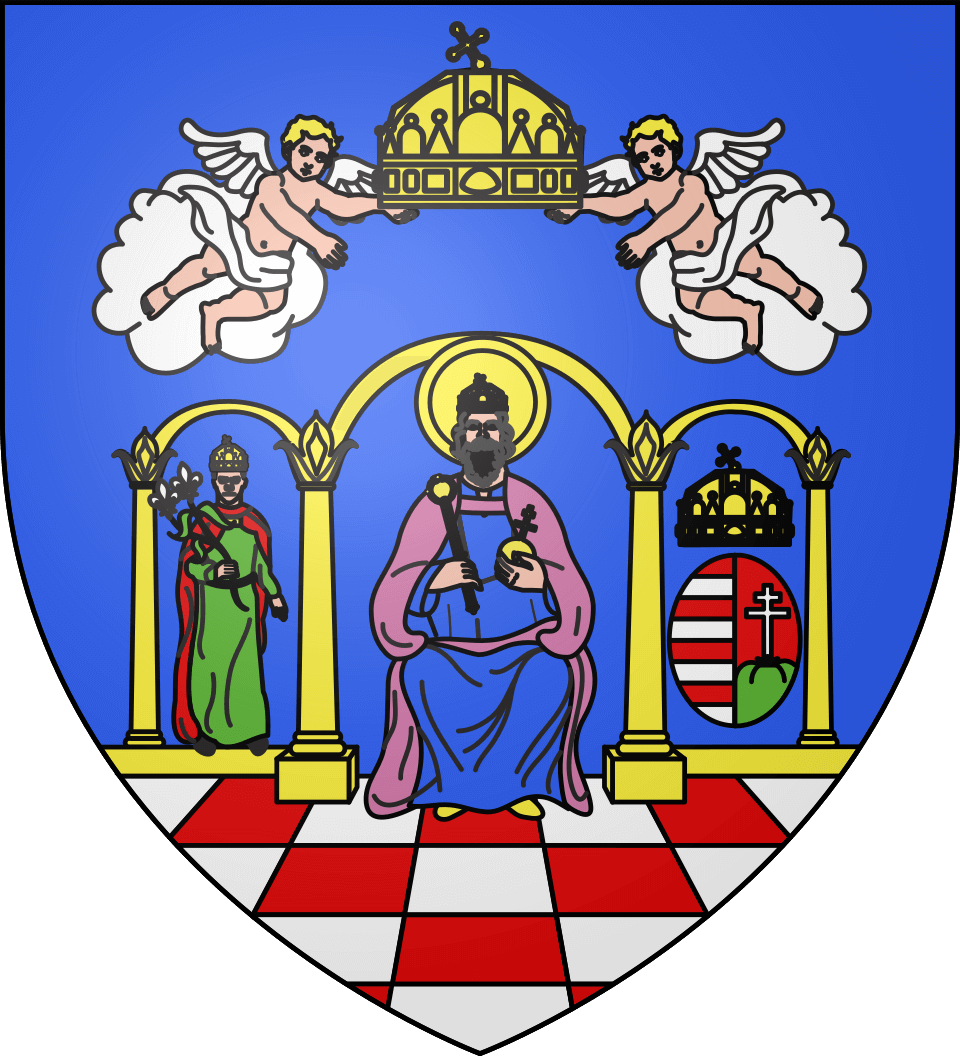
Each of Hungary’s 19 counties and the capital Budapest carries a distinctive coat of arms. Here are eight notable examples:
The four red and four silver horizontal bars are the heraldic legacy of the Árpád dynasty, first documented on the seal of King Emeric in 1202. They are traditionally said to represent four rivers: the Duna (Danube), Tisza, Dráva, and Száva. They are among the oldest continuously used heraldic charges in Europe.
The silver patriarchal (double) cross on a green trimount, issuing from a golden crown, occupies the right side of the shield. The double cross first appeared on coins of Béla III (1172–1196). The three green hills are traditionally interpreted as the Tátra, Mátra, and Fátra mountain ranges.
The Holy Crown of Hungary (Szent Korona) surmounts the shield as a symbol of Hungarian sovereignty. According to the Doctrine of the Holy Crown, sovereignty resides not in the monarch but in the Crown itself. It is attributed to King Szent István (Saint Stephen), crowned in the year 1000. The Crown was placed atop the combined coat of arms in the 16th century.
Following the collapse of communist rule, the National Assembly voted on 3 July 1990 to restore the traditional small coat of arms — including the Holy Crown — as the official state symbol, replacing the socialist Kádár emblem in use since 1957.
The red-white-green tricolour was officially recognised on 11 April 1848, during the Hungarian Revolution. Red represents strength and blood shed for the nation, white symbolises fidelity and the rivers, and green stands for hope and the plains and forests. The colours derive from the tinctures of the historic coat of arms.
Explore the coat of arms of each of Hungary’s 19 megyék (counties) and the capital Budapest.
Last reviewed by the Emblema Mundi editorial team on 2026-06-22.