Country
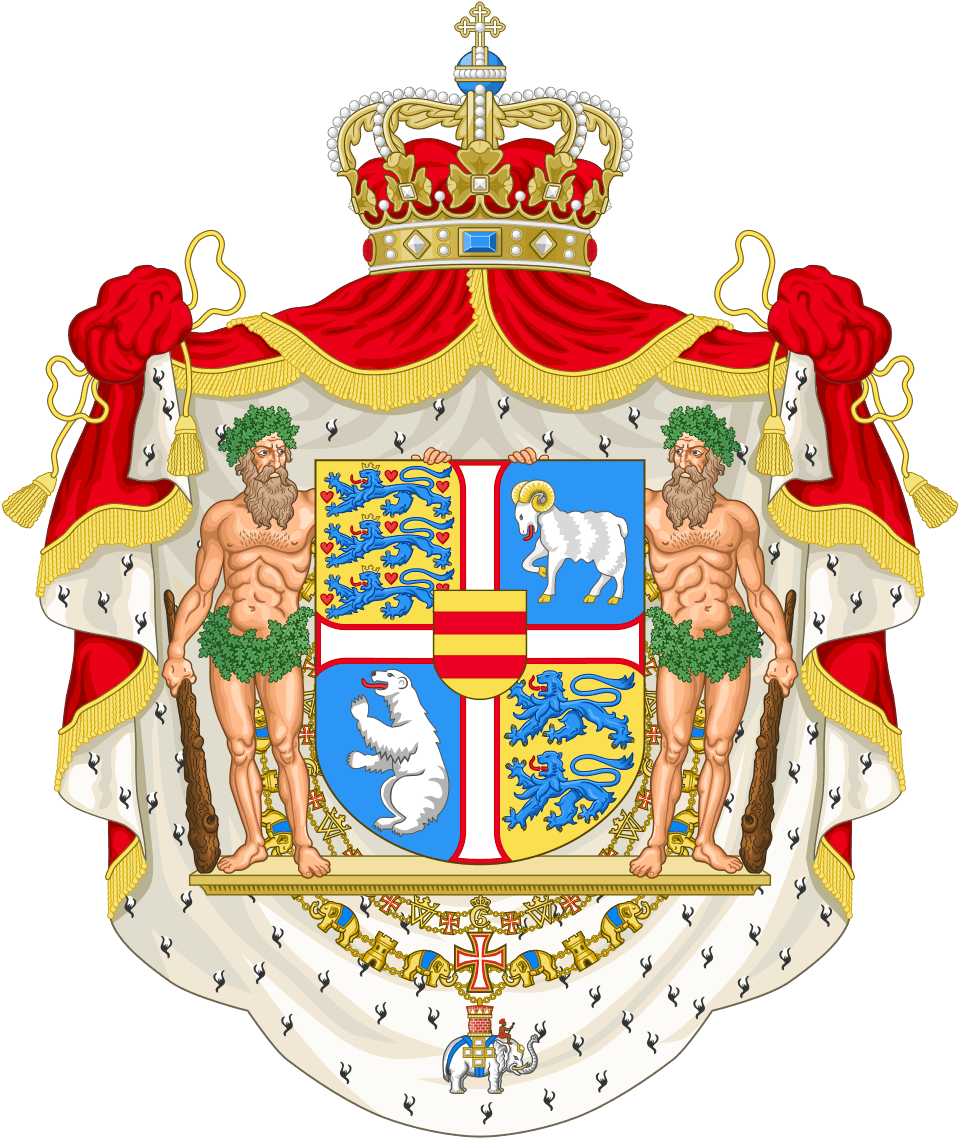
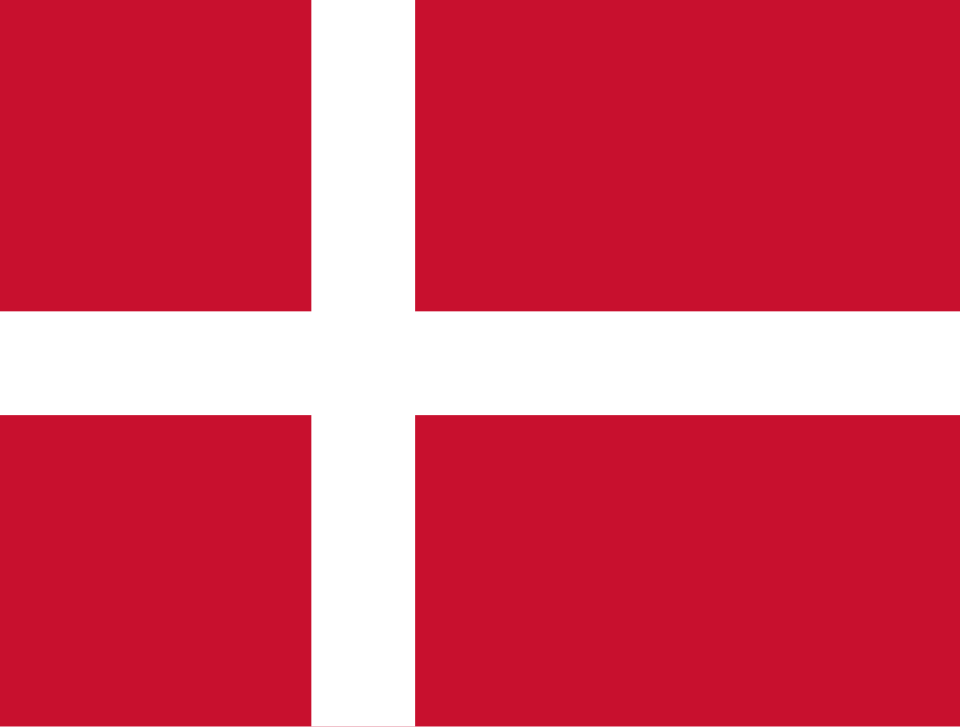
Denmark holds two extraordinary records in world heraldry and vexillology. Its coat of arms — three crowned blue lions accompanied by nine red hearts on a golden shield — is the oldest royal coat of arms in continuous use in Europe, first documented on the seal of King Canute VI around 1194. Its flag — the Dannebrog, a red banner with a white Nordic cross — holds the Guinness World Record as the oldest continuously used national flag, traditionally dated to 15 June 1219 when, according to legend, it fell from the sky during the Battle of Lyndanisse in Estonia. The Dannebrog is also the mother of all Nordic cross flags — Sweden, Norway, Finland, Iceland, and the Faroe Islands all derive their cross design from the Danish model.
Flag
Not available
Coat of Arms
Not available
| Official name | Kongeriget Danmark |
|---|---|
| Coat of arms | Three crowned blue lions, nine red hearts, on gold |
| Blazon | Or, three lions passant in pale Azure crowned and armed Or langued Gules, nine hearts Gules |
| Arms first documented | c. 1194 (seal of Canute VI) |
| National flag | Dannebrog — red with white Nordic cross |
| Flag legend | Battle of Lyndanisse, 15 June 1219 |
| Guinness record | Oldest continuously used national flag (since 1625) |
| Capital | København |
| Government | Unitary parliamentary constitutional monarchy |
| Head of State | Frederik X (since 2024) |
Coat of Arms of Denmark — Or, three lions passant Azure, nine hearts Gules
The Danish coat of arms is the oldest royal arms in continuous use in Europe:
Or, three lions passant in pale Azure crowned and armed Or langued Gules, nine hearts Gules.
Three blue lions walking one above the other, each wearing a golden crown, on a golden field scattered with nine red hearts. The royal crown surmounts the shield.
The oldest known depiction of the three lions appears on a seal used by King Canute VI around 1194. The arms evolved from the heraldry of the House of Estridsen, the dynasty that provided Denmark’s kings from 1047 to 1412. The lions were not crowned until the mid-13th century.
The nine red charges were historically described as søblade (water-lily leaves or lily pads), not hearts. Over the centuries, their stylisation evolved until they became indistinguishable from heraldic hearts. Their number varied widely — sometimes as few as three, sometimes many more — until King Frederick VI fixed the count at nine in 1819 and formally decreed that the beasts were lions (facing the viewer, not in profile).
The greater coat of arms is one of the most complex heraldic achievements in Europe. It quarters the arms of Denmark with those of the Faroe Islands (a ram), Greenland (a polar bear), the former union territories of Sweden (three crowns) and Norway (a lion with an axe), and the Oldenburg and Delmenhorst dynastic charges. Two wild men (woodwoses) serve as supporters, and the collar of the Order of the Elephant encircles the shield. The current version was adopted under Frederik X on 20 December 2024.
The Dannebrog — The oldest continuously used national flag in the world
The Dannebrog is a red flag with a white Nordic cross — the cross extending to the edges of the flag with the vertical bar shifted to the hoist. It holds the Guinness World Record as the oldest continuously used national flag, in continuous use since 1625.
According to Denmark’s most famous national legend, on 15 June 1219, King Valdemar II was fighting the Estonians at the Battle of Lyndanisse (modern-day Tallinn). As the battle turned against the Danes, a huge red banner with a white cross is said to have fallen from the sky, rallying the troops and securing victory. Whether historical or mythical, the story has been central to Danish identity for eight centuries.
The earliest confirmed depiction of the Dannebrog appears in the Gelre Armorial, compiled between approximately 1370 and 1395. A banner with a white-on-red cross is attested in Danish royal use from the 14th century onward.
The Dannebrog is the origin point for the entire family of Nordic cross flags. Sweden (1906, based on older traditions), Norway (1821), Finland (1918), Iceland (1915), the Faroe Islands (1919), and Åland (1954) all adopted the same off-centre cross design, making the Dannebrog the most influential flag template in Scandinavian history.
Danish heraldry is among the oldest and best-documented in Northern Europe. The three lions of Denmark influenced the heraldry of territories across the Danish realm and the Kalmar Union — notably Estonia (whose three lions derive directly from the Danish royal arms during the period of Danish rule, 1219–1346) and England’s three lions (a related but independent development).
The Order of the Elephant (Elefantordenen), founded by Christian I in 1462, is one of the oldest orders of chivalry in Europe and features prominently in the greater royal arms. Municipal heraldry is rich: cities such as København, Århus, Odense, and Aalborg maintain arms dating to their mediaeval charters, many featuring ships, castles, and the Dannebrog cross itself.
The state coat of arms is blazoned Or, three lions passant in pale Azure crowned and armed Or langued Gules, nine hearts Gules — three crowned blue lions on a golden field surrounded by nine red hearts. It is the oldest royal coat of arms in continuous use in Europe, first documented on the seal of King Canute VI around 1194.
Yes. The Dannebrog holds the Guinness World Record as the oldest continuously used national flag, in continuous use since 1625. Its origin legend dates to the Battle of Lyndanisse on 15 June 1219. The earliest confirmed depiction appears in the Gelre Armorial (c. 1370–1395).
The nine red charges were historically described as water-lily leaves (søblade) but are now conventionally rendered as hearts. Their number varied over the centuries and was fixed at nine by King Frederick VI in 1819.
The Dannebrog is the origin of the Nordic cross design — a cross extending to the edges with the vertical bar shifted toward the hoist. All other Nordic flags derive from the Danish model. The cross represents Christianity, adopted by Denmark under Harald Bluetooth in the 10th century.
The greater royal coat of arms quarters Denmark with the Faroe Islands, Greenland, and historic union territories. It is supported by two wild men and encircled by the collar of the Order of the Elephant. The current version was adopted under Frederik X on 20 December 2024.
Last reviewed by the Emblema Mundi editorial team on 2026-06-24.