Country
The Leo Belgicus — a golden lion rampant on a black shield — has been the heraldic soul of Belgium since the country’s birth in the Revolution of 1830. Blazoned Sable, a lion rampant Or, armed and langued Gules, it descends from the arms of the Duchy of Brabant, whose Duke Henri I (d. 1235) first bore a golden lion on black. The national flag — black, yellow, and red vertical stripes — draws directly from these Brabantine tinctures, echoing the lion’s field, body, and claws. Beneath the motto L’union fait la force / Eendracht maakt macht (“Unity makes strength”), the arms unite a country of three communities and three regions, each with its own heraldic tradition: the black lion of Flanders, the red cock of Wallonia, and the iris of Brussels.
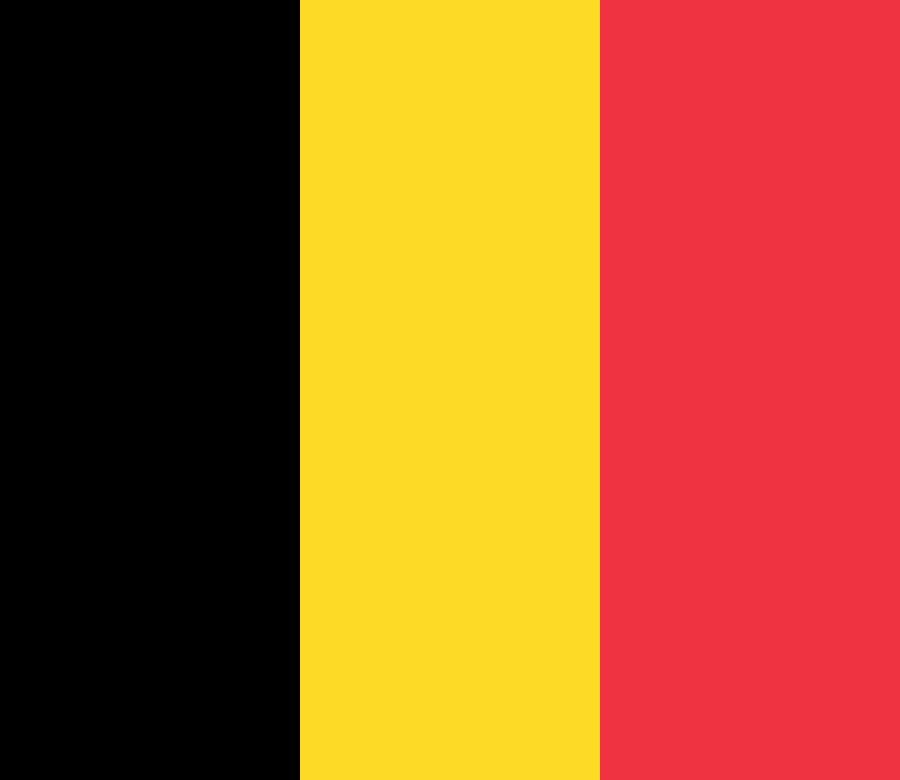
Flag
Not available
Coat of Arms
Not available
| Official name | Koninkrijk België / Royaume de Belgique / Königreich Belgien |
|---|---|
| Coat of arms | Leo Belgicus — golden lion rampant on black shield |
| Blazon | Sable, a lion rampant Or, armed and langued Gules |
| Arms adopted | 1830 (Revolution); royal decree 17 March 1837 |
| Motto | L’union fait la force / Eendracht maakt macht |
| National flag | Vertical tricolour — black, yellow, red (13:15 ratio) |
| Flag adopted | 23 January 1831 (Constitution) |
| Capital | Bruxelles / Brussel |
| Head of State | Philippe / Filip (since 2013) |
| Provinces | 10 provinces + Région de Bruxelles-Capitale |
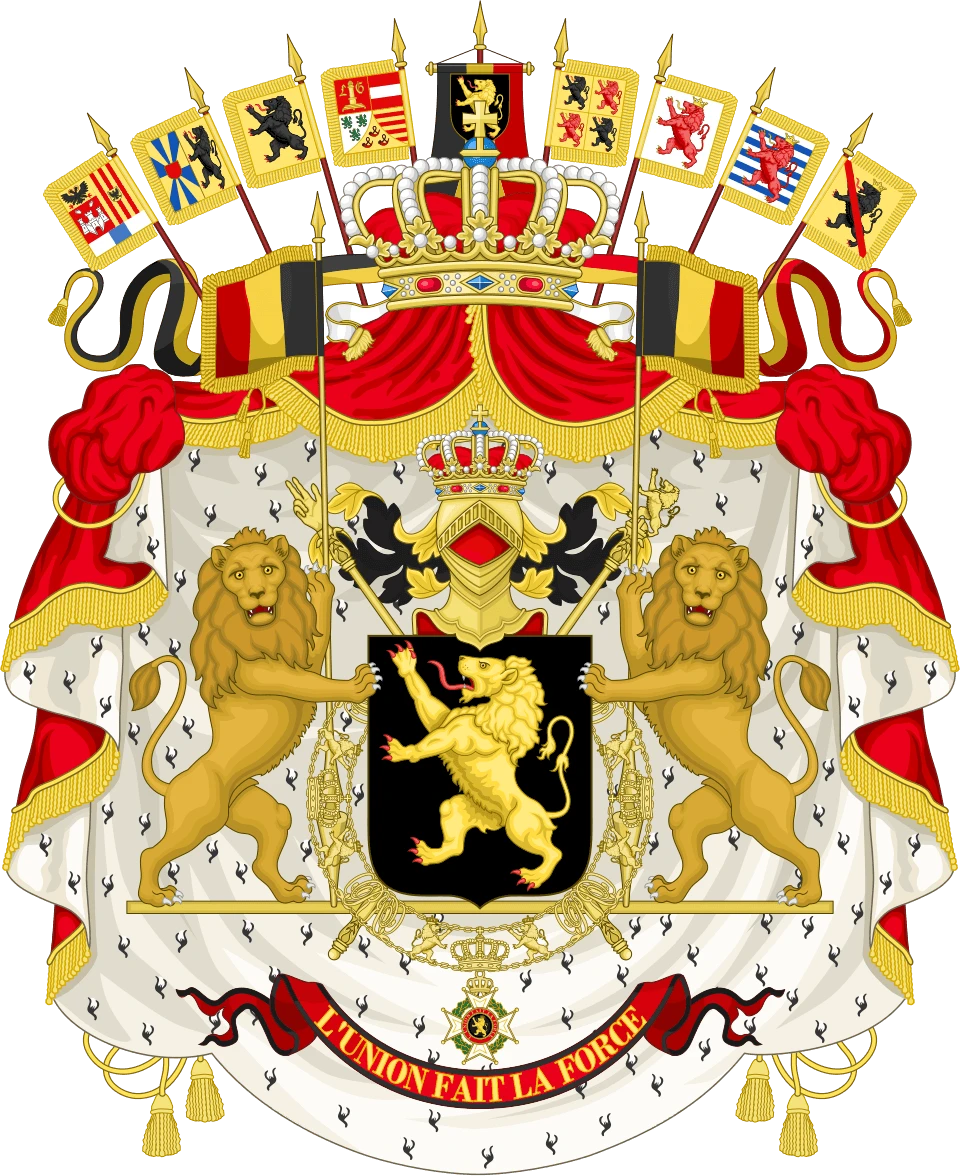
Coat of Arms of Belgium — Sable, a lion rampant Or, armed and langued Gules
The Belgian coat of arms centres on the Leo Belgicus, one of the most celebrated heraldic lions in Europe:
Sable, a lion rampant Or, armed and langued Gules.
A golden lion, rampant and facing dexter, with red claws and tongue, on a black shield.
The lion derives from the arms of the Duchy of Brabant, the most powerful of the southern Low Countries principalities. Duke Henri I (d. 1235) was the first to use a golden lion on a black field. Over the following centuries, the Brabantine lion came to represent the entire federation of provinces that would eventually become Belgium.
When Brussels rose against Dutch rule on 25 August 1830, the revolutionaries rejected the symbols of the United Kingdom of the Netherlands and adopted the Brabantine lion as their emblem. The provisional government proclaimed independence on 4 October 1830, and Article 193 (originally 125) of the Belgian Constitution enshrined the lion and the motto: “The Belgian nation takes red, yellow and black as colours, and as state coat of arms the Belgian lion with the motto UNITY MAKES STRENGTH.”
A royal decree of 17 March 1837 defined two versions. The greater arms include a royal pavilion, the lion shield, crossed sceptres, the Order of Léopold, and two lion supporters on a scroll bearing the motto in both French and Dutch. The lesser arms display the shield alone beneath the royal crown.
Flag of Belgium — Black, yellow, red — the Brabantine tinctures
The Belgian flag is a vertical tricolour of black (hoist), yellow (centre), and red (fly), in the unusual proportions of 13:15.
A tricolour of red, black, and yellow first appeared during the Brabant Revolution of 1789–1790, when the southern provinces briefly threw off Habsburg rule to form the United Belgian States. The colours were drawn from the Brabantine coat of arms: the black field, the golden lion, and the lion’s red claws and tongue.
On 27 August 1830, the day after the riots at the La Monnaie theatre, insurgents hoisted a red-yellow-black horizontal tricolour. The provisional government adopted it on 30 September 1830. When the National Congress enshrined the flag in the Constitution on 23 January 1831, the stripes were changed to vertical — influenced by the French model — and the order was fixed as black-yellow-red.
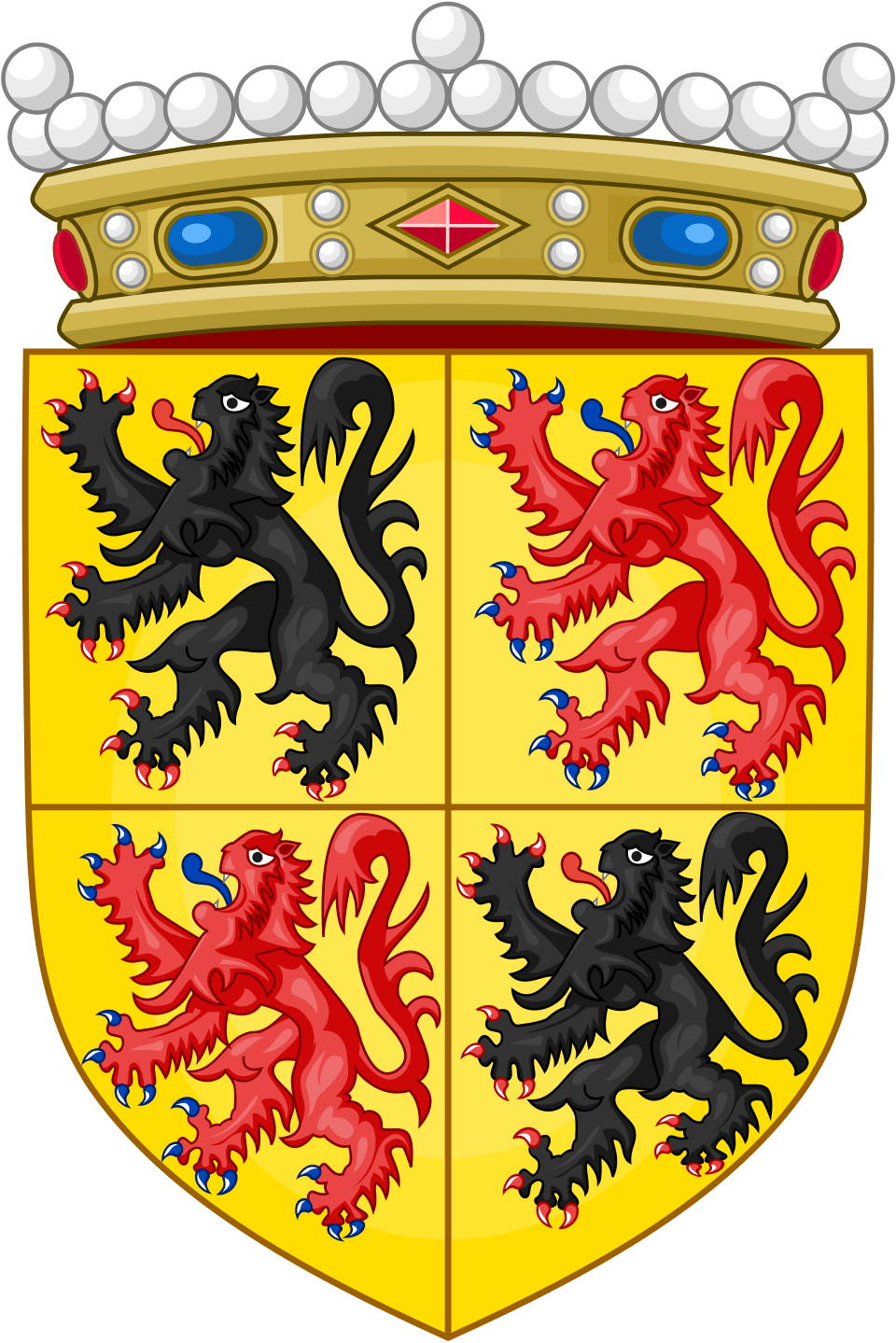
The three colours correspond to the heraldic lions of the historic provinces: the black lion of Flanders and Namur, the golden lion of Brabant, and the red lion of Hainaut, Limburg, and Luxembourg.
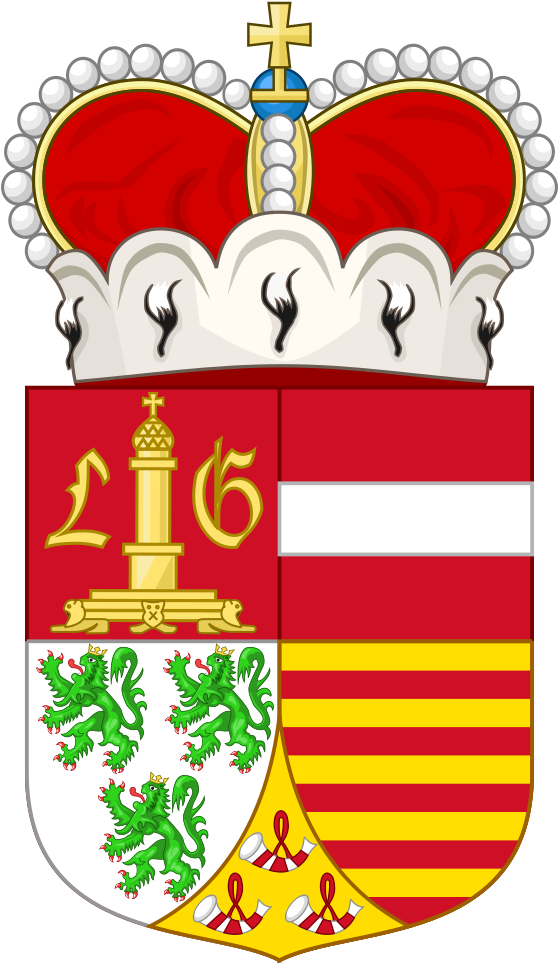
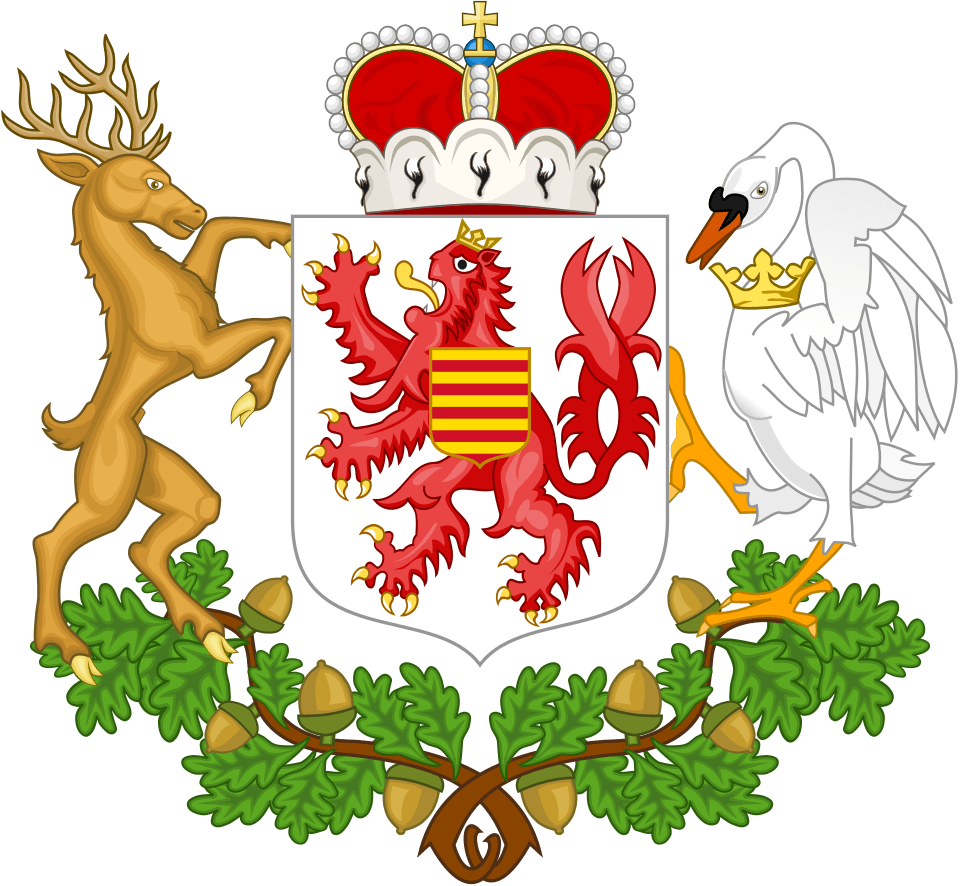
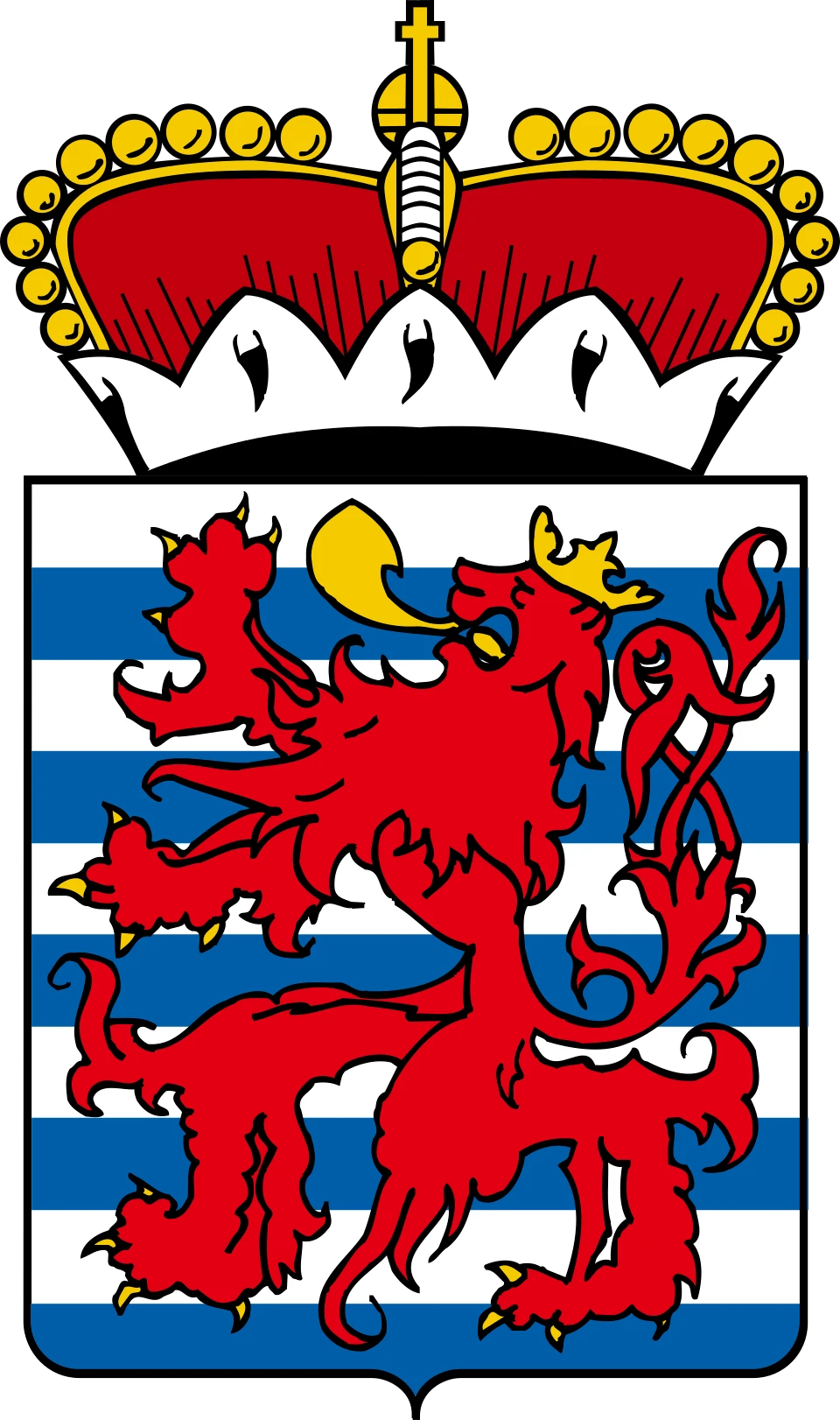
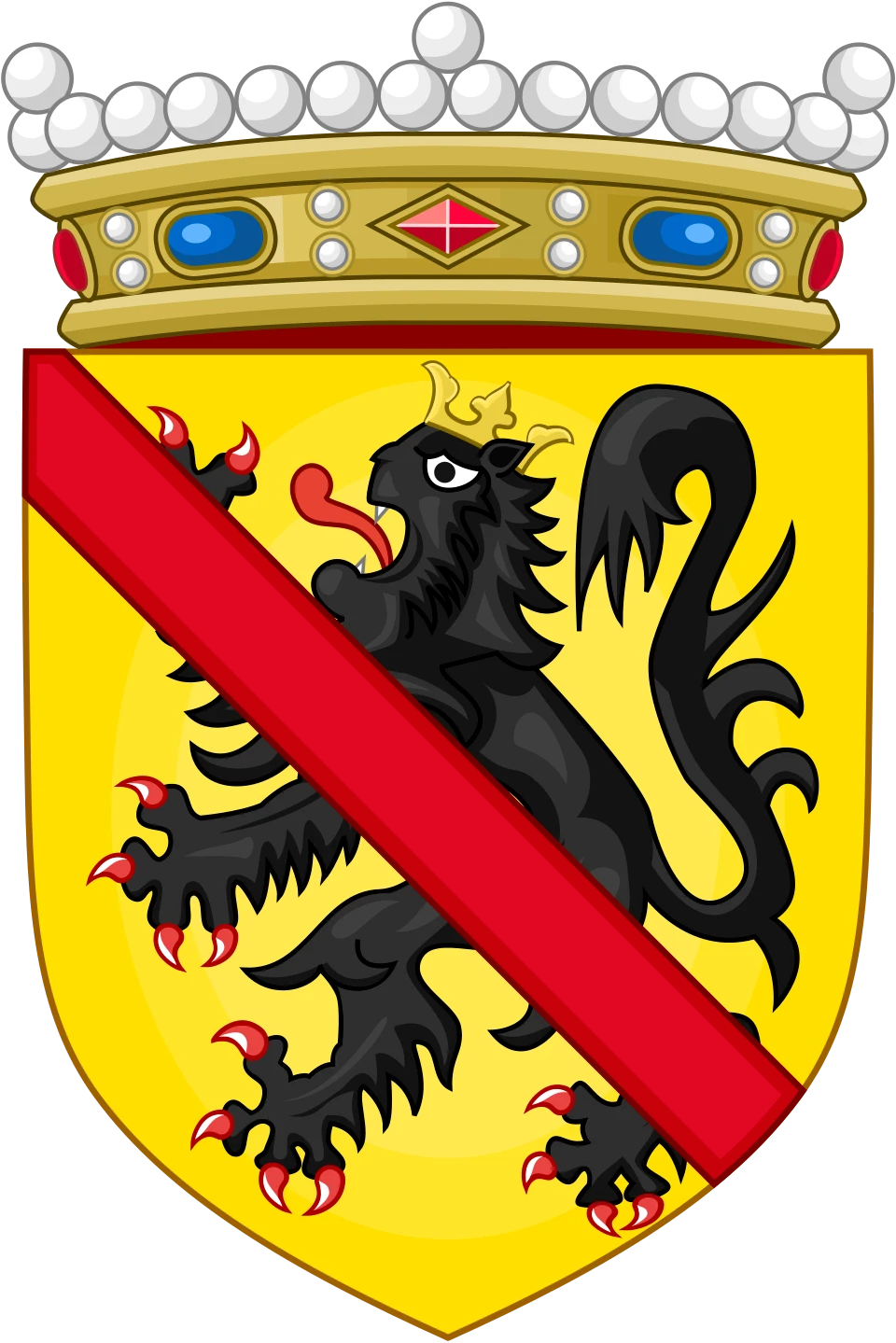
Belgium’s heraldic heritage is among the richest in Western Europe, shaped by its position at the crossroads of the Burgundian, Habsburg, and French heraldic traditions. The historic principalities — the Duchy of Brabant, the County of Flanders, the County of Hainaut, the Prince-Bishopric of Liège, and the Duchy of Luxembourg — each bore distinctive arms that survive in provincial and municipal heraldry today.
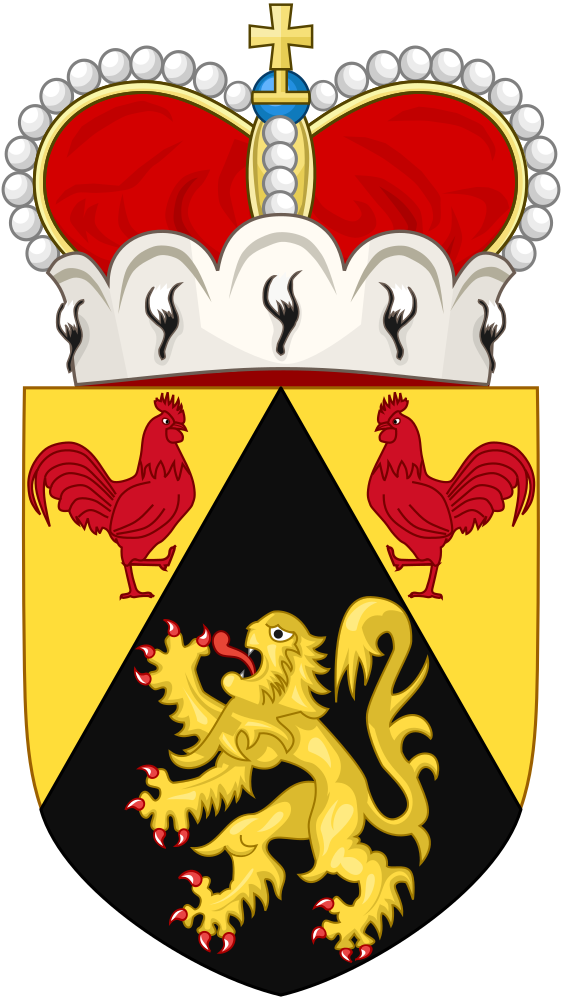
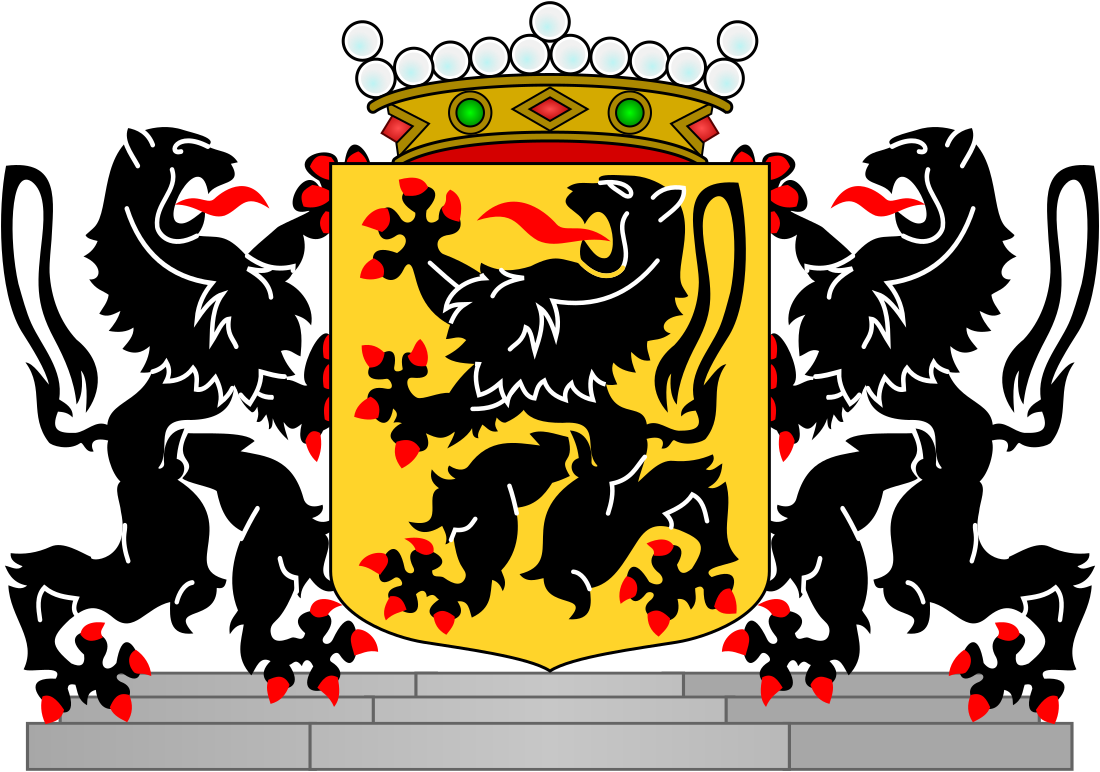
The Conseil héraldique (Heraldic Council), established in 1843, advises on heraldic matters. Belgian municipal heraldry is exceptionally dense: virtually every commune in Flanders and Wallonia maintains an official coat of arms, many dating to mediaeval charters. The black lion of Flanders, the perron of Liège, and the red cock of Wallonia (coq hardi) are among the most iconic regional charges.
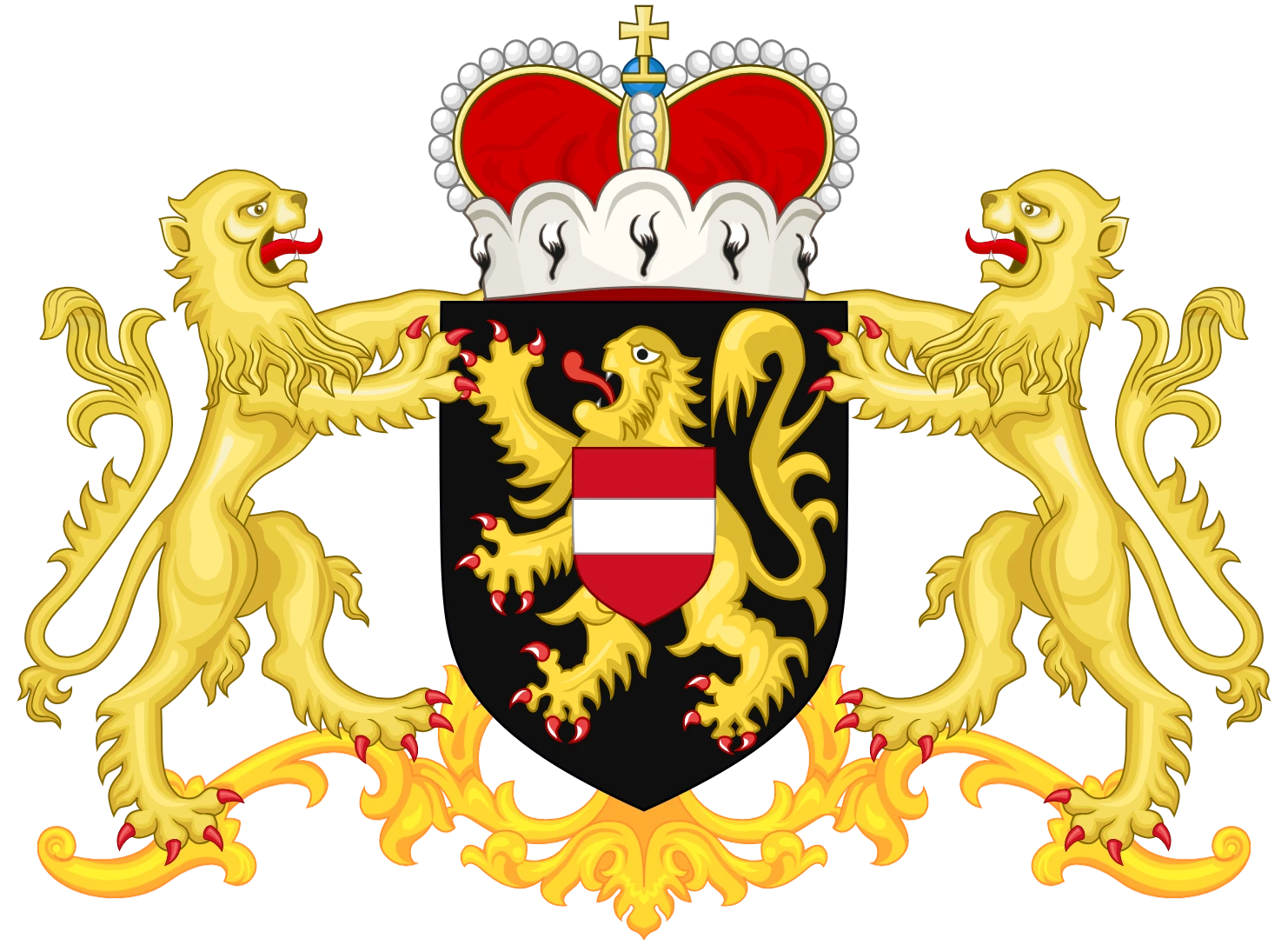
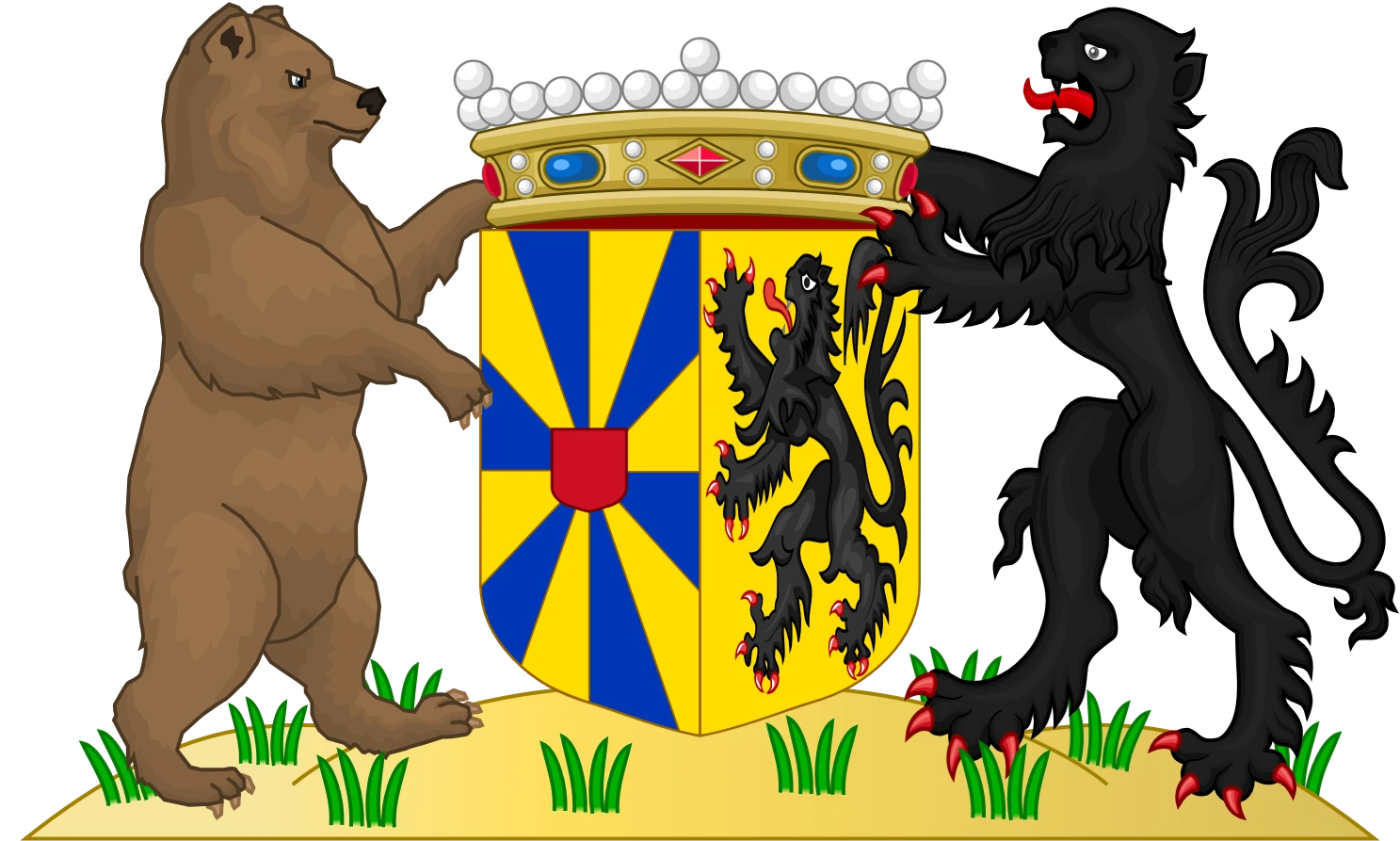
Each of Belgium’s 10 provinces and the Brussels-Capital Region carries its own coat of arms:
The Leo Belgicus is a golden lion rampant on a black shield — blazoned Sable, a lion rampant Or, armed and langued Gules. It derives from the arms of the Duchy of Brabant, whose Duke Henri I (d. 1235) was the first to use a golden lion on a black shield. The lion became the symbol of Belgian independence after the 1830 Revolution.
L’union fait la force (French) or Eendracht maakt macht (Dutch) means “Unity makes strength”. It is inscribed on the coat of arms and reflects Belgium’s identity as a federal state uniting Dutch-speaking Flanders, French-speaking Wallonia, and bilingual Brussels. Article 193 of the Belgian Constitution enshrines this motto alongside the national colours.
The colours derive from the coat of arms of the Duchy of Brabant: the golden (yellow) lion on a black field with red claws and tongue. They also correspond to the heraldic lions of Hainaut, Limburg, Luxembourg (red), Brabant (yellow/gold), and Flanders and Namur (black). The tricolour was first used during the Brabant Revolution of 1789–1790 and adopted constitutionally on 23 January 1831.
The Belgian lion was adopted as the state emblem after the Belgian Revolution of 1830. Article 193 of the Constitution establishes the Belgian lion as the state coat of arms. A royal decree of 17 March 1837 defined the greater and lesser versions of the achievement.
Belgium has 10 provinces (5 in Flanders, 5 in Wallonia) plus the Brussels-Capital Region. Each carries its own coat of arms, often with roots in the mediaeval counties, duchies, and prince-bishoprics of the Low Countries — such as the lion of Flanders, the lion of Brabant, and the perron of Liège.
Explore the coat of arms of each of Belgium’s 10 provinces and the Brussels-Capital Region.
Last reviewed by the Emblema Mundi editorial team on 2026-06-23.