Country
No European country’s national symbols carry as much political weight as those of Belarus. The current state emblem — a wreath of wheat, a silhouette of the country, and a red star — is derived from the Byelorussian SSR emblem designed by Ivan Dubasov in 1950 and was adopted after a controversial referendum on 14 May 1995. It replaced the Pahonia (Pahonja), the mounted knight that had served as Belarus’s coat of arms since independence in 1991 — itself inherited from the Grand Duchy of Lithuania, of which Belarusian lands were a core part for five centuries. The national flag followed the same trajectory: the white-red-white banner of 1918 and 1991 gave way to the current red-green bicolour with its distinctive folk ornament pattern. Both the Pahonia and the white-red-white flag remain potent symbols of Belarusian national identity and democratic opposition.
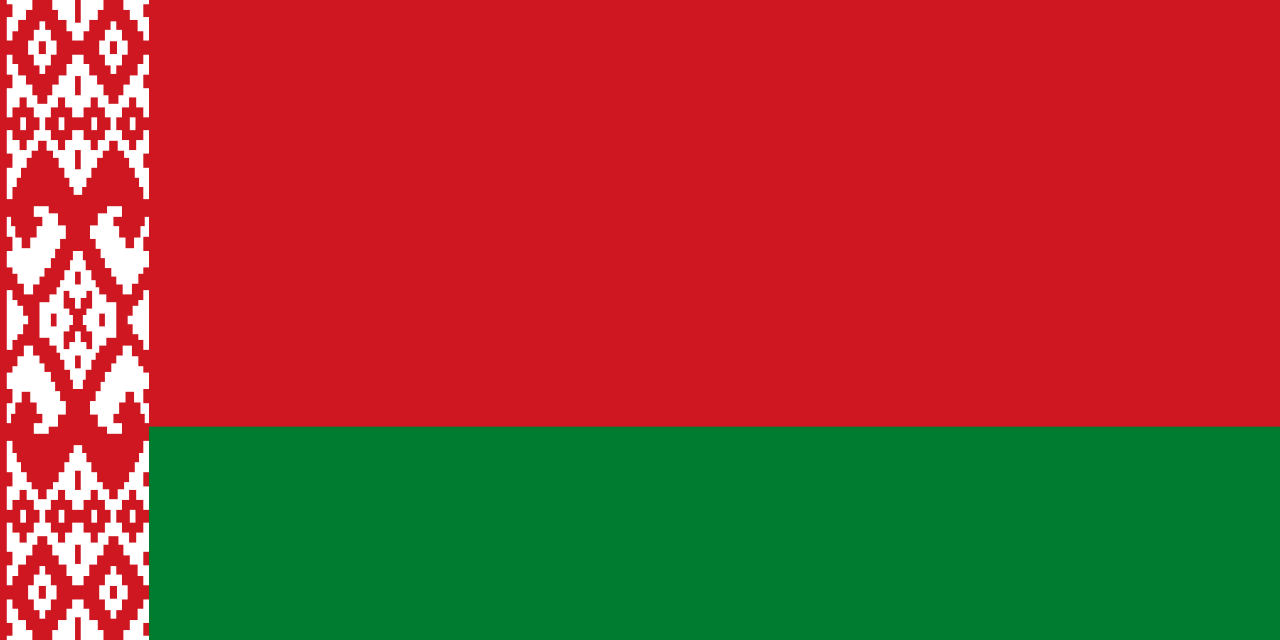
Flag
Not available
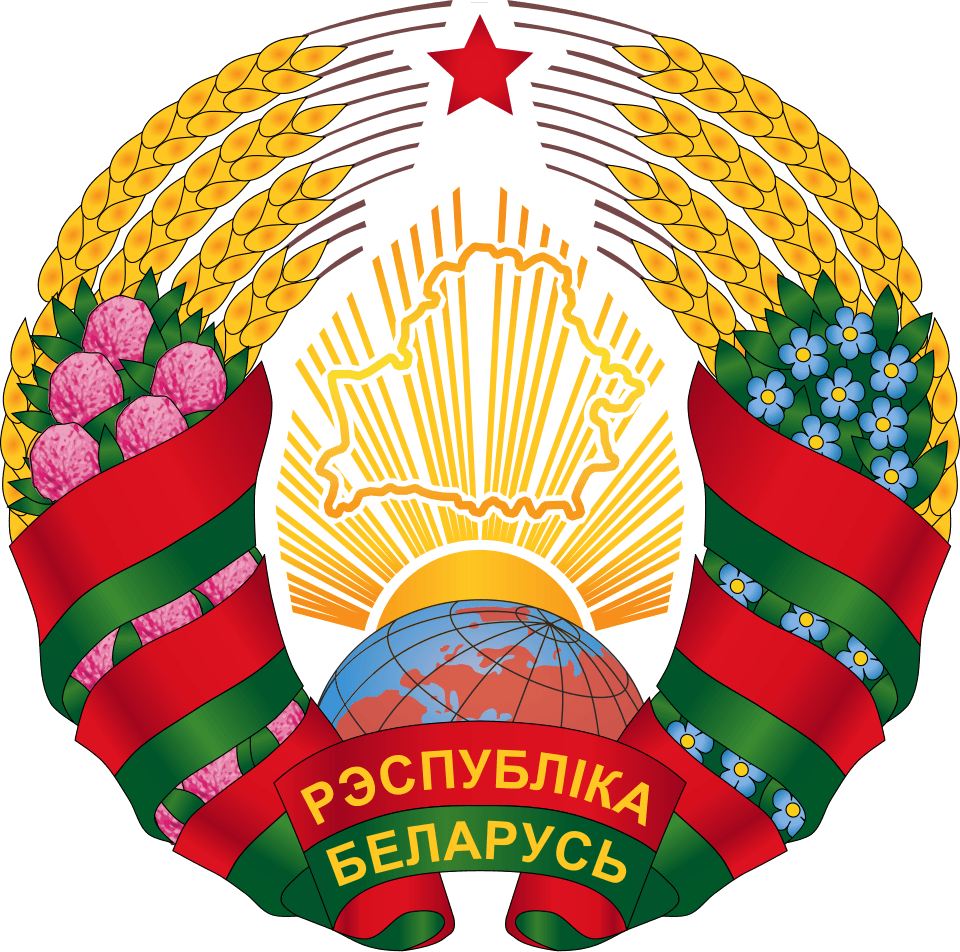
Coat of Arms
Not available
| Official name | R&ehacek;spublíka B&iecute;larus’ / Respublika Belarus’ |
|---|---|
| State emblem | Wheat wreath, country silhouette, red star, flag-coloured ribbon |
| Emblem adopted | 14 May 1995 (referendum); current design 2012 |
| Historic coat of arms | Pahonia — armed knight on horseback (1991–1995; origin: Grand Duchy of Lithuania) |
| National flag | Red-green bicolour with red-on-white ornament at hoist |
| Flag adopted | 14 May 1995 (referendum); updated 2012 |
| Historic flag | White-red-white (1918, 1991–1995) |
| Capital | Minsk |
| Government | Unitary presidential republic |
| Head of State | Aliaksandr Lukašenka (since 1994) |
State Emblem of Belarus — Wheat wreath, country silhouette, red star (post-1995)
The current state emblem of Belarus (Dziaržaŭny hierb Respubliki Biełarus’) is not a coat of arms in the heraldic sense — it has no shield, no blazon, and does not follow the rules of tincture. It is a state emblem modelled on the Soviet-era design.
The emblem is derived from the one used by the Byelorussian Soviet Socialist Republic, designed by Ivan Dubasov in 1950. Following a referendum on 14 May 1995, initiated by President Aliaksandr Lukašenka, this Soviet-derived design replaced the historic Pahonia. The referendum also restored a modified Soviet-era flag and granted equal status to the Russian language. The legality of the referendum has been disputed by the opposition and by international observers, including the OSCE Parliamentary Assembly.
From independence in 1991 until the 1995 referendum, Belarus used the Pahonia (Pahonja, “the Pursuit”) as its coat of arms — a genuine heraldic achievement with a proper blazon:
Gules, a knight armed cap-à-pie Argent, mounted on a horse Argent, brandishing a sword and bearing a shield charged with a cross patriarchal Or.
The Pahonia originated as the state symbol of the Grand Duchy of Lithuania, one of the largest states in mediaeval Europe, of which Belarusian lands formed a core territory. The 1991 version was drafted by artist Jauhien Kulik, a member of the Belarusian Popular Front. After 1995, the Pahonia became a symbol of the democratic opposition, prominently displayed during the 2020–2021 protests.
Flag of Belarus — Red-green bicolour with folk ornament (post-1995)
The national flag of Belarus is an unequal bicolour: two-thirds red (upper) and one-third green (lower), with a vertical red-on-white ornament pattern at the hoist.
The decorative band reproduces a traditional Belarusian rushnik (embroidered towel) pattern, originally designed by Matrona Markevich in 1917. In the Soviet-era flag (1951), the ornament was white on red; after the 1995 referendum, the colours were reversed to red on white. The pattern symbolises the continuity of Belarusian folk culture and craftsmanship.
The current flag was approved by the 14 May 1995 referendum with 75.1% of votes. It is a modification of the 1951 Byelorussian SSR flag, with the hammer and sickle removed and the ornament colours reversed. In 2012, the State Committee for Standardisation updated the design specifications.
Before the 1995 referendum, Belarus flew the white-red-white flag (bieł-čyrvona-bieły s’ciah), designed by Klawdziy Duzh-Dushewski before 1917. It was first used by the Belarusian Democratic Republic in 1918 and readopted at independence in 1991. After its replacement in 1995, the white-red-white flag became an emblem of the democratic opposition, carried at mass rallies on Freedom Day, at Dziady memorial marches, and during the 2020–2021 protests following the disputed presidential election.
Belarus’s heraldic roots lie in the Grand Duchy of Lithuania (13th–18th centuries), one of the great heraldic cultures of Eastern Europe. The Pahonia — the pursuing knight — served as the state arms of the Grand Duchy and later of the Polish-Lithuanian Commonwealth. Belarusian noble families (szlachta) bore arms following the traditions of Lithuanian and Polish heraldry, with distinctive charges and the system of clan arms (herby) shared across the Commonwealth.
At the local level, many Belarusian cities retain historic coats of arms granted under the Magdeburg Rights — the system of municipal self-governance adopted from German law across the Grand Duchy. Cities such as Polack (arms granted 1498), Minsk, Hrodna, and Brest bear arms that predate Russian annexation. The six voblasts (regions) — Brest, Homel, Hrodna, Mahilioŭ, Minsk, and Viciebsk — also maintain official heraldic emblems that blend Grand Duchy heritage with modern design.
The current state emblem features a wreath of wheat ears, flax, and clover, a silhouette of Belarus in gold, a red five-pointed star, and a ribbon in the colours of the national flag. It is derived from the emblem of the Byelorussian SSR designed by Ivan Dubasov in 1950, with the hammer and sickle replaced by the country’s outline. It was adopted following a referendum on 14 May 1995.
The Pahonia (Pursuit) — a mounted knight on a charging horse, bearing a sword and shield — was the coat of arms of Belarus from 1991 to 1995. It originated as the symbol of the Grand Duchy of Lithuania, of which Belarusian lands were historically a part. It was replaced following a referendum on 14 May 1995 initiated by President Aliaksandr Lukašenka, which also restored a modified Soviet-era flag.
The white-red-white flag was the national flag of the Belarusian Democratic Republic in 1918 and of independent Belarus from 1991 to 1995. Designed by Klawdziy Duzh-Dushewski before 1917, it was replaced after the 1995 referendum. It has since become a symbol of the democratic opposition, prominently displayed during the 2020–2021 protests.
The red-on-white ornament pattern at the hoist is derived from traditional Belarusian folk weaving (rushnik embroidery). The original pattern was designed by Matrona Markevich in 1917. The current version, with reversed colours (red ornament on white, instead of the Soviet-era white on red), was adopted after the 1995 referendum and updated in 2012.
No. In heraldic terms, the current state emblem is not a coat of arms — it does not follow the rules of conventional heraldry (no shield, no blazon, no tinctures). It is classified as a state emblem. The historic Pahonia, by contrast, was a genuine heraldic achievement with a proper blazon: Gules, a knight armed cap-à-pie Argent on a horse Argent.
Last reviewed by the Emblema Mundi editorial team on 2026-06-22.