Country
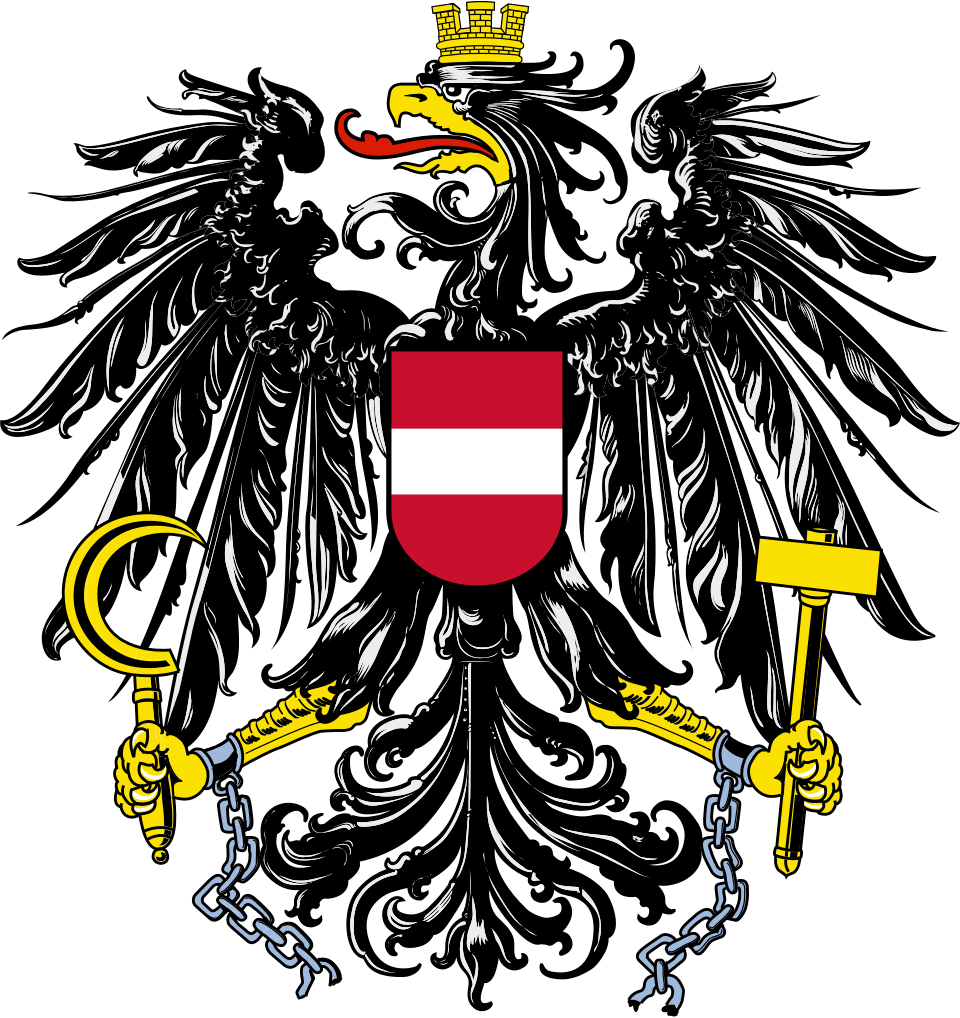
The Bundesadler — Austria’s federal eagle — is one of the most symbolically loaded coats of arms in Europe. A single-headed black eagle bearing the Bindenschild (red-white-red shield) on its chest, it wears a mural crown for the bourgeoisie, holds a sickle for the farmers and a hammer for the workers, and since 1945 carries broken chains around its talons — a stark reminder of liberation from Nazi occupation. The national flag — red, white, red — is among the oldest in the world, traced by legend to Duke Leopold V at the Siege of Acre in 1191 and documented on the Babenberg Bindenschild since the 13th century. Below, nine Bundesländer carry their own coats of arms, rooted in the duchies and margraviates of the Holy Roman Empire.
Flag
Not available
Coat of Arms
Not available
| Official name | Republik Österreich |
|---|---|
| Coat of arms | Bundesadler — black eagle, Bindenschild, mural crown, hammer, sickle, broken chains |
| Arms adopted | 1919 (First Republic); restored 1945 with broken chains |
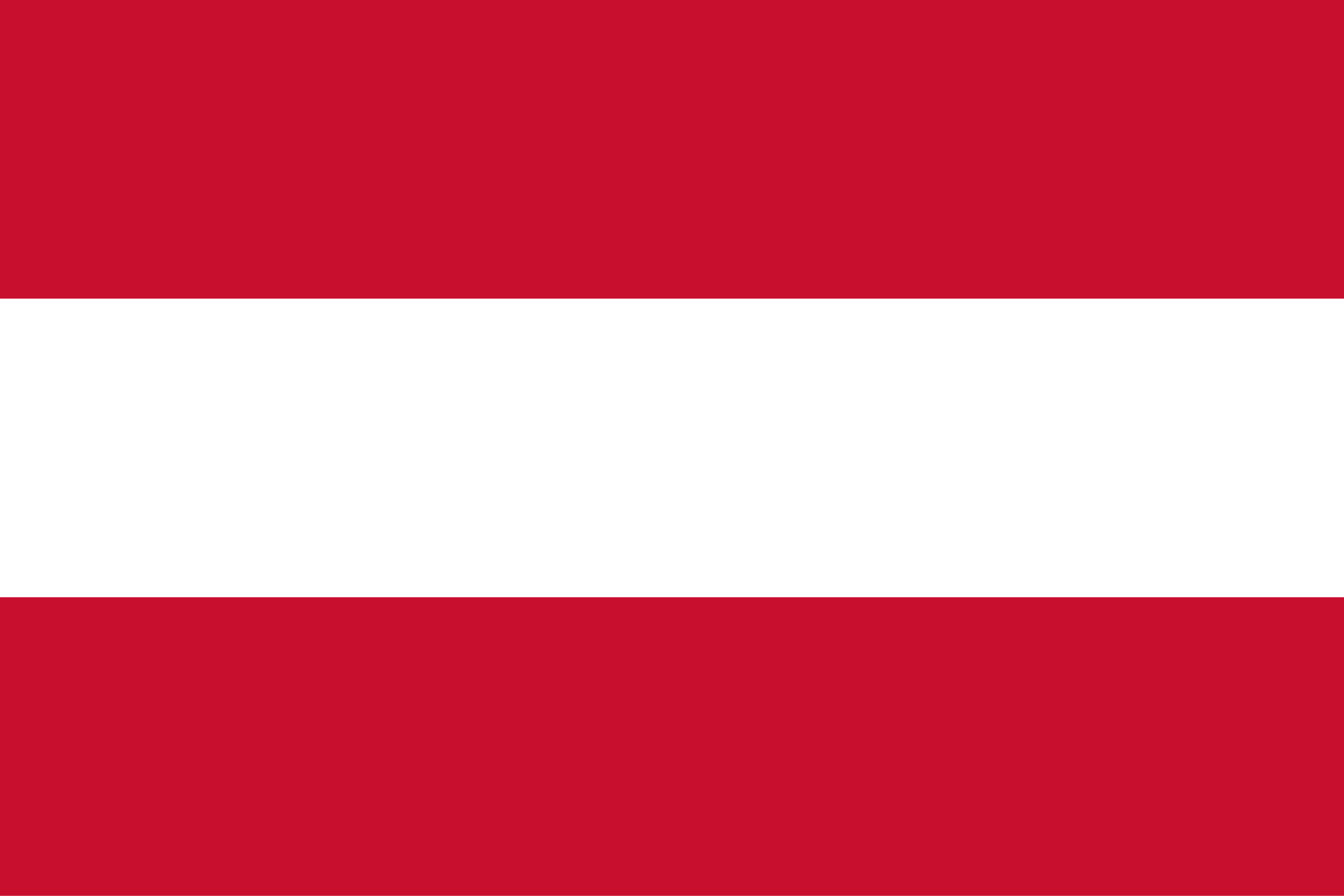
| National flag | Horizontal triband — red, white, red |
| Flag origin | Babenberg Bindenschild (13th c.); legend of Leopold V at Acre, 1191 |
| Capital | Wien |
| Government | Federal parliamentary republic |
| Head of State | Alexander Van der Bellen (since 2017) |
| Legal basis | Wappengesetz 1984; Bundes-Verfassungsgesetz |
| Bundesländer | 9 |
Coat of Arms of Austria — Bundesadler with Bindenschild, hammer, sickle, broken chains
The Bundesadler (federal eagle) is unique among European state symbols in explicitly representing all classes of society within a single heraldic composition.
For centuries, Austria was represented by the double-headed eagle of the Habsburg dynasty and the Holy Roman Empire. When the Republic of German-Austria was proclaimed in 1919, the double-headed eagle was replaced by a single-headed republican eagle bearing the Bindenschild, hammer, and sickle — a deliberate break with imperial symbolism.
The authoritarian Federal State (Ständestaat) of Engelbert Dollfuß replaced the republican eagle with a double-headed eagle in 1934, evoking the Habsburg tradition. After the Anschluss in March 1938, all Austrian state symbols were abolished. The republican Bundesadler was restored in 1945 with the addition of the broken chains.
The coat of arms is described in the Bundes-Verfassungsgesetz (Federal Constitutional Law) and codified in the Wappengesetz (Coat of Arms Act) of 1984.
Flag of Austria — Red-white-red, the Bindenschild in flag form
The Austrian flag is a horizontal triband of red, white, and red — one of the oldest national flags in the world. Its heraldic blazon is simply Gules, a fess Argent: the Bindenschild.
According to a famous legend, Duke Leopold V of Austria fought so fiercely during the Siege of Acre in the Third Crusade (1191) that his white surcoat was entirely drenched in blood. When he removed his belt, the cloth beneath it appeared white and unstained — revealing the red-white-red pattern. The story was documented as early as 1260.
Whether the legend is historical or not, the red-white-red arms are reliably attested from the Babenberg margraviate. A triband shield appears as early as a 1105 depiction of Margrave Leopold III, and the first verifiable representation dates to a 1230 manuscript under Duke Friedrich II (the Quarrelsome). The Bindenschild has been in continuous use for nearly eight centuries.
The red-white-red flag is enshrined in Austrian constitutional law. A state flag variant adds the Bundesadler at the centre. The civil flag — the plain triband — is used by private citizens.
Austria’s heraldic heritage is among the deepest in Europe, shaped by eight centuries at the heart of the Holy Roman Empire and the Habsburg monarchy. The double-headed imperial eagle became the most recognisable symbol of the Empire, and Austrian heraldic practice influenced traditions from Bohemia to the Balkans.
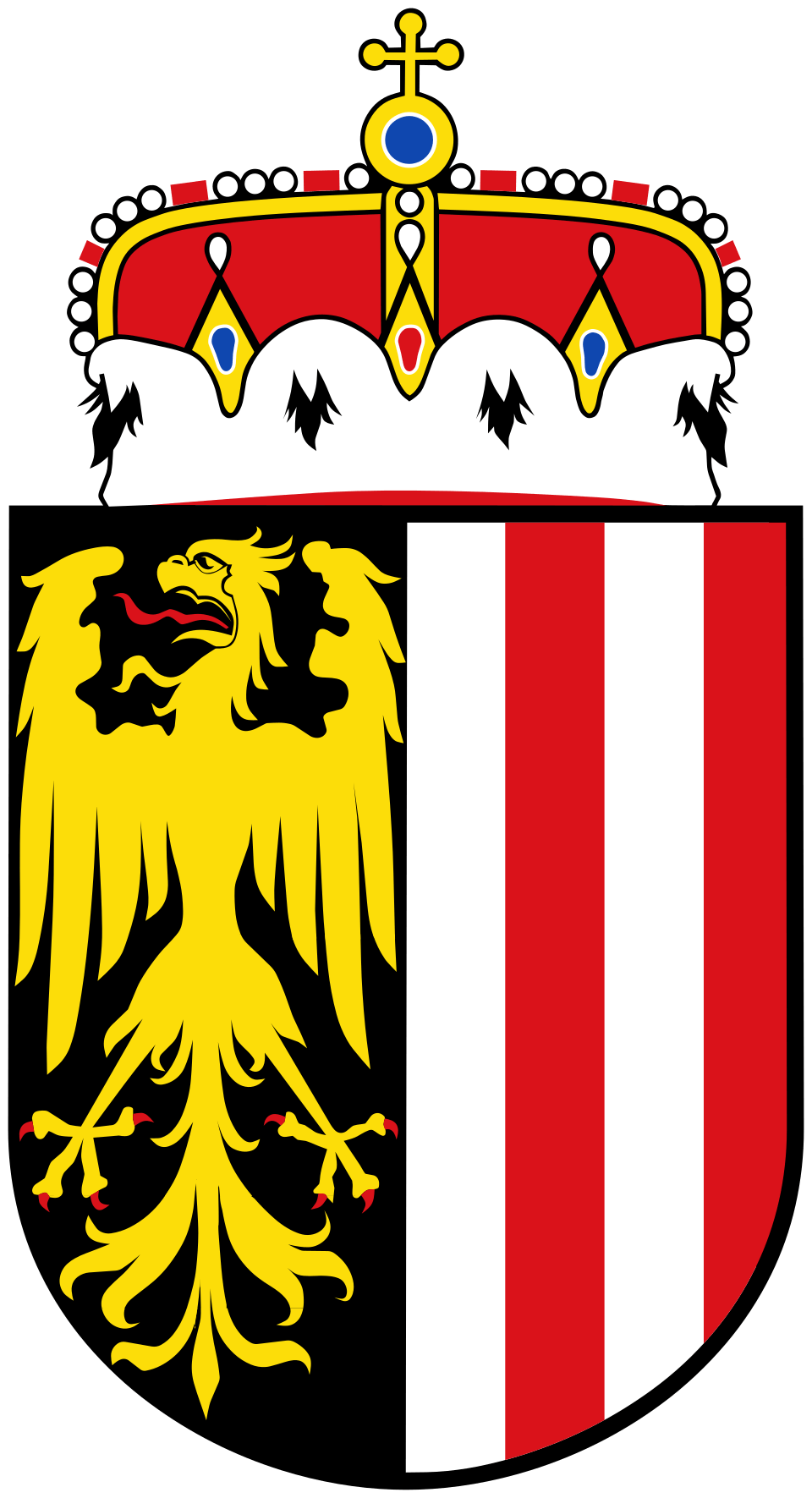
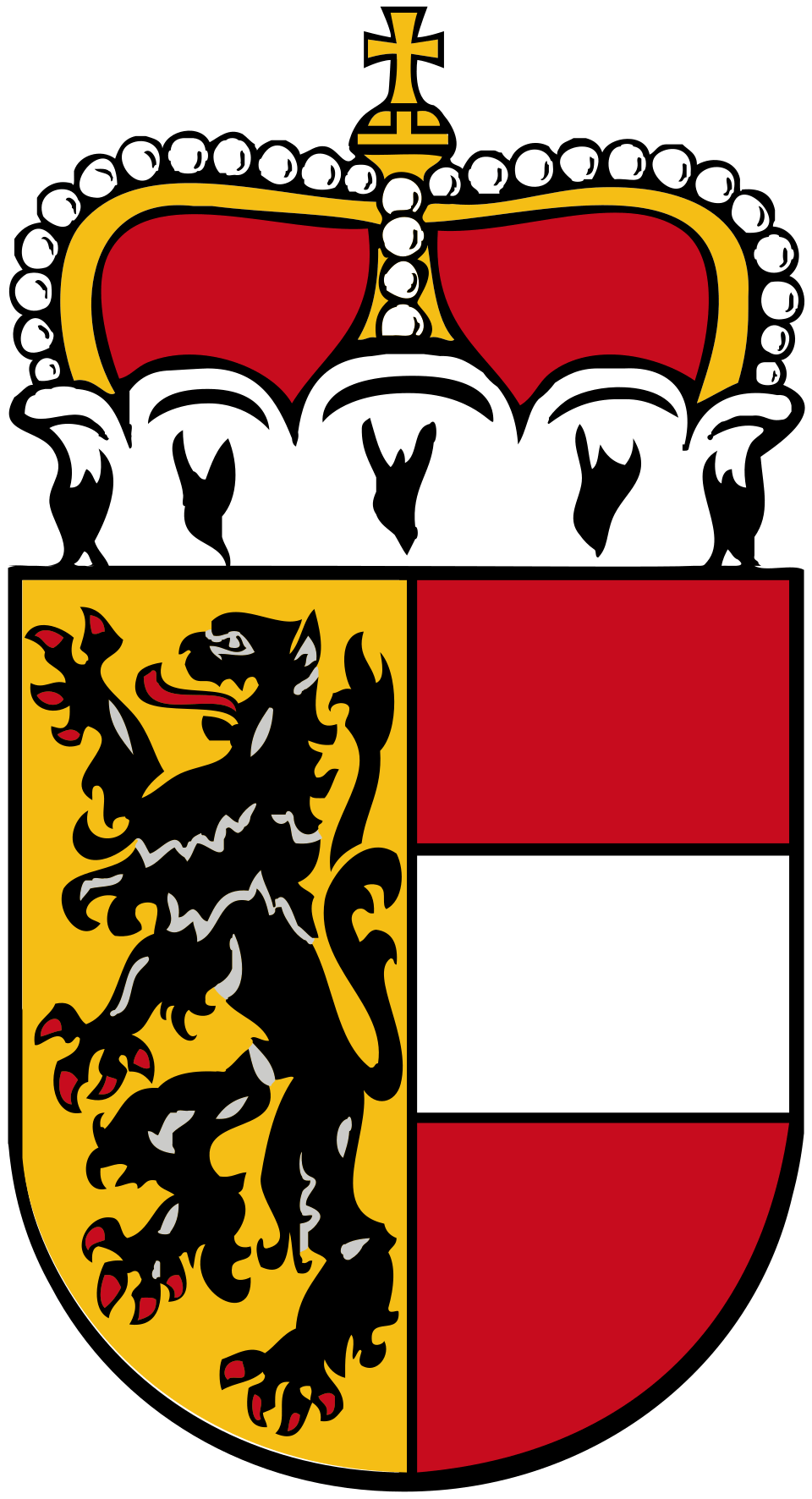
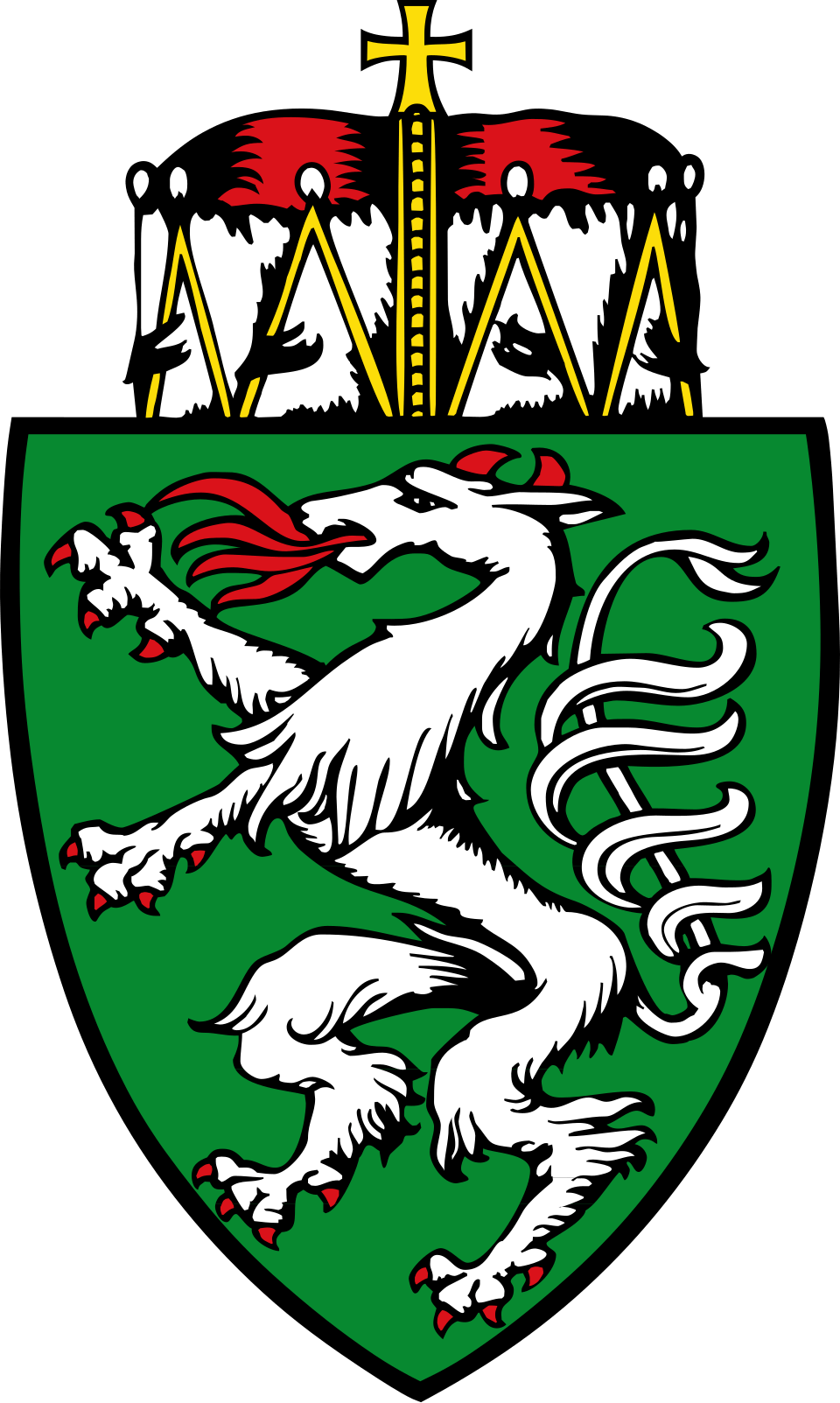
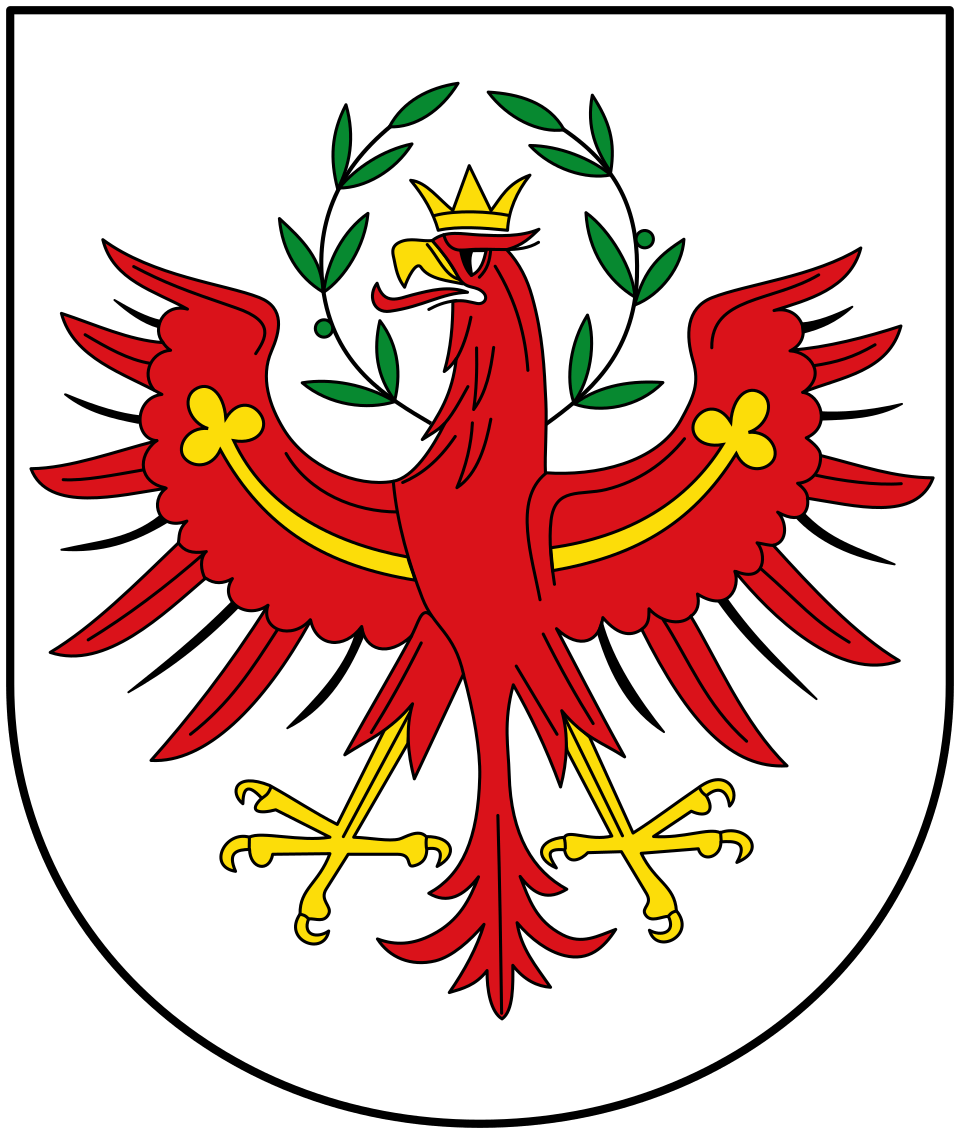
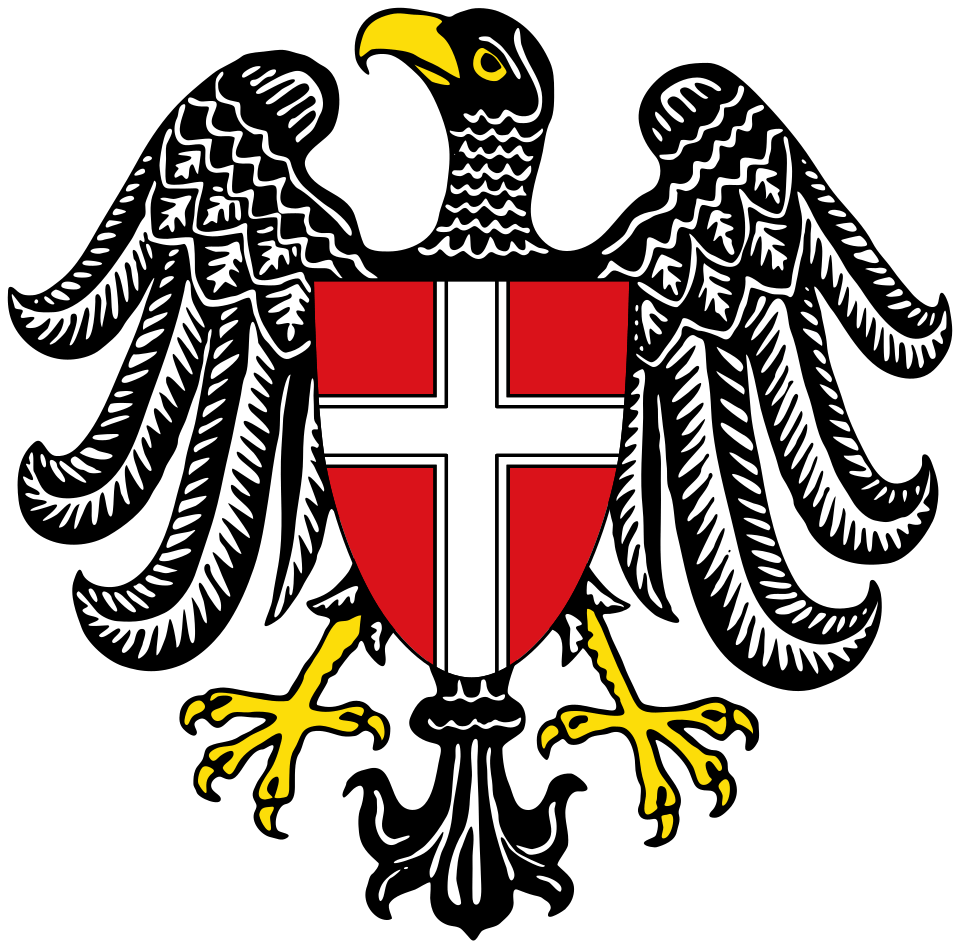
Each of the nine Bundesländer carries a coat of arms with roots in the mediaeval duchies and margraviates: the panther of Steiermark (Styria), the eagle of Tirol, the red-and-gold bars of Oberösterreich (Upper Austria), and the cross of Wien (Vienna) are among the most distinctive. Municipal heraldry is equally rich — cities like Graz, Innsbruck, Linz, and Salzburg maintain arms that date to their mediaeval charters.
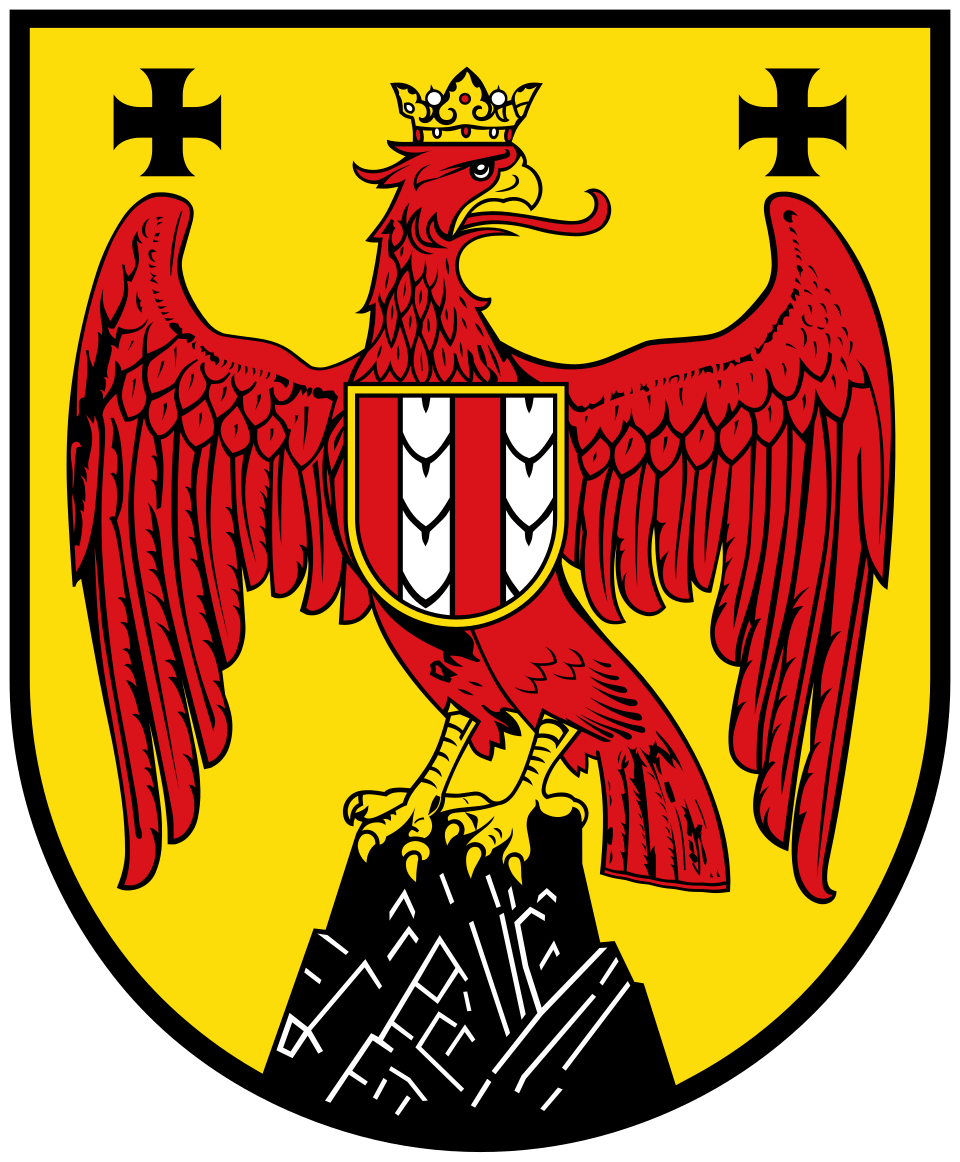
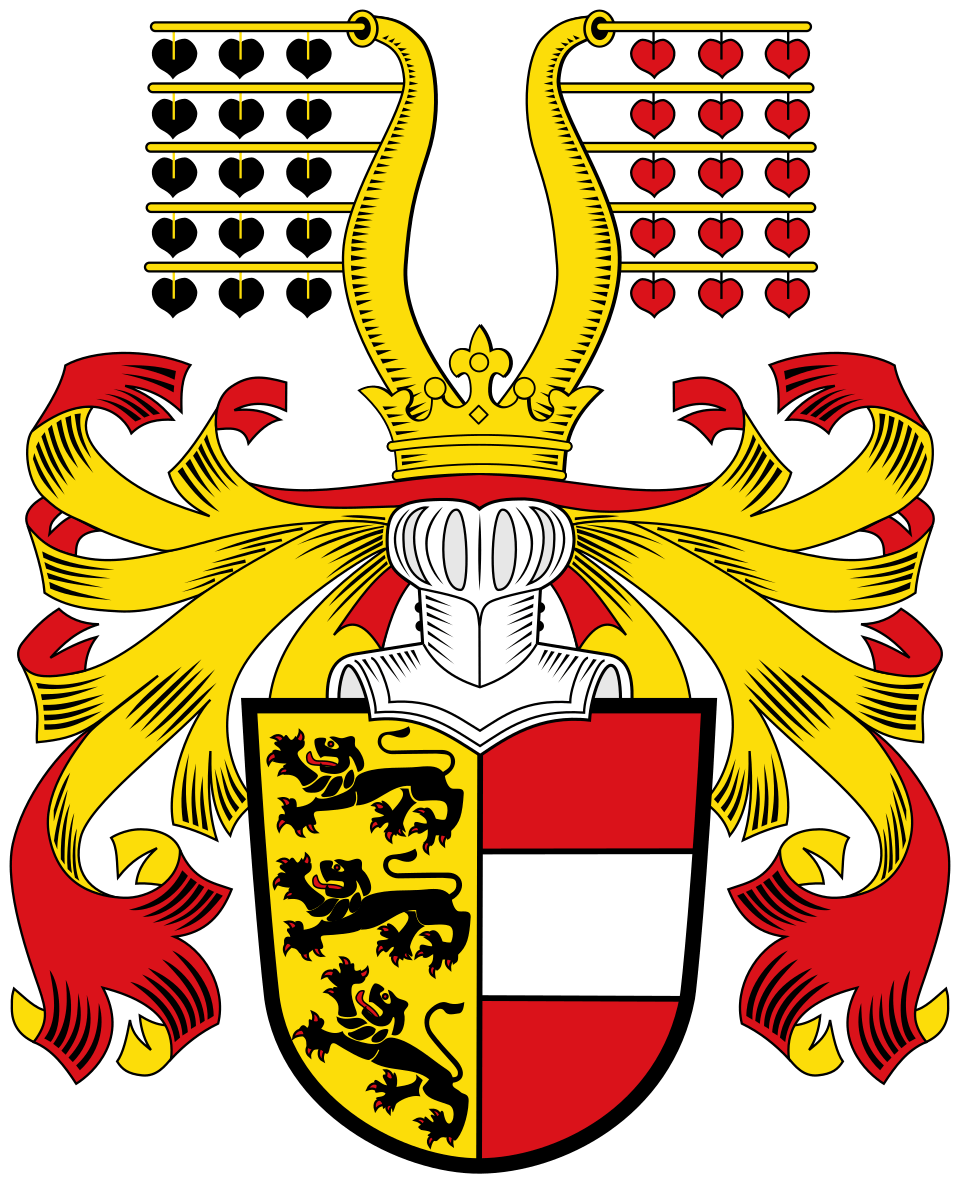
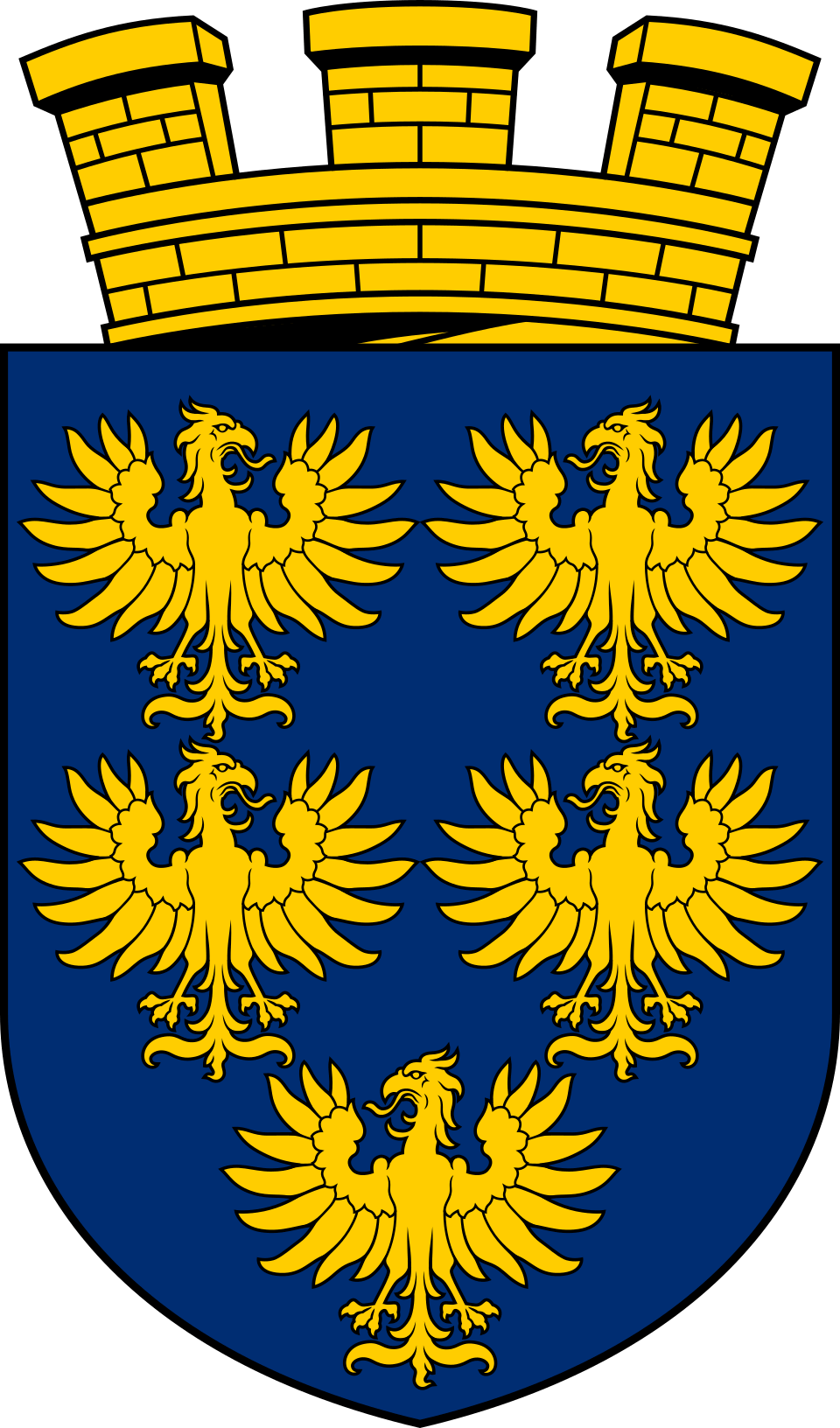
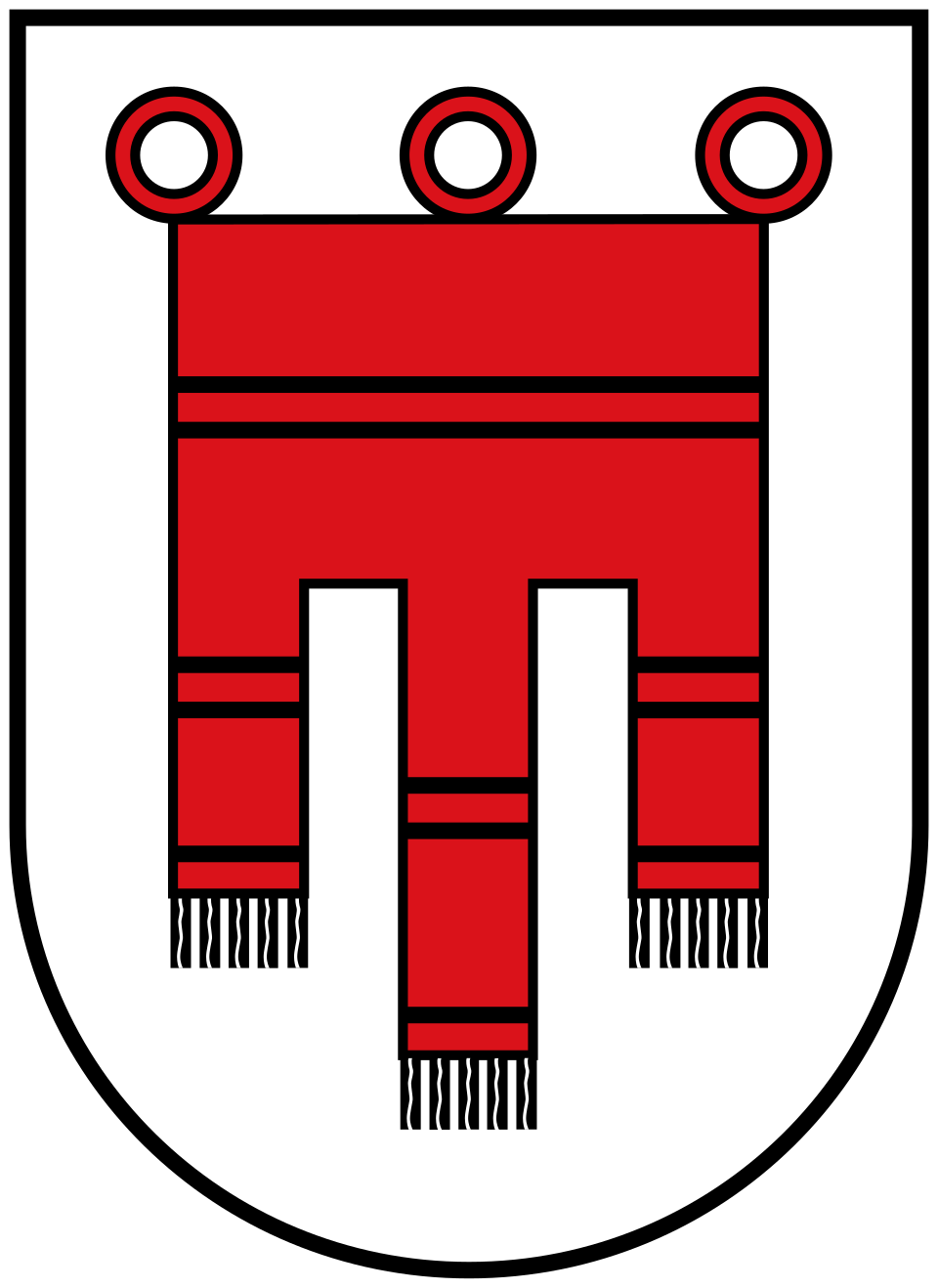
Each of Austria’s nine Bundesländer carries its own historic coat of arms:
The Austrian Bundesadler (federal eagle) is a single-headed black eagle bearing the Bindenschild (red-white-red shield) on its chest. It wears a golden mural crown (bourgeoisie), holds a golden sickle (farmers) in its right talon and a golden hammer (workers) in its left. Broken iron chains encircle its talons, added in 1945 to symbolise liberation from Nazi rule.
The broken chains were added in 1945 when the Second Republic restored the 1919 coat of arms. They symbolise Austria’s liberation from Nazi occupation (1938–1945). The original 1919 Bundesadler had no chains — they are the only element that distinguishes the Second Republic’s arms from those of the First Republic.
According to legend, Duke Leopold V’s white tunic was soaked in blood during the Siege of Acre in 1191, leaving a white band beneath his belt. More reliably, the triband derives from the heraldic arms of the Babenberg dynasty (the Bindenschild), documented since a 1230 manuscript. It is one of the oldest national flags in the world.
Between 1934 and 1938, the authoritarian Ständestaat replaced the single-headed republican eagle with a double-headed eagle, echoing the Habsburg tradition. After the Anschluss in 1938, Austrian symbols were abolished entirely. The republican Bundesadler was restored in 1945 with the addition of broken chains.
Austria has nine Bundesländer (federal states): Burgenland, Kärnten, Niederösterreich, Oberösterreich, Salzburg, Steiermark, Tirol, Vorarlberg, and Wien. Each has its own coat of arms, often rooted in the mediaeval duchies and margraviates of the Holy Roman Empire.
Explore the coat of arms of each of Austria’s nine federal states.
Last reviewed by the Emblema Mundi editorial team on 2026-06-22.