Federal State
Schleswig-Holstein is Germany's northernmost federal state, bordering Denmark to the north and the North Sea and Baltic Sea to the west and east. Its territory unites two former duchies — the Duchy of Schleswig, historically tied to the Danish Crown, and the Duchy of Holstein, a fief of the Holy Roman Empire — whose union under a single ruler was disputed between Denmark and Prussia across centuries of conflict, culminating in the Second Schleswig War of 1864. The state's coat of arms and distinctive blue-white-red flag directly encode this dual heritage. The state capital is Kiel.
Flag
Not available
Coat of Arms
Not available
| Federal State | Schleswig-Holstein |
|---|---|
| Capital | Kiel |
| Coat of Arms adopted | 18 January 1948 |
| Flag adopted | 18 January 1948 |
| Colors | Blue, white, red (flag); or, gules, argent, azure (arms) |
| Region | Northern Germany |
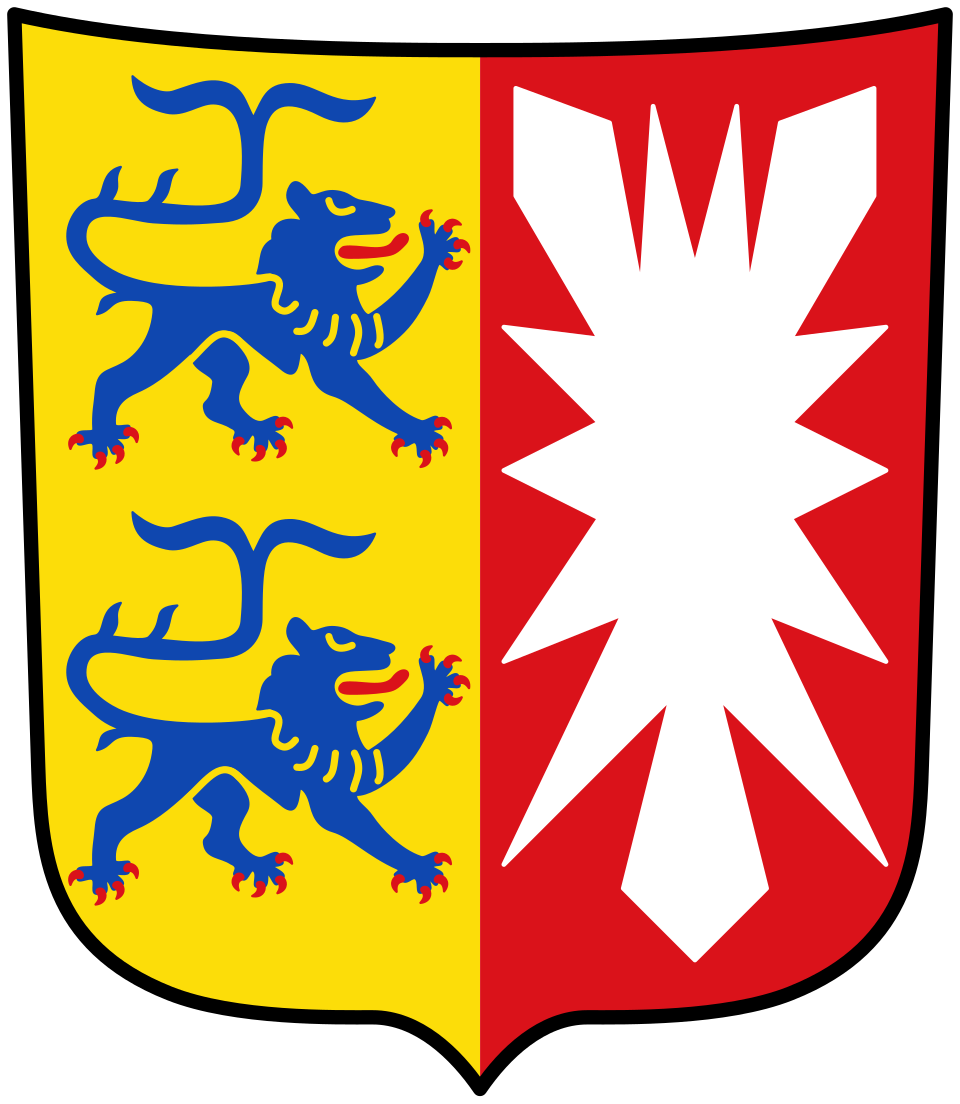
Coat of Arms of Schleswig-Holstein — adopted 18 January 1948
Per pale: dexter, or, two lions passant in pale azure crowned or (Schleswig); sinister, gules, a nettle leaf argent (Holstein). Ensigned with a people's crown (Volkskrone) of gold.
The arms of Schleswig and Holstein have been combined on a divided shield since at least the 15th century, when the two duchies came under the rule of the Danish kings and the Schauenburg counts simultaneously. The formula Up ewig ungedeelt (Low German: "Undivided forever"), adopted at the 1460 Treaty of Ribe, expressed the inseparability of the two territories — a principle that paradoxically prolonged their political disputes until 1864. When the modern state of Schleswig-Holstein was established in 1946 under British occupation, the combined arms were adopted on 18 January 1948, together with the flag.
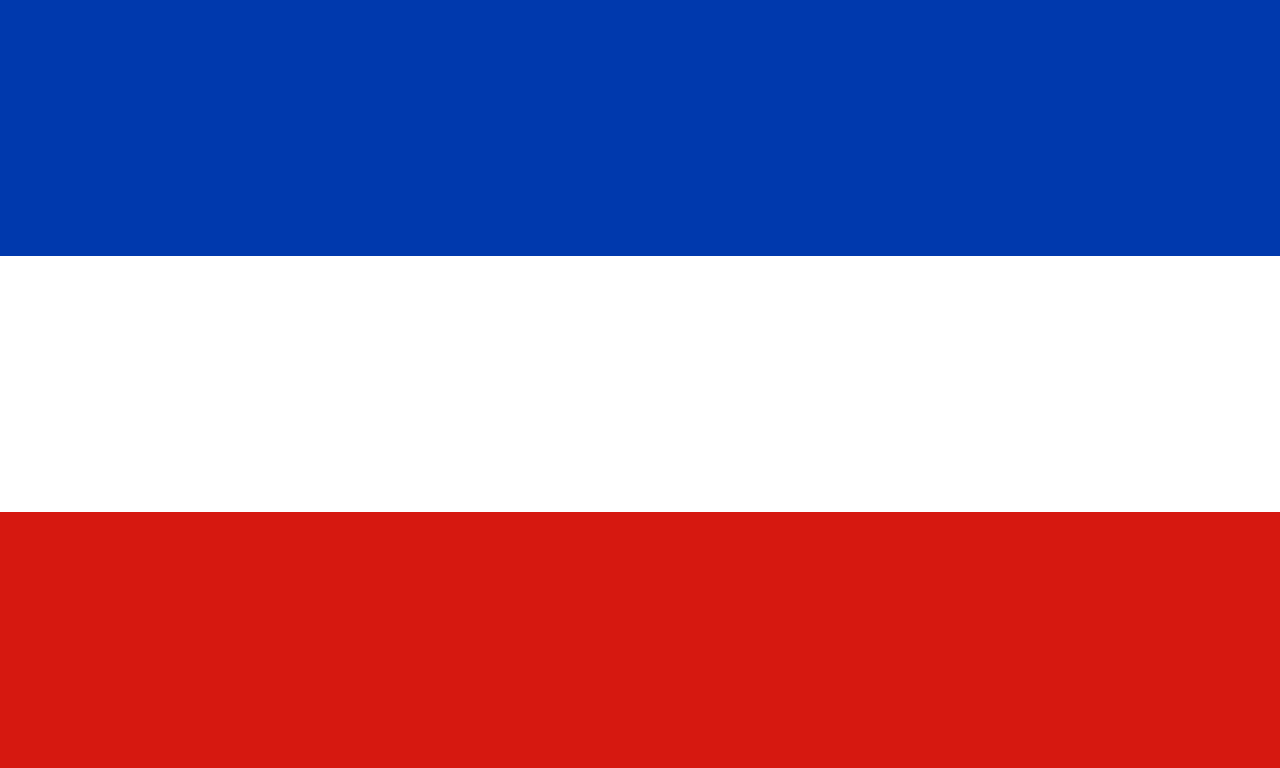
Flag of Schleswig-Holstein — blue, white, red tricolor
The flag of Schleswig-Holstein displays three equal horizontal stripes of blue, white, and red. Unlike most German states, it does not use the national black-red-gold tricolor. Blue is taken from the Schleswig lions (azure on gold); red from the Holstein field (gules); white from the Holstein nettle leaf (argent). The state service flag (Dienstflagge) adds the divided coat of arms centered across all three stripes.
The blue-white-red combination was already associated with Schleswig-Holstein identity in the 19th century during the Schleswig-Holstein Question. When the state was formally established after World War II, the historically rooted tricolor was preferred over the federal black-red-gold, asserting the region's distinctive identity. Both the flag and the coat of arms were adopted simultaneously on 18 January 1948.
The blue-white-red flag is prominently flown on all state buildings, the Landtag in Kiel, and at official functions. Its distinctly non-federal color scheme makes it one of the most recognizable state flags in Germany. The flag's colors are also worn by supporters of the state at national sporting events, where Schleswig-Holstein identity is strongly expressed.
The divided shield shows the two historical duchies: the dexter half bears two blue lions passant on gold for the Duchy of Schleswig (derived from the Danish royal arms); the sinister half shows the silver Holsteinisches Nesselblatt on red for the Duchy of Holstein. The division reflects the centuries-long union of two territories with distinct constitutional statuses.
The Holsteinisches Nesselblatt (Holstein nettle leaf) is a stylized silver leaf on a red field, the heraldic symbol of the Duchy of Holstein since the 13th century. It appears on the sinister half of the Schleswig-Holstein coat of arms and is one of the most distinctive charges in German regional heraldry.
Schleswig-Holstein adopted its own blue-white-red tricolor in 1948, derived from the heraldic colors of the two duchies rather than the German national black-red-gold. This emphasizes the state's unique dual identity rooted in Danish and imperial traditions predating the modern German state.
The coat of arms was officially adopted on 18 January 1948, simultaneously with the flag, by the state government of Schleswig-Holstein under British occupation authority.
Per pale: dexter, or, two lions passant in pale azure crowned or (Schleswig); sinister, gules, a nettle leaf argent (Holstein). Ensigned with a people's crown of gold.
Last reviewed by the Emblema Mundi editorial team on June 29, 2026.