Federal State
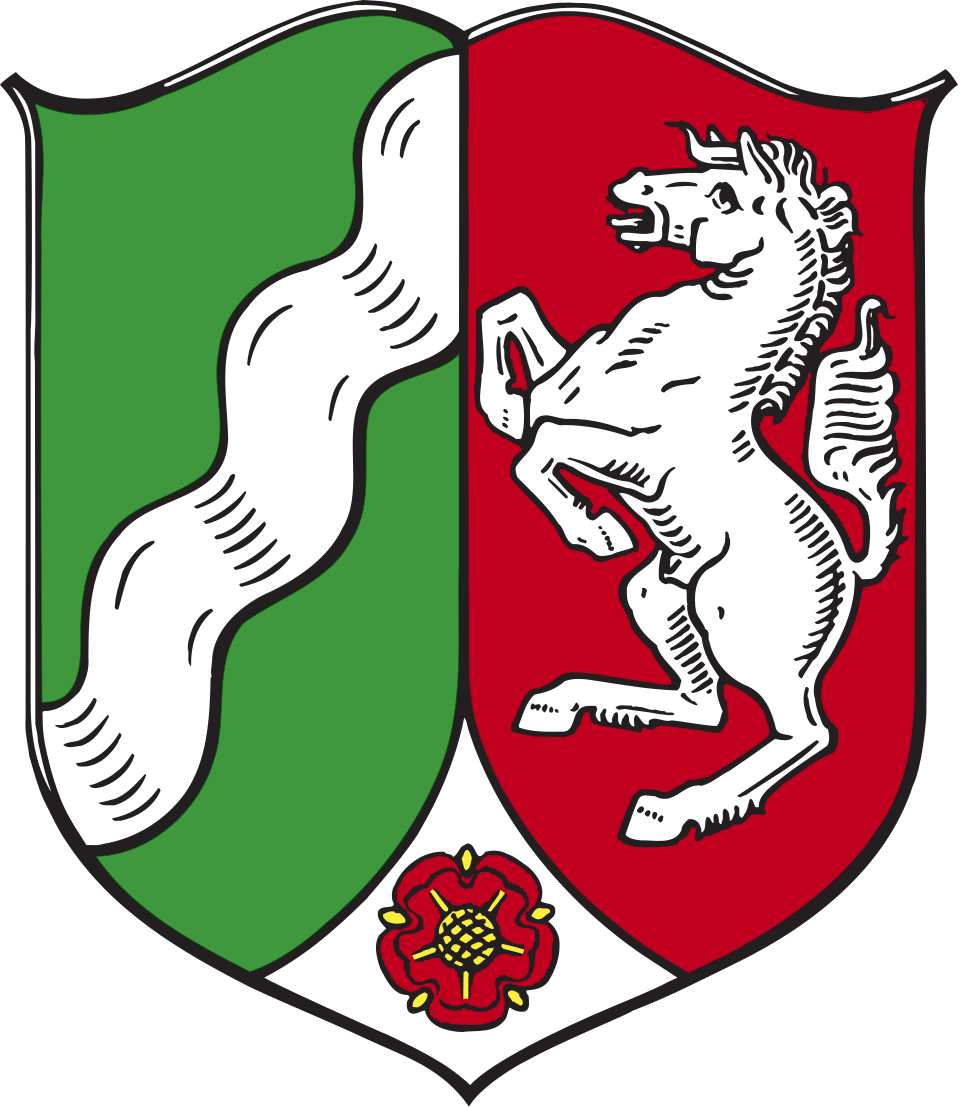
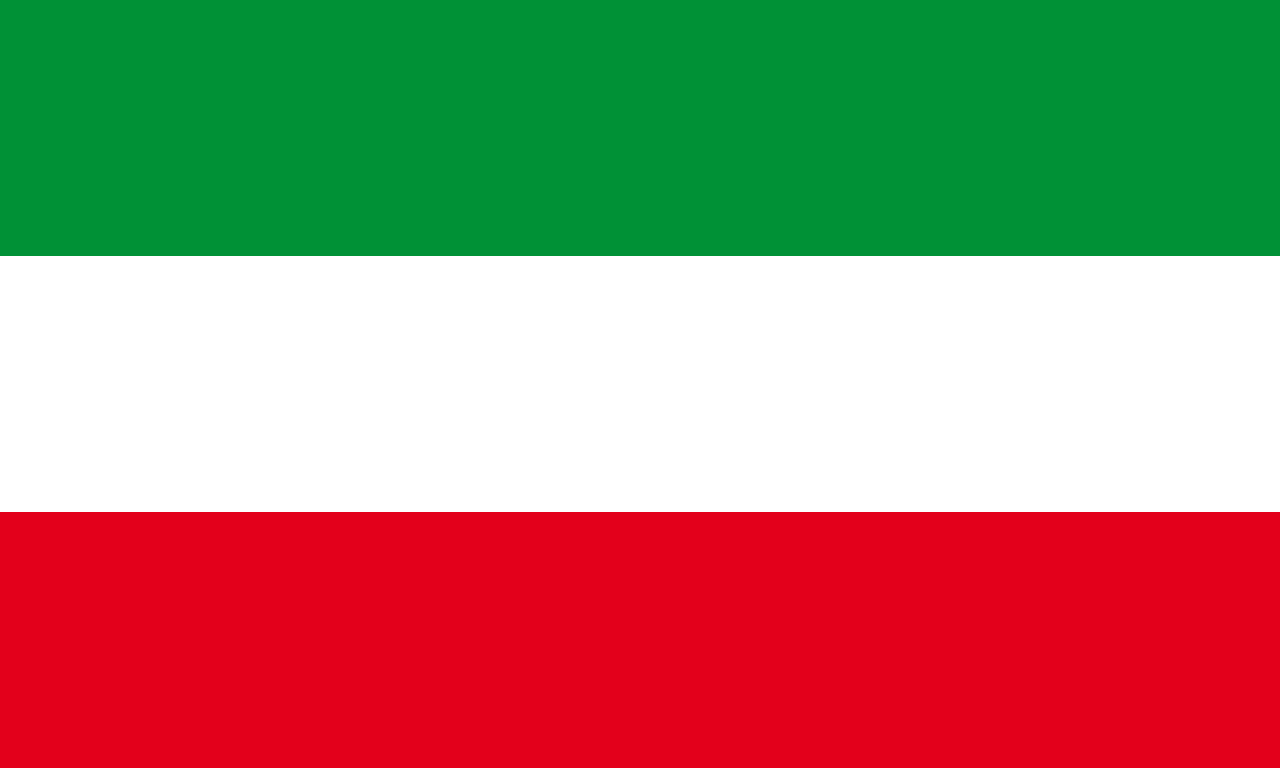
Nordrhein-Westfalen (North Rhine-Westphalia) is Germany's most populous federal state and its economic powerhouse, home to Köln, Düsseldorf, and the Ruhr industrial region. Its coat of arms is a tripartite shield uniting three medieval territories: the Rhineland (a silver wavy band for the Rhine), Westphalia (the Sachsenross), and Lippe (a red rose). Its flag — green, white, and red — distils those same territorial colors into a striking tricolor that is immediately recognizable as representing the diversity and unity of the state.
Flag
Not available
Coat of Arms
Not available
| Federal State | Nordrhein-Westfalen (North Rhine-Westphalia) |
|---|---|
| Capital | Düsseldorf |
| Coat of Arms adopted | 10 March 1953 |
| Flag adopted | 10 March 1953 |
| Colors | Green, white, red |
| Region | Western Germany |
Coat of Arms of Nordrhein-Westfalen — tripartite: Rhine, Westphalia, Lippe
Per pale of three: I. Vert, a bend wavy Argent (Rhineland); II. Gules, a horse courant Argent (Westphalia); III. Argent, a rose of five petals Gules, seeded Or, barbed Vert (Lippe). Ensigned with a mural crown of the people.
Nordrhein-Westfalen was created on 23 August 1946 by the British occupation authorities from the northern Rhine Province, the Province of Westphalia, and — after a transitional period — the Free State of Lippe (merged 21 January 1947). None of these territories had a single unified heraldic tradition, so the new state commissioned a tripartite shield to represent each constituent part with equal dignity. The three charges — Rhine wavy band, Sachsenross, and Lippe rose — were chosen as the most historically recognized symbols of their respective regions. Both the coat of arms and the flag were officialized by state law on 10 March 1953.
Flag of Nordrhein-Westfalen — green, white, and red tricolor
The flag consists of three equal horizontal stripes: green, white, and red. The green derives from the Rhineland's heraldic color (the wavy band on green); the white from Westphalia's Saxon horse on red (the horse color); and the red from Westphalia and the shared heraldic tradition of the region. The state service flag (Dienstflagge) centers the tripartite coat of arms across all three stripes.
The green-white-red flag was designed as part of the same 1953 legislative package that formalized the coat of arms. The color sequence intentionally mirrors the three territories in the same order as the coat of arms: Rhineland (green, top), Westphalia (white, center, from the Sachsenross), and the combined red of Westphalia and Lippe (bottom). The flag was officialized by state law on 10 March 1953.
The green-white-red flag is one of the most widely displayed state flags in Germany by sheer population coverage, flying above the government buildings of cities including Köln, Düsseldorf, Dortmund, Essen, and Bonn. The Dienstflagge with the tripartite arms is used by state ministries, courts, and official delegations. The Lippe rose in particular has gained wider recognition as a symbol of the Ostwestfalen-Lippe region.
The tripartite coat of arms brings together the symbols of the three constituent territories: a silver wavy band on green for the Rhineland (representing the Rhine), the white Sachsenross on red for Westphalia, and a red rose on silver for Lippe. The three charges were chosen as the most historically recognized emblems of each region.
The silver wavy band (Wellenbalken) on a green field represents the Rhine river (Rhein), the defining geographical feature of the Rhineland. It stands for the western, Rhenish half of the state and its long history as a crossing point of European civilizations.
The red five-petaled rose with a golden center on silver is the ancient arms of the Principality of Lippe (Fürstentum Lippe), used by the Counts and later Princes of Lippe since the 12th century. Lippe was an independent state until 1947, when it was merged into Nordrhein-Westfalen.
Green comes from the Rhineland heraldic color, white from the Westphalian Sachsenross (the horse on the arms), and red from the shared heraldic tradition of Westphalia and Lippe. The three stripes thus correspond directly to the three fields of the coat of arms. The flag was formalized by state law on 10 March 1953.
Nordrhein-Westfalen was created on 23 August 1946 by the British occupation authorities from the northern Rhine Province and the Province of Westphalia. The Free State of Lippe was added on 21 January 1947. It is today Germany's most populous state, with its capital at Düsseldorf.
Last reviewed by the Emblema Mundi editorial team on June 29, 2026.