City-State
The Free and Hanseatic City of Hamburg (Freie und Hansestadt Hamburg) is Germany's second-largest city and one of three Stadtstaaten (city-states) that are simultaneously cities and federal states. Hamburg is Germany's largest port and one of the most important commercial centers in northern Europe. Its heraldic symbol, the Hamburger Burg — a white three-towered castle on red — has been used since the 13th century, when Hamburg rose as a major port of the Hanseatic League. The city became a Free Imperial City in 1618 and has maintained its status as a free Hanseatic city to this day. The current civil arms were confirmed by state law on 14 May 1952.
Flag
Not available
Coat of Arms
Not available
| City-State | Free and Hanseatic City of Hamburg |
|---|---|
| Capital | Hamburg |
| Coat of Arms adopted | 14 May 1952 (current form) |
| Flag adopted | 14 May 1952 |
| Colors | Red and white |
| Region | Northwest Germany |
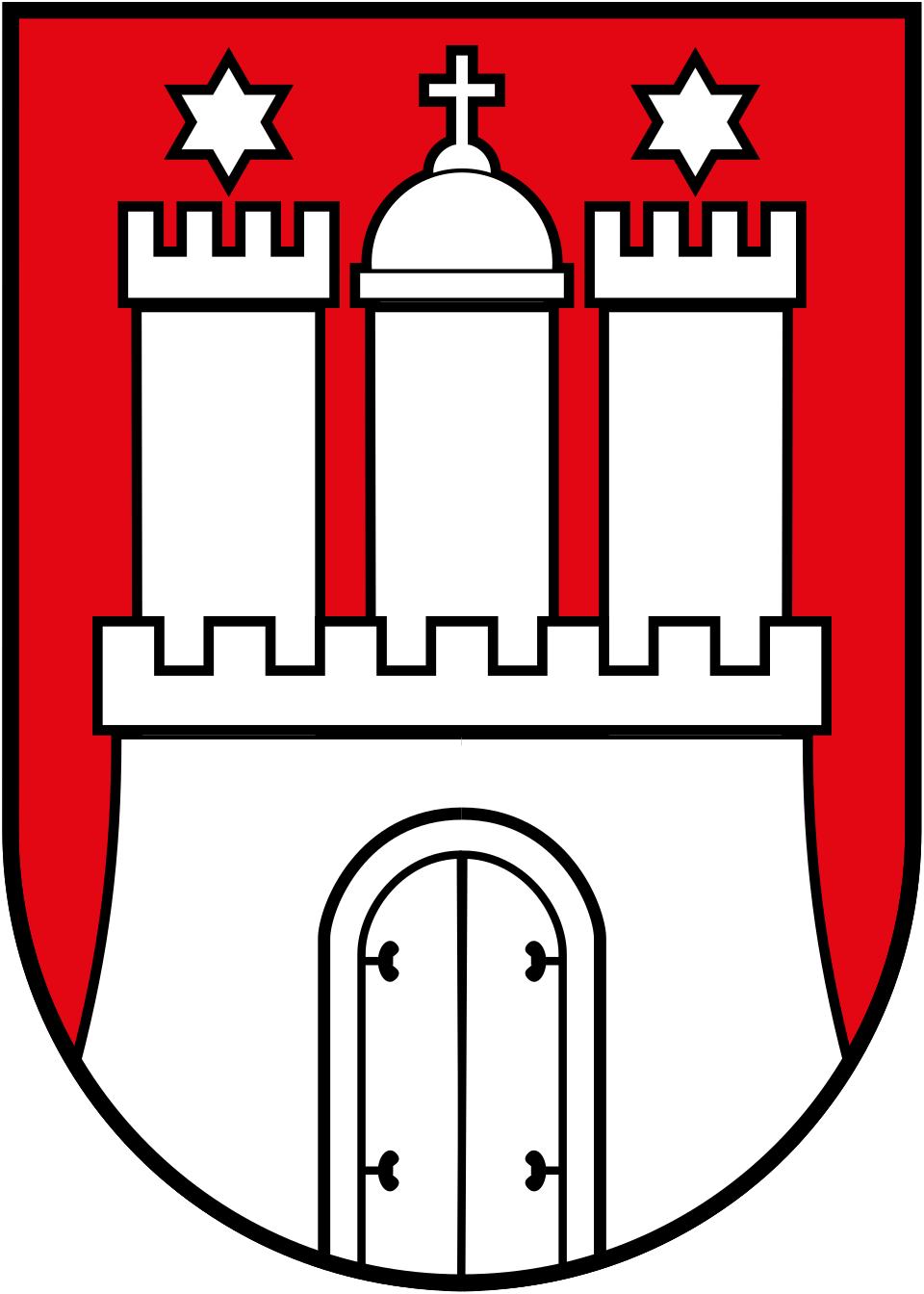
Coat of Arms of Hamburg — the Hamburger Burg
Gules, a castle of three towers Argent, masoned Sable, the central tower greater, all topped with crosses, the gate open, and six-pointed stars in the spaces between the towers (civil arms). The state arms add two lions Or rampant as supporters and branches of oak.
The Hammaburg was a fortified settlement founded around 808, traditionally considered the origin of Hamburg. By the 13th century, the three-towered castle appeared on the city seal as Hamburg grew into a major port. Hamburg received imperial trading privileges from Friedrich I. Barbarossa in 1189, joined the Hanseatic League, and became a Free Imperial City in 1618. The Hamburger Burg survived as the city's symbol across the Napoleonic occupation, the German Empire and the Weimar Republic. Three official versions were codified by state law on 14 May 1952: the civil arms (plain shield), the state arms (with lion supporters and oak), and the admiralty arms (for government vessels).
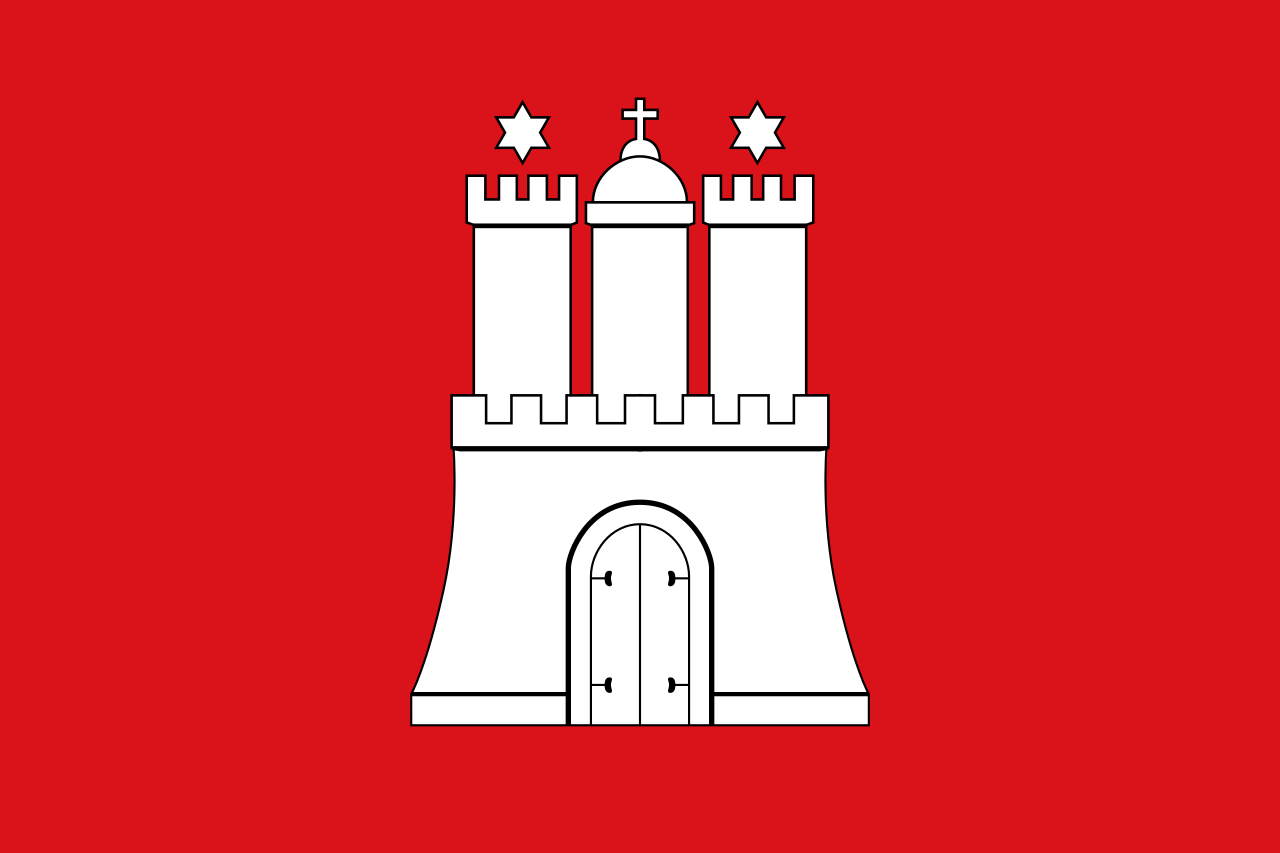
Flag of Hamburg — Landesflagge, red with white castle
The flag of Hamburg is a red field charged with the white Hamburger Burg in the center. Three official variants exist: the civil flag (Landesflagge) with the plain white castle; the state flag (Staatsflagge) bearing the full coat of arms with lion supporters; and the admiralty flag (Admiralitätsflagge) with a swallow-tailed cut for government vessels.
The red-and-white colors are the historical colors of the Hanseatic League and of Hamburg specifically, used in various forms since the medieval period. The castle on red derives directly from the coat of arms. The current standardized flag design was confirmed by state law on 14 May 1952.
The civil flag with the plain white castle flies on public and private buildings throughout Hamburg. State authorities use the Staatsflagge with the full coat of arms. The Admiralitätsflagge is flown on government vessels and by the Hamburg Port Authority (Hamburger Hafen).
The Hamburger Burg represents the Hammaburg, a fortified settlement founded around 808 that gave the city its name. It symbolizes Hamburg's ancient origins and its long history as a fortified trading city and major port.
Three: the civil arms (Kleines Wappen) with the plain castle shield; the state arms (Großes Wappen) with two golden lion supporters and oak branches; and the admiralty arms (Admiralitätswappen) for government vessels.
The flag was confirmed by state law on 14 May 1952.
The Admiralitätsflagge is a swallow-tailed variant of the state flag used on government vessels and by the Hamburg port authority. It bears the full coat of arms with lion supporters.
Hamburg's official name reflects its status as a free imperial city of the Holy Roman Empire since 1618 and as one of the leading cities of the medieval Hanseatic League. This dual heritage is still honored in the official name and in the greater coat of arms.
Last reviewed by the Emblema Mundi editorial team on June 29, 2026.