City-State
The Free Hanseatic City of Bremen (Freie Hansestadt Bremen) is Germany's smallest federal state by area and one of three Stadtstaaten (city-states). It consists of two separate cities: Bremen (the state capital) and Bremerhaven. Bremen's heraldic history is among the oldest in Germany: the Bremer Schlüssel — a silver key on red — has been the city's symbol since at least the 13th century, traditionally identified as the key of Saint Peter, patron saint of Bremen Cathedral. The city's flag, popularly known as the Speckflagge, was confirmed by state law in 1952.
Flag
Not available
Coat of Arms
Not available
| City-State | Free Hanseatic City of Bremen |
|---|---|
| Capital | Bremen |
| Coat of Arms adopted | 1891 (confirmed 1949) |
| Flag adopted | Confirmed 1952 |
| Colors | Red and white |
| Region | Northwest Germany |
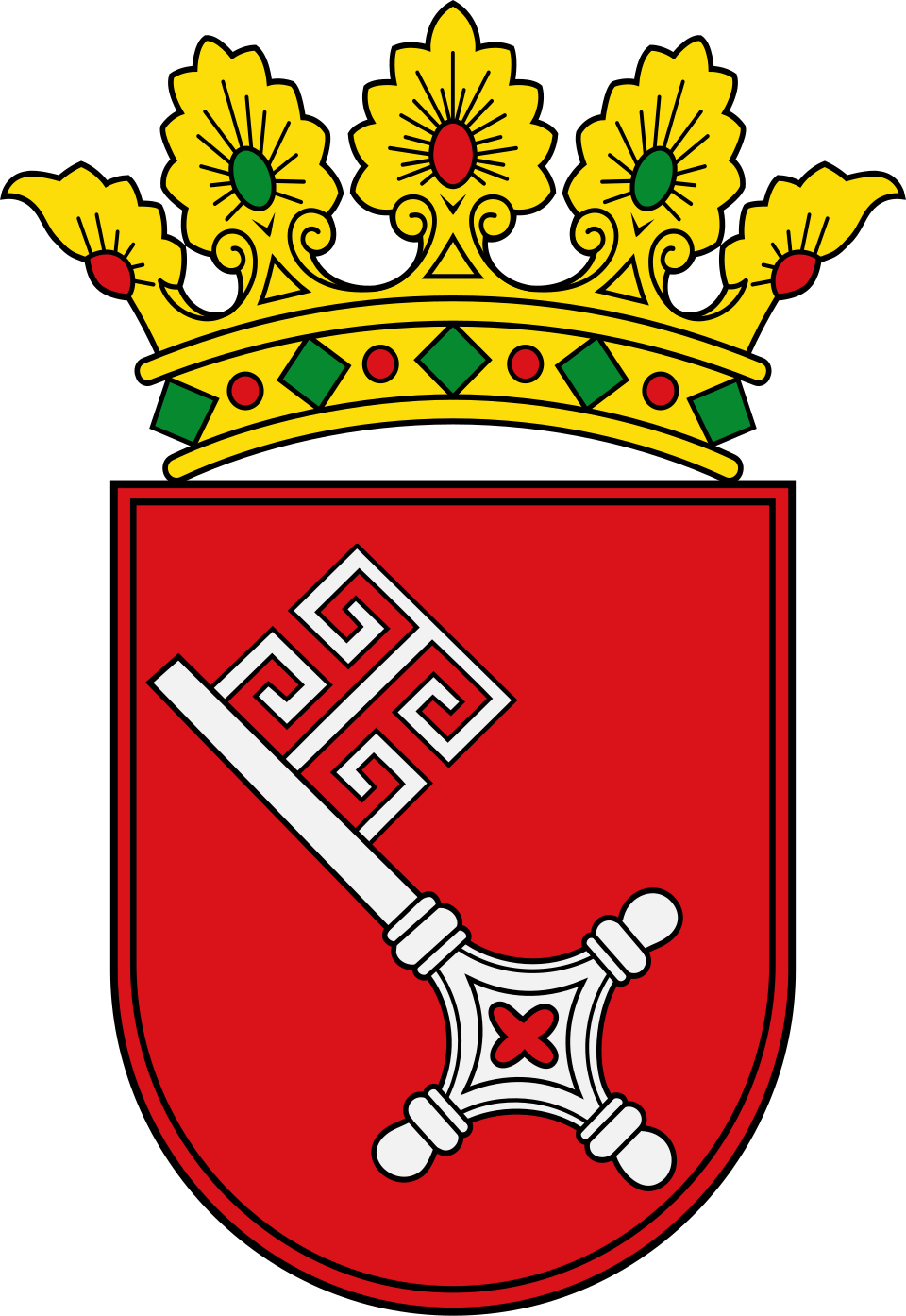
Coat of Arms of Bremen — the Bremer Schlüssel
Gules, a key in bend sinister Argent, bit upward and to the dexter (lesser arms). The greater arms add two crowned lions Or rampant as supporters and a five-towered mural crown as crest.
Bremen was founded as a diocese in 787 by Charlemagne (Karl der Große), and the key of Saint Peter became its episcopal symbol. By the 13th century, the key appeared on city seals as Bremen developed from an episcopal city into a powerful free commune. Bremen joined the Hanseatic League and gradually asserted its independence from the archbishopric, gaining the status of a free imperial city in 1646. The current standardized arms were codified in 1891 and confirmed by state law in 1949 after the re-establishment of the Free Hanseatic City as a federal state.
Flag of Bremen — the Speckflagge
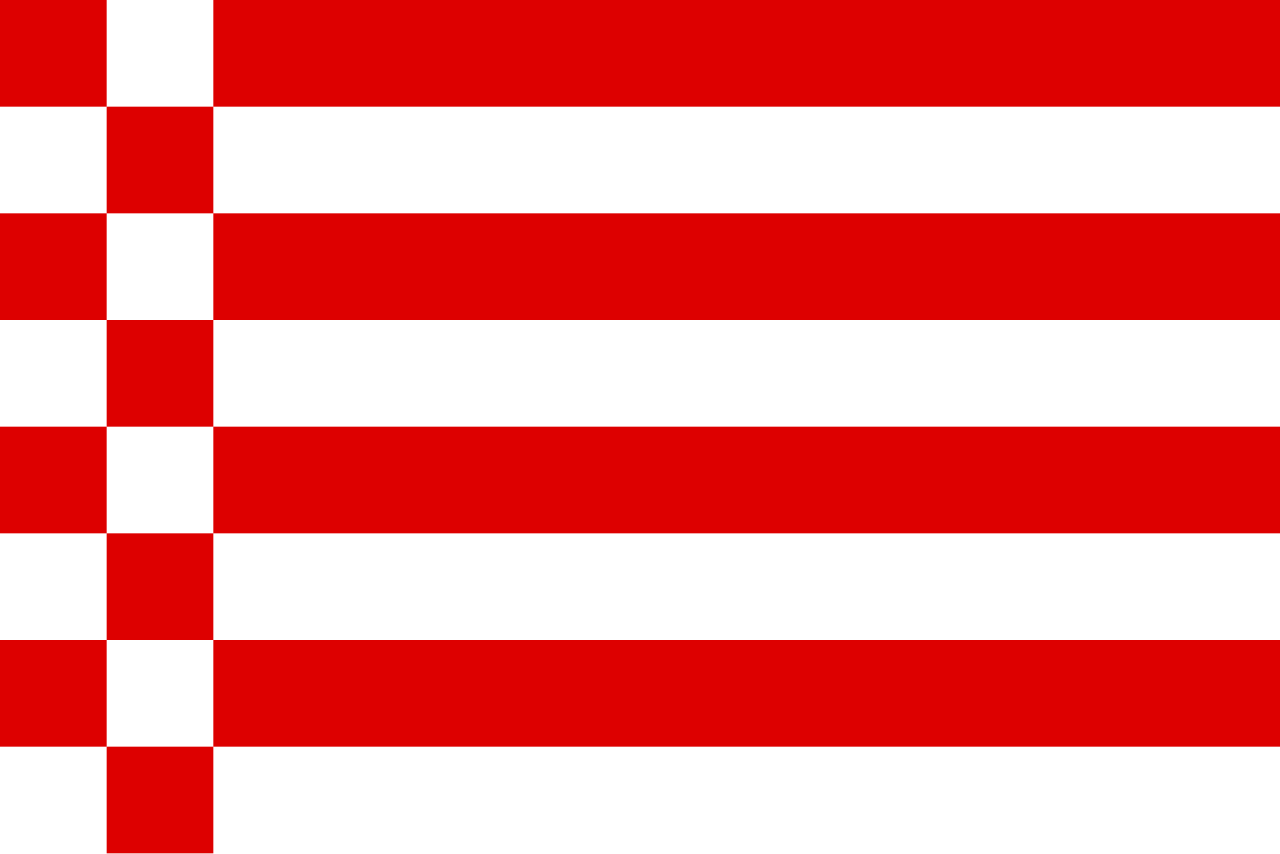
The flag of Bremen consists of at least eight horizontal stripes alternating red and white, with a square checkered red-and-white canton on the hoist side spanning all stripes. The state service flag (Dienstflagge) additionally bears the middle coat of arms (silver key with crown) centered on the field.
The red-and-white colors are the historical colors of Bremen, associated with the city's Hanseatic identity and its episcopal origins. The distinctive striped design earned the flag its popular nickname Speckflagge (bacon flag) due to the resemblance to streaky bacon. The flag was confirmed by state law in 1952.
The Speckflagge flies on public and private buildings throughout Bremen and Bremerhaven. State authorities use the Dienstflagge with the key emblem. The flag is one of the most distinctive of any German federal state due to its unusual multi-stripe design.
The Bremer Schlüssel is traditionally identified as the key of Saint Peter, patron saint of Bremen Cathedral, whose diocese was founded in 787. It symbolizes Bremen's ecclesiastical origins and later its civic independence.
The flag is nicknamed the Speckflagge (bacon flag) because its alternating red-and-white horizontal stripes resemble streaky bacon. It has at least eight stripes and a checkered canton on the hoist side.
The current forms were adopted in 1891 and confirmed by state law in 1949 after World War II.
The Hanseatic League was a medieval commercial confederation of north European merchant cities. Bremen was a prominent member, and its status as a Freie Hansestadt is still reflected in its official name and in the mural crown and lion supporters of its greater coat of arms.
The lesser arms show only the red shield with the silver key. The middle arms add a crown above the shield. The greater arms are supported by two crowned golden lions rampant and ensigned with a five-towered mural crown.
Last reviewed by the Emblema Mundi editorial team on June 29, 2026.