Federal State
Brandenburg is a federal state in northeastern Germany surrounding — but not including — the capital Berlin. Its capital is Potsdam. The state traces its heraldic identity to the Margraviate of Brandenburg, one of the most influential territories of the Holy Roman Empire, founded in the 12th century by Albrecht der Bär of the Ascanian dynasty. The Brandenburger Adler — a red eagle on silver with distinctive golden trefoils on its wings — has been the state's emblem for over 800 years. Brandenburg was re-established as a Bundesland in 1990 after German reunification, and its coat of arms was officialized by the state constitution of 1992.
Flag
Not available
Coat of Arms
Not available
| Federal State | Brandenburg |
|---|---|
| Capital | Potsdam |
| Coat of Arms adopted | 1992 (state constitution) |
| Flag adopted | 1992 (state constitution) |
| Colors | Red and white |
| Region | Northeast Germany |
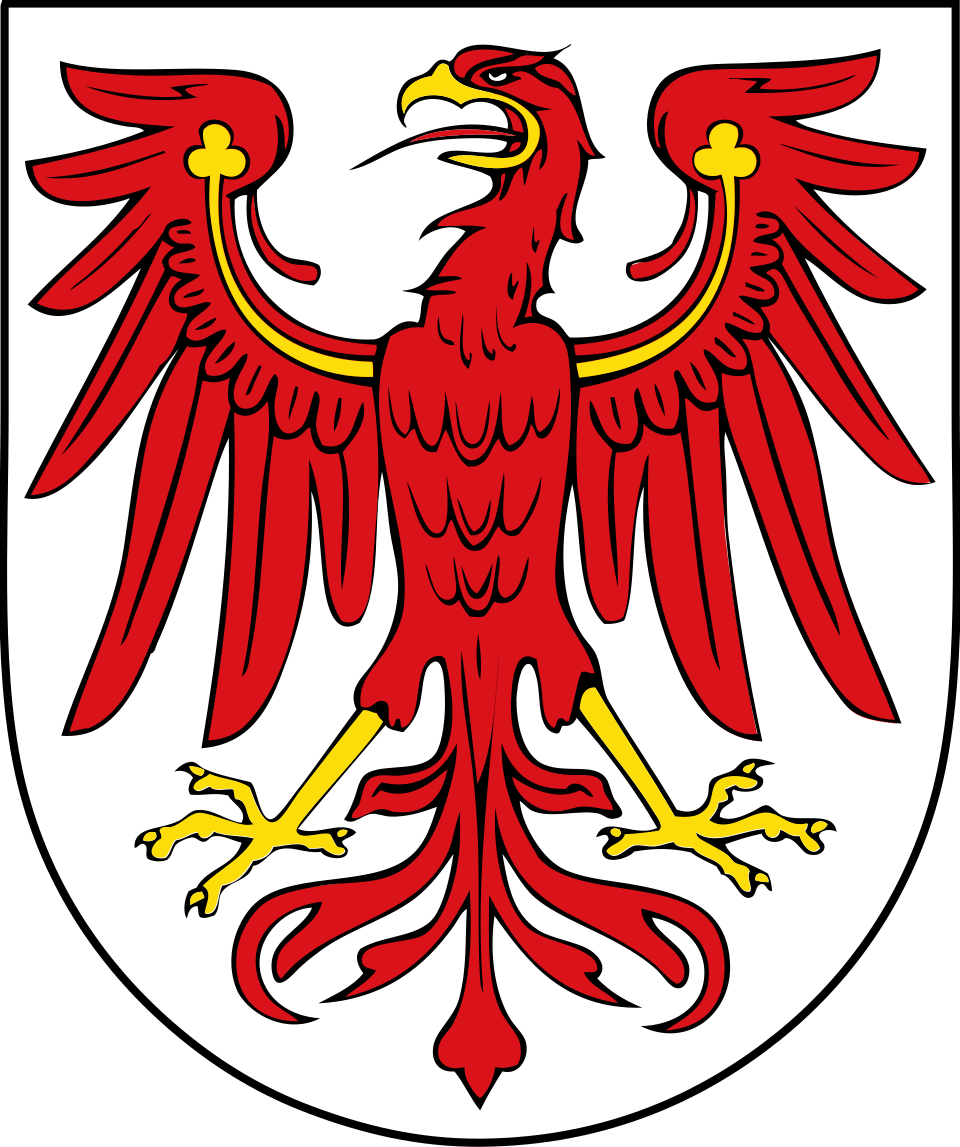
Coat of Arms of Brandenburg — the Brandenburger Adler
Argent, an eagle displayed Gules, beaked, membered, armed and langued of the same, charged on the wings with trefoils Or (Kleestängel).
The Margraviate of Brandenburg was established around 1157 when Albrecht der Bär of the Ascanian dynasty was granted the mark. The Ascanians adopted the eagle as their dynastic symbol — a red eagle on silver, decorated with the distinctive Kleestängel on its wings. The eagle continued as the symbol of Brandenburg through the rule of the Hohenzollern dynasty, which held the mark from 1415 and eventually became kings of Prussia and German emperors. After German reunification in 1990, Brandenburg was re-established as a federal state, and the historical eagle was confirmed as its coat of arms by the state constitution adopted in 1992.
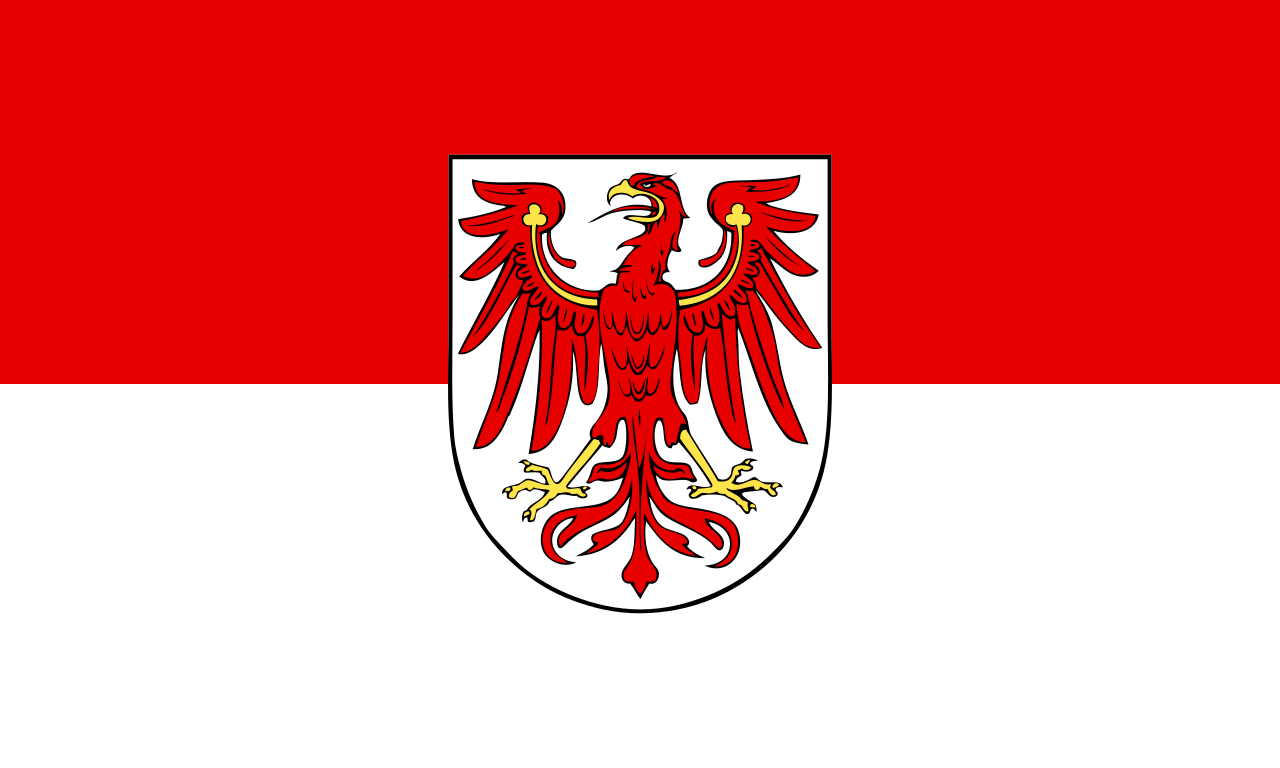
Flag of Brandenburg — red over white bicolor
The flag of Brandenburg consists of two equal horizontal stripes: red above white. The state service flag additionally bears the red Brandenburg eagle with its golden Kleestängel centered across both stripes.
The red-and-white colors directly mirror the heraldic colors of the Brandenburger Adler: a red eagle on a white (silver) field. These colors have been associated with Brandenburg since the medieval Margraviate. The flag was officialized by the state constitution of 1992 when Brandenburg was re-established after reunification.
The plain red-white bicolor is used by private citizens. State authorities use the flag with the eagle. The flag flies on all Brandenburg state government buildings and in Potsdam, the state capital.
The Brandenburger Adler has been the heraldic symbol of the March of Brandenburg since the 12th century. It was adopted by Albrecht der Bär of the Ascanian dynasty and has been associated with Brandenburg across more than 800 years of history.
The Kleestängel are the distinctive golden trefoil clover ornaments on the eagle's wings, unique to Brandenburg and rarely found in other German eagle arms.
The current coat of arms was officialized by the state constitution of 1992, after Brandenburg was re-established as a federal state following German reunification in 1990.
The flag is red over white — two equal horizontal stripes — mirroring the heraldic colors of the Brandenburger Adler (red eagle on silver/white).
The Margraviate of Brandenburg was established by Albrecht der Bär of the Ascanian dynasty around 1157. The Ascanians adopted the eagle as their heraldic symbol, originating the Brandenburger Adler tradition.
Last reviewed by the Emblema Mundi editorial team on June 29, 2026.