City-State
Berlin is Germany's capital and largest city, and one of three Stadtstaaten (city-states) that are simultaneously cities and federal states of the Federal Republic of Germany. The city's heraldic history stretches back to at least 1280, when the black bear first appeared on an official city seal. This Berliner Bär — a black bear passant on a silver field — has remained the core symbol of Berlin across seven centuries of history, through the Hohenzollern kingdom, the Weimar Republic, division and reunification. The current coat of arms was officialized on 13 May 1954.
Flag
Not available
Coat of Arms
Not available
| City-State | Berlin |
|---|---|
| Capital | Berlin |
| Coat of Arms adopted | 13 May 1954 |
| Flag adopted | 13 May 1954 |
| Colors | Red and white |
| Region | Northeast Germany |
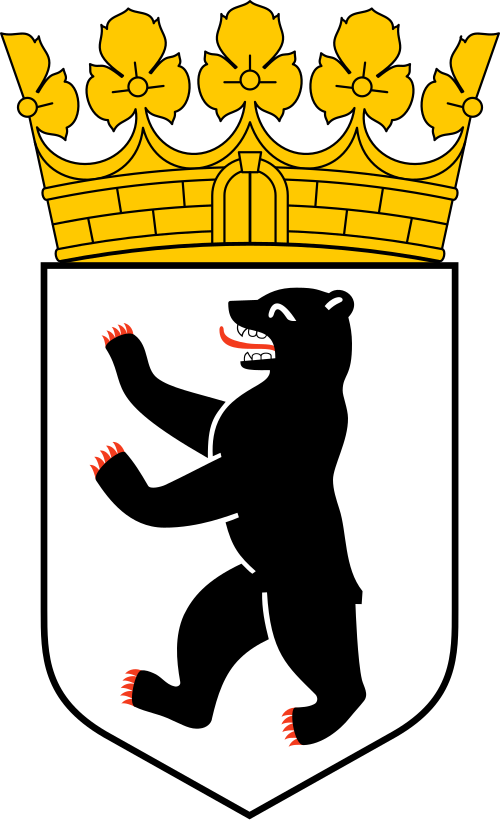
Coat of Arms of Berlin — the Berliner Bär on silver
Argent, a bear passant Sable, armed and langued Gules, ensigned with a mural crown Or of five merlons.
The Berliner Bär first appears on a city seal dated to around 1280, making it one of the oldest continuous heraldic symbols in Germany. Its precise origin is debated: it may be a canting device on the city name (popularly linked to the German word Bär, bear), or it may derive from the arms of the Margraves of Brandenburg, who controlled the town in its early years. Under the Hohenzollern kings of Prussia, Berlin served as the royal capital, and the bear appeared alongside the Hohenzollern eagle. After World War II and the division of the city, both East and West Berlin maintained the bear as their symbol. Upon German reunification in 1990, the bear was confirmed as the emblem of the reunified city-state.
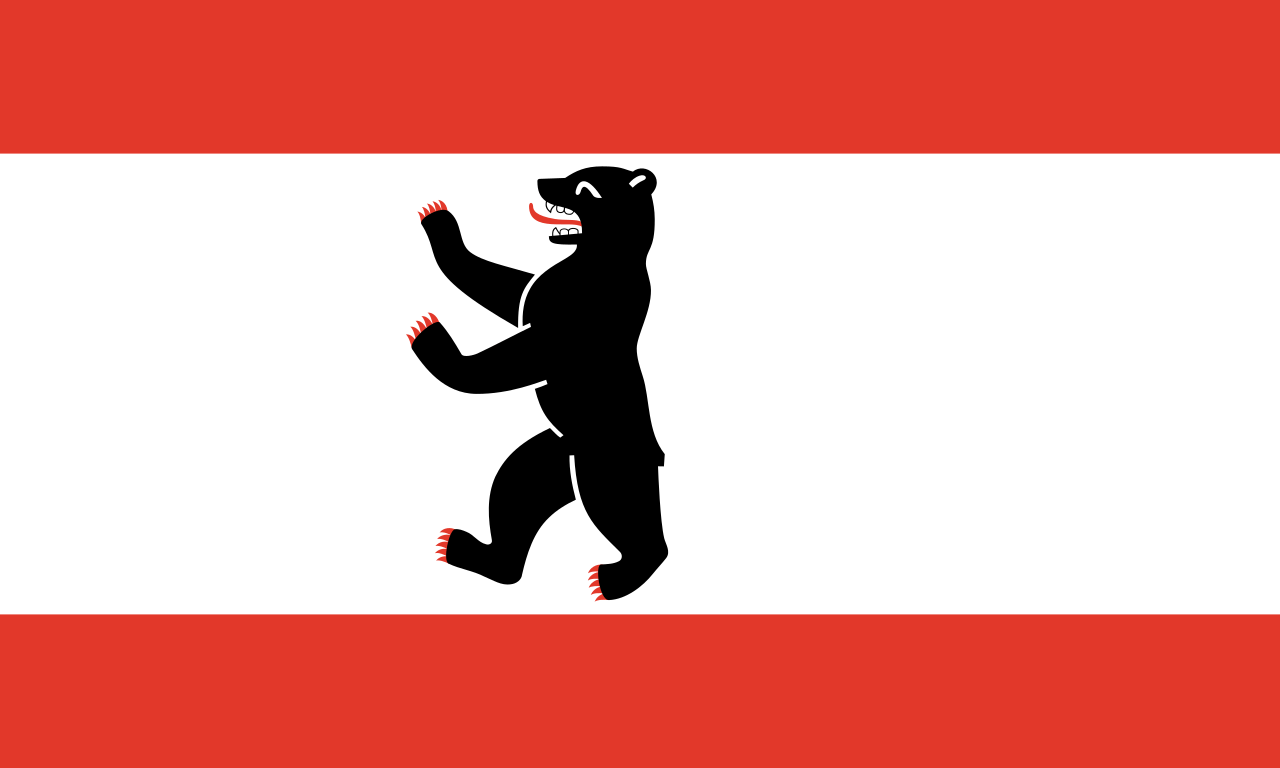
Flag of Berlin — red-white-red triband
The flag of Berlin is a horizontal triband: red, white, red, with the white stripe twice as wide as each red stripe. The Berlin bear appears centered on the white stripe — without crown on the civil flag (Landesflagge), with the golden mural crown on the state flag (Staatsflagge).
The red-and-white colors are the historical colors of Berlin, used since the medieval period. They derive from the city's traditional livery and were maintained across the various political regimes that controlled the city. The current flag design was officialized on 13 May 1954.
The civil flag without the crown is used by private citizens and organizations. State authorities use the Staatsflagge with the crowned bear. The flag flies on all Berlin senate buildings and is the dominant symbol of the city in official contexts.
The Berliner Bär has been Berlin's heraldic symbol since at least 1280. It may be a canting device on the city name or may derive from the arms of the Margraves of Brandenburg who founded the town.
The current coat of arms was officialized on 13 May 1954, and applies to the reunified city-state since German reunification in 1990.
The flag is red-white-red, with the white stripe twice as wide as each red stripe. These are Berlin's historical colors dating to the medieval period.
The civil flag (Landesflagge) shows the Berlin bear without a crown, while the state flag (Staatsflagge) shows the bear with the golden mural crown.
Berlin is one of three German Stadtstaaten (city-states), alongside Hamburg and Bremen. As the capital and largest city of Germany, it holds the status of a Bundesland in its own right, with its own parliament (Abgeordnetenhaus) and government (Senat).
Last reviewed by the Emblema Mundi editorial team on June 29, 2026.