US State
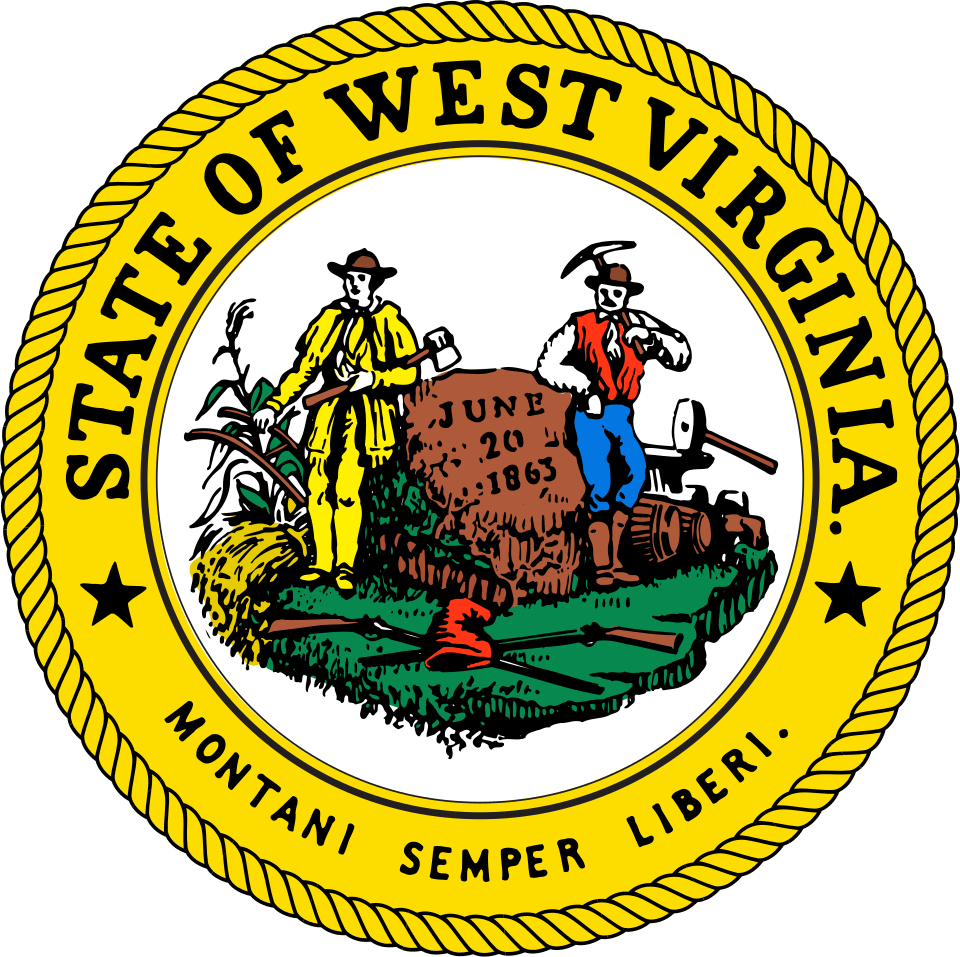
Two men stand before a rock bearing the date June 20, 1863 (the day West Virginia became a state during the Civil War). A farmer with a plow and cornstalk stands on the left; a miner with a pickaxe and anvil on the right. Two rifles are crossed above, and a Phrygian (liberty) cap sits atop them. The motto Montani Semper Liberi (“Mountaineers Are Always Free”) appears on a ribbon below.
Flag
Not available
Seal
Not available
| State | West Virginia (35th state, admitted 20 June 1863) |
|---|---|
| State seal | Two men (farmer and miner) flanking rock with date June 20 1863 |
| Seal adopted | 1863 |
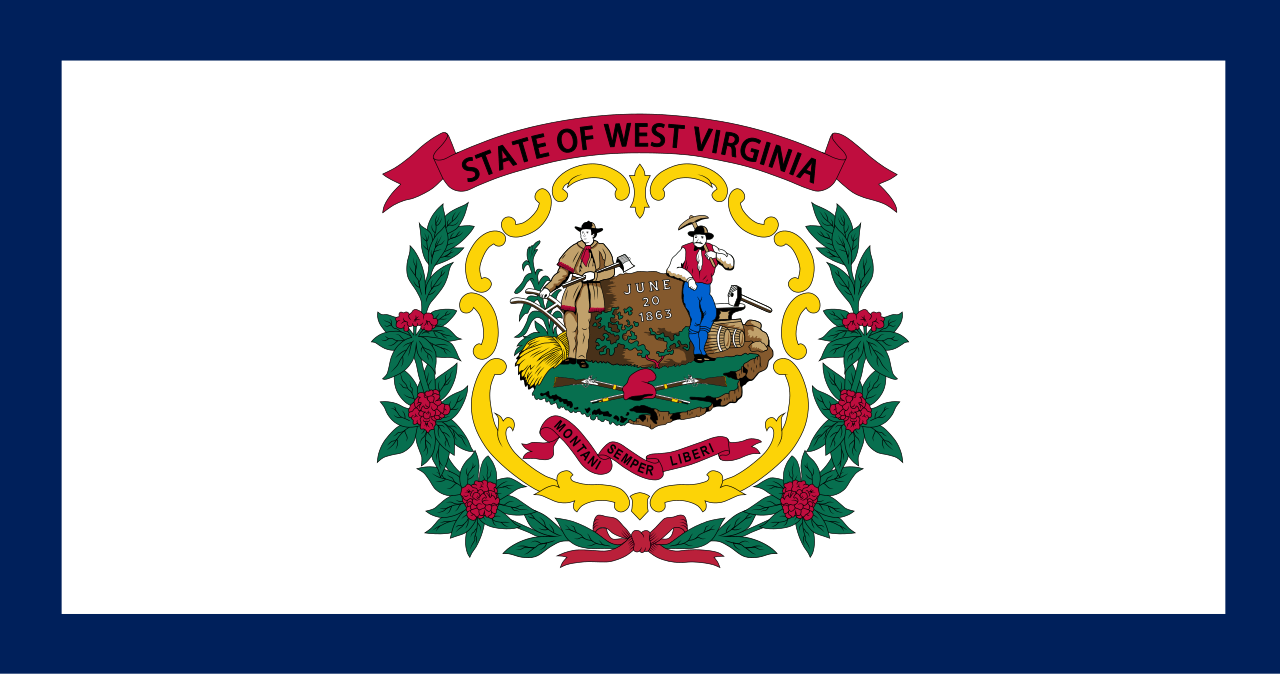
| State flag | White field bordered in blue with state coat of arms and wreath of rhododendron |
| Flag adopted | 1929 |
| Motto | Montani Semper Liberi (“Mountaineers Are Always Free”) |
| Capital | Charleston |
| Nickname | The Mountain State |
| State flower | Rhododendron (Rhododendron maximum) |
Flag of West Virginia — Adopted 1929
A white field bordered in dark blue bears the state coat of arms at center, surrounded by a wreath of Rhododendron maximum (the state flower). Adopted 7 March 1929.
Great Seal of West Virginia — Since 1863
Two men stand before a rock bearing the date June 20, 1863 (the day West Virginia became a state during the Civil War). A farmer with a plow and cornstalk stands on the left; a miner with a pickaxe and anvil on the right. Two rifles are crossed above, and a Phrygian (liberty) cap sits atop them. The motto Montani Semper Liberi (“Mountaineers Are Always Free”) appears on a ribbon below.
Two men (farmer and miner) flanking rock with date June 20 1863. Rifles, liberty cap, Montani Semper Liberi. Adopted 1863.
Montani Semper Liberi (“Mountaineers Are Always Free”).
White field bordered in blue with state coat of arms and wreath of rhododendron. Adopted 1929.
Last reviewed by the Emblema Mundi editorial team on 2026-06-28.