US State
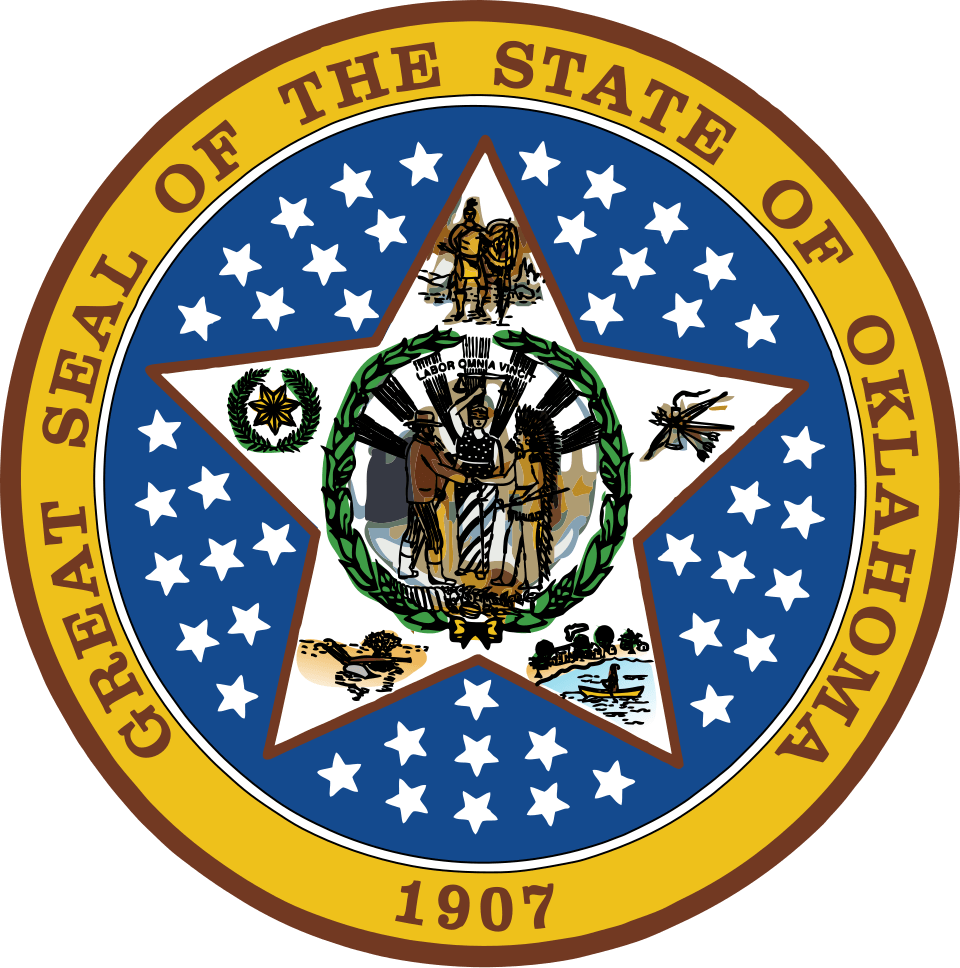
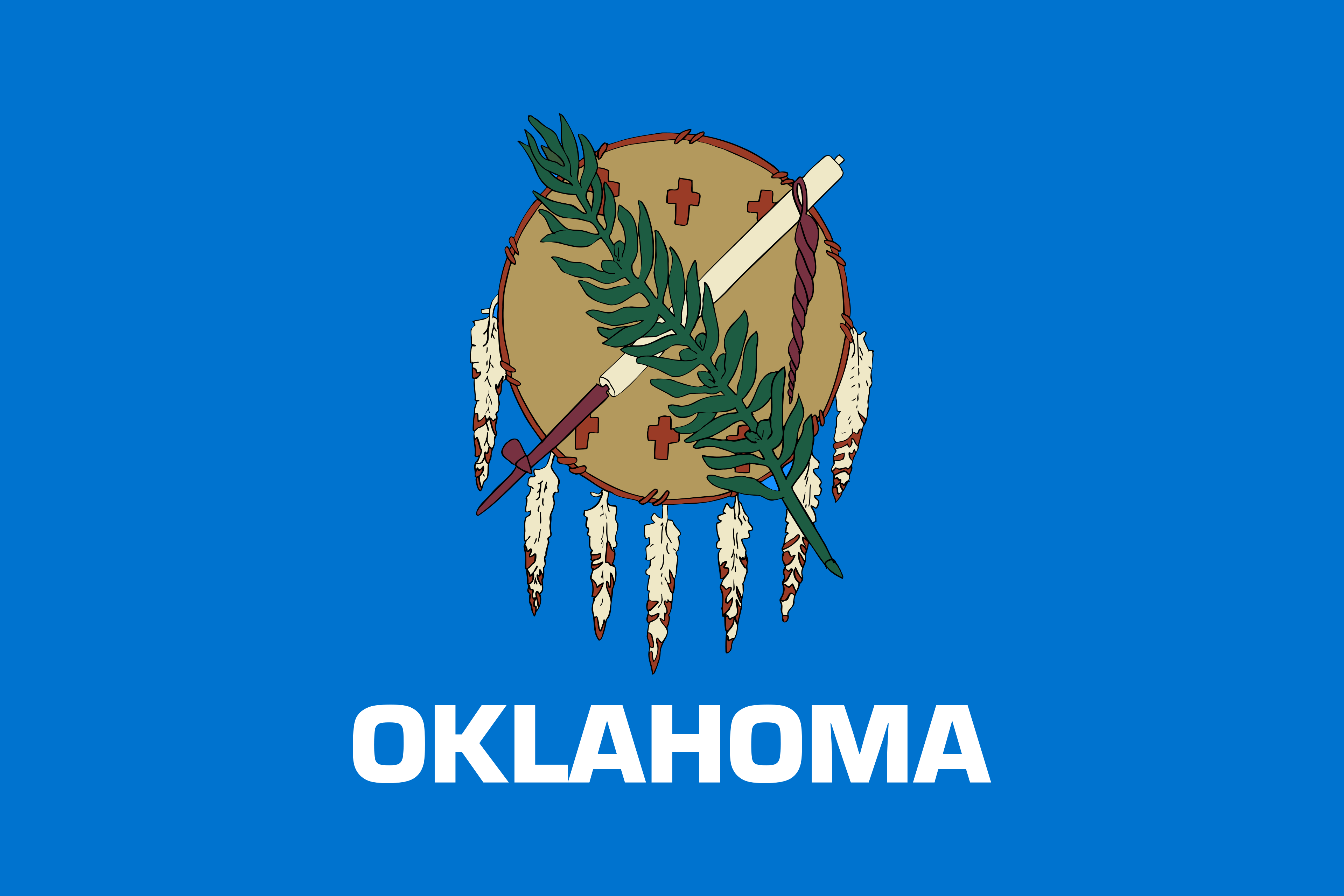
Oklahoma’s state emblems are unique in the nation for their deep integration of Native American heritage. The Great Seal, designed by Gabe E. Parker (one-eighth Choctaw) and adopted in 1907, features a five-pointed star whose rays bear the seals of the Five Civilized Tribes — Cherokee, Chickasaw, Choctaw, Creek, and Seminole — surrounded by 45 stars (Oklahoma being the 46th). The seal incorporates the design of the proposed State of Sequoyah, which would have been an exclusively Native American state. The flag, designed by Louise Funk Fluke and adopted in 1925, places an Osage warrior’s shield with seven eagle feathers, a calumet (peace pipe), and an olive branch on a sky blue field.
Flag
Not available
Seal
Not available
| State | Oklahoma (46th state, admitted 16 November 1907) |
|---|---|
| State seal | Five-pointed star with Five Civilized Tribes seals, 45 surrounding stars |
| Seal designer | Gabe E. Parker (one-eighth Choctaw) |
| Seal adopted | 1907 |
| State flag | Sky blue field, Osage shield, eagle feathers, calumet, olive branch |
| Flag designer | Louise Funk Fluke |
| Flag adopted | 1925; “Oklahoma” added 1941; standardized 2006 |
| Motto | Labor Omnia Vincit (“Labor Conquers All Things”) |
| Capital | Oklahoma City |
| Nickname | The Sooner State |
| State flower | Oklahoma rose (Rosa oklahoma) |
Flag of Oklahoma — Osage shield on sky blue, adopted 1925
The Oklahoma flag is one of the few US state flags centered on Native American symbolism — an Osage shield rather than a European-style seal or coat of arms.
A sky blue field bears a circular Osage warrior’s rawhide shield decorated with six painted crosses and fringed with seven pendant eagle feathers. Superimposed on the shield: a calumet (peace pipe) crossed at right angles by an olive branch, uniting Native American and European-American symbols of peace. The word “Oklahoma” appears below in white.
The flag was designed by Louise Funk Fluke and adopted in 1925. The state name was added beneath the shield in 1941.
In 2005, an Oklahoma Boy Scout leader preparing patches for the National Jamboree discovered that multiple unauthorized versions of the flag were in use across state agencies. Senate Bill 1359, signed by Governor Brad Henry, established precise specifications (including Pantone colors) effective 1 November 2006.
Great Seal of Oklahoma — Labor Omnia Vincit — since 1907
The Oklahoma seal is the most tribally complex of all US state seals, incorporating the official symbols of five sovereign nations.
A large five-pointed star dominates the center. Each ray bears the seal of one of the Five Civilized Tribes: Cherokee, Chickasaw, Choctaw, Creek (Muscogee), and Seminole. Around the star, 45 smaller stars represent the states that existed before Oklahoma’s admission as the 46th. The motto Labor Omnia Vincit (“Labor Conquers All Things”) encircles the design.
The seal incorporates the 1905 design for a proposed Native American state called Sequoyah, which would have comprised the land of Indian Territory. The United States rejected the bid, instead merging Indian Territory with Oklahoma Territory for joint statehood in 1907.
The seal was designed by Gabe E. Parker, who was one-eighth Choctaw. Parker supervised Armstrong School, chaired the Constitutional Convention of 1906–07, and later served as federal superintendent of the Five Tribes.
A five-pointed star bearing the seals of the Five Civilized Tribes (Cherokee, Chickasaw, Choctaw, Creek, Seminole), surrounded by 45 stars. Motto: Labor Omnia Vincit. Designed by Gabe E. Parker, adopted 1907.
A traditional Osage warrior’s rawhide shield with six crosses and seven eagle feathers. A calumet and olive branch are crossed on it, uniting Native American and European symbols of peace.
Louise Funk Fluke. Adopted 1925; “Oklahoma” added 1941; standardized 2006.
Latin for “Labor Conquers All Things.” From Virgil’s Georgics.
The Cherokee, Chickasaw, Choctaw, Creek, and Seminole were relocated to Indian Territory during the Trail of Tears. The seal incorporates the design for the proposed State of Sequoyah, which was rejected before Oklahoma’s statehood in 1907.
Last reviewed by the Emblema Mundi editorial team on 2026-06-27.